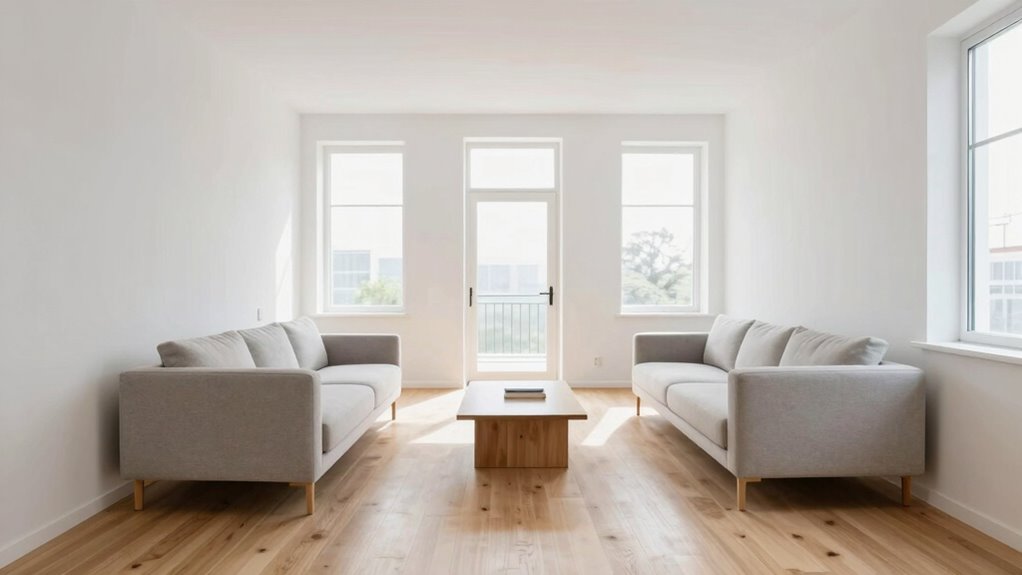
Making small room layout changes quickly boosts mobility by removing obstacles and creating clear pathways. You can achieve this by rearranging furniture, pushing larger pieces against walls, and eliminating unnecessary clutter. These simple adjustments open up space, making movement easier and safer. Choosing multi-purpose furniture and minimizing clutter further enhances space and flow. Curious how these tweaks can transform your space? Keep exploring to discover effective strategies for a more accessible environment.

Turn quiet afternoons into listening time
- Thousands of audiobooks, podcasts and originals
- Listen on your phone, tablet or Echo — also offline
- Cancel anytime
Key Takeaways
- Repositioning furniture creates clear pathways, reducing obstacles and enhancing ease of movement.
- Removing unnecessary items minimizes clutter, preventing hazards and improving accessibility.
- Using multi-purpose furniture maximizes space efficiency, allowing for better flow and mobility.
- Simplifying layout and avoiding overcrowding increases perceived space, making navigation faster.
- Strategic furniture placement and decor choices optimize room layout for quicker, safer movement.
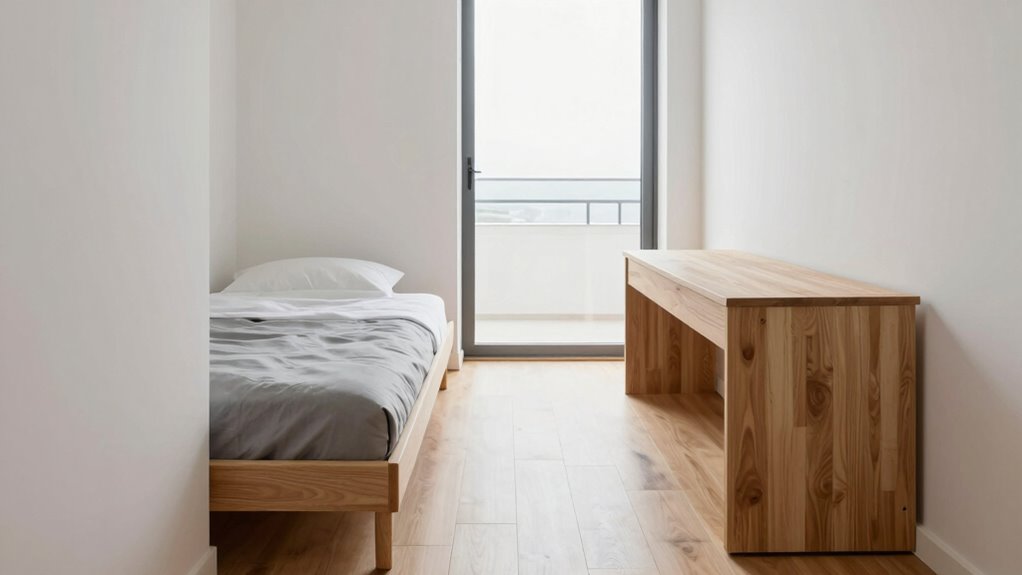
Have you ever felt cramped in a small room despite your best efforts to organize? It’s frustrating to feel like your space is limited when you’re just trying to move freely. One of the quickest ways to improve mobility is to rethink your furniture arrangement. When furniture is placed haphazardly or blocks pathways, it creates obstacles that make even simple movements feel challenging. By carefully analyzing where each piece sits, you can create a more open, inviting environment that allows you to move smoothly from one area to another. For example, pushing larger furniture against walls or into corners can free up central space, giving your room a more open feel. Removing unnecessary pieces, or finding multi-purpose furniture, also helps reduce clutter and creates a more functional layout. Incorporating landscaping into your decor can also influence how you perceive and utilize your space, creating a more harmonious environment. Obstacle removal plays a *vital* role in making your small room feel more spacious and accessible. When you clear out items that don’t serve a purpose or clutter the space, you eliminate physical barriers that restrict movement. This isn’t just about aesthetics—it’s about creating a safe, efficient environment where you can navigate without tripping or feeling boxed in. Take a moment to evaluate which furniture or objects are truly needed; anything that doesn’t contribute to your daily routines should be considered for removal or repositioning. Simplifying room layout can make your space appear larger and more welcoming. This process can feel liberating and instantly boost your room’s functionality. It’s not just about getting rid of things, but about making intentional choices to enhance flow and ease of movement. Additionally, understanding your space layout and how to optimize it can make a significant difference in how your room feels. Proper furniture placement is key to maximizing available space and improving overall comfort.
Frequently Asked Questions
Can Small Changes Make a Noticeable Difference Immediately?
Yes, small changes can make a noticeable difference immediately. By focusing on space optimization and clutter reduction, you free up pathways and create a more open environment. Moving furniture, removing unnecessary items, or repositioning pieces instantly improves mobility. These adjustments help you navigate your space more easily, reduce accidents, and create a more comfortable, functional room without needing major renovations. Small tweaks can transform your room’s usability right away.
Are There Specific Furniture Types That Enhance Mobility?
Choosing furniture like narrow, multi-functional pieces enhances mobility by optimizing space. For example, a person replaced bulky sofas with compact, modular seating, allowing easier navigation. Furniture selection focused on lightweight, mobile options, and space optimization freed up pathways. This straightforward change improved daily movement considerably, demonstrating how strategic furniture choices directly boost mobility in small rooms. Your focus on smart furniture selection can make a noticeable difference fast.
How Often Should Room Layouts Be Reassessed for Mobility?
You should reassess your room layouts at least every one to two years, especially as decorating trends evolve and accessibility standards change. Regular evaluations help you identify obstacles that hinder mobility and guarantee your space remains functional. Staying updated on the latest accessibility standards allows you to make informed adjustments, improving mobility quickly. By proactively reviewing your layout, you create a safer, more comfortable environment aligned with current design and accessibility best practices.
Do Color Choices Impact Perceived Space and Movement?
Yes, color choices can dramatically impact perceived space and movement, almost as if a room transforms overnight! Bright colors and cool tones boost visual perception, making spaces seem larger and more open, while dark shades shrink and confine. By understanding color psychology, you can strategically select hues that enhance mobility, creating a sense of freedom and flow. This simple tweak can make your room feel like a vast, unrestricted domain instead of a cramped closet.
What Tools Are Best for Planning Layout Adjustments?
You should use tools like room planners or interior design apps to plan your layout adjustments. These tools help you experiment with furniture arrangement and visualize space optimization before moving anything physically. A digital floor plan allows you to see how different arrangements impact mobility, making it easier to identify the best options for maximizing space and improving flow. This way, you can make informed decisions quickly and efficiently.
Conclusion
Think of your small room as a tiny boat steering a busy river. With just a few strategic adjustments—like clearing clutter or rearranging furniture—you turn choppy waters into a smooth journey. These simple layout tweaks act like a skilled captain, guiding you effortlessly through tight spots. Soon, your space becomes a sleek vessel, offering swift mobility and ease. Embrace these changes, and watch your small room transform into a nimble, welcoming haven.
Fall Picks
fall essentials
As an affiliate, we earn on qualifying purchases.