
Choosing the right footwear is essential because it directly affects your comfort, stability, and joint health as you move. Proper shoes with adequate cushioning absorb impact and reduce fatigue, while good arch support keeps your feet aligned and prevents injuries. When your footwear supports natural biomechanics, you move more confidently and comfortably. Small changes in your shoe choice can greatly boost mobility and prevent long-term issues. Keep going to discover how these factors can transform your everyday movement.

Get comfort and care essentials delivered free — and shop member deals
- Fast, free delivery on millions of items
- Access to Prime Big Deal Days deals on October 6–7
- Prime Video, Amazon Music and more included
Key Takeaways
- Proper footwear enhances comfort and reduces fatigue during movement by absorbing impact forces.
- Cushioning and support improve balance, stability, and overall mobility efficiency.
- Correct footwear prevents misalignment and strain on joints, reducing injury risk.
- Well-designed shoes promote natural biomechanics, making extended activity easier and more comfortable.
- Choosing supportive footwear helps prevent long-term joint issues and enhances sustained mobility.
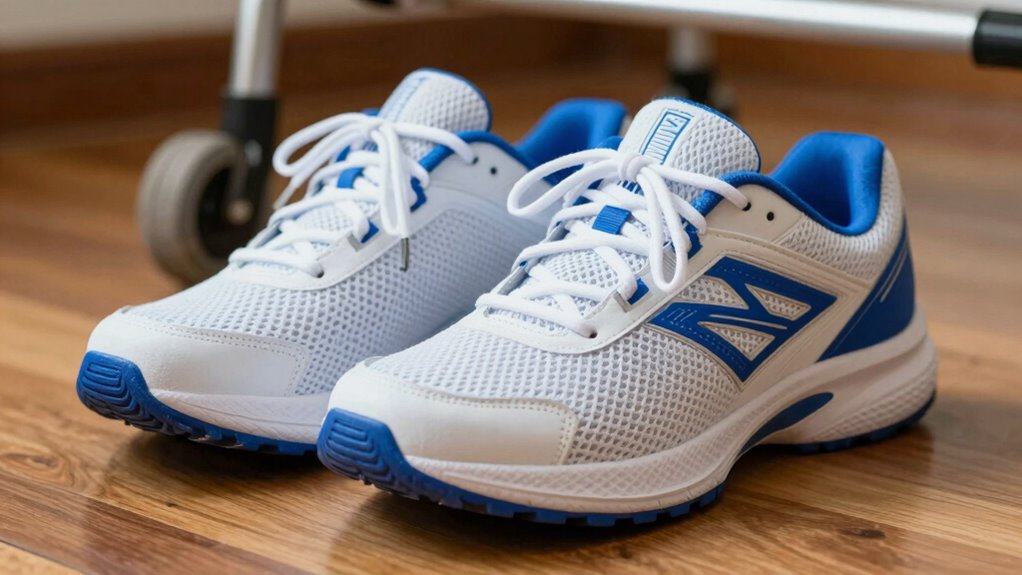
Have you ever considered how your footwear impacts your mobility? The shoes you choose can make a significant difference in how easily and comfortably you move through your day. When you walk or run, your feet absorb the impact, and proper footwear helps manage that force. Shoe cushioning plays a pivotal role here. Well-cadded shoes provide a soft barrier that reduces stress on your joints, preventing fatigue and discomfort over time. Without adequate cushioning, even short walks can become tiring, and prolonged activity might lead to soreness or injury. Cushioning isn’t just about comfort; it’s about protecting your body from the repetitive shocks that come with movement.
Proper cushioning in footwear reduces joint stress and prevents fatigue during daily activities.
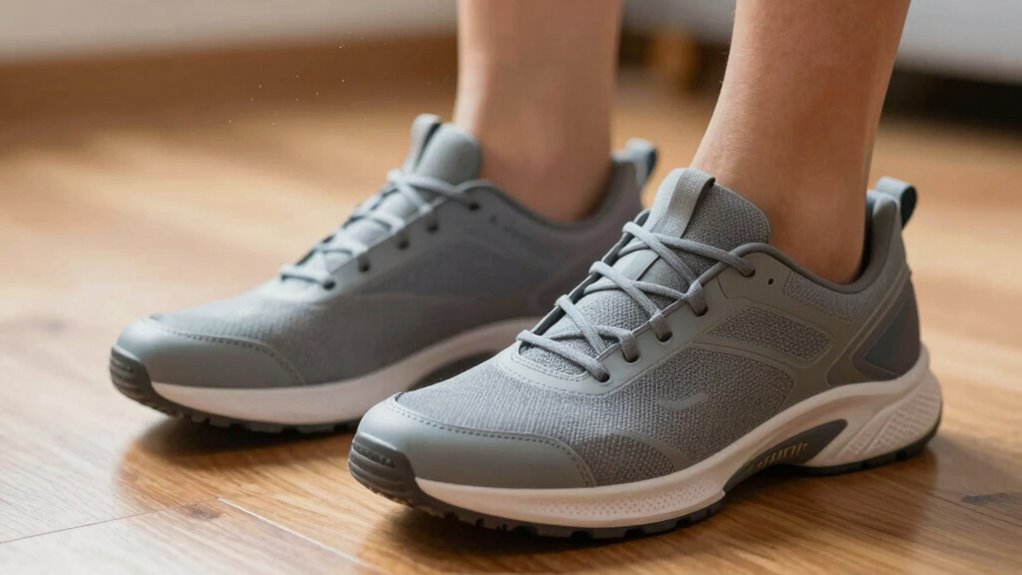
Equally important is arch support. Your feet have natural arches designed to distribute weight efficiently. When your shoes lack proper arch support, it can throw off your alignment, causing instability and extra strain on your ankles, knees, and hips. Over time, this misalignment can lead to pain and even chronic conditions like plantar fasciitis or shin splints. Good footwear with proper arch support helps maintain the natural biomechanics of your feet, allowing you to move confidently and efficiently. It keeps your feet aligned, which benefits your whole body by reducing unnecessary stress on joints and muscles.
When your footwear combines both shoe cushioning and arch support, you experience a noticeable improvement in mobility. You’ll find yourself taking longer walks, standing for extended periods, and even engaging in physical activities with less fear of discomfort or injury. Proper support helps you maintain balance and stability, making your movements more precise and controlled. It’s especially indispensable if you’re recovering from an injury, have existing foot conditions, or simply spend a lot of time on your feet. The right shoes can turn what once felt like a chore into an enjoyable experience, encouraging you to stay active and healthy. Additionally, choosing shoes with adequate support and cushioning can help prevent long-term joint issues caused by improper alignment. Understanding foot biomechanics can help you select footwear that enhances your mobility and overall well-being, especially considering how supportive footwear can influence your comfort.
Choosing footwear that prioritizes cushioning and support isn’t just about comfort; it’s an investment in your overall mobility health. When your shoes work with your body rather than against it, you experience less pain, fewer injuries, and increased confidence in your movement. As you consider your next pair, think about how your shoes support your arches and cushion your steps. This small change can have a big impact, transforming your daily mobility and helping you stay active longer and more comfortably.
Frequently Asked Questions
How Do Different Shoe Types Impact Mobility Support Effectiveness?
Different shoe types impact mobility support by offering varied shoe material and arch support features. For example, athletic shoes with cushioned soles and firm arch support enhance stability and shock absorption, improving movement. Conversely, minimalist shoes with little arch support may increase strain, reducing support effectiveness. Your choice of shoe material and arch support directly influences comfort, balance, and injury prevention, making it essential to select footwear tailored to your mobility needs.
Can Improper Footwear Cause Long-Term Mobility Issues?
While it’s easy to overlook, improper footwear can subtly influence your long-term mobility. Poor footwear durability may cause discomfort and instability, leading to strain over time. Ignoring fashion considerations shouldn’t compromise support, as ill-fitting shoes can weaken muscles and joints gradually. If you prioritize quality and comfort, you reduce the risk of developing chronic issues, keeping your mobility healthy and sustainable for years to come.
What Features Should I Look for in Supportive Footwear?
You should look for supportive footwear with durable shoe material that provides stability and comfort. Prioritize shoes with good arch support to help distribute pressure evenly and reduce strain on your feet. Flexible soles and cushioned insoles also enhance comfort and shock absorption. Make certain the footwear fits well, with enough room in the toe box, to prevent blisters and long-term issues. This combination ensures proper support and promotes better mobility.
How Often Should Mobility Footwear Be Replaced?
You should replace your mobility footwear every 6 to 12 months, depending on usage and wear. For example, if your shoes show significant signs of deterioration, like worn-out soles or loss of support, it’s time for a replacement. Footwear lifespan varies based on activity level, but regular inspection guarantees ideal support. Prioritize replacement frequency to prevent injuries and maintain mobility, especially if you notice discomfort or decreased stability.
Are Custom Orthotics Necessary for Optimal Mobility Support?
Custom orthotics aren’t always necessary for ideal mobility support, but they can make a significant difference. They use specialized orthotic material to provide tailored arch support, which helps distribute pressure evenly and improve stability. If you have specific foot issues or need personalized support, investing in custom orthotics can enhance comfort and mobility. Otherwise, well-designed over-the-counter options might suffice for everyday activities.
Conclusion
Your choice of footwear can transform your mobility support like a key unsealing endless possibilities. Just as a sturdy bridge connects distant shores, the right shoes bridge the gap between discomfort and effortless movement. When you prioritize supportive footwear, you pave a smoother path through your daily activities, making each step feel lighter and more confident. Remember, your shoes are the foundation of your mobility—choose them wisely, and watch your world open up like a sunrise on the horizon.
Fall Picks
fall essentials
As an affiliate, we earn on qualifying purchases.