
To reduce fear during standing practice, focus on slow, deliberate breathing to calm your nervous system and stay present. Use mindfulness and body awareness to build confidence in your stability, paying attention to how your body feels and trusting your physical capabilities. Visualization techniques can help you stay focused and relaxed, while embracing free-floating relaxation reduces tension. Keep practicing these strategies to strengthen your mind-body connection, and you’ll find it easier to stay centered even in challenging moments.

Turn quiet afternoons into listening time
- Thousands of audiobooks, podcasts and originals
- Listen on your phone, tablet or Echo — also offline
- Cancel anytime
Key Takeaways
- Practice slow, deliberate breathing to calm the nervous system and reduce immediate fear.
- Use mindfulness and body awareness to build confidence and stay centered during standing exercises.
- Incorporate visualization techniques to foster mental clarity and maintain focus under challenging conditions.
- Emphasize relaxation and free floating to promote calmness and lessen fear of losing balance.
- Develop a strong mind-body connection to trust physical capabilities and improve overall stability.
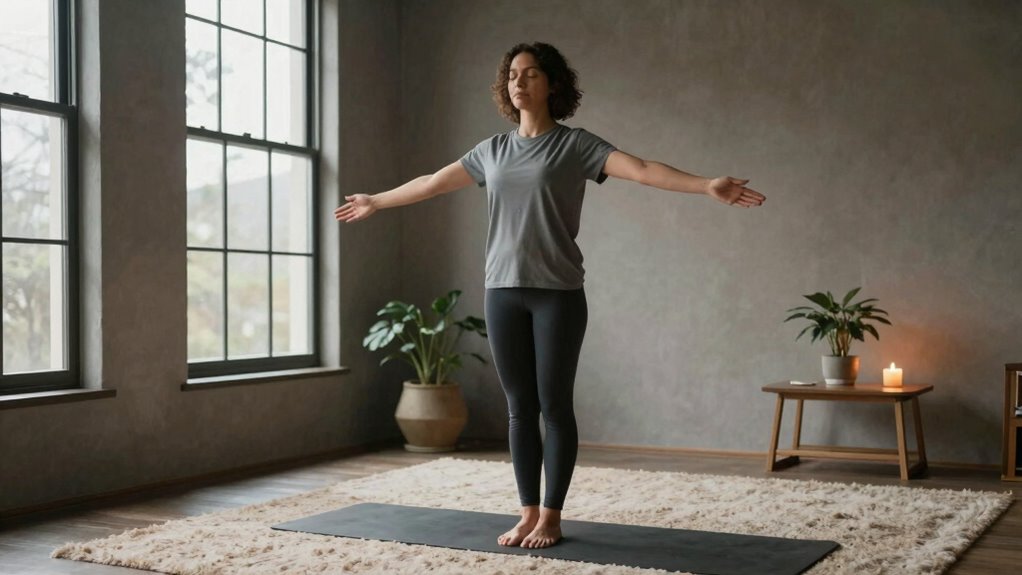
Standing practice can be intimidating, especially if you’re new to it or have a fear of losing your balance. That fear can make it harder to settle into the moment and fully benefit from the experience. To reduce that anxiety, focus on your breathing and incorporate mindfulness exercises. Your breath is a powerful tool: slow, deliberate breathing can help calm your nervous system and ground you in the present. When you feel your heart race or your muscles tense, take a deep breath in through your nose, hold it for a couple of seconds, then exhale slowly through your mouth. Repeat this process a few times, paying close attention to the sensation of your breath. This simple technique can immediately lower stress levels and bring your awareness inward, making it easier to stay centered. Additionally, understanding the importance of Free Floating in balancing and relaxation practices can enhance your ability to remain calm during standing exercises. Developing an awareness of body stability through mindful focus can also support your confidence in maintaining balance. Recognizing how body awareness influences your overall stability can help you make necessary adjustments and build trust in your physical capabilities. Incorporating techniques such as visualization can further improve your focus and help you maintain composure during challenging moments. Cultivating a sense of mind-body connection can further deepen your practice and improve your balance over time.
Products Worth Considering

Garmin Forerunner 55 GPS Running Smartwatch, Black

Oura Ring 4 Smart Ring – Silver – Size 8

Therabody Theragun Mini 3rd Generation Massage Gun
As an affiliate, we earn on qualifying purchases.
Frequently Asked Questions
Can Fear During Standing Practice Be Completely Eliminated?
Fear during standing practice can’t be completely eliminated, but you can manage it effectively. By practicing mindfulness meditation, you become more aware of your fears without judgment, reducing their power. Gradual exposure helps you build confidence gradually, making the fear more manageable over time. With consistent effort, you’ll notice your fear diminishes, allowing you to stand comfortably and confidently, even in challenging situations.
How Long Does It Take to Overcome Fear in Standing Practice?
It varies for everyone, but with consistent effort, most people start noticing reduced fear within a few weeks. You can speed up progress by practicing mindfulness exercises to stay present and calm, and using gradual exposure to slowly increase your comfort level. Keep practicing regularly, and over time, your fear will diminish as your confidence builds. Patience and persistence are key to overcoming fear in standing practice.
Are There Specific Breathing Techniques to Reduce Fear?
Yes, focusing on breathing awareness helps reduce fear during standing practice. You can try deep, slow breaths, inhaling through your nose and exhaling through your mouth to calm your nervous system. Incorporate relaxation techniques like progressive muscle relaxation or gentle belly breathing to ease tension. These methods help you stay grounded, reduce anxiety, and build confidence, making it easier to maintain your stance without fear.
Does Previous Trauma Affect Fear During Standing Practice?
Yes, previous trauma can heighten fear during standing practice. By cultivating trauma awareness, you recognize your emotional triggers and create a safe space for yourself. Building emotional resilience helps you manage fear more effectively, allowing you to stay grounded despite past experiences. Incorporate gentle breathing exercises and mindfulness to foster a sense of safety, gradually reducing fear. Remember, progress is personal—be patient and compassionate with yourself.
Should Beginners Start With Shorter or Longer Standing Sessions?
Like planting seeds for growth, starting small can lead to big progress. As a beginner, you should begin with shorter standing sessions to build confidence and avoid overwhelm. Focus on postural adjustments to maintain comfort and stability. Gradually extend your session duration as you gain strength and familiarity. This gentle approach helps you stay grounded, reduce fear, and foster a positive experience, making each step feel achievable and empowering.
Conclusion
By applying these techniques, you can gradually ease your fear during standing practice and build confidence. Remember, studies show that consistent mindfulness exercises can reduce anxiety by up to 30%. Don’t rush the process—be patient with yourself as you develop stability and trust in your body. With time and persistence, standing practice becomes a calming, empowering experience, helping you face fears with greater resilience and calmness.