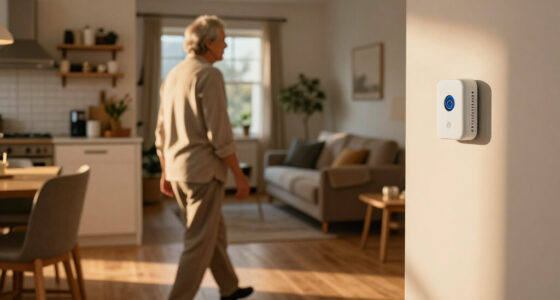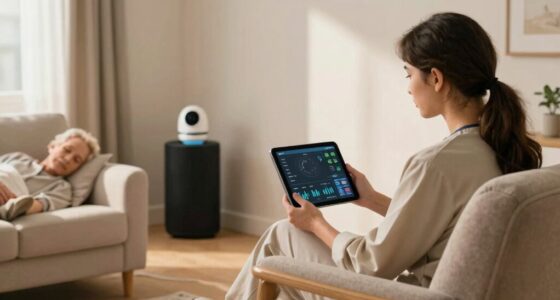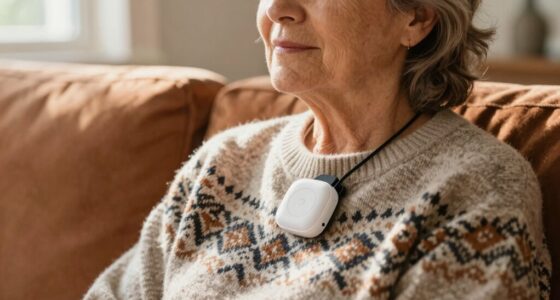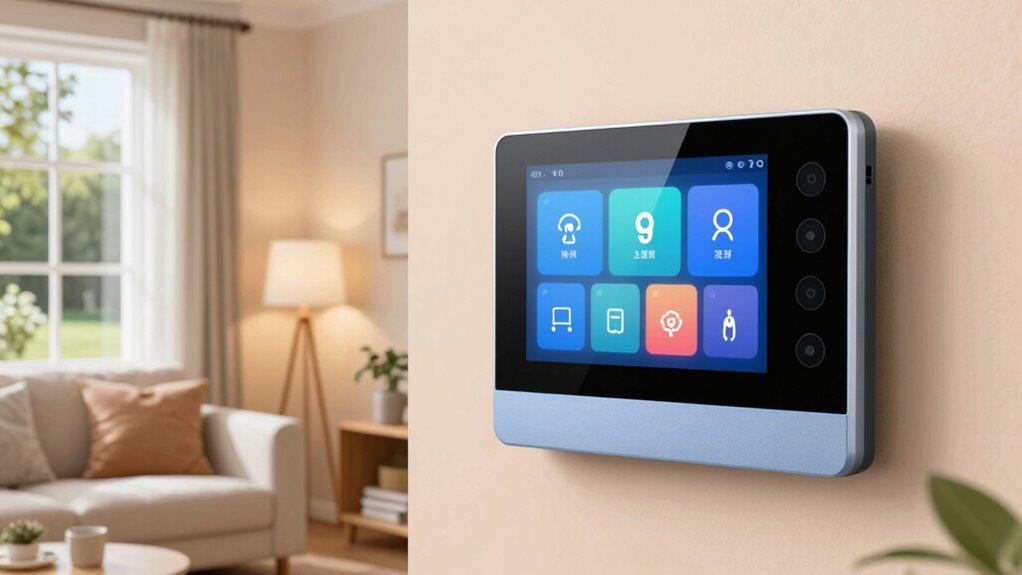

In-home alert systems do more than just call for help—they provide peace of mind, independence, and confidence by ensuring assistance is just a button away during emergencies. They integrate with wearable devices and smart home tech to monitor your safety proactively, offering real-time alerts for falls, health issues, or fires. With secure communication and intuitive features, they create a layered safety network that keeps you protected and in control. Keep exploring to discover how these systems truly enhance your daily life.

Turn quiet afternoons into listening time
- Thousands of audiobooks, podcasts and originals
- Listen on your phone, tablet or Echo — also offline
- Cancel anytime
Key Takeaways
- In-home alert systems enhance overall safety by enabling quick emergency responses and reducing vulnerability during crises.
- They promote independence and peace of mind, allowing users to manage daily activities confidently.
- Integration with wearable devices and smart home tech creates a comprehensive safety network.
- Advanced communication features ensure secure, accurate information transfer to emergency responders.
- These systems contribute to a proactive safety environment, improving quality of life through layered protection.

Emergency preparedness is at the core of why these alert systems are so valuable. No matter how safe your environment seems, accidents can happen unexpectedly. In-home alert systems prepare you for the unforeseen by providing immediate access to assistance. Many systems include features like GPS tracking, fall detection, and two-way communication, which guarantee you’re not left stranded or unable to call for help. This proactive approach makes a significant difference in emergency situations, especially when every second counts. You’re empowered to handle crises confidently, knowing help is just a button away.
Beyond immediate safety, these systems contribute to your peace of mind. As you age or care for someone with health concerns, it’s natural to worry about what might happen during a medical emergency or accident. With a reliable alert system in place, you can focus on daily activities, knowing that support is always accessible. This added security encourages independence, allowing you or your loved ones to remain in familiar surroundings longer, without the constant fear of what could go wrong. It’s a way of taking control of your safety, rather than feeling vulnerable or helpless.
Furthermore, many of these systems are now integrating with wearable biosensors, enhancing their ability to monitor vital signs and detect health issues proactively. Integrating with other home safety measures creates a comprehensive safety environment, ensuring multiple layers of protection. Utilizing Smart home technology can also streamline emergency responses and automate safety protocols, making your environment even more secure. This interconnected setup means you’re covered from multiple angles, whether it’s a fire, health crisis, or other emergencies. Secure communication is vital in ensuring that emergency responders receive accurate information swiftly. Additionally, advancements in technology integration are making these systems more intuitive and user-friendly. The bigger picture is about building a safer, more secure environment that supports a better quality of life. In essence, in-home alert systems are not just gadgets—they’re crucial tools that reinforce safety, independence, and confidence for you and your loved ones.
Products Worth Considering

OMRON VIVA 360+ Body Composition Monitor and Smart Scale
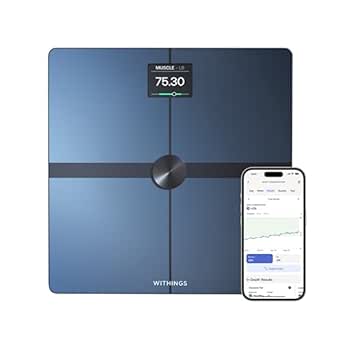
Withings Body Smart Wi-Fi and Bluetooth Smart Scale

Levoit Core 400S-P Smart Air Purifier for Large Rooms
As an affiliate, we earn on qualifying purchases.
Frequently Asked Questions
How Do In-Home Alert Systems Integrate With Smart Home Devices?
In-home alert systems seamlessly integrate with smart home devices through voice integration, allowing you to control and monitor alerts hands-free. They also prioritize sensor compatibility, ensuring alerts work with various sensors like motion or door sensors. You can set up your system to respond to specific triggers, like a door opening or movement detected, and get real-time notifications, making your home safer and more connected.
What Are the Privacy Concerns With In-Home Alert Systems?
About 70% of users worry about their data privacy with in-home alert systems. You should know that data encryption helps protect your recordings and alerts from unauthorized access. However, concerns remain about how companies handle user privacy, especially if data is shared or stored insecurely. Staying informed about privacy policies and choosing systems with robust data encryption can help you safeguard your personal information and maintain control over your home security.
Can In-Home Alert Systems Be Customized for Specific Needs?
Yes, in-home alert systems can be customized for your specific needs. You can choose personalization options like additional sensors, medical alerts, or tailored emergency response protocols. This customization guarantees the system addresses your unique safety concerns, whether it’s fall detection, medication reminders, or instant alerts for emergencies. By adapting these features, you gain peace of mind knowing your system is optimized for your lifestyle and emergency response requirements.
What Is the Typical Lifespan of In-Home Alert System Batteries?
Like a trusty sidekick, your in-home alert system’s batteries typically last between 3 to 5 years. Regular battery maintenance is key to ensuring it works when needed. You should check the batteries periodically and perform power replacements as soon as they show signs of weakening. Don’t wait for a true “call for help” moment—staying proactive keeps your system reliable and your peace of mind intact.
Are There Any Hidden Costs Beyond the Initial Setup?
Yes, there can be hidden costs beyond the initial setup. You might encounter hidden fees for professional monitoring services or activation charges. Additionally, many in-home alert systems require monthly subscriptions for ongoing monitoring and emergency response, which can add up over time. Always read the fine print and ask about any extra charges upfront to avoid surprises later. Being aware assists you in budgeting and guarantees your system stays reliable.
Conclusion
As you consider in-home alert systems, remember the wisdom of the lighthouse keeper—guiding and protecting those within. These systems serve as your modern beacon, offering safety and peace of mind when it matters most. By embracing this technology, you’re not just installing devices; you’re creating a secure sanctuary, much like the lighthouse standing firm against the storm. Trust in this bigger picture, and keep your loved ones safe, no matter what storms may come.