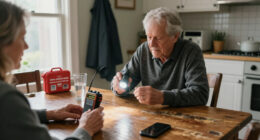

To help your parent stand from a recliner safely, use assistive devices like transfer belts or grab bars for support. Make certain the environment is clutter-free and spacious, so movement is stable. Communicate clearly and calmly, explaining each step and encouraging your parent to hold your arm. Use proper posture, stand close with feet shoulder-width apart, and support their movement gently. If you’re interested in more detailed tips, keep exploring ways to make this process safer.

Get comfort and care essentials delivered free — and shop member deals
- Fast, free delivery on millions of items
- Access to Prime Big Deal Days deals on October 6–7
- Prime Video, Amazon Music and more included
Key Takeaways
- Use assistive devices like transfer belts and grab bars for added stability during standing.
- Assess the environment, removing obstacles and ensuring enough space for safe movement.
- Clearly explain each step and communicate calmly to promote understanding and cooperation.
- Position yourself close, feet shoulder-width apart, supporting the parent as they push off to stand.
- Ensure the parent is balanced before assisting further and guide them slowly when sitting down.

Helping a parent stand up from a recliner can be tricky and sometimes risky, especially if they have mobility challenges or weakened muscles. To do this safely, it’s essential to use the right assistive devices that provide support and stability. Devices like transfer belts, grab bars, or even lift-assist chairs can make a significant difference. These tools help reduce the strain on both you and your parent, minimizing the risk of falls or injuries. Before attempting to help, take a moment to assess your parent’s specific needs and the environment around the recliner. Confirm there’s enough space, and remove any obstacles that could cause tripping.
Using assistive devices and assessing the environment ensures safe, stable transitions from sitting to standing.
Clear communication is crucial throughout the process. As a caregiver, you need to explain each step clearly and calmly to your parent, so they understand what’s happening and feel secure. Use simple instructions like, “I’m going to help you stand now,” or “Please hold onto my arm.” This helps your parent feel involved and reassures them that you’re in control. Maintain eye contact and speak in a reassuring tone to foster trust and reduce anxiety.
Position yourself correctly before attempting to assist. Stand close to your parent’s side, with your feet shoulder-width apart to create a stable base. If they’re able to, have them sit up fully by leaning forward slightly and pushing off the armrests or the seat of the recliner. If you’re using assistive devices like a transfer belt, secure it snugly around their waist. When they’re ready, provide steady, gentle support as they push off and stand. Keep your back straight and avoid twisting your torso or bending at the waist, which can cause injury. Additionally, using proper lifting techniques can significantly reduce the risk of caregiver injury. Understanding the importance of projector technology can help you better support and care for your loved ones by improving safety measures and comfort. Being aware of specialized equipment like lift chairs can also enhance safety during mobility assistance.
Once they’re upright, help them stabilize by offering your arm or the handle of an assistive device. Make sure they’re balanced before moving away. If your parent needs to sit back down, guide them slowly and carefully, again using clear communication. Remember, patience is key. Rushing can increase the risk of falls or discomfort. Incorporating ergonomic aids into your caregiving routine can further improve safety and ease physical strain. With practice and the right tools, you’ll find a safer, more comfortable way for your parent to transition from sitting to standing. Prioritizing safety, utilizing assistive devices, and maintaining open caregiver communication will help make this process smoother and less stressful for both of you.
Frequently Asked Questions
What Signs Indicate My Parent Is Ready to Stand?
You’ll notice your parent is ready to stand when they show improved balance assessment and muscle strength, such as steadying themselves with minimal support or shifting weight smoothly. Watch for signs like leaning forward, pushing gently against the armrests, or attempting to rise slowly. These cues indicate their muscles are strong enough, and their balance is stable enough, to stand safely with minimal assistance.
Are There Specific Recliner Features That Aid Safe Standing?
Yes, look for recliners with user-friendly recliner mechanisms that allow smooth, controlled movement, reducing strain when standing. Features like built-in safety straps can provide extra support, helping your parent stabilize themselves before standing. These features make it safer and easier for your parent to shift from sitting to standing, minimizing the risk of falls. Choosing a recliner with these features can greatly improve safety and comfort during mobility.
How Often Should I Check My Parent’s Mobility?
You should check your parent’s mobility regularly, ideally daily or as recommended by their healthcare provider. Consistent caregiver communication is key to noticing any changes or difficulties. Observe how they move and perform mobility exercises, noting if they seem weaker or more unsteady. Regular checks help you guarantee assistance, prevent falls, and ascertain their safety while encouraging independence. Stay attentive and proactive to support their evolving needs.
What Should I Do if My Parent Feels Dizzy During Standing?
When your parent feels dizzy during standing, think of it like a sudden storm—quick action is essential. First, help them sit back down gently, preventing a fall. Exercise precautions, like encouraging slow movements, and consider medication effects that might cause dizziness. Stay calm, keep them steady, and consult their healthcare provider to address underlying issues. Your quick response can turn a dangerous moment into a safe, manageable one.
Is It Better to Assist From the Front or Side of the Recliner?
It’s better to assist from the front of the recliner, guaranteeing proper recliner positioning for stability. Stand close and offer a steadying hand at your parent’s waist or under their arms. Use assistance techniques like guiding their hips forward while supporting their back, helping them stand gradually. Avoid pulling from the side, which can destabilize the recliner or cause falls. Your active support helps make a safe, confident shift.
Conclusion
By mastering these mindful methods, you make movement safer and simpler for your parent. Remember, patience and proper positioning promote peace of mind for both of you. By blending balance, body awareness, and gentle guidance, you create a caring, confident connection that keeps comfort and caution close. With a little practice and a lot of compassion, you turn challenging changes into caring conversions, ensuring every stand is safe, steady, and supported.
Halloween Picks
halloween
As an affiliate, we earn on qualifying purchases.