
TL;DR

Get comfort and care essentials delivered free — and shop member deals
- Fast, free delivery on millions of items
- Access to Prime Big Deal Days deals on October 6–7
- Prime Video, Amazon Music and more included
A Sixty and Me article by sports scientist and trainer Patricia Siegel argues that women over 60 should combine endurance exercise with strength training rather than choose one over the other. It proposes a weekly mix of moderate aerobic sessions, intervals and resistance work, but the recommendations are the author’s guidance, not a personalized prescription.
Women over 60 should combine endurance exercise and strength training, rather than focus on only one, according to a fitness report by sports scientist and personal trainer Patricia Siegel published by Sixty and Me. The article offers a sample weekly routine aimed at cardiovascular fitness, muscle maintenance and bone health, but it does not report new research or establish a single plan that is appropriate for everyone.
Siegel recommends two types of endurance work: moderate, conversational-pace exercise and interval sessions that alternate harder efforts with recovery. For the moderate sessions, she suggests about 35 to 45 minutes twice a week. She describes the effort as one at which a person can speak a few sentences but cannot comfortably sing, and presents the talk test as a way to gauge intensity.
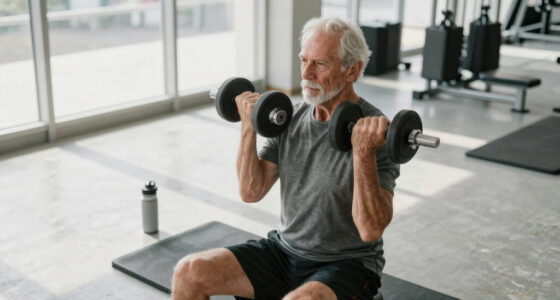
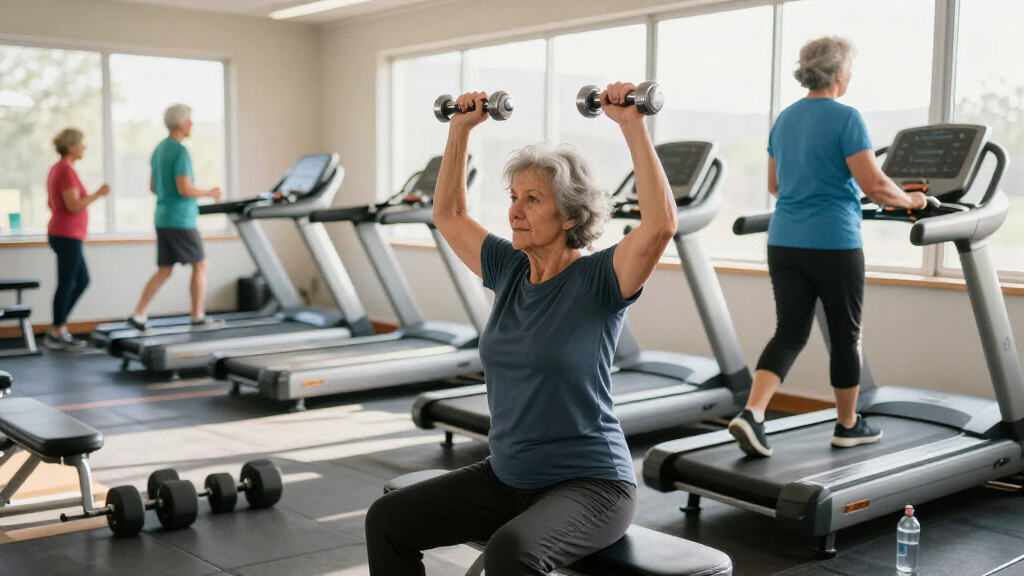
For intervals, the article gives a beginner example of 30 seconds of hard effort followed by about a minute of easier activity, repeated four or five times. Siegel suggests doing intervals no more than once or twice weekly. For strength work, she proposes three weekly sessions, with either two upper-body workouts and one lower-body workout or three full-body sessions. Her suggested starting structure is three to four sets of 10 to 12 repetitions, using a weight that leaves about two further repetitions possible.
The report also recommends gradual increases in training demand, such as adding repetitions, sets or weight. It says impact movements, including heel drops, skips or jumps, may provide an additional stimulus for bones when they can be done safely. Its example week includes strength work, two moderate endurance sessions, one interval day and one rest day; it is an illustration, not a requirement.
Why the Combined Plan Matters
The article addresses a practical question for older women: whether time should go to cardio or resistance exercise. Its answer is both, with different forms serving different purposes. Endurance work is presented as a way to build cardiovascular capacity, while strength training is described as supporting muscle and everyday function. The report also links resistance and impact exercise with bone health.
That distinction matters because the recommendation is not simply to exercise more, but to include more than one kind of activity. The article cites U.S. data showing that 13.9% of adults aged 65 and older met both federal aerobic and muscle-strengthening guidelines in their leisure time in 2022. The reported share was 16.8% for those aged 65 to 74, 12.3% for ages 75 to 84 and 6.2% for people 85 and older. These figures describe guideline participation; they do not show that Siegel’s specific routine changes health outcomes.
Readers should treat the schedule as general fitness guidance rather than medical advice. Ability, health conditions, previous injuries and experience can affect which movements and intensity levels are suitable. The article does not provide individual assessments, and people with health concerns should seek guidance from a qualified professional before changing their exercise routine.
recumbent exercise bike for seniors
As an affiliate, we earn on qualifying purchases.
As an affiliate, we earn on qualifying purchases.
How the Routine Is Structured
Siegel’s article responds to conflicting messages she says women encounter about exercise after 60, including advice to rely on walking, focus only on strength training or avoid resistance work because of concerns about bones. Her report argues against an either-or approach and organizes training around endurance, resistance and bone-loading activity.
For endurance exercise, the article calls walking an accessible starting point. It says that when a person adapts to the same walking pace, they can adjust by moving faster, choosing more challenging terrain or changing activity. For strength work, it describes progressive overload—gradually changing the weight, repetitions, sets or pace of movement—as the way to continue challenging muscles. These are Siegel’s recommendations; the report does not provide trial results comparing its plan with other routines.
““During the exercise you would be able to speak a few sentences but won’t be able to sing.””
— Patricia Siegel, describing moderate endurance effort
lightweight dumbbells for women over 60
As an affiliate, we earn on qualifying purchases.
As an affiliate, we earn on qualifying purchases.
Limits of the Exercise Guidance
The source is a fitness article, not a clinical guideline or report of a new study. It does not explain the research basis for each specific session length, repetition range or weekly frequency, nor does it compare the proposed schedule with other approaches. It also does not specify how the plan should change for people with osteoporosis, cardiovascular conditions, pain, balance concerns or limited exercise experience.
The article’s cited statistics are presented as background, but the source material does not include links to the underlying data or further methodological detail. The suggested impact exercises are qualified as movements to do safely; the report does not set out screening criteria or adaptations for readers who should avoid jumping. Individual suitability and expected benefits therefore remain matters for assessment, not conclusions established by this article.
As an affiliate, we earn on qualifying purchases.
How Readers Can Apply the Advice
The report does not announce a formal program, research follow-up or public-health change. Its immediate next step for readers is to use the sample week as a discussion point and adapt it to their capabilities and goals. The article suggests starting with accessible endurance activity such as walking, then adjusting the challenge over time, alongside appropriately scaled strength work.
Anyone considering intervals, heavier resistance or impact exercises should account for their health and fitness history and seek qualified advice where needed. The source provides no evidence that readers should follow the example schedule exactly; what happens next will depend on individual circumstances and whether the proposed mix is suitable for them.
As an affiliate, we earn on qualifying purchases.
Key Questions
Does the report recommend cardio or strength training for women over 60?
Both. Siegel’s article argues that endurance exercise and strength training have complementary roles and should not be treated as an either-or choice.
How much endurance exercise does the article suggest?
It suggests two moderate sessions of about 35 to 45 minutes each per week, plus interval training no more than once or twice weekly. These are the author’s general recommendations, not individualized medical advice.
What strength-training schedule does Siegel propose?
The article suggests three strength sessions per week, arranged as two upper-body sessions and one lower-body session, or as three full-body workouts. It recommends choosing challenging loads while leaving roughly two repetitions in reserve.
Does the article say walking is enough?
It describes walking as a useful starting point, but says people may need to increase the pace, choose more challenging terrain or change activity as they adapt. It does not present walking as a substitute for strength training.
Are jumps or other impact exercises suitable for everyone?
The report mentions heel drops, skips, hops and jumps as possible bone-loading movements when done safely. It does not provide individual screening advice, so people with health concerns or uncertainty about these exercises should consult a qualified professional.
Source: rss
Fall Picks
fall essentials
As an affiliate, we earn on qualifying purchases.