TL;DR

Get comfort and care essentials delivered free — and shop member deals
- Fast, free delivery on millions of items
- Access to Prime Big Deal Days deals on October 6–7
- Prime Video, Amazon Music and more included
A 2025 study of 567 older adults in rural South Africa found that hearing loss was associated with more than twice the odds of dementia, according to geriatrician Brent Tipping. The study does not establish cause and effect or show that treating hearing loss prevents dementia, but it adds to the case for addressing sensory problems as part of older adults’ health care.
Hearing loss was associated with more than twice the odds of dementia among older adults in a rural South African study, according to geriatrician Brent Tipping, who discussed the findings in a Medical Xpress report published Oct. 6. The research supports paying attention to hearing and vision as part of older people’s health care, but it does not show that hearing loss causes dementia or that treating it prevents the condition.
The study, co-authored by Tipping, examined hearing, vision and dementia in 567 older adults from Agincourt, Mpumalanga. Participants were drawn from the Health and Aging in Africa: A Longitudinal Study of an INDEPTH Community in South Africa, known as HAALSI. The paper, by Muqi Guo and colleagues, appeared in the journal Alzheimer’s & Dementia in 2025.
Tipping also pointed to visual impairment, affecting near and far vision, as being associated with elevated dementia risk. The report does not provide enough detail to determine how the study measured each impairment or the size of the association for vision. Its findings are observational: they identify an association, not a proven mechanism.
The report frames sensory health as one part of broader dementia-risk reduction. It also describes established areas of attention in general health care, including blood pressure, cholesterol, diabetes, weight, physical activity and excessive alcohol use. Tipping says clinicians reviewing confusion or daytime difficulties may also consider whether sleeping medication contributes to a patient’s problems. These measures are not presented as guarantees against dementia.
Hearing Care in Dementia Risk Reduction
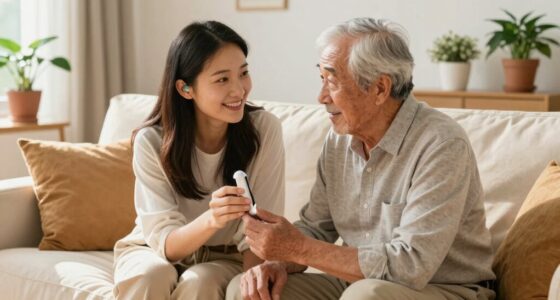
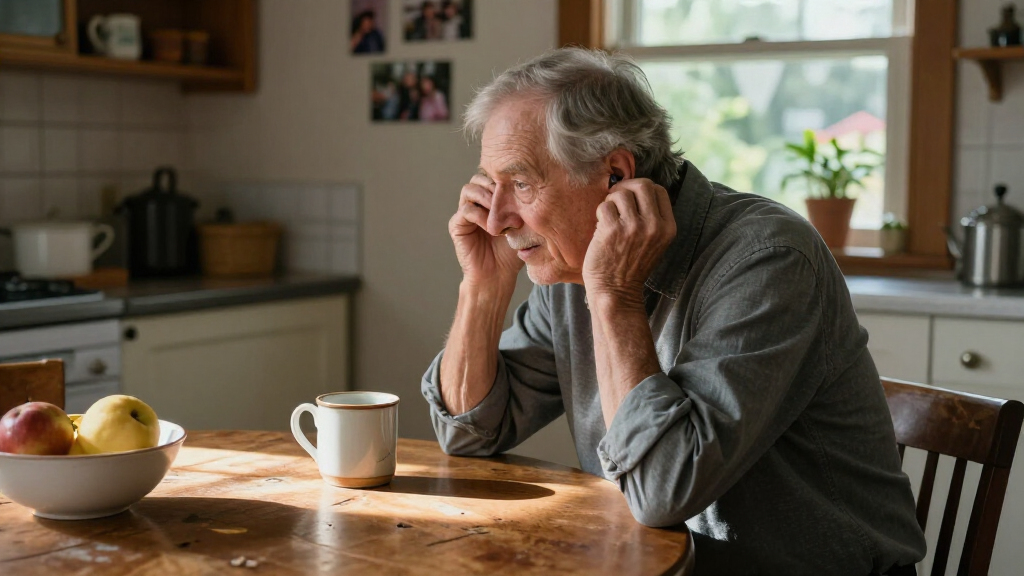
The findings matter because hearing difficulties can be a reason for people to seek assessment and support, rather than being treated as an unavoidable part of aging. The study gives clinicians and families a reason to include hearing and vision in conversations about older adults’ health, while keeping the limits of the evidence clear.
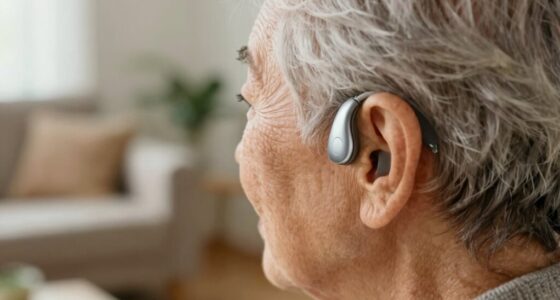
That distinction matters for decisions about prevention. The study does not establish that hearing loss is a direct cause, nor does it show that hearing aids or other interventions reduce dementia incidence. Still, assessing and addressing sensory impairment may support communication and daily functioning, and the report argues that sensory interventions deserve attention within wider efforts to protect brain health.
The wider stakes are substantial. The source report cites a Global Burden of Disease projection that the number of people living with dementia could grow from about 57 million in 2019 to 153 million by 2050, with population growth and aging contributing to the increase. Those figures are projections, not a count of future cases that is certain to occur.
As an affiliate, we earn on qualifying purchases.
The Study and Its South African Setting
The 2025 paper, “Sensory impairment and dementia risk among older adults in rural South Africa,” draws on research in Agincourt and focuses on older adults in a specific community. Its results are useful evidence from a setting that is underrepresented in some dementia research, but they should not automatically be assumed to describe every population or health system.
The Medical Xpress report places the findings within a broader account of dementia prevention. It cites the Lancet Commission’s estimate that addressing 14 modifiable risk factors could prevent or delay around 45% of dementia cases worldwide. That is an estimate about the combined set of factors, not a claim that hearing care alone would produce that outcome. The report also highlights education across the life course and says unequal access to quality early education is a concern in South Africa.
Tipping works in a country where specialist geriatric care is limited. He says only two funded training positions exist nationally. Wits describes its Division of Geriatric Medicine as the largest training and service delivery center for the specialty in sub-Saharan Africa. The report also stresses that dementia care involves families, whose responsibilities can grow as a person needs help with tasks such as preparing meals, driving and taking medication.
“The patients have layers of complexity.”
— Dr. Brent Tipping, as quoted in the Medical Xpress report
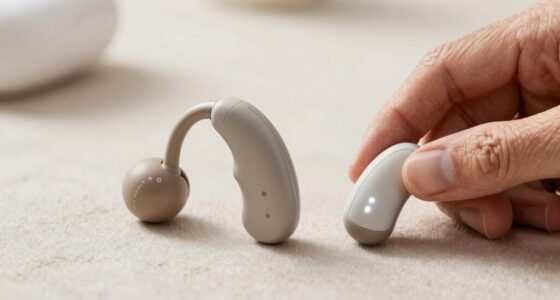
hearing support devices for older adults
As an affiliate, we earn on qualifying purchases.
As an affiliate, we earn on qualifying purchases.
Limits of the Hearing Evidence
The study’s reported association does not establish whether hearing loss contributes to dementia, whether dementia-related changes affect hearing, or whether other factors help explain the relationship. The source report does not give detailed study methods, adjustment factors, confidence intervals or separate numerical estimates for vision impairment, so those specifics cannot be assessed from the material provided.
It is also unclear whether treating hearing loss changes dementia risk. The report explicitly says the findings do not demonstrate that treatment prevents the condition. Further research would be needed to test whether sensory interventions affect dementia outcomes, and how results from this rural South African group apply to other communities.
hearing amplifiers for severe hearing loss
As an affiliate, we earn on qualifying purchases.
As an affiliate, we earn on qualifying purchases.
Research and Care Priorities
The report does not announce a new trial or a scheduled follow-up study. The next steps implied by the findings are continued research into sensory impairment and dementia, alongside practical attention to hearing and vision in older adults’ care. Any claim that an intervention prevents dementia would need evidence beyond the association reported here.
For health services, the report also points to the need for more geriatric training and support for family caregivers. Tipping says a first specialist consultation can take about two hours because clinicians consider health conditions, independence and home support together. The current evidence supports taking sensory problems seriously as part of that broader assessment, without presenting hearing treatment as a proven dementia-prevention measure.
vision and hearing impairment aids
As an affiliate, we earn on qualifying purchases.
As an affiliate, we earn on qualifying purchases.
Key Questions
What did the South African study find?
Among 567 older adults in Agincourt, hearing loss was associated with more than twice the odds of dementia, according to Tipping’s account of the study. The research also linked near and far visual impairment with elevated risk, although the report does not give a specific figure for vision.
Does hearing loss cause dementia?
The study does not establish that. It reports an association, which cannot by itself show whether hearing loss causes dementia or whether other explanations contribute.
Can treating hearing loss prevent dementia?
The report says the findings do not show that treating hearing loss prevents dementia. Hearing and vision interventions are discussed as relevant to overall health, but a dementia-prevention effect has not been demonstrated by this study.
Who took part in the research?
The study examined 567 older adults from Agincourt, Mpumalanga, drawn from the HAALSI study in South Africa. Its findings are specific to the participants studied and may not apply identically to every population.
What other factors does the report mention?
The report discusses managing blood pressure, cholesterol, diabetes and weight, staying active, limiting excessive alcohol use, and considering medication effects when assessing confusion or daytime problems. It also notes the role of education and lifelong learning. These are broader health considerations, not guarantees against dementia.
Source: rss
Cold & flu season Picks
humidifiers
As an affiliate, we earn on qualifying purchases.