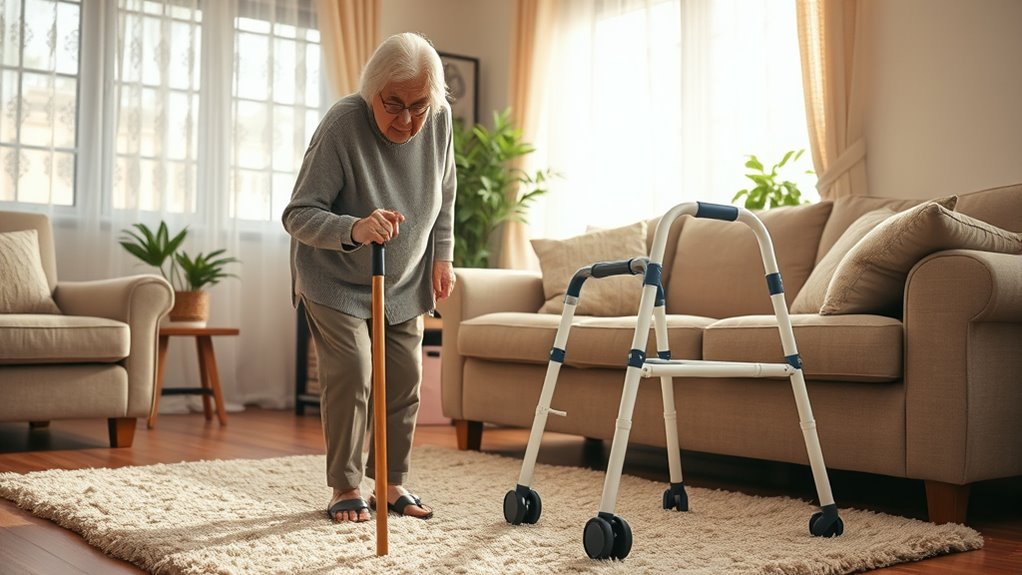

When assisting a senior with a walker or cane, guarantee their device is properly adjusted for comfort and safety, and always support them gently by guiding rather than pulling. Encourage slow, steady steps, and keep pathways clear of obstacles. Use firm but gentle support, especially during transfers, and monitor the condition of their aids regularly for wear or damage. Taking these steps helps keep your loved one confident and secure—there’s more to learn for better care.

Turn quiet afternoons into listening time
- Thousands of audiobooks, podcasts and originals
- Listen on your phone, tablet or Echo — also offline
- Cancel anytime
Key Takeaways
- Assess the senior’s needs to select the appropriate mobility aid, ensuring proper fit and support.
- Communicate clearly and support the senior at each transfer or movement, using gait belts or steadying techniques.
- Keep pathways obstacle-free, well-lit, and with non-slip surfaces to promote safe indoor mobility.
- Regularly inspect and maintain mobility aids for damage, loose parts, or worn tips to ensure safety.
- Encourage independence by involving seniors in planning activities and supporting confident, steady walking.
As an affiliate, we earn on qualifying purchases.
Choosing the Right Mobility Aid for Your Senior
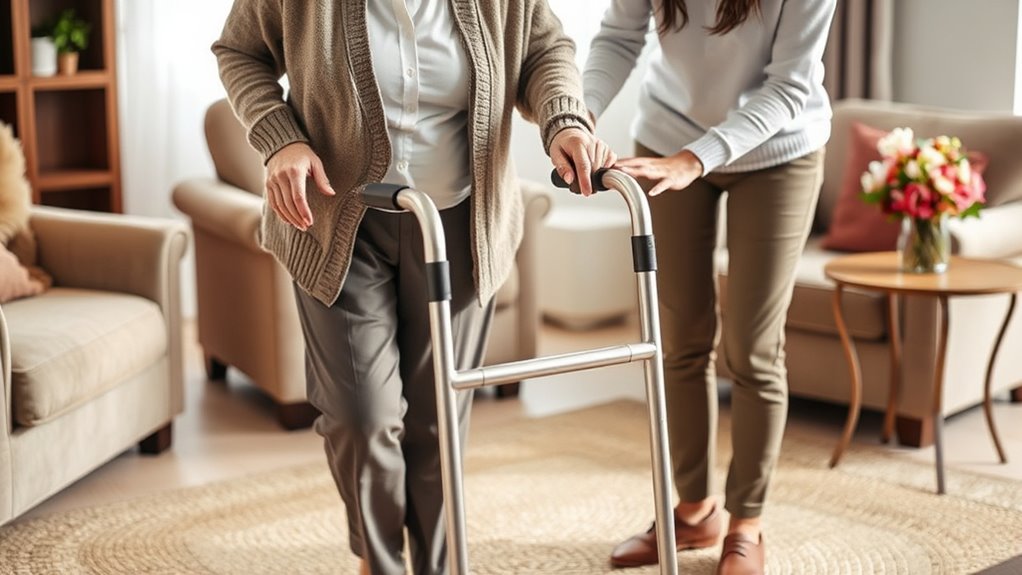
Are you unsure how to select the best mobility aid for your senior loved one? First, assess their specific needs, such as balance, strength, and mobility level. If they have stability issues or weakness in both legs, a walker might be the best choice. For mild balance problems or if they need support on one side, a cane is usually sufficient. Consider their living environment—narrow hallways or tight spaces may require more compact devices. Comfort and adjustability are essential; ensure the device fits properly to prevent discomfort or falls. Think about ease of use and safety features like non-slip tips or brakes. Consulting with a healthcare professional can help determine the most appropriate aid, ensuring your loved one stays safe and confident. Additionally, exploring energy-efficient cloud solutions can provide peace of mind for caregivers managing data and health information securely.
As an affiliate, we earn on qualifying purchases.
Proper Techniques for Assisting With Walking

When assisting a senior with walking, you should always stabilize them before moving to prevent falls. Support them carefully during transfers to guarantee safety and confidence. Encouraging proper posture helps maintain balance and reduces strain, making walking safer for both of you. Incorporating outdoor seating areas can also provide comfortable resting spots to prevent fatigue during outdoor walks. Additionally, ensuring proper ventilation considerations in the home can improve overall comfort and help seniors breathe more easily during activity. Regularly checking home safety features can further reduce the risk of accidents and create a safer environment for mobility assistance. Proper fire safety measures in the home are also essential to protect seniors from potential hazards while moving around.
Stabilize Before Moving
Before assisting a senior with walking, it’s essential to guarantee they are stabilized to prevent falls or injury. First, ensure they’re standing upright with their weight evenly distributed. Check that their feet are firmly planted on the ground and that their balance is steady. If they’re using a walker or cane, make sure the device is positioned correctly and securely in place. Offer support by placing your hands lightly on their waist or hips, avoiding pulling or pushing. Encourage them to take slow, deliberate steps, focusing on maintaining their balance. Confirm they feel confident before proceeding. Stabilizing them reduces the risk of slipping or losing their footing, creating a safer environment for movement. Always prioritize their comfort and stability before encouraging any steps forward. Additionally, verifying that their assistive devices are properly adjusted and secure can further enhance safety during mobility. Being aware of the importance of proper technique in assisting with walking can also help prevent injuries and ensure their confidence. Recognizing the significance of proper patient stabilization can make a crucial difference in their safety. Incorporating preventative safety measures can further reduce the risk of falls during mobility assistance. Using appropriate support techniques can help you provide more effective and safe assistance.
Support During Transfers
Supporting seniors during transfers requires careful technique to guarantee safety and stability. Always communicate clearly, explaining each step before moving. Stand close, with your feet shoulder-width apart, to maintain your own balance. When assisting with walking, hold their gait belt or steady their arm securely, guiding them smoothly. Encourage the senior to pivot on their stronger side and use their own mobility aids if possible. Keep their feet flat on the ground and avoid pulling on their arms or clothing. Use gentle, supportive movements to prevent sudden shifts. Confirm the environment is free of obstacles. Your goal is to provide steady support without restricting their movement or causing discomfort. Proper transfer techniques are essential for reducing fall risk and building confidence during transfers. Being aware of proper transfer techniques can further enhance safety and comfort for both caregiver and senior. Additionally, maintaining a safe environment minimizes hazards during these maneuvers. Incorporating proper body mechanics can help prevent caregiver injuries and improve transfer safety.
Encourage Proper Posture
Encouraging proper posture during walking is essential for safety and comfort. As you assist your senior, remind them to stand upright with shoulders back and head aligned with their spine. Proper posture helps maintain balance and reduces strain on joints. Support them by guiding their gait, encouraging slow, deliberate steps. Keep the walker or cane at a comfortable height, ensuring their elbows are slightly bent. Encourage them to look forward, not down, to maintain proper alignment. Remind them to avoid hunching or leaning excessively, which can cause falls or fatigue. Reinforce the importance of engaging core muscles for stability. Consistently practicing good posture boosts confidence, prevents injuries, and promotes independence during daily walks. Additionally, correct tool usage is vital for ensuring safety and effectiveness during mobility assistance. Being aware of modern sneaker materials can also contribute to better footwear choices that support mobility needs.
As an affiliate, we earn on qualifying purchases.
Ensuring Safety When Using Walkers and Canes

Ensuring safety when using walkers and canes is essential to prevent falls and injuries. Always check that the device is in good condition, with non-slip tips and secure handgrips. Adjust the height so your elbows are slightly bent when gripping the device, reducing strain and maintaining balance. Use your walker or cane on the stronger side of your body to support weaker limbs effectively. Be mindful of uneven surfaces, clutter, or wet floors that can cause slips. Move slowly and carefully, especially when standing up or sitting down. Regularly inspect your device for wear and tear, replacing parts as needed. If you’re new to using these aids, consider training or supervision until you gain confidence and proper technique. Proper technique and understanding of mobility aids can improve safety and stability during use. Additionally, choosing the right home environment modifications can provide peace of mind knowing your home environment is safe and well-protected. Remember that maintaining good home safety practices is crucial for reducing the risk of accidents.
As an affiliate, we earn on qualifying purchases.
Adapting Home Environments for Better Accessibility

Adapting your home environment can make a significant difference in maintaining safety and independence for seniors using mobility aids. Start by removing tripping hazards like loose rugs, clutter, and cords. Install grab bars in bathrooms and near stairs for extra support. Widen doorways and hallways to accommodate walkers and wheelchairs. Use non-slip mats in the shower and on slippery floors. Adjust lighting to reduce shadows and improve visibility. Consider adding stairlifts or ramps for easier access to different levels. Proper home modifications tailored to individual needs can further enhance safety and support independence for seniors, ensuring a more accessible living space. Incorporating visual cues such as contrasting colors or markers can also assist those with visual or cognitive challenges in navigating their environment more safely. Additionally, choosing appropriate flooring materials can help reduce fall risks and improve overall safety. Understanding the importance of adaptations based on individual needs can lead to more effective safety improvements.
Teaching Seniors How to Use Their Devices Correctly

Teaching seniors how to use their mobility devices properly is essential for safety and independence. You should start by ensuring the device is adjusted to the correct height, allowing comfortable and natural movement. Show them how to grip the device firmly and maintain good posture while walking. Emphasize the importance of looking ahead rather than down to stay balanced and avoid obstacles. Teach them to move slowly and steadily, especially on uneven surfaces or when turning. Remind them to regularly inspect their devices for wear and tear, such as loose parts or worn tips. Encourage practicing in a safe environment until they feel confident. Providing clear instructions and supervision helps seniors develop proper habits, reducing fall risk and boosting their confidence to navigate daily activities safely.
Monitoring for Wear and Maintenance Needs

You need to regularly check your loved one’s mobility device for signs of wear and tear. Look for issues like loose parts, worn-out grips, or damaged tips that could jeopardize safety. Catching these signs early helps ensure the device stays secure and reliable.
Regular Inspection Routines
Regular inspection routines are essential to guarantee mobility aids remain safe and effective for senior users. You should check your walker or cane regularly for signs of damage or deterioration. Look closely at the frame, joints, and handles for cracks, rust, or looseness. Ensure that the non-slip tips are intact and provide good traction; replace them if they are worn down. Confirm that adjustable parts, such as height settings, operate smoothly and stay securely in place. For canes, verify that the grip is firm and free of cracks. Keep all components clean and dry to prevent slipping or deterioration. Regularly testing the stability of your device helps catch issues early, reducing the risk of accidents and guaranteeing your mobility aid continues to support you safely.
Recognizing Wear Signs
Monitoring your mobility aids for signs of wear is essential to guarantee they remain safe and reliable. Regularly inspect your walker or cane for cracks, loose parts, or bent components. Check the rubber tips and handgrips for signs of deterioration or flattening, which can cause slipping. Pay attention to any wobbling or instability when using the device. Frayed straps, loose screws, or damaged wheels also indicate it’s time for maintenance or replacement. If you notice any cracks, tears, or excessive wear, don’t delay—replace the damaged parts or the entire aid. Keeping an eye on these signs ensures your device functions properly, reduces fall risks, and prolongs its lifespan. Consistent checks help you maintain safety and independence at home.
Encouraging Independence While Providing Support

How can seniors maintain their independence while still receiving the support they need? The key is to encourage confidence in their abilities while offering gentle assistance. Involve them in planning daily activities, letting them make choices to foster a sense of control. Use mobility aids appropriately, ensuring they’re comfortable and properly fitted, so seniors feel secure using them. Offer support only when necessary, such as standing nearby during ambulation or providing a hand without taking over. Praise their efforts to promote motivation. Simplify tasks and create a safe environment that minimizes risks. Respect their wishes and encourage small, achievable goals. This approach helps seniors feel empowered, appreciated, and capable of maintaining their independence with the right balance of support.
Frequently Asked Questions
How Can I Motivate Seniors to Consistently Use Their Mobility Aids?
You can motivate seniors to use their mobility aids by emphasizing safety and independence, showing how these devices reduce fall risks, and boost confidence. Encourage them positively, celebrate small successes, and involve them in choosing comfortable, stylish aids that suit their preferences. Remind them that regular use helps maintain mobility and social engagement, making their daily lives easier and more enjoyable. Patience and consistent encouragement are key to building confidence.
What Are Signs That a Mobility Device Needs Professional Adjustment or Repair?
Did you know that 65% of Americans aged 65+ use smart mobility devices? You should watch for signs that your device needs professional adjustment or repair, like wobbly or unstable parts, handles that feel loose, or uneven wear on tips and wheels. If your device isn’t functioning smoothly, it could be unsafe. Regular inspections and timely repairs guarantee your senior stays safe, supported, and confident during every step.
How Do I Handle a Senior’s Fear or Anxiety About Using Mobility Aids?
You can handle a senior’s fear or anxiety about using mobility aids by reassuring them and emphasizing safety benefits. Encourage them to express their concerns openly, listen carefully, and be patient. Offer gentle encouragement and demonstrate proper use to build confidence. Celebrate small successes, and consider involving a healthcare professional or therapist for additional support. Your positive attitude and reassurance help them feel more comfortable and less anxious about their mobility device.
Are There Specific Exercises to Improve a Senior’s Balance and Strength?
Think of balance exercises as building a sturdy bridge for your loved one’s confidence. You can encourage simple activities like standing on one foot, heel-to-toe walking, or gentle leg lifts. Incorporate chair squats or seated leg extensions for strength. Consistency is key—practice daily, and always supervise to prevent falls. These exercises help seniors regain stability, reduce fall risks, and boost their independence and self-esteem.
How Can I Prevent Seniors From Developing Dependency on Mobility Devices?
To prevent seniors from developing dependency on mobility devices, encourage regular strength and balance exercises tailored to their abilities. Promote safe walking habits and mobility training to enhance confidence. Support independence by setting achievable goals and gradually reducing reliance on devices as strength improves. Make sure they receive proper instructions and supervision, and consult healthcare professionals for personalized plans. This proactive approach helps maintain mobility and reduces overdependence on assistive devices.
Conclusion
Supporting your senior with the right mobility aid and proper assistance boosts their confidence and safety. Did you know that falls are the leading cause of injury among older adults, but proper support can reduce this risk by up to 50%? By choosing suitable devices, encouraging independence, and maintaining safety checks, you help your loved one stay active and secure at home. Your attentive care makes a real difference in their quality of life.
Fall Picks
fall essentials
As an affiliate, we earn on qualifying purchases.