To give a bed bath to a bedridden senior, gather all supplies, create a private, comfortable space, and follow infection control practices like hand hygiene and glove use. Support the senior with pillows, start with the face, and wash each body part gently, keeping only one area uncovered at a time. Dry thoroughly, apply moisturizer, and monitor the skin for issues. Careful positioning and safety tips help keep the process smooth—continue to learn more about effective techniques and safety precautions.

Turn quiet afternoons into listening time
- Thousands of audiobooks, podcasts and originals
- Listen on your phone, tablet or Echo — also offline
- Cancel anytime
Key Takeaways
- Prepare supplies, create privacy, and ensure a clean, comfortable environment before starting the bath.
- Conduct a skin assessment, perform hand hygiene, and use gloves to prevent infection.
- Follow a gentle, structured bathing sequence, supporting limbs and maintaining privacy throughout.
- Use proper washing techniques, supporting the senior and thoroughly drying skin to prevent irritation.
- Moisturize skin after drying, monitor for skin issues, and ensure the environment stays warm and draft-free.
Preparing the Environment and Gathering Supplies

Before starting a bed bath, make sure you have all the supplies ready. Gather soap, washcloths, towels, gloves, basins, and waterproof pads. Having everything at hand maintains the process smooth and efficient. Prepare the room by closing windows, doors, and curtains to ensure privacy. Use privacy screens if available. Adjust the room temperature to a warm, comfortable level to prevent the senior from feeling cold. Place waterproof pads or towels underneath the senior to catch water spills and protect the bedding. Raise the bed to a height that’s comfortable for you to work without straining your back. Proper preparation creates a safe, private, and comfortable environment, making the bathing process easier for both you and the senior. Additionally, ensuring the room has adequate lighting helps you see clearly and perform the bath safely. You can also check that the air quality in the room is good to enhance comfort and reduce respiratory irritation during the bath. Considering essential oils for respiratory health can further promote a calming atmosphere and aid in easier breathing during the process. Incorporating good ventilation can also help maintain optimal air quality and keep the environment fresh.
Ensuring Infection Control and Skin Assessment

To prevent infections, make sure you practice proper hand hygiene before and after each step of the bath. Carefully check the skin for any signs of redness, sores, or irritation, especially on pressure points and skin folds. Keeping a close eye on skin integrity helps catch problems early and keeps the senior comfortable and safe. Incorporating Free Floating techniques can help ensure the environment remains clean and reduce the risk of contamination during the process. Additionally, understanding infection control principles can further enhance safety and prevent the spread of germs. Paying attention to air quality in the environment can also support overall health and reduce the presence of airborne pathogens. Maintaining proper disinfection routines for equipment and surfaces further minimizes contamination risks. Consulting deep-sky imaging resources can also offer insights into maintaining optimal hygiene and equipment care in healthcare settings.
Proper Hand Hygiene
Proper hand hygiene is essential for preventing infections and protecting both the senior and caregiver during bed bath procedures. Before starting, wash your hands thoroughly with soap and warm water for at least 20 seconds, making sure to clean under your nails and between fingers. If soap and water aren’t available, use an alcohol-based hand sanitizer with at least 60% alcohol. Always put on disposable gloves before touching the senior’s skin or supplies, and change them between tasks to prevent cross-contamination. After completing the bath, dispose of gloves properly and wash your hands again. Maintaining good hand hygiene reduces the risk of spreading bacteria or viruses, ensuring a safe and clean environment for the senior’s care and comfort. Additionally, being aware of proper air purifier maintenance can help create a healthier environment in caregiving settings. Regular cleaning of vacuum filters also plays a role in maintaining a germ-free environment, especially in spaces where seniors reside.
Skin Integrity Checks
Regular skin integrity checks are vital to prevent infections and identify potential issues early. You should examine the skin carefully during each bath, focusing on areas prone to trouble, such as pressure points, folds, and bony prominences. To do this effectively:
- Look for redness, swelling, sores, or irritation that might indicate pressure ulcers or infection.
- Feel for warmth, hardness, or changes in texture that suggest inflammation or skin breakdown.
- Observe for moisture, peeling, or discoloration, especially in skin folds and around pressure points.
Keep in mind, early detection allows prompt intervention, reducing complications. Always document your findings and notify healthcare providers if you notice any concerning signs. Regular checks are essential for maintaining skin health and preventing infections.
Planning the Bathing Sequence and Technique

When planning the bathing sequence, start with the face and neck to keep the senior comfortable and maintain dignity. Use gentle handling methods, washing one area at a time and covering areas not being cleaned to safeguard privacy. This structured approach ensures thorough cleaning while minimizing discomfort and skin irritation. Incorporating simple routines can also help streamline the process and reduce stress for both caregiver and senior. Additionally, understanding water temperature and chemistry can prevent skin irritation and make the experience more pleasant. Being aware of skincare device safety guidelines can further enhance comfort and prevent accidental injury during bathing. Integrating connected equipment such as waterproof sensors can monitor water temperature and ensure safety throughout the process.
Structured Washing Order
Have you considered the most effective way to organize the bathing process to guarantee thoroughness and comfort? Planning your washing order helps streamline the task and respects the senior’s dignity. Start with the face and neck, wiping carefully with a damp cloth. Then, proceed with these steps:
- Wash the upper body, including shoulders and chest.
- Move to the arms, hands, and underarms.
- Finish with the lower body—hips, legs, and feet.
Uncover only the area you’re washing at that moment, keeping the rest covered for privacy. Regularly change water and washcloths, especially when moving between different areas. Implementing a structured bathing process can help improve efficiency and dignity during the bath. This structured approach ensures a thorough, efficient bath while maintaining comfort and respect.
Gentle Handling Methods
Planning the bathing sequence and using gentle handling techniques help keep the senior comfortable and preserve their dignity. Move slowly and communicate clearly to reassure them throughout. Support their limbs and head carefully to avoid discomfort or injury. Use smooth, gentle strokes when washing and drying, avoiding excessive pressure. Proper positioning minimizes skin irritation and prevents falls. Additionally, being aware of pressure points can help prevent skin breakdown and ensure comfort during the bath. Incorporating auditory cues can also enhance relaxation and cooperation during the process. Being mindful of skin integrity is essential for maintaining healthy skin and preventing injuries during bathing. Recognizing personal preferences can also make the experience more respectful and soothing for the senior. Paying attention to safe handling techniques ensures the caregiver minimizes the risk of injury to both themselves and the senior.
Proper Positioning and Support During the Bath

Proper positioning and support are essential to guarantee the senior’s safety and comfort during the bath. You need to assure they are stable and well-supported throughout. First, adjust the bed height to a comfortable level for you, reducing strain. Use pillows or rolled towels to support the senior’s back, neck, and limbs, preventing slips and discomfort. When turning or repositioning, do so slowly, helping them roll onto their side or back, keeping their body aligned and supported. Always keep one hand on the senior to stabilize them, and communicate throughout. Cover areas not being washed to maintain dignity. Proper positioning minimizes the risk of falls, skin injury, and discomfort during the bath. Supporting proper positioning helps enhance safety and comfort during caregiving routines. Ensuring the senior’s safe and comfortable positioning reduces the risk of injury and makes the bathing process more pleasant.
Washing Procedures for Different Body Areas

Washing different body areas requires a systematic approach to guarantee thorough cleaning while maintaining the senior’s comfort and dignity. Start with the face, gently wiping eyes from inner to outer corners with a damp cloth. Move to the neck and shoulders, uncovering only the area you’re washing. Use a clean washcloth for each section, rinsing thoroughly to remove soap residues. When washing the chest, abdomen, arms, and hands, support the limbs to prevent discomfort. For the lower body, carefully clean the hips, thighs, legs, and feet, keeping the covered parts protected. Focus on skin folds and creases, drying gently afterward. Remember, gentle, deliberate motions help avoid skin irritation and foster a respectful, calming experience. Incorporating proper skin care routines ensures the senior’s skin remains healthy and free from irritation. Additionally, paying attention to skin health can help prevent complications such as infections or pressure sores.
Maintaining Hygiene and Monitoring Skin Condition
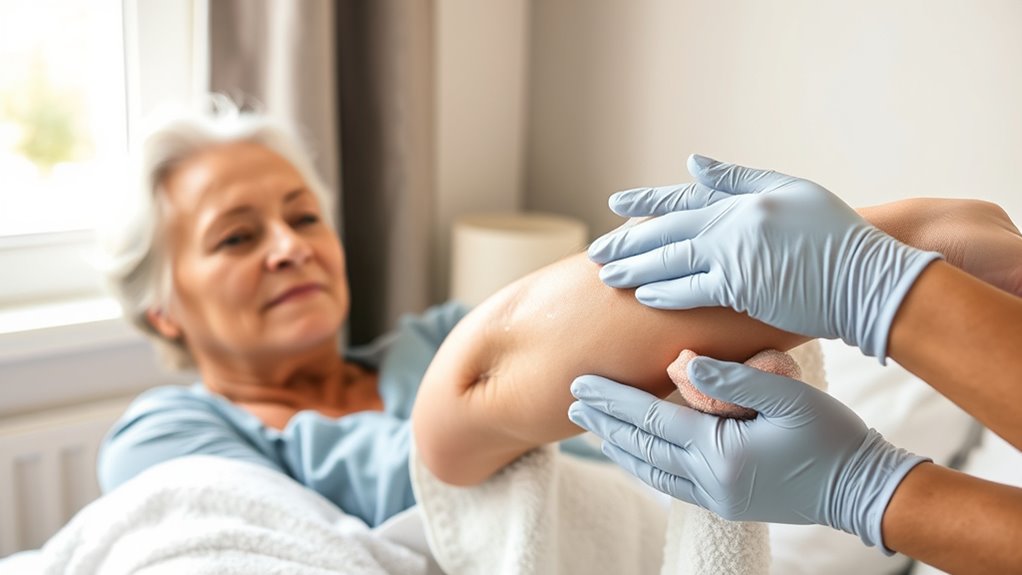
After completing the washing process, it’s important to focus on maintaining the senior’s hygiene and keeping a close eye on their skin condition. First, check for redness, sores, or irritation, especially on pressure points and skin folds. Second, ensure the skin is thoroughly dried to prevent moisture buildup, which can cause pressure ulcers. Third, monitor for signs of skin breakdown or infection during each bath. Keep the room clean and well-ventilated to reduce bacterial growth. Use gentle products and avoid excessive rubbing to protect fragile skin. Regularly inspect areas prone to pressure sores. If you notice any skin issues worsening, consult healthcare professionals promptly. Proper hygiene and vigilant skin monitoring help prevent complications and promote comfort.
Additional Comfort Measures and Safety Tips

To guarantee the senior’s comfort and safety during a bed bath, consider additional measures such as testing water temperature carefully before each use and maintaining a calm, respectful demeanor throughout the process. Always verify the water is warm, about 100°F to 115°F, using your elbow or a thermometer, to prevent burns or chills. Use gentle, soothing movements to help the senior relax. Keep the environment warm and free from drafts to avoid discomfort. Applying a warm lotion after the bath can help moisturize and soothe their skin. Dispose of soiled water properly and refill basins as needed to maintain hygiene. Stay patient and respectful, speaking softly and reassuring the senior to reduce embarrassment or anxiety during the process.
Post-Bath Care and Skin Moisturization

Once you’ve completed the bath, focus on caring for the senior’s skin to maintain its health and comfort. First, gently pat the skin dry, paying close attention to skin folds and creases to prevent moisture buildup. Second, apply a moisturizer suited for sensitive skin to lock in hydration and prevent dryness. Third, inspect the skin for any redness, irritation, or sores, and address issues promptly.
Gently dry skin, apply moisturizer, and check for irritation to keep seniors comfortable and healthy.
Remember to:
- Use a fragrance-free, gentle lotion to avoid irritation.
- Focus on areas prone to pressure ulcers, like hips and heels.
- Keep the room warm to prevent chilling during drying and moisturizing.
Consistent skin care helps reduce the risk of skin breakdown and keeps the senior comfortable.
Frequently Asked Questions
How Often Should I Bathe a Bedridden Senior?
You should bathe a bedridden senior 1-2 times a week to maintain good hygiene without risking skin damage. Additionally, wash their hair about once a week unless their healthcare provider advises otherwise. Regularly check their skin for signs of irritation, pressure sores, or infections during each bath. If you notice any issues or have concerns, consult their healthcare team for personalized advice on bathing frequency and methods.
What Should I Do if the Senior Has Fragile or Sensitive Skin?
Think of their skin as delicate glass, requiring gentle handling. You should use mild, non-irritating soap and avoid scrubbing or excessive lathering. Rinse thoroughly to remove all soap residues and pat dry softly, especially in skin folds. Apply warm lotion afterward to lock in moisture, and keep an eye out for redness or irritation. Your careful touch protects their fragile skin from damage and discomfort.
How Can I Prevent Falls During Repositioning for Bathing?
To prevent falls during repositioning, you should guarantee the bed is at a comfortable height for you. Use pillows or rolled towels to support and stabilize the senior as you turn them, and always move slowly and gently. Keep the bed locked or secured to prevent shifting, and make sure the surrounding area is clear of obstacles. Communicate clearly with the senior to keep them relaxed and cooperative throughout the process.
What Are Signs of Skin Infections or Pressure Ulcers to Watch For?
Think of the skin as a window into health; any cracks or fogging signal trouble. Watch for redness, swelling, warmth, or tenderness, especially over bony areas. Look for open sores, blisters, or a foul smell, which indicate infection. Changes in skin color, peeling, or darkened spots also raise concern. Regularly inspecting these signs helps catch problems early, preventing serious complications from pressure ulcers or infections.
How Do I Ensure the Water Temperature Is Safe for Bathing?
You should always test the water temperature before bathing. Use your elbow or a thermometer to check if it’s between 100°F and 115°F (38°C to 46°C). The water should feel warm but not hot to prevent burns. Adjust the temperature if needed, and double-check each time you refill the basin. This guarantees the bath is safe and comfortable for the senior, preventing any risk of injury.
Conclusion
By following these steps, you’ll provide a safe, comfortable bed bath that keeps your loved one clean and happy. Remember, patience and gentle care make all the difference—think of it as channeling your inner Florence Nightingale! Keep the environment calm, monitor skin health, and offer reassurance throughout. With practice, giving a bed bath becomes second nature, ensuring your senior feels cherished and well-cared for—no need for a time machine, just your compassionate touch.
Fall Picks
fall essentials
As an affiliate, we earn on qualifying purchases.