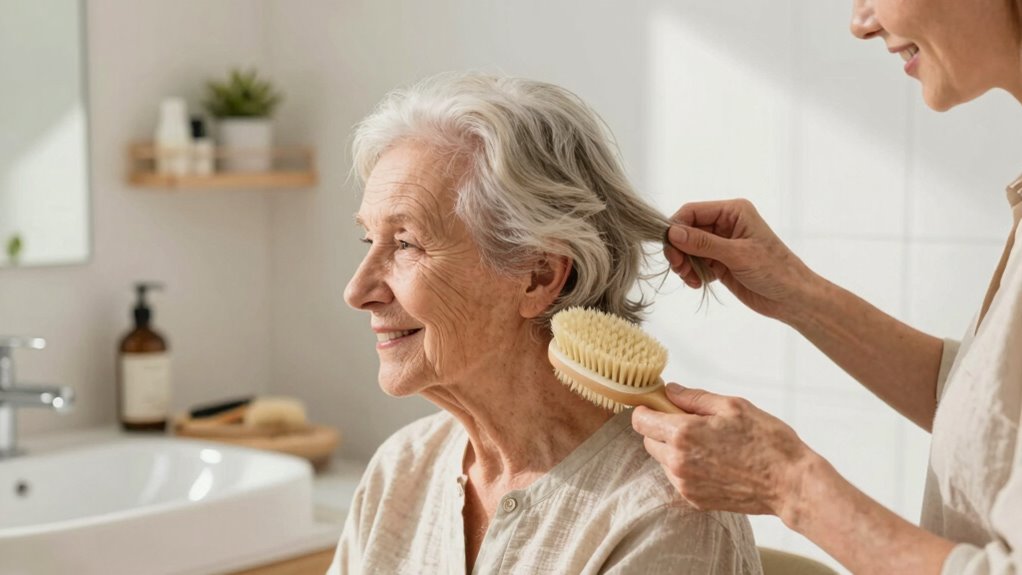

To make grooming easier for your parent with dementia, offer simple choices to promote independence and make them feel involved. Use calming, familiar environments and establish consistent routines to reduce anxiety. Keep tools accessible and turn tasks into positive, engaging activities. Show patience, provide emotional support, and respect their dignity throughout. Small adjustments can make a big difference in comfort and cooperation—if you keep exploring, you’ll discover even more helpful strategies.
Key Takeaways
- Offer choices and involve your parent to promote independence and reduce resistance.
- Create a calm, familiar environment with consistent routines and visual cues.
- Use simple, easy-to-handle grooming tools and turn tasks into engaging activities.
- Provide reassurance, patience, and positive reinforcement to support emotional well-being.
- Respect their dignity, making small adjustments to routines for comfort and cooperation.
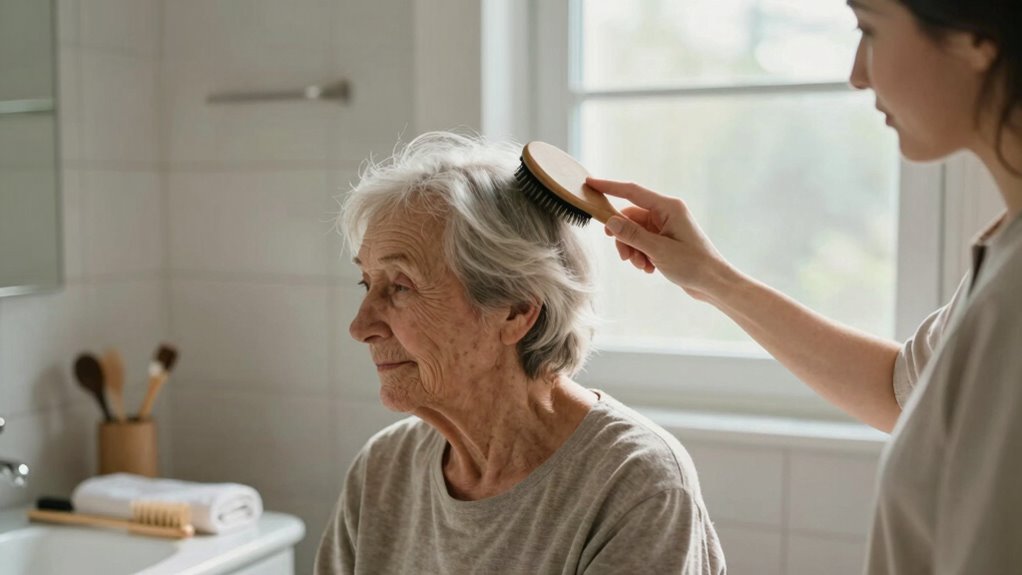
Caring for a parent with dementia can be challenging, especially when it comes to maintaining their grooming and personal hygiene. As their caregiver, you want to respect their dignity while ensuring they stay clean and comfortable. You might find that giving them choices about their grooming routines helps preserve their sense of control. For example, ask if they’d like to brush their teeth first or wash their face before dressing. This approach fosters independence and reduces resistance, making the process smoother for both of you.
At the same time, emotional support plays a crucial role. Many people with dementia feel frustrated or embarrassed about their changing abilities. Your reassurance, patience, and gentle encouragement can make a significant difference. Instead of insisting they do everything perfectly, praise their efforts and focus on what they can do. This positive reinforcement boosts their confidence and makes grooming less stressful. When they feel supported emotionally, they’re more willing to participate and cooperate.
Offering reassurance and praise helps build confidence and makes grooming more manageable for your loved one.
Creating a calm, familiar environment also helps manage grooming routines. Use a well-lit, quiet space with minimal distractions. Keep grooming tools within reach to avoid unnecessary frustration. Establishing a routine—doing tasks at the same time every day—helps your parent feel secure and understand what’s coming next. Consistency can reduce anxiety and make grooming a habitual part of their day, rather than a struggle. Incorporating consistent routines can further enhance their comfort and cooperation. Understanding the importance of simple systems can help you create more effective routines that are easy to follow and maintain. Additionally, paying attention to their preferences can make the process more personalized and less intimidating. Understanding the benefits of visual cues can also be a helpful strategy, as many individuals with dementia respond well to visual guidance. Developing a predictable schedule also provides a sense of stability that many individuals with dementia find reassuring.
You can also make grooming easier by simplifying tasks. Use gentle, easy-to-handle toothbrushes, washcloths, and hairbrushes designed for comfort. Dress your parent in clothes that are easy to put on and take off, which minimizes fuss. If they’re resistant to certain activities, try turning grooming into a game or offer a preferred item, like a favorite towel or lotion, to make the experience more positive. Remember, patience is essential. Rushing or forcing can lead to agitation, so keep your tone calm and reassuring. It’s helpful to observe and adapt to their comfort levels for different grooming activities, as this can vary from day to day.
Ultimately, managing grooming for a parent with dementia requires a compassionate balance. Respect their independence where possible, and provide emotional support to ease their anxiety. Small adjustments, patience, and understanding can transform a challenging task into a more manageable, even positive, part of your daily routine. Your gentle approach can help your parent feel valued and cared for, preserving their dignity while ensuring they stay clean and comfortable.
dementia grooming assistive tools
As an affiliate, we earn on qualifying purchases.
As an affiliate, we earn on qualifying purchases.
Frequently Asked Questions
How Can I Handle Resistance During Grooming Sessions?
To handle resistance during grooming sessions, use behavior management and communication strategies. Stay calm, speak gently, and explain each step to reduce fear. Offer choices when possible, like selecting a towel or brush, to give your parent a sense of control. Distraction techniques, such as talking about a favorite topic, can also divert attention. Patience and consistency help build trust, making grooming easier over time.
What Safety Tools Are Recommended for Grooming at Home?
You should consider using assistive devices like non-slip mats, adaptive brushes, and ergonomic scissors to guarantee safety during grooming. Follow safety guidelines such as keeping sharp tools out of reach, maintaining good lighting, and staying close to monitor your parent’s reactions. These tools and guidelines help prevent accidents, make grooming safer, and promote a more comfortable experience for both of you. Always adapt based on your parent’s specific needs.
How Often Should Grooming Routines Be Scheduled?
Think of grooming routines as a steady heartbeat—consistent and reassuring. You should schedule personal care for your parent with dementia daily or every other day, depending on their needs. Regular routines provide emotional support and help maintain hygiene. By sticking to this schedule, you create a sense of security and familiarity, making grooming less stressful for both of you. Consistency is key to fostering comfort and dignity.
Are There Specific Products That Ease Grooming for Dementia Patients?
Yes, there are specialized grooming products and adaptive grooming tools designed to make grooming easier for dementia patients. These tools often feature ergonomic handles, non-slip grips, and gentle materials to reduce discomfort. Using these products helps you manage grooming routines more safely and comfortably, minimizing frustration for both you and your parent. Incorporate these tools into your routine to promote independence and maintain dignity while caring for your loved one.
How Can I Involve My Parent in Grooming to Increase Cooperation?
To involve your parent in grooming, start by offering choices to empower them, like selecting their clothing or toothbrush. Use gentle encouragement and provide emotional support, making personal hygiene a positive experience. Keep routines consistent and simple, and involve them in small tasks to boost cooperation. Remember, patience and understanding help reduce frustration, making grooming more comfortable and collaborative for both of you.

Brilliant Specialty Adult Round Toothbrush for Sensitive Mouths to Support Chemo and Other Sensory Oral Care Needs with Ultra Soft Bristles, Teal, 1 Pack
- Designed for Sensitive Mouths: Supports chemo, autism, dry mouth, sores
- 360° Round Brush Head: Cleans teeth, tongue, gums, cheeks, hard-to-reach areas
- Ultra Soft Bristles: 20,000+ round-tip bristles for gentle cleaning and massaging
As an affiliate, we earn on qualifying purchases.
As an affiliate, we earn on qualifying purchases.
Conclusion
Taking steps to simplify grooming for your parent can greatly improve their comfort and dignity. Remember, nearly 60% of caregivers report feeling overwhelmed by daily routines, so you’re not alone. By staying patient, using easy-to-manage tools, and creating a calming environment, you make these moments more manageable for both of you. Your care and compassion truly make a difference, helping your parent feel respected and loved every step of the way.
As an affiliate, we earn on qualifying purchases.

Secure Safety Solutions Door Guard Safety Banner, 50" Width
- Dual-Sided Safety Sign: Bright STOP and DO NOT ENTER signs
- High-Visibility Design: Red, eye-catching visual cues
- Durable Materials: Nylon webbing and vinyl construction
As an affiliate, we earn on qualifying purchases.
As an affiliate, we earn on qualifying purchases.