

If your elderly parent falls, stay calm and check for injuries without moving them unnecessarily. Call 911 if they’re unresponsive, in severe pain, or show signs of serious injury. Keep them warm, monitor their breathing, and document details. Once stabilized, encourage a medical assessment to identify underlying issues. To prevent future falls, focus on exercises, home modifications, proper assistive devices, and medication reviews. Keeping them safe is essential, and there’s more to take into account to protect your parent long-term.

Turn quiet afternoons into listening time
- Thousands of audiobooks, podcasts and originals
- Listen on your phone, tablet or Echo — also offline
- Cancel anytime
Key Takeaways
- Immediately assess the parent’s condition, check for injuries, and call 911 if they are unresponsive or in severe pain.
- Keep the parent still, monitor breathing, and avoid moving them unless in immediate danger.
- Provide first aid for visible bleeding or bruising and document the incident details for healthcare providers.
- Schedule a medical evaluation to identify underlying issues and assess fall risks.
- Implement fall prevention strategies such as home modifications, regular exercise, medication review, and assistive device use.
elderly fall safety assistive devices
As an affiliate, we earn on qualifying purchases.
As an affiliate, we earn on qualifying purchases.
Immediate Steps to Take After a Fall

After an elderly person falls, your first priority is to guarantee their safety and check for injuries. Stay calm and gently assess their condition without moving them unnecessarily. Look for visible signs of trauma, bleeding, or severe pain, and avoid moving them if you suspect spinal or fracture injuries. If they’re unresponsive, unconscious, or experiencing intense pain, call 911 immediately. Keep them warm and comfortable while waiting for help, covering them with a blanket if needed. Observe their breathing and responsiveness, and reassure them with a calm voice. Document what happened, including the time, location, and any witnesses. Do not attempt to move or lift the person unless they’re in immediate danger, such as near a hazard. Additionally, monitoring contrast ratio can help you assess their overall condition more effectively. Being prepared with first aid knowledge can also make a significant difference in providing immediate assistance. Recognizing early signs of health concerns can aid in timely medical intervention, especially since fall-related injuries often have delayed symptoms. Staying aware of fall prevention strategies can help reduce future risks and ensure their safety.
home fall prevention modifications for seniors
As an affiliate, we earn on qualifying purchases.
As an affiliate, we earn on qualifying purchases.
Recognizing Signs of Serious Injuries

Watch for visible bleeding or bruising that doesn’t fade quickly, as these can signal deeper injuries. Pay attention to sudden behavioral changes, like confusion or agitation, which might indicate a head injury or other serious problem. If you notice either, seek medical help immediately to guarantee your parent gets the care they need. Additionally, monitor for injury severity signs, such as difficulty walking or persistent pain, which require prompt medical evaluation. Recognizing Free Floating injuries and their symptoms can help prevent complications and ensure timely treatment. Being aware of auditory processing issues can aid in understanding how your parent perceives and responds to their environment, potentially influencing recovery and safety. Incorporating modern healthcare approaches can further improve elder care outcomes and safety strategies. Understanding industry trends related to elder care can further inform your response and prevention strategies.
Visible Bleeding or Bruising
Visible bleeding or bruising can indicate serious injuries that require prompt attention. If you see blood pooling or bleeding that won’t stop, apply gentle pressure with a clean cloth to control it. Do not try to remove any embedded objects or press too hard if the bleeding is severe. For bruises, monitor for swelling, discoloration, or pain that worsens over time. Extensive or rapidly spreading bruising could signal internal bleeding or fractures. If the bleeding is heavy, the bruising is severe, or your parent shows signs of shock—such as pale skin, weakness, or rapid breathing—call emergency services immediately. Even if injuries seem minor, it’s vital to have a healthcare professional evaluate your parent to rule out underlying serious damage. Recognizing pool-related injuries and understanding proper first aid can help ensure timely and effective care. Additionally, keeping an eye on infection risks and maintaining good wound hygiene are crucial steps in preventing complications. Implementing preventive measures such as installing safety barriers around pools can also significantly reduce the risk of falls and injuries. Being aware of thermal behavior in healing injuries can aid in proper care and monitoring. Moreover, consulting with a healthcare professional about safety precautions can further help prevent future accidents.
Sudden Behavioral Changes
Sudden behavioral changes in your elderly parent can be a critical sign of serious injuries from a fall, requiring immediate attention. If they become confused, agitated, or unusually sleepy, it could indicate head trauma or a brain injury. Changes like withdrawal, hallucinations, or unresponsiveness may signal more severe issues. Pay close attention to these signs, as they often precede worsening conditions. Recognizing signs of distress can aid caregivers in monitoring health data remotely, potentially alerting medical professionals to urgent changes. Additionally, being aware of essential oils for trauma may provide supportive comfort or aid in calming agitation during emergency situations. Staying informed about creative storytelling for branding can also help caregivers communicate effectively with healthcare providers, ensuring clear and compassionate exchanges.
elderly fall recovery first aid kit
As an affiliate, we earn on qualifying purchases.
As an affiliate, we earn on qualifying purchases.
When to Seek Emergency Medical Help

If your elderly parent shows signs of severe injury, like heavy bleeding, difficulty breathing, or loss of consciousness, you should call emergency services immediately. Don’t wait if they’re unresponsive or in extreme pain, as prompt medical help is vital. Always stay with them until help arrives, and avoid moving them unless absolutely necessary. Utilizing smart emergency alerts can also help ensure quick response times in such situations. Additionally, being aware of safety precautions for falls can help prevent future incidents and ensure their well-being. Understanding load‑planning tools can be crucial in assessing their home environment and minimizing fall risks. Proper home safety assessments can help identify hazards that increase the likelihood of falls and allow for targeted preventive measures. Remember, understanding relationship dynamics can be crucial in effectively handling the situation and providing appropriate support.
Signs of Serious Injury
When a fall occurs, it’s essential to recognize signs that indicate a serious injury. Look for visible bleeding, swelling, or bruising that worsens over time. If your parent is unable to move a limb or complains of severe pain, don’t ignore it. Watch for signs of head injury, such as dizziness, confusion, or loss of consciousness. If they are unresponsive, vomiting, or have difficulty breathing, these are urgent red flags. Also, note if they are unusually drowsy or have a seizure. Any of these signs suggest internal injuries or fractures that require immediate medical attention. Do not delay—call emergency services right away if you observe any of these symptoms. Quick action can be lifesaving and prevent further complications.
When to Call Emergency
Recognizing the signs that indicate a need for emergency medical help can save your elderly parent’s life. Call 911 immediately if they are unconscious, unresponsive, or cannot wake up. Seek emergency care if they are experiencing severe pain, heavy bleeding, difficulty breathing, or if they have visible injuries like broken bones or head trauma. Watch for signs of confusion, dizziness, or if they vomit repeatedly. If your parent shows any signs of a spinal injury—such as neck pain or inability to move limbs—do not move them and call for emergency help. Also, call emergency services if they fall and are unable to stand or if they develop new symptoms like weakness or loss of sensation. Prompt action can prevent further harm and ensure they get the care they need.
As an affiliate, we earn on qualifying purchases.
Conducting a Medical Evaluation and Risk Assessment
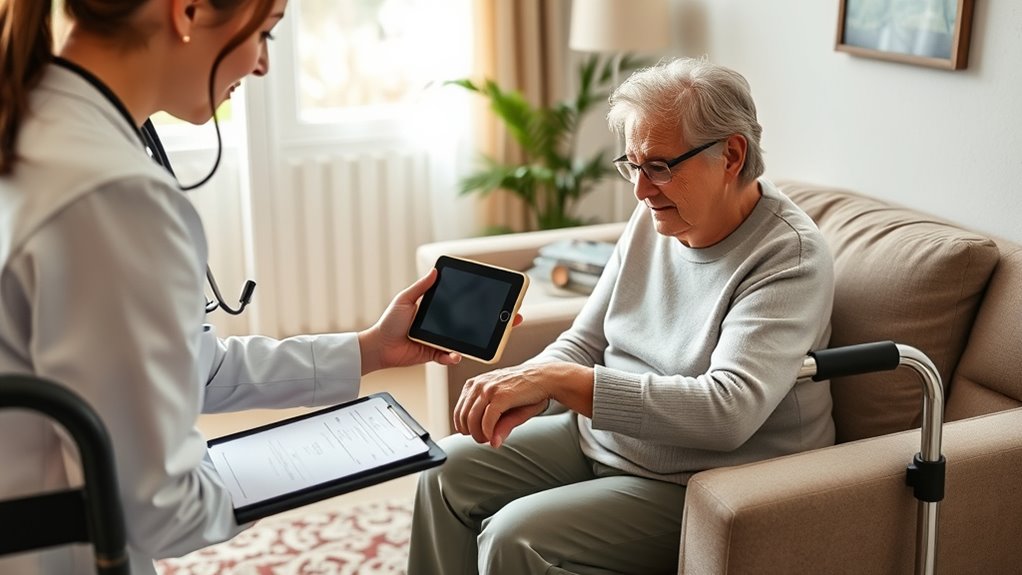
Conducting a thorough medical evaluation and risk assessment is essential after an elderly parent experiences a fall. You should schedule a visit with their healthcare provider promptly to identify any underlying medical issues, such as weakness, balance problems, or dizziness. Review all medications together, especially if they take four or more, since side effects can increase fall risk. Make certain their vision is checked annually, as poor eyesight contributes considerably to falls. During the assessment, ask the doctor to screen for modifiable risk factors and evaluate for conditions like osteoporosis or neurological issues. This extensive review helps pinpoint the causes of the fall and guides tailored interventions. Addressing medical concerns early can prevent future falls and improve your parent’s overall safety and wellbeing.
Implementing Exercise and Physical Therapy Strategies

Implementing exercise and physical therapy strategies is essential for reducing fall risk in elderly parents. Regular activity strengthens muscles, improves balance, and enhances mobility. Consider group programs involving strength and balance exercises three times a week, which can lower falls by about 23%. High-intensity resistance training, done at least three times weekly for 12 weeks, can reduce fall rates by 20-30%. Activities like yoga and tai chi boost coordination and stability. Consulting a physiotherapist helps customize exercises to your parent’s needs. Use the table below to select suitable activities:
| Activity Type | Frequency | Benefits |
|---|---|---|
| Strength Training | 3x/week | Builds muscle, supports gait |
| Balance Exercises | Daily | Enhances stability |
| Gait & Coordination | 3x/week | Improves walking control |
| Flexibility Work | 2-3x/week | Maintains range of motion |
Making Home Environment Changes for Safety

Making home environment changes is a crucial step in preventing falls among elderly parents. Picture a safe, clutter-free space where hazards are minimized. Start by:
Creating a safe, clutter-free home with proper lighting and support reduces fall risks for elderly parents.
- Clearing pathways—remove loose rugs, clutter, and electrical cords that could trip your parent.
- Installing grab bars—place them near toilets, showers, and bathtubs to provide sturdy support.
- Improving lighting—use bright, night-friendly bulbs in hallways and bathrooms to eliminate shadows and improve visibility.
These adjustments create a safer environment, reducing the risk of slips and trips. With a well-organized, well-lit, and supported space, your parent gains confidence and independence. Regularly inspect and maintain these modifications to ensure ongoing safety and address new hazards promptly.
Choosing and Maintaining Assistive Devices
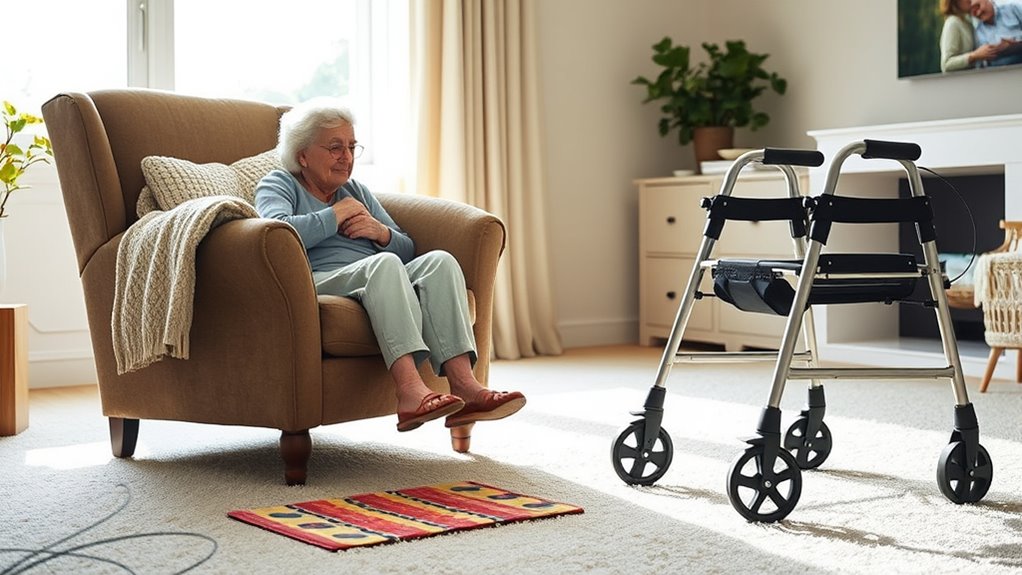
Choosing the right assistive devices is essential for enhancing safety and maintaining independence. You should consult with healthcare professionals to determine which devices best suit your parent’s specific needs and mobility level. Make sure the devices are properly fitted; ill-fitting equipment can cause discomfort or increase fall risk. Regularly inspect devices like walkers, canes, or wheelchairs for signs of wear, damage, or instability, and replace or repair them as needed. Keep devices clean and ensure they’re used correctly to maximize safety. Encourage your parent to practice using the equipment in a safe environment until they feel confident. Proper maintenance and regular checkups help guarantee assistive devices continue to provide reliable support, reducing fall risks and promoting ongoing independence.
Managing Medications to Reduce Fall Risks

Managing medications effectively is essential for reducing fall risks among seniors. When you review your parent’s medications, focus on potential side effects that cause dizziness, drowsiness, or balance issues. Here are three key steps:
Managing medications carefully helps prevent falls and keeps seniors safe.
- Visualize a pharmacist highlighting each pill, explaining how certain medications might impair coordination or alertness.
- Imagine sitting with your parent, going through the medication list, and identifying drugs that could increase fall risk.
- Picture scheduling regular doctor visits to reassess prescriptions, ensuring dosages are appropriate and unnecessary medications are discontinued.
Developing a Long-term Fall Prevention Plan
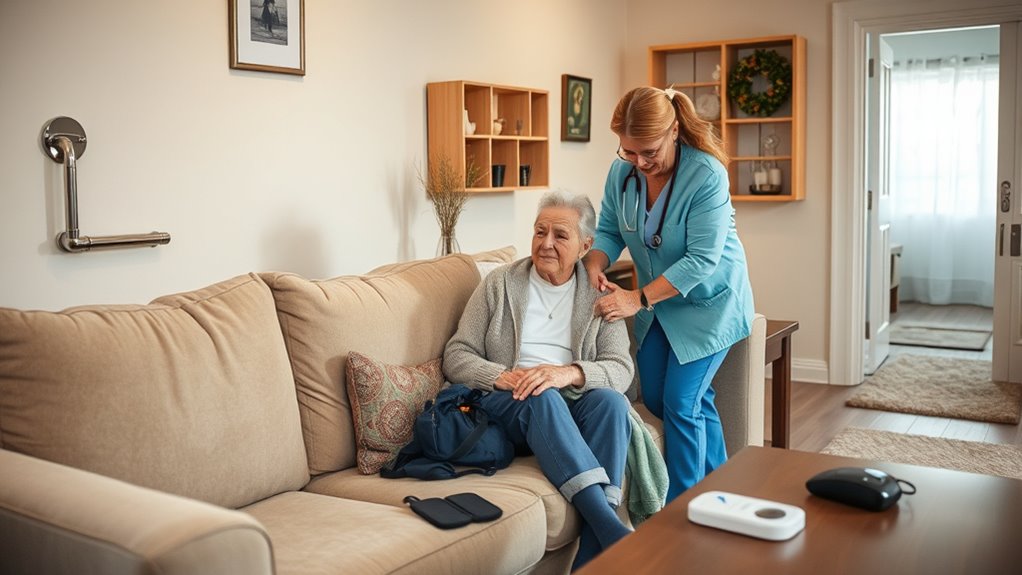
Developing a long-term fall prevention plan requires a proactive approach that integrates multiple strategies tailored to your parent’s needs. Start by evaluating their specific risks, such as mobility issues or vision impairments. Collaborate with healthcare providers to create a personalized plan that includes regular exercise, home modifications, and medication reviews. Consistently review and update the plan as your parent’s condition evolves. Use this table to understand key elements:
| Strategy | Purpose |
|---|---|
| Exercise & Balance Activities | Improve strength and coordination |
| Home Environment Modifications | Minimize fall hazards |
| Assistive Devices | Enhance stability and mobility |
| Medical & Medication Review | Reduce medication-related risks |
A comprehensive, adaptable plan keeps your parent safe and reduces fall risks over time.
Frequently Asked Questions
How Can I Tell if My Parent Has a Hidden Injury After a Fall?
You should look for signs like persistent pain, swelling, bruising, or difficulty moving, which could indicate hidden injuries. Watch for changes in behavior, confusion, or dizziness, as these might signal internal issues. If your parent shows any of these symptoms or if you suspect a serious injury, it’s vital to seek medical attention promptly. Keep them comfortable and avoid moving them unnecessarily until a healthcare professional evaluates their condition.
What Are the Best Balance Exercises for Elderly Fall Prevention?
To help your parent stay steady on their feet, focus on gentle exercises like tai chi, which promotes graceful movements and balance. Yoga poses that improve core strength and leg stability are also beneficial. Encourage activities that challenge their coordination, like standing on one foot with support nearby. Consistent practice, ideally three times a week, will boost their confidence and reduce the risk of future falls.
How Often Should I Review My Parent’s Medications for Fall Risks?
You should review your parent’s medications at least every six months, or more often if they experience side effects like dizziness or drowsiness. Regular reviews help identify drugs that increase fall risk, especially if they’re taking multiple medications. Stay in close contact with their healthcare provider to adjust prescriptions as needed, ensuring medications don’t contribute to balance issues or other fall hazards.
Which Home Modifications Are Most Effective for Preventing Falls?
Think of your home as a safe harbor. You can anchor it by clearing clutter, removing loose rugs, and improving lighting to brighten dark corners. Install grab bars near toilets and in showers, and add non-slip mats on slippery surfaces. These modifications act as sturdy beams, supporting your loved one’s stability. By creating a secure environment, you help prevent falls, allowing them to navigate their space with confidence and peace of mind.
When Should I Consider Using Assistive Devices for My Parent?
You should consider using assistive devices when your parent experiences balance issues, weakness, or has had a fall, indicating they need extra stability. If they struggle walking, climbing stairs, or getting up from chairs, devices like canes, walkers, or scooters can help prevent future falls. Consult with their healthcare provider to select the right aid and guarantee proper fit and safety. Regularly inspect and maintain these devices to keep your parent safe.
Conclusion
By staying vigilant and proactive, you can create a safety net that catches your parent before a fall turns into a crisis. Think of it like tending a garden—you nurture and protect the roots so the entire plant thrives. Remember, over 90% of falls are preventable with the right steps. With your attentive care, you’ll help your parent stay steady and secure, ensuring they flourish in their independence for years to come.
Fall Picks
fall essentials
As an affiliate, we earn on qualifying purchases.