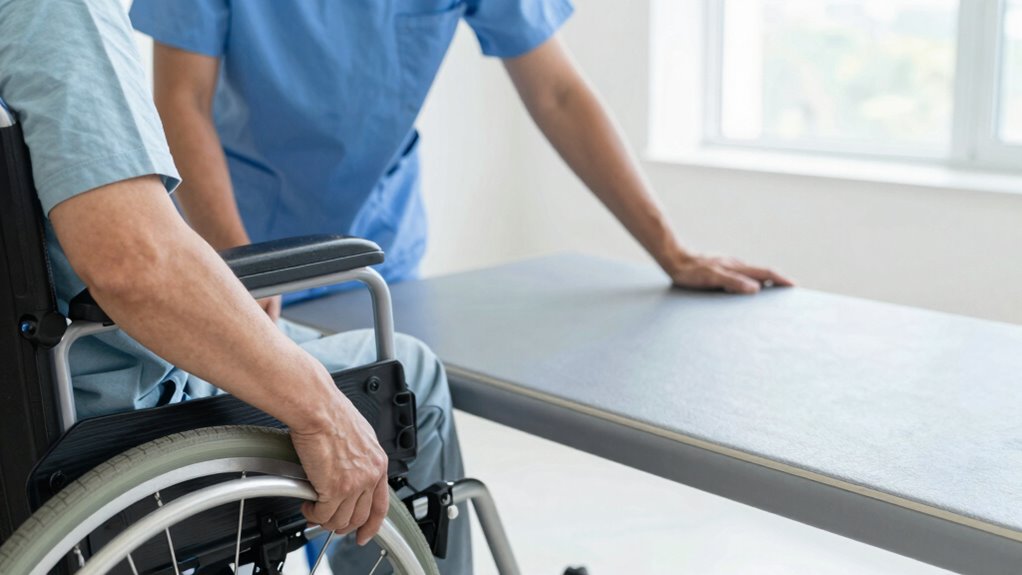

To make wheelchair transfers feel more predictable, focus on mastering proper body positioning and developing a consistent routine that reinforces muscle memory. Clear your environment of obstacles and use transfer aids like grab bars or transfer boards for added stability. Practice in familiar, controlled settings with support nearby, and take your time to build confidence through repetition. As you become more familiar with your technique and environment, transfers become safer and more comfortable—stay with us to learn more tips.
Key Takeaways
- Develop and consistently follow a routine to reinforce muscle memory and transfer predictability.
- Use environmental adjustments like proper surface heights and transfer aids for stability.
- Practice transfers in a familiar, controlled setting to build confidence and reduce uncertainty.
- Ensure proper body positioning and controlled movements to enhance consistency.
- Have a caregiver or support nearby during practice for guidance and safety reinforcement.

Performing wheelchair transfers can often feel uncertain or intimidating, especially if you’re unsure of what to expect. To build confidence and make the process smoother, it helps to focus on adaptive techniques and environmental adjustments. These strategies can reduce anxiety and make each transfer feel more predictable, giving you greater independence and control.
Start by mastering adaptive techniques that suit your specific needs. For example, practicing proper body positioning can make a big difference. Sitting upright, engaging your core, and leaning slightly forward or to the side before transferring can provide better stability. Using your arms to push off the armrests or seat cushion with controlled, deliberate movements helps you maintain balance. When you’re familiar with these techniques, your transfers become more consistent and less stressful. Developing a routine can also help reinforce muscle memory and improve overall transfer confidence. Additionally, understanding electric bikes and their capabilities can inspire you to explore new ways of maintaining mobility and independence outside your transfers.
Master proper body positioning and controlled movements to make wheelchair transfers safer and more consistent.
Alongside adaptive methods, environmental adjustments play a vital role. Clear the area surrounding your transfer location, removing obstacles and clutter that could cause imbalance or distraction. Ensure that surfaces like beds, chairs, or toilets are at appropriate heights, ideally matching the height of your wheelchair seat or slightly higher. This alignment minimizes the effort needed to transfer and reduces the risk of falls. If necessary, use transfer boards or grab bars, which offer extra support and stability. Installing grab bars near your bed or bathroom can give you secure handholds, making each move more predictable. Incorporating proper lighting can also enhance visibility and confidence during transfers.
Practicing in a safe, familiar environment also boosts your confidence. Repeating transfers in a controlled setting helps reinforce good habits and builds muscle memory. Over time, this consistency makes the transfer process feel more natural and less uncertain. It’s helpful to establish a routine—using the same sequence of movements each time—so your body and mind become accustomed to the steps. Being aware of home safety features can further enhance your confidence during transfers.
Additionally, having a caregiver or assistive device nearby during initial practice sessions offers reassurance. They can guide you through adaptive techniques, provide physical support when needed, and help you correct any missteps early on. Gaining knowledge about proper transfer techniques can improve safety and confidence, making the entire process smoother. As you become more comfortable, you’ll rely less on external help, and transfers will feel more predictable and manageable.
Incorporating these adaptive techniques and environmental adjustments into your routine transforms what might seem like a challenging task into a manageable, confident process. With patience and consistent practice, you’ll find that each transfer becomes more familiar, controlled, and safe, empowering you to move independently with greater ease.

Transfer Board and Slide Board for transferring, Sliding Board Transfer to Wheelchair ,Patient Transfer ,Transfer Boards from Wheelchair to Car, Toilet, Tub, Slide Sheet, (Patented Product)
【Package includes】: 1 x Transfer Board(31.5"x8") + 1 x Slide Sheet (Green, 28"x28"(73x73cm) .
As an affiliate, we earn on qualifying purchases.
As an affiliate, we earn on qualifying purchases.
Frequently Asked Questions
What Are Common Mistakes During Wheelchair Transfers?
Common mistakes during wheelchair transfers include rushing the process, which can compromise safety precautions and lead to falls. You might also neglect proper transfer techniques, like not locking the wheelchair wheels or failing to use transfer belts when needed. Failing to communicate clearly with the person you’re assisting can cause confusion, and ignoring environmental hazards increases risks. Always prioritize safety precautions and proper transfer techniques to guarantee a smooth, safe transfer every time.
How Can I Build Confidence in Transferring?
To build confidence in transferring, focus on building trust in your abilities and overcoming fear step by step. Practice transfers with a knowledgeable caregiver or therapist who provides reassurance and guidance. Start with simple moves, gradually progressing to more complex ones as you gain comfort. Celebrate small successes, stay patient, and remind yourself that mastering each transfer boosts your confidence and reduces anxiety, making the process feel more predictable and manageable.
Are There Specific Techniques for Different Types of Wheelchairs?
A stitch in time saves nine, so knowing specific techniques for different wheelchair types is key. You should adapt your transfer methods based on whether you’re working with manual, power, or tilt-in-space wheelchairs. Using adaptive techniques tailored to each wheelchair’s design ensures safer, smoother transfers. Always assess the wheelchair’s features first, then adjust your approach, making your transfers more predictable and confident for both you and the person you’re assisting.
How Do I Handle Transfers on Uneven Surfaces?
When handling transfers on uneven surfaces, you first assess the surface stability and potential hazards. Use transfer aids like transfer boards or grip pads to improve safety and grip. Confirm the wheelchair is positioned securely, with brakes engaged, and the footrests out of the way. Communicate clearly with the person you’re assisting, and move slowly and steadily to maintain balance and confidence throughout the transfer.
What Equipment Can Assist With Safer Transfers?
To guarantee safer transfers, you can use assistive devices and transfer aids like transfer boards, gait belts, and grab bars. These tools provide extra support, stability, and leverage, reducing the risk of falls or injuries. When you incorporate transfer aids into your routine, you gain confidence and control during each move. Always choose equipment suited to your needs and ensure proper training to maximize safety and effectiveness.
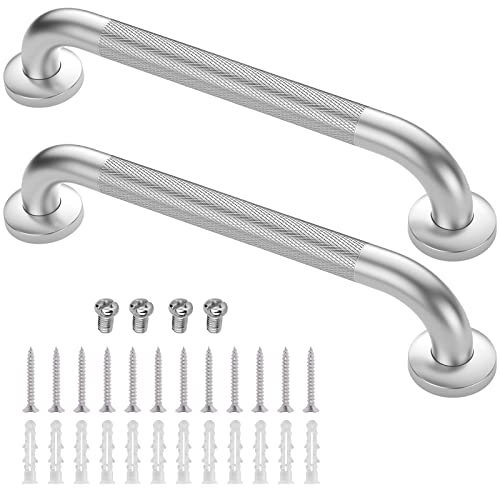
Grab Bars for Shower, 2 Pack 16 Inch Anti-Slip Safety Shower Handle for Senior, Stainless Steel Shower Grab Bars, Handicap Elderly Bathtub and Toilet Bathroom Assist
SUPERB MATERIAL: The shower grab bars for seniors is made of stainless steel which is waterproof, rustproof and…
As an affiliate, we earn on qualifying purchases.
As an affiliate, we earn on qualifying purchases.
Conclusion
By mastering these techniques, you’ll find transfers become smoother and more predictable. But there’s one essential step many overlook—something that could transform your confidence entirely. Are you ready to discover this game-changing tip that could make all the difference? Stay tuned, because once you reveal this secret, your transfers will never feel the same again. Prepare to take control and face each transfer with newfound certainty—you won’t want to miss what’s coming next.

Car Transfer Aid Easy Slide Sheet Positioning Patient Transfer Device Slip Slider Sheets for Vehicles Wheelchairs Bed Turning Repositioning Hospitals and Home Care Assist Moving Elderly Disabled
【【TUBULAR DESIGN】Transfer slide sheet that can be used without folding. Tubular design with slick surface makes getting into…
As an affiliate, we earn on qualifying purchases.
As an affiliate, we earn on qualifying purchases.
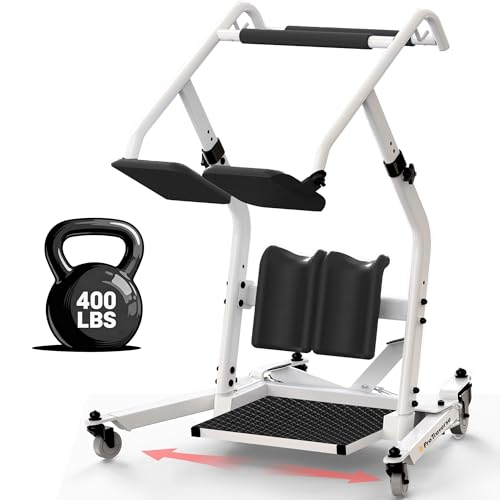
ProTraverse Stand Assist Lift – Sit to Stand Patient Transfer Chair for Elderly & Disabled, 400 lbs Capacity Lift Aid with Adjustable Height – Home & Nursing Care Mobility Support,Black
[𝐄𝐧𝐡𝐚𝐧𝐜𝐞𝐝 𝐒𝐭𝐚𝐛𝐢𝐥𝐢𝐭𝐲 & 𝐒𝐚𝐟𝐞 𝐓𝐫𝐚𝐧𝐬𝐟𝐞𝐫 𝐒𝐲𝐬𝐭𝐞𝐦] – The ProTraverse stand assist lift provides reliable support for safe sit-to-stand…
As an affiliate, we earn on qualifying purchases.
As an affiliate, we earn on qualifying purchases.