
With better hearing support, you’ll notice clearer conversations and less effort to understand speech, even in noisy environments. Your social confidence grows as you participate more comfortably in family gatherings, outings, and community events. You’ll enjoy seamless streaming of calls, music, and TV, making entertainment more enjoyable. Discreet and easy to operate, modern hearing aids help you stay connected and independent. Keep exploring to discover even more ways these innovations can enrich your daily life.
Key Takeaways
- Seniors experience clearer, more natural conversations, reducing the need for repetitions and improving social interactions.
- Enhanced sound processing decreases listening effort and fatigue in noisy or crowded environments.
- Better hearing support fosters increased participation in family, social, and community activities.
- Improved connectivity with devices like smartphones and TVs enhances entertainment and communication.
- Overall quality of life and independence are boosted, leading to greater emotional well-being and social engagement.
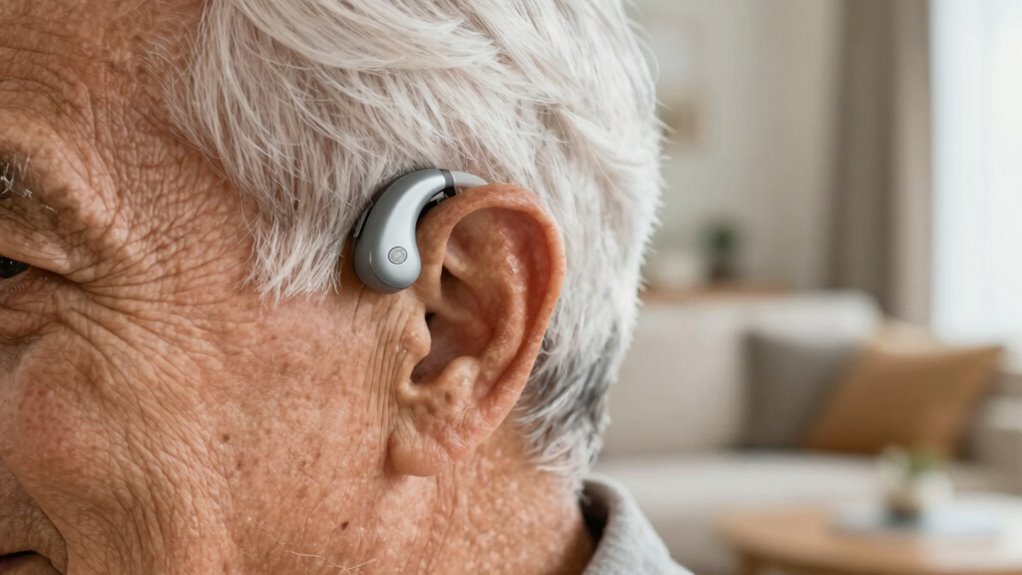
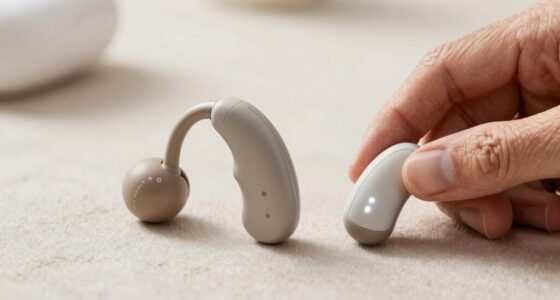
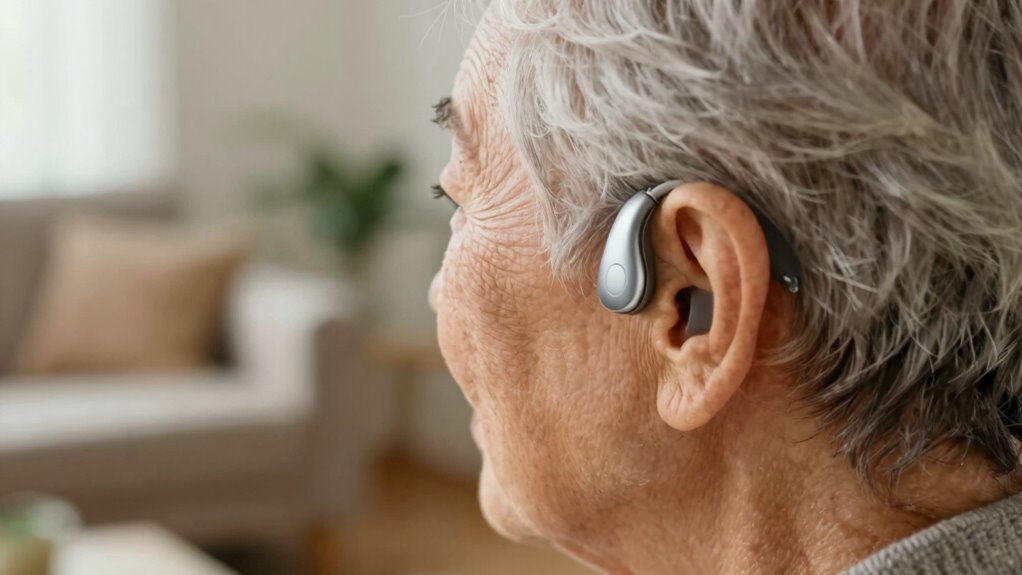
Have you noticed that your loved ones are struggling to hear conversations or enjoy their favorite sounds? It can be frustrating for both of you, especially when simple interactions become difficult. Fortunately, hearing aids for seniors have advanced considerably, incorporating assistive technology that makes a real difference. These devices don’t just amplify sounds—they help improve clarity, reduce background noise, and adapt to different environments. When your loved one wears hearing aids equipped with modern assistive technology, they’re more likely to reconnect with the world around them, regaining the ability to follow conversations and enjoy music or nature sounds. This improvement in hearing quality can boost their confidence and encourage more active participation in social settings.
Modern hearing aids enhance clarity, reduce background noise, and help seniors reconnect with the world around them.
Better hearing support doesn’t just impact how well your loved one can hear; it transforms their social engagement. When they no longer have to ask others to repeat themselves or strain to catch every word, they feel more comfortable and confident in social interactions. This renewed engagement often leads to a more vibrant social life, where they can join family gatherings, outings, and community events without feeling left out or overwhelmed. Enhanced hearing support helps break down the barriers created by hearing loss, making conversations more natural and enjoyable. As a result, your loved one’s relationships become stronger, and they’re more likely to maintain meaningful connections with friends and family.
With the help of assistive technology, many hearing aids now come with features like Bluetooth connectivity, allowing your loved one to pair their device with smartphones or televisions. This means they can stream calls, music, or TV audio directly to their hearing aids, further enriching their listening experience. Such innovations make it easier for seniors to stay engaged with their favorite media and remain connected to loved ones, even from a distance. Furthermore, modern hearing aids are discreet, comfortable, and easy to operate, which encourages consistent use. When your loved one feels confident in their device, they’re more likely to wear it regularly, maximizing the benefits of better hearing support. Additionally, advancements in projector technology demonstrate how improved visual and audio quality can enhance overall entertainment experiences, similar to how better hearing technology enhances communication. Incorporating hearing aid technology that adapts to different environments ensures a seamless listening experience, further promoting regular use and enjoyment.
Recent innovations in assistive technology also include features designed to help users navigate complex auditory environments, such as in crowded places or noisy settings, ensuring clearer understanding even in challenging situations. These advancements are inspired by the ongoing improvements in natural pool design, which aim to create more sustainable and user-friendly outdoor spaces. In fact, the integration of advanced sound processing within hearing aids further enhances their ability to filter out unwanted noise, making it easier to focus on conversations. Ultimately, investing in quality hearing aids with advanced assistive technology can dramatically improve your loved one’s quality of life. They’ll find it easier to participate in conversations, enjoy entertainment, and stay socially active. This positive change doesn’t just enhance their hearing—it revitalizes their overall well-being and sense of independence. You’ll notice a happier, more engaged loved one, one who feels empowered to connect and communicate without the barriers of untreated hearing loss.
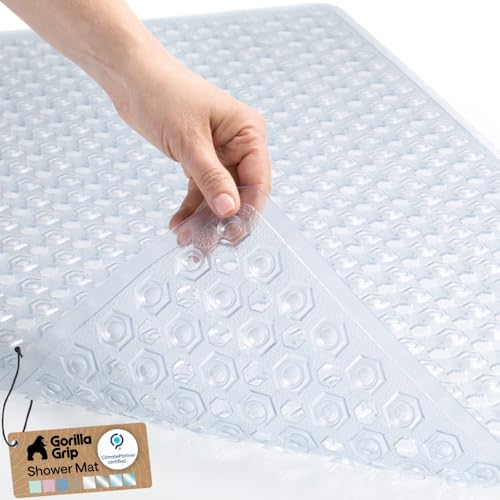
GORILLA GRIP Patented Bath Tub Shower Mat, Machine Washable Bathtub Floor Liner Mats, Suction Cups and Drain Holes to Keep Tubs Clean, Soft on Feet, Bathroom Essentials, 35x16 Inch, Clear
PATENTED DESIGN WITH POWERFUL SUCTION GRIP: a bath mat designed to securely stay in place; this patented bathtub...
As an affiliate, we earn on qualifying purchases.
Frequently Asked Questions
How Do Hearing Aids Affect Balance and Fall Risk?
Hearing aids can improve your balance and reduce fall risk by enhancing your ability to hear and interpret surrounding sounds. When you hear better, you become more aware of your environment, which helps prevent trips and falls. With better balance support, you’ll feel steadier on your feet, making fall prevention easier. Ultimately, hearing aids contribute to safer, more confident movement, especially in unfamiliar or crowded settings.
Are There Hearing Aids Specifically Designed for Severe Hearing Loss?
Yes, there are advanced hearing devices specifically designed for severe hearing loss, often called severe hearing solutions. These devices provide powerful amplification tailored to your needs, helping you reconnect with sound. Modern technology offers discreet, effective options that improve clarity and comfort. With these advanced hearing devices, you can enjoy a richer listening experience, enhancing your confidence and quality of life, no matter how profound your hearing challenges are.
Can Hearing Aids Be Customized for Different Listening Environments?
Yes, hearing aids can be customized for different listening environments. You can personalize the settings to adapt to various situations, like quiet rooms or noisy places. Modern hearing aids feature environmental adaptation, automatically adjusting their functions based on your surroundings. This customization guarantees you get clear sound quality and comfort, making it easier to communicate and enjoy activities regardless of where you are.
How Often Should Seniors Replace or Upgrade Their Hearing Aids?
You should consider replacing or upgrading your hearing aids every 3 to 5 years, depending on hearing aid longevity and your changing needs. Regular upgrades guarantee you benefit from the latest technology and improved features. If your devices become less effective or show signs of wear sooner, it’s wise to consult your audiologist. Staying current with upgrades helps maintain ideal hearing performance and comfort, enhancing your overall quality of life.
What Are the Costs and Insurance Options for Hearing Aids?
Hearing aids are an investment, and understanding costs helps you navigate the financial landscape. Costs vary widely depending on features, but insurance plans can act as your safety net, covering a significant portion of expenses. Some plans, including Medicare and Medicaid, may provide limited coverage or discounts. It is crucial to check your specific policy’s cost coverage options, so you can confidently embrace better hearing without financial surprises.

YINENN Bath and Shower Safety Mats 40x16 inch, Non Slip with Suction Cups for Bathroom Stall and Tub Floor, Extra Large and Machine Washable, Drain Holes Keep Bathtub Clean, Clear
Extra large bath shower safety mats: No chemical smell, vinyl quality material. Heavy duty and standard dimensions and...
As an affiliate, we earn on qualifying purchases.
Conclusion
Imagine reconnecting with loved ones you’ve missed hearing clearly—like Jane, who finally caught her grandson’s jokes again after getting hearing aids. Better hearing support transforms your daily life, boosting confidence and reducing frustration. When you invest in the right hearing aids, you don’t just hear better—you experience more of life’s precious moments. So, take that step today; a richer, more connected life is just a hearing aid away.

TEESHLY Bath Tub and Shower Mats, Non Slip 40 x 16 Inch Extra Large Bathtub Mat, Machine Washable Bathmat with Drain Holes, Suction Cups for Bathroom Floor, Gray
NON-SLIP LARGE BATH MAT: Our non-slip large bathtub mat offers superior coverage with its 40 x 16-inch size,...
As an affiliate, we earn on qualifying purchases.

SIXHOME Patented Non Slip Bathtub Mat with Strong Suction Cups, Dual Upgraded Material Tub Mat, Cuttable Machine Washable Fast Drain Shower Floor Mat, 23.6"x15.7", Light Grey
Powerful Non-Slip Grip – This shower mat features numerous strong suction cups on the bottom that cling securely...
As an affiliate, we earn on qualifying purchases.