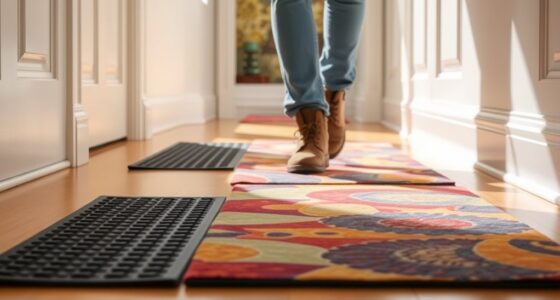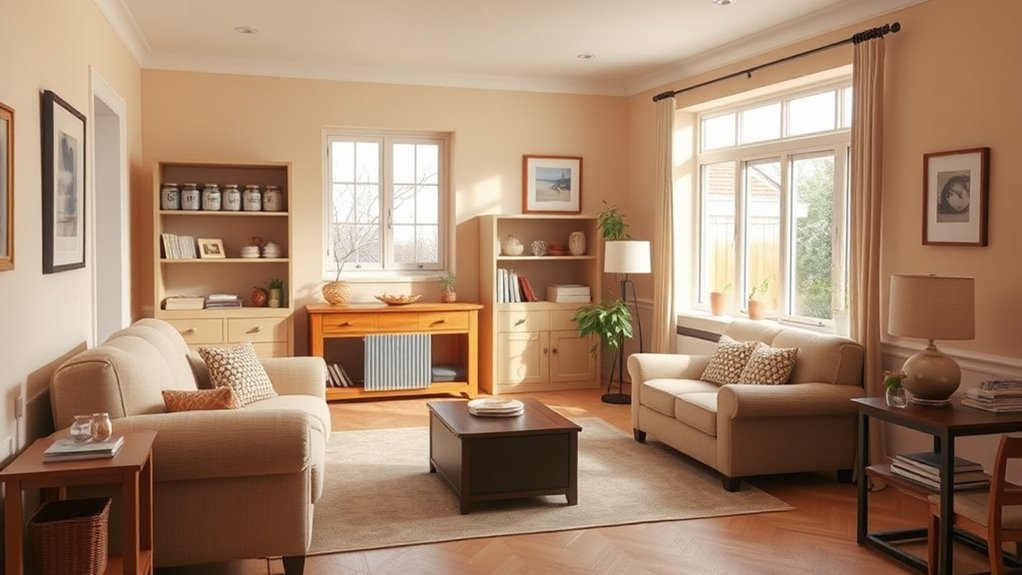

To make your home easier for someone with memory loss, focus on clear signage with familiar images and simple symbols placed consistently to aid navigation. Use adaptive lighting that adjusts to natural rhythms—brighter during the day and softer at night—to promote safety and comfort. Incorporate motion-activated lights in key areas to prevent falls, and personalize cues with familiar objects to foster independence. Small adjustments in lighting and signage can greatly enhance safety—explore more ways to create a supportive environment.
Key Takeaways
- Implement adaptive, motion-activated lighting that mimics natural light cycles to enhance safety and regulate sleep patterns.
- Use clear, simple signage with familiar images and consistent placement to aid navigation and reduce confusion.
- Incorporate personalized cues, like familiar objects or signs, to promote recognition and independence.
- Ensure smooth lighting transitions aligned with daily rhythms, using warm tones at night and bright lights during the day.
- Maintain and update signage and lighting systems regularly for clarity, safety, and ongoing support.
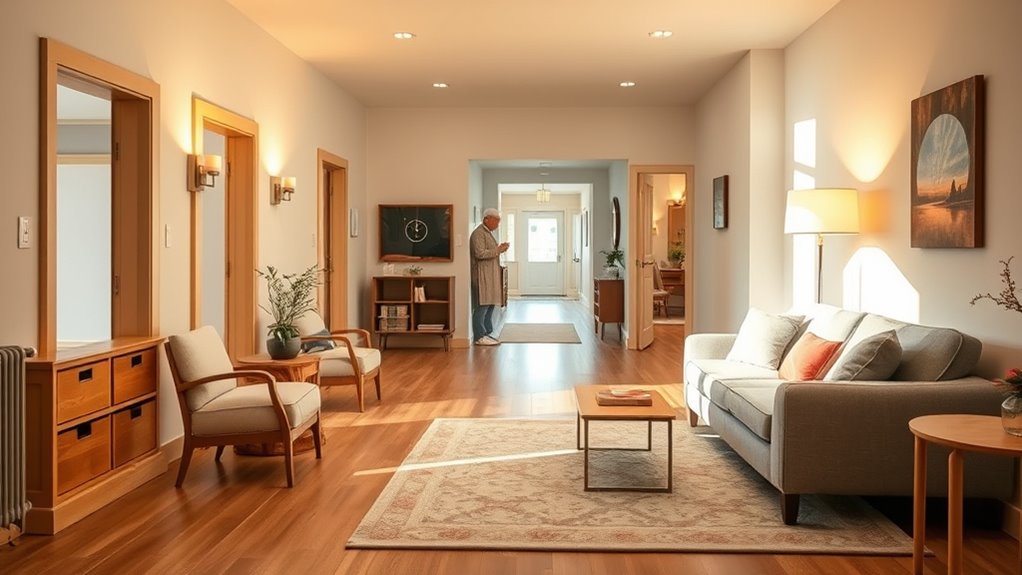
Creating a dementia-friendly home is essential for guaranteeing safety, independence, and comfort for those living with memory loss. One effective way to achieve this is through thoughtful lighting solutions, such as interactive lighting systems. These systems respond to movement or time of day, helping to guide individuals safely through the space without confusion or disorientation. For example, installing motion-activated lights in hallways and bathrooms ensures that your loved one won’t have to fumble for switches in the dark, reducing the risk of falls. Additionally, adaptive lighting can mimic natural light cycles, which can help regulate sleep patterns, improving overall well-being. When paired with personalized signage, these lighting features create a more intuitive environment. Clear, easy-to-read signs with large fonts and simple symbols can direct people to essential areas like the bathroom, kitchen, or bedroom. Personalizing signage with familiar images or items can further reduce confusion, making navigation more straightforward. For instance, a sign with a picture of a coffee mug for the kitchen or a bed for the bedroom helps reinforce familiar cues. You want your loved one to feel more autonomous, so making these signs consistent and strategically placed guarantees they always know where they are.
Beyond signage, consider the placement and brightness of your interactive lighting. Use warm-toned lights during evening hours to promote relaxation and prevent overstimulation, while brighter lights during the day can boost alertness and activity. The key is to create a seamless transition between different lighting states that align with natural rhythms, helping your loved one feel more in control of their environment. Additionally, keep signage simple—avoid clutter and overly detailed instructions—so that it’s easy to interpret at a glance. Incorporating familiar objects or photos alongside signs can reinforce recognition and independence. For example, a picture of a familiar pet or a favorite chair next to a sign can provide comforting cues. Proper lighting design that considers contrast and intensity is vital for ensuring safety and ease of navigation. As you implement these features, remember that consistency is crucial. Regularly update signage if needed and maintain your lighting system to guarantee it functions properly. These small but impactful adjustments make a significant difference in reducing confusion, preventing accidents, and fostering a sense of security. Your goal is to create a home where your loved one can navigate confidently, feeling supported and safe. By combining interactive lighting with personalized signage, you help build an environment that’s both functional and comforting, empowering them to maintain as much independence as possible.

Bath Mat,Ultra Thin Bathroom Rugs,Rubber Bath Mats for Bathroom,No Slip Bath Rugs,Quick Dry,Machine Washable,Low Pile,Absorbent,Shower Outside,Sink,Home Decor Accessories.Grey,1'5"x2'3"(17x27Inch)
- Ultra Thin Design: Fits under doors with 0.2-inch thickness
- Quick Dry & Absorbent: Made from terry cloth for fast drying
- Non-Slip Rubber Backing: Provides safety and traction on wet floors
As an affiliate, we earn on qualifying purchases.
Frequently Asked Questions
How Can Technology Assist in a Dementia-Friendly Home?
Technology can substantially assist in a dementia-friendly home by integrating a smart home system that simplifies daily tasks. You can use assistive devices like automated lights, medication reminders, and voice-activated controls to promote independence. These tools help reduce confusion, enhance safety, and ensure your loved one feels more secure. By leveraging smart home technology, you make everyday routines easier and create a supportive environment tailored to their needs.
What Are Cost-Effective Modifications for Dementia-Friendly Design?
Did you know that simple, affordable upgrades can substantially improve safety? You can make cost-effective modifications like adding clear signage, installing lever handles, and using non-slip mats. DIY modifications, such as rearranging furniture for easy navigation or installing night lights, also help. These actions are budget-friendly, easy to implement, and make your home safer and more comfortable for someone with memory challenges.
How Do I Involve a Loved One in Home Redesign?
You involve your loved one in home redesign by encouraging family involvement, making them feel valued and secure. Talk openly about changes, asking for their preferences and ideas, which fosters trust and cooperation. Offer emotional support throughout the process, reassuring them that the modifications aim to improve their comfort and safety. By actively including them, you ensure the redesign feels personalized, helping your loved one adapt more easily to the new environment.
What Safety Measures Are Essential for Dementia Care at Home?
While safeguarding personal safety, you should prioritize essential safety measures like installing locks on cabinets and stair gates. Keep emergency planning in mind by ensuring easy access to exits and having clear, visible emergency contact information. Regularly assess your home for hazards, add lighting in dark areas, and remove tripping risks. These steps help protect your loved one, creating a secure environment that promotes independence and peace of mind.
How Often Should Home Adaptations Be Reassessed?
You should reevaluate your home adaptations every 6 to 12 months, depending on your loved one’s changing needs. Regular home maintenance ensures safety features stay effective, and reevaluating helps identify new risks. If your loved one’s condition progresses or if you notice safety concerns, schedule a reassessment sooner. Staying proactive guarantees your home remains a secure, supportive environment, tailored to their evolving needs and ensuring safety through consistent home maintenance.

YCTMALL Rubber Bath mats Quick-Drying Non-Slip Bathroom mat Super Absorbent Bath mat Instant Dry Bath mat, Bathroom Rug in Front of The Kitchen Sink, Shower Room, Bathtub, Oval(Grey+16.9x26.7in)
- Quick Water Absorption: Soft diatomaceous earth for fast drying
- Easy to Clean: Wipes or machine washable surface
- Non-Slip & Durable: Rubber backing for safety and longevity
As an affiliate, we earn on qualifying purchases.
Conclusion
So, why not turn your home into a fortress of clarity? Picture yourself steering a maze of color-coded doors and labeled cabinets, all in the name of “dementia-friendly” design. Soon, you’ll be living in a place so foolproof, even forgetfulness might give up and take a vacation. With these tips, your house becomes a haven—no more lost keys or misplaced glasses—just a haven where memory lapses politely decline to visit.

YIHOUSE Memory Foam Bathroom Rugs Sets 2 Piece, 32"x20"+24"x17", Dark Grey
- Deep cushioning with high-density foam: Provides supportive, cloud-like comfort
- Durable and washable design: Resists shrinking, shedding, maintains softness
- Moisture-absorbing coral velvet surface: Quickly wicks water, keeps floors dry
As an affiliate, we earn on qualifying purchases.
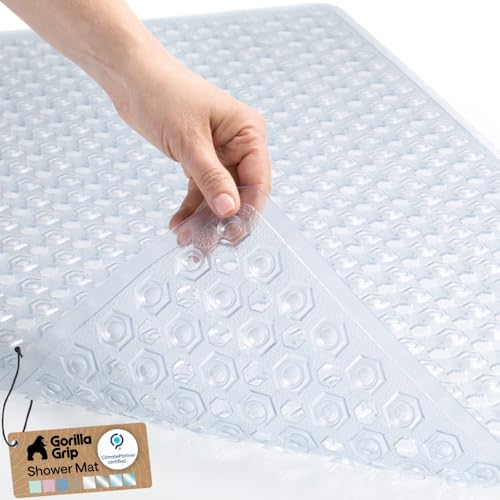
GORILLA GRIP Patented Bath Tub Shower Mat, Machine Washable Bathtub Floor Liner Mats, Suction Cups and Drain Holes to Keep Tubs Clean, Soft on Feet, Bathroom Essentials, 35x16 Inch, Clear
- Patented Design with Suction Cups: Securely stays in place with powerful suction
- Easy Water Drainage: Drain holes prevent water pooling
- BPA-Free and Textured: Soft, pebble-textured surface for comfort
As an affiliate, we earn on qualifying purchases.