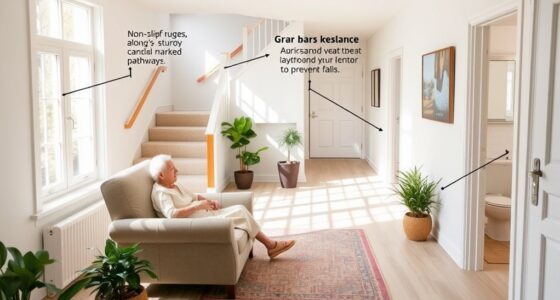
To create peace and quiet for a loved one with dementia, focus on reducing noise and clutter in their environment. Keep rooms calm and free of loud sounds or distractions, using soft music and aromatherapy to promote relaxation. Minimize clutter by organizing spaces and removing unnecessary items, so your loved one feels secure and less overwhelmed. Small adjustments can make a significant difference—continue to discover more simple strategies to help them feel calm and safe.
Listen free for 30 days with Audible
Thousands of audiobooks and originals — cancel anytime.
As an affiliate, we earn on qualifying purchases.
Key Takeaways
- Create a calm environment by minimizing noise, clutter, and visual distractions to reduce overstimulation and confusion.
- Use soft, familiar music at gentle volumes to soothe and promote relaxation.
- Introduce calming scents like lavender with diffusers to foster a peaceful atmosphere.
- Employ noise reduction tools such as soundproofing or white noise machines to block disruptive sounds.
- Keep spaces tidy and clutter-free to help the loved one focus and feel secure.

When caring for a loved one with dementia, reducing noise and clutter can make a meaningful difference in calming their mind. Excessive stimuli can overwhelm them, leading to agitation and confusion. Creating a serene environment helps your loved one feel safer and more at ease. One effective way to promote calmness is through music therapy. Soft, familiar tunes can soothe anxiety and improve mood. Keep music playing at a gentle volume, preferably something they recognize and enjoy. This familiar soundscape acts as a comforting anchor, reducing feelings of disorientation. Along with music, aromatherapy can also play a crucial role in creating a peaceful atmosphere. Scents like lavender or chamomile are known for their calming properties. Using a diffuser or applying diluted essential oils to a cloth nearby can help your loved one relax. Just ensure the scents are mild and not overpowering, as some people with dementia are sensitive to strong smells. Additionally, incorporating noise reduction strategies such as soundproofing or white noise machines can further minimize disruptive sounds. Minimize clutter to prevent visual distractions that can cause confusion or agitation. Clear walkways and keep surfaces tidy. Use simple, familiar objects and avoid having too many decorations or items that don’t serve a functional purpose. When the environment is orderly, your loved one can focus better and feel less overwhelmed. It’s also important to maintain a consistent routine and environment to foster familiarity. Reducing noise isn’t just about turning down volume; it’s about creating a calm, predictable setting. Use soft lighting instead of harsh fluorescent lights, and keep background noise to a minimum. Turning off loud TVs or radios during quiet times can help prevent sensory overload. In addition, routinely assessing the environment for potential overstimulation can help you make ongoing adjustments to support your loved one’s well-being. Incorporate calming routines that include music and aromatherapy to reinforce a sense of security. For example, playing gentle music during daily activities or before bedtime can signal relaxation. Diffusing soothing scents in common areas can subtly promote calmness throughout the day. Remember, your goal is to create an environment where your loved one feels safe and understood. By thoughtfully reducing noise and clutter, and using tools like music therapy and aromatherapy, you help ease their confusion and reduce agitation. Your efforts can profoundly improve their quality of life, making each day more peaceful and manageable for both of you.
white noise machine for dementia
As an affiliate, we earn on qualifying purchases.
As an affiliate, we earn on qualifying purchases.
Frequently Asked Questions
How Can I Identify Specific Noise Triggers for My Loved One?
To identify specific noise triggers, observe your loved one’s reactions during different situations. Pay attention to when they become agitated or confused, and note if loud sounds, sudden noises, or certain environments cause these responses. Use calming techniques like gentle reassurance and a quiet environment to test their effects. By carefully observing and adjusting, you can pinpoint triggers and create a peaceful space that helps reduce their stress.
Are There Recommended Tools or Devices to Help Reduce Noise Levels?
Think of sound masking as your loved one’s gentle shield, softening overwhelming noises. Noise canceling headphones act like a calming fortress, blocking disruptive sounds. These tools help create a peaceful environment, allowing your loved one to feel safe and calmer. You can find user-friendly sound masking devices and comfortable headphones designed specifically for dementia care, making it easier to manage noise triggers and foster tranquility in their daily life.
How Can I Balance Noise Reduction With Engaging Activities?
To balance noise reduction with engaging activities, incorporate gentle music therapy and sensory stimulation into daily routines. You can play calming music during quiet times and introduce tactile or visual activities that stimulate senses without overwhelming. Keep activities short and adaptable to your loved one’s mood, ensuring they remain engaged without excessive noise or clutter. This approach helps create a calming environment while promoting mental engagement and emotional well-being.
What Are Effective Ways to Organize Clutter Without Causing Confusion?
Clutter may seem chaotic, but organizing it thoughtfully creates calm through visual cues and sensory stimulation. Use labeled containers and clear storage to keep essentials accessible, reducing confusion. Keep frequently used items within reach and designate specific spots for belongings. This structured approach minimizes overwhelm, helping your loved one navigate their environment confidently. Balancing simplicity with familiarity encourages independence while maintaining a peaceful space, easing their daily routines.
How Do I Handle Situations Where My Loved One Becomes Agitated Despite Noise Control?
When your loved one becomes agitated despite noise control, try introducing calming techniques like music therapy or aromatherapy. Play soft, familiar music to soothe them or use gentle scents such as lavender to create a calming environment. Stay calm yourself, speak softly, and offer reassurance. These approaches can help reduce agitation, providing comfort and stability when noise and clutter aren’t enough.
As an affiliate, we earn on qualifying purchases.
Conclusion
By reducing noise, minimizing clutter, and creating a peaceful environment, you help your loved one feel calmer, safer, and more comfortable. By simplifying their surroundings, easing their stress, and promoting their well-being, you make every day a little easier. By offering quiet moments, gentle routines, and a soothing space, you support their peace of mind. And by doing so, you nurture their dignity, their comfort, and your loving connection.
As an affiliate, we earn on qualifying purchases.
As an affiliate, we earn on qualifying purchases.
Flea & tick season Picks
flea and tick prevention
As an affiliate, we earn on qualifying purchases.