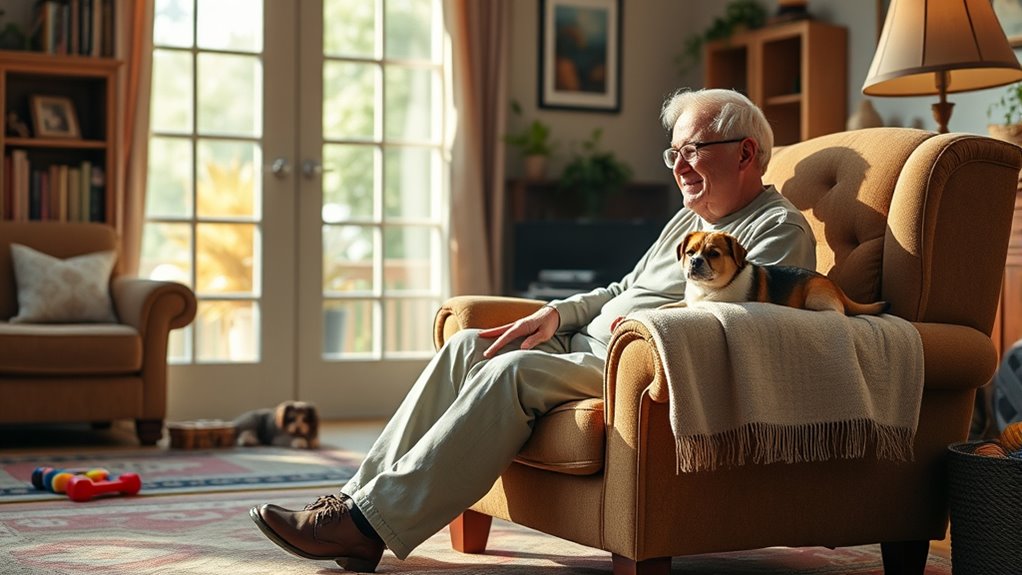

To manage pets safely in a home with frail seniors, focus on choosing calm, gentle animals that match their activity levels. Observe your pet’s behavior to prevent accidents and establish routines like feeding and walking to create predictability and reduce stress. Supervise interactions to ensure safety and maintain emotional bonds. By understanding pet behavior management, you can foster a harmonious environment that supports both emotional comfort and safety—continue to explore effective strategies for a nurturing home.

Turn quiet afternoons into listening time
- Thousands of audiobooks, podcasts and originals
- Listen on your phone, tablet or Echo — also offline
- Cancel anytime
Key Takeaways
- Choose calm, gentle pets that match the senior’s activity level to ensure safety and emotional support.
- Establish consistent routines for feeding, walking, and grooming to reduce stress and promote predictability.
- Monitor pet behavior closely to prevent accidents and ensure interactions remain safe and comforting.
- Set clear boundaries and supervise interactions to avoid disruptive behaviors and protect frail seniors.
- Regularly observe and manage pet needs to maintain a harmonious, safe environment that supports emotional well-being.

Have you ever wondered how pets impact your relationship with your parents? If your parents are frail seniors, understanding pet behavior becomes even more essential. Pets can offer much-needed emotional support, but they also require careful management to guarantee everyone’s safety and comfort. When you bring a pet into a home with elderly parents, you’re not just adding a furry companion—you’re creating an environment that influences everyone’s daily routine and emotional well-being.
Pets often act as emotional anchors, providing comfort during times of loneliness or stress. For seniors, who may face mobility challenges or health concerns, these animals can be a source of unconditional love and companionship. Their consistent presence can help reduce feelings of isolation, boost mood, and even lower stress levels. However, it’s necessary to observe their pet behavior closely. Some animals may become anxious or overly energetic, which could unintentionally cause accidents or overwhelm your parents. Training and choosing the right pet breed that matches your parents’ activity levels and health status can make a significant difference. Calm, gentle animals tend to be better suited for frail seniors, offering emotional support without risking safety.
Pets provide vital emotional support and reduce loneliness in seniors when their behavior is carefully managed.
Managing pet behavior is also about setting boundaries and establishing routines. Seniors with limited mobility might find it difficult to handle a pet that jumps on furniture or demands constant attention. In these cases, it’s wise to select pets that are more independent or easier to train. Regularly scheduled activities like feeding, walking, and grooming help create a predictable environment, reducing anxiety for both your parents and the pet. By managing pet behavior effectively, you guarantee that the pet’s needs are met without disrupting your parents’ comfort or safety.
It’s also important to consider the emotional support that pets provide. They can serve as a calming presence, especially during moments of distress or confusion, which are common in aging populations. This emotional connection can help your parents feel more secure and less isolated. To maximize this benefit, encourage gentle interaction and guarantee the pet’s needs are met, so the animal remains a positive influence. Supervised interactions are essential to prevent accidental injuries or misunderstandings that could arise from pet behavior.
Additionally, understanding pet behavior management techniques can significantly enhance safety and harmony in the home.
Frequently Asked Questions
How Can I Prevent My Pet From Causing Falls Around Seniors?
To prevent your pet from causing falls around seniors, supervise their interactions closely and create a safe environment. Use pet enrichment activities to keep your pet engaged and reduce unwanted behaviors. Encourage senior pet bonding through gentle play and cuddles, which can foster trust and calmness. Keep walkways clear of toys and clutter, and train your pet to be mindful of seniors’ movements, making the home safer for everyone.
What Are Safe Pet Types for Frail Elderly Individuals?
Imagine a frail grandmother happily caring for a small, calm rabbit, which illustrates ideal senior pet compatibility. For age-appropriate pet selection, choose gentle, low-energy animals like small dogs or cats, or even calm fish. These pets typically require less physical activity and pose fewer fall risks, making them safer for frail elderly individuals. Always consider the pet’s temperament and the senior’s mobility to guarantee a harmonious match.
How Do I Train Pets to Be Gentle With Seniors?
You can train your pets to be gentle with seniors by consistently practicing gentle handling and rewarding calm behavior with positive reinforcement. Use treats and praise whenever your pet displays gentle actions around seniors, especially during interactions. Keep training sessions short and patient, encouraging your pet to stay calm and respectful. Over time, your pet will learn to be more gentle, creating a safer and more comfortable environment for your elderly loved ones.
What Measures Ensure Pets Don’T Interfere With Medical Devices?
Did you know that nearly 60% of pet owners worry about pets interfering with medical devices? To prevent this, you should implement pet safety measures like keeping pet medical devices away from seniors’ equipment, using barriers, and training pets to avoid sensitive areas. Regular supervision and ensuring pets are calm around medical devices help maintain safety and reduce accidental interference, giving both your pet and senior peace of mind.
How Can I Manage Pet Allergies in Elderly Households?
To manage pet allergies in elderly households, focus on allergy mitigation and pet allergen control. Regularly clean and vacuum using HEPA filters, wash bedding frequently, and keep pets out of bedrooms. Consider air purifiers to reduce airborne allergens and bathe pets regularly to minimize dander. Creating pet-free zones helps limit allergen spread, making the environment safer and more comfortable for seniors with allergies.
Conclusion
By understanding your pet’s needs, respecting your parent’s comfort, and prioritizing safety, you create a harmonious home. You foster companionship, promote well-being, and guarantee security. You balance interactions, set boundaries, and provide care. You nurture trust, encourage activity, and maintain peace. In doing so, you build a safe, comforting environment where pets and seniors thrive together, sharing love, joy, and connection every day.
Fall Picks
fall essentials
As an affiliate, we earn on qualifying purchases.