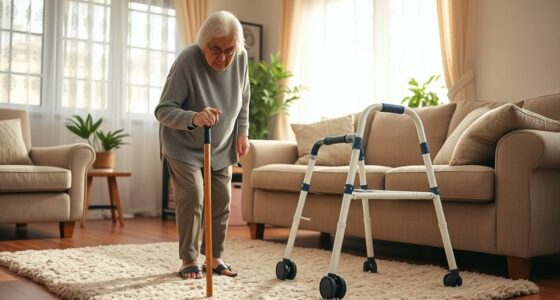

To protect your back while lifting, always use proper body mechanics: keep your feet shoulder-width apart, bend at your hips and knees, and keep your back straight. Keep the patient or object close to your body and avoid twisting—pivot your feet instead. Use assistive devices like mechanical lifts or transfer belts whenever possible, and communicate clearly with your team. Continuing with these safety tips will help you lift more safely and prevent injury.
Key Takeaways
- Maintain a stable stance with feet shoulder-width apart and keep the load close to your body.
- Bend at hips and knees while keeping your back straight and engaging core muscles before lifting.
- Use assistive devices like mechanical lifts or transfer belts whenever possible to reduce physical strain.
- Communicate clearly with patients and team members, using verbal cues to coordinate safe lifts.
- Avoid twisting your torso; pivot your feet to change direction safely during transfers.
Understanding the Risks of Manual Handling

Understanding the risks of manual handling is essential because improper techniques can lead to serious injuries for caregivers. Lifting, transferring, or repositioning patients places significant strain on your musculoskeletal system, especially your back, shoulders, and arms. Nearly 80% of caregiver injuries stem from manual handling tasks, with over half involving lifting or transferring older adults or patients. These injuries often result in long-term disabilities, lost workdays, and increased healthcare costs. Caregivers without proper training are especially vulnerable, frequently lifting weights equivalent to 1.8 tons during an eight-hour shift. Recognizing these risks emphasizes the importance of using safe practices, assistive devices, and proper body mechanics to protect yourself from preventable injuries. Being aware of these hazards motivates you to prioritize safety during every patient transfer or lift. Additionally, understanding the role of proper equipment can significantly reduce the physical burden and minimize injury risk during manual handling activities. Incorporating ergonomic principles into your lifting techniques can further enhance safety and reduce strain. Regular training and staying informed about safe handling techniques are vital components of injury prevention. Moreover, staying updated on the latest safety guidelines ensures that caregivers can adapt to new best practices and minimize injury potential.
A focus on preventive measures can make a substantial difference in reducing injury rates and promoting a safer work environment.
Principles of Proper Body Mechanics

Practicing proper body mechanics is essential to prevent injuries during patient handling. You should start by positioning your feet shoulder-width apart to create a stable base. Bend at your hips and knees, not your waist, keeping your back straight to distribute the load evenly through your legs. Keep the patient close to your body to minimize strain on your back and arms. Avoid twisting your torso; instead, pivot your feet to change direction safely. Engage your core muscles to support your spine during lifts. Use smooth, controlled movements and lift with your legs, not your back. Always plan your lift before starting, and communicate clearly with your team or patient. Following these principles helps safeguard your back and ensures safe, effective patient handling. Incorporating visual and auditory cues can further enhance safe lifting techniques and communication.
Utilizing Assistive Devices Effectively

Using assistive devices correctly can substantially reduce the physical strain involved in patient handling. To maximize their benefits, ensure you’re trained in proper use and always inspect equipment before use. Mechanical lifts, transfer belts, and friction-reducing devices help distribute weight evenly and minimize injury risk. Proper integration involves planning the transfer, securing the device, and communicating clearly with the patient and team. Incorporating reliable infrastructure can further enhance safety and efficiency during transfers. Additionally, understanding nanotechnology advancements in assistive devices can lead to more innovative and effective solutions. Considering energy-efficient equipment options can also contribute to safer and more sustainable caregiving practices. Exploring advanced materials in device design may offer even better safety and comfort features for both caregivers and patients. Staying informed about navigation and mapping technologies can help optimize transfer procedures and reduce risks.
Communicating and Coordinating During Transfers
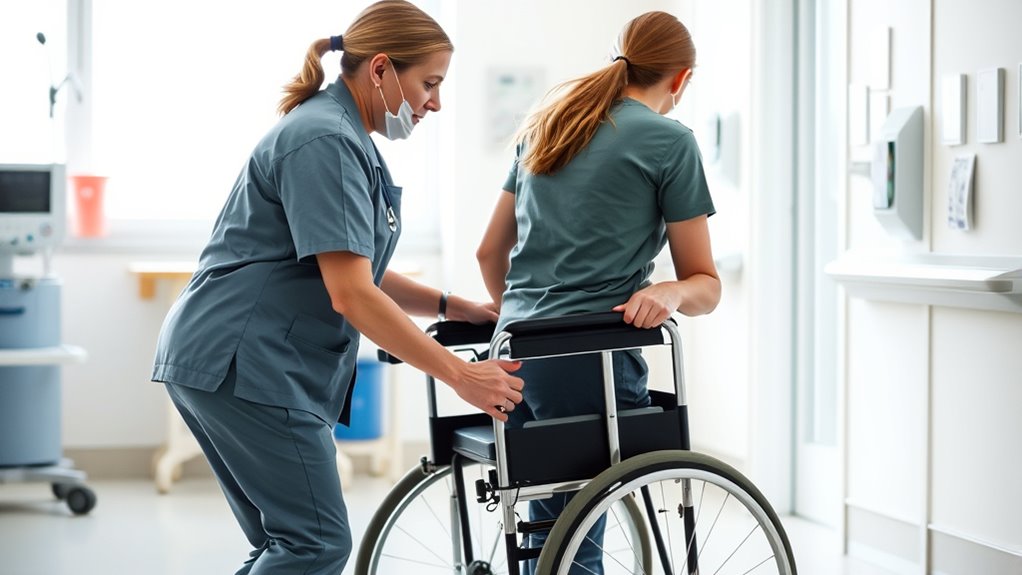
Effective communication is essential to make certain everyone involved in the transfer understands their role and movements. Use clear verbal cues to guide the patient and coordinate with other caregivers, reducing confusion and sudden motions. By establishing a shared plan and speaking consistently, you can help prevent injuries and make the transfer safer for all. Additionally, staying informed about safety protocols can further enhance the effectiveness of your communication and coordination efforts. Regularly updating your knowledge of proper lifting techniques ensures that you are following best practices and minimizing risk during transfers. Remember, using appropriate communication techniques can significantly improve team coordination and patient safety during transfers.
Clear Verbal Cues
Clear verbal cues are essential for guaranteeing safe and coordinated transfers. As you work with the patient or other caregivers, communicate your intentions clearly and calmly. Use simple instructions like “Ready?”, “On three,” or “Lift now.” This helps everyone synchronize their movements, reducing the risk of sudden shifts or slips. Encourage the patient to respond or inform you if they feel discomfort or if something isn’t right. Consistent cues create a rhythm, making the process smoother and safer. Avoid ambiguous commands or silence, which can lead to confusion or unexpected movements. Remember, effective communication builds trust, minimizes surprises, and ensures everyone is prepared for each step, ultimately protecting your back and the patient’s safety during transfers.
Assistive Coordination Strategies
Coordinating with other caregivers and the patient during transfers guarantees everyone moves safely and efficiently. Clear communication helps coordinate efforts, ensuring each person knows their role and timing. Use explicit commands like “Ready?” or “Lift on three.” Confirm the patient understands instructions and is prepared before starting. If the patient can participate, encourage them to follow directions, reducing your lifting effort. Always ask for assistance when needed, especially with heavy or unpredictable patients. Establish a plan beforehand, so everyone is aware of their responsibilities. Consistent, concise communication minimizes surprises and sudden movements that could cause injury. Incorporating Proper communication techniques can significantly enhance safety and efficiency during transfers. Staying aware of body mechanics and maintaining awareness of your environment helps prevent injuries and promotes a safer transfer process. Paying attention to ergonomic principles ensures proper posture and reduces strain during lifting. Being mindful of patient cues can also help you adapt your approach to ensure the safety and comfort of the patient. By staying in sync, you distribute the workload evenly, protect your back, and promote safe, smooth transfers for everyone involved.
Ergonomic Strategies to Minimize Strain
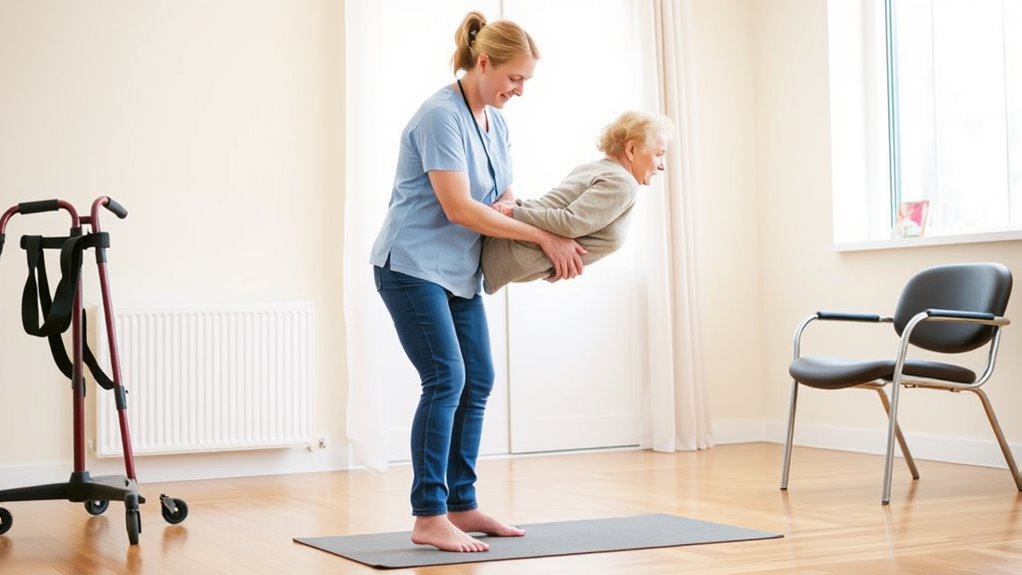
To reduce strain during lifting, focus on proper body positioning techniques that keep your back straight and use your legs. Always employ mechanical aids when available, as they lessen the physical load on your body. Maintaining a neutral spine alignment helps prevent injuries and ensures safer transfers for both you and your patient. Additionally, incorporating ergonomic workspace principles can support your posture and reduce overall discomfort during caregiving tasks. Being mindful of proper lifting techniques can further enhance safety and efficiency in caregiving activities. Proper body mechanics are essential for preventing injuries and maintaining your overall well-being during caregiving tasks. Incorporating ergonomic principles into your routine can help you develop safer lifting habits and protect your back over time.
Proper Body Positioning Techniques
Proper body positioning is essential to minimize strain and prevent injuries during patient handling. You should stand with your feet shoulder-width apart to create a stable base. Bend at your hips and knees, not your waist, keeping your back straight and engaging your core muscles. Hold the patient or object close to your body to reduce leverage on your back and arms. Avoid twisting your torso; instead, pivot your feet when changing direction. Keep your shoulders level and maintain a neutral spine throughout the lift. Distribute your weight evenly on both legs and avoid sudden movements. Using proper positioning not only decreases the risk of musculoskeletal injuries but also enhances your strength and endurance during patient transfers. Always prioritize ergonomic alignment to protect your back and maintain safety. Incorporating proper body positioning techniques ensures safer patient handling practices and helps prevent long-term injuries. Being mindful of body mechanics can further improve safety and efficiency during lifts, especially when combined with proper lifting techniques.
Use Mechanical Aids Effectively
Using mechanical aids effectively is essential to reducing physical strain during patient handling. Always assess the patient’s size, weight, and mobility before choosing the right device. Confirm lifts, slings, and transfer equipment are in good condition, properly maintained, and compatible with the task. Familiarize yourself with the manufacturer’s instructions and your facility’s protocols. Position the mechanical aid close to the patient to minimize reaching and awkward postures. Secure slings or harnesses correctly to prevent slips or falls. Communicate clearly with other caregivers and the patient to coordinate movements smoothly. Use mechanical aids for heavy or awkward transfers whenever possible, rather than manual lifting. Proper utilization markedly decreases the risk of injury and improves safety for both you and the patient.
Maintain Neutral Spine Alignment
Maintaining a neutral spine during lifting and transferring is essential to reduce strain and prevent injuries. When your spine stays aligned, it minimizes pressure on your discs and muscles, decreasing injury risk. To achieve this, keep your back straight, shoulders relaxed, and core engaged. Avoid twisting or bending at the waist; instead, pivot your feet to turn. Position yourself close to the load or patient to limit reach and strain. Use the following table to visualize proper alignment:
| Body Part | Position | Action |
|---|---|---|
| Spine | Neutral | Keep straight, avoid bending |
| Shoulders | Relaxed | Keep level and relaxed |
| Hips | Stable | Maintain over feet |
Focus on steady, controlled movements to protect your back during lifts.
Implementing Training and Organizational Support

Implementing effective training and organizational support is essential for reducing caregiver injuries related to patient handling. You need comprehensive programs that teach proper body mechanics, safe lifting techniques, and the correct use of assistive devices. Regular training sessions keep staff updated on best practices and reinforce safety protocols. Organizational policies should promote a safety-first culture, ensuring that equipment like mechanical lifts is readily available and properly maintained. Support from leadership encourages adherence to safety measures and fosters accountability. Encouraging open communication allows caregivers to seek help without hesitation. Monitoring and evaluating lifting practices help identify areas for improvement, reducing injury risks. When training and policies align, you create a more inclusive environment that protects caregivers’ health and enhances patient care quality.
Frequently Asked Questions
How Often Should Caregivers Receive Refresher Training on Safe Lifting?
You should receive refresher training on safe lifting at least annually, or more often if your workplace introduces new equipment or procedures. Regular updates help you stay current on best practices, reinforce proper body mechanics, and reduce injury risks. Don’t wait for an incident to seek additional training. Staying proactive guarantees your safety and keeps your skills sharp, making patient transfers safer for both you and those you care for.
What Are Common Misconceptions About Manual Patient Handling?
Many believe that manual patient handling is always necessary, but it’s often better to rely on assistive devices to lighten the load. Some think lifting with their back is safe if they’re careful, yet proper body mechanics show otherwise. You might assume you can handle heavy loads alone, but teamwork and equipment reduce injury risk. Recognizing these misconceptions helps you prioritize safety and protect your health during patient transfers.
How Can Caregivers Assess Patient Readiness for Transfer?
You should first check if the patient can follow directions and maintain stability during the transfer. Look for signs of pain, dizziness, or weakness, and ask about their comfort level. Test their ability to sit or stand with minimal support. Observe their balance and coordination, and communicate clearly to guarantee they understand the process. If you’re unsure, ask for assistance or use transfer aids to reduce injury risk.
Are There Specific Policies That Reduce Injury Risk Effectively?
You should follow facility policies that prioritize the use of assistive devices like mechanical lifts and transfer belts, which substantially lower injury risk. Make certain policies mandate proper training on equipment and safe transfer protocols. Regularly review and enforce policies that promote teamwork and communication during lifts. Implementing these procedures creates a safer environment, reduces strain, and helps prevent long-term injuries for caregivers.
How Do Workplace Culture and Leadership Influence Safety Practices?
Workplace culture and leadership play a vital role in safety practices by setting expectations and encouraging safe behaviors. When leaders prioritize caregiver well-being, promote training, and support the use of assistive devices, you’re more likely to follow proper lifting techniques. A positive culture fosters open communication, teamwork, and accountability, making safety a shared responsibility. This environment reduces risks, prevents injuries, and improves overall care quality.
Conclusion
By applying proper lifting techniques and utilizing assistive devices, you greatly reduce the risk of injury. Remember, research shows that consistent training and good communication can lower strain and improve safety. While some believe that experienced caregivers are immune to injury, studies suggest even seasoned professionals benefit from ongoing ergonomic practices. Keep learning, stay alert, and prioritize your back’s health—protecting yourself ensures you can continue providing the best care possible.