To use a transfer belt safely, place it snugly around the patient’s waist, just above the hips, ensuring two fingers fit underneath. Check that it’s secure and properly positioned before helping your patient stand or move. Always communicate clearly, move slowly, and support their weight evenly. Be mindful of any medical conditions or contraindications that might affect the transfer. If you want to learn more about maintaining safety and comfort, keep going—there’s more to explore.
Key Takeaways
- Ensure the transfer belt fits snugly around the waist, allowing two fingers to slide underneath comfortably.
- Assess the patient’s medical condition and environment for safety before starting the transfer.
- Use slow, controlled movements and communicate clearly to prevent injury and ensure patient cooperation.
- Check the belt regularly for proper fit, damage, and cleanliness throughout use.
- Avoid using the gait belt after recent surgeries or with open wounds; consult healthcare professionals if unsure.
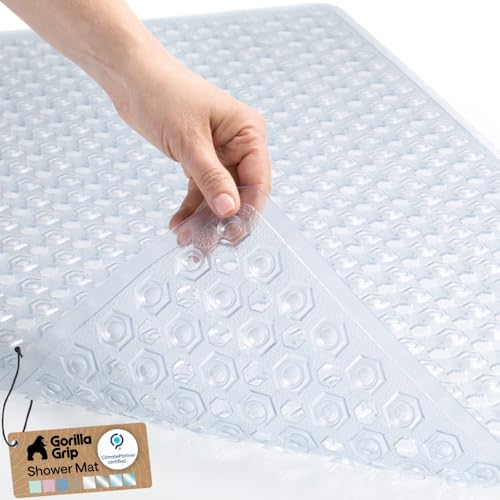
GORILLA GRIP Patented Bath Tub Shower Mat, Machine Washable Bathtub Floor Liner Mats, Suction Cups and Drain Holes to Keep Tubs Clean, Soft on Feet, Bathroom Essentials, 35x16 Inch, Clear
- Patented Design with Suction Cups: Securely stays in place with powerful suction
- Easy Water Drainage: Drain holes prevent water pooling
- BPA-Free and Textured: Soft, pebble-textured surface for comfort
As an affiliate, we earn on qualifying purchases.
Understanding the Purpose and Benefits of Transfer Belts

Transfer belts are essential tools that provide caregivers with a secure handhold during assisted mobility. They help you stabilize and support individuals with limited balance or strength, making transfers safer for both of you. Using a belt reduces the risk of falls and injuries, giving you better control during movements like sitting to standing. It also minimizes your physical strain and lowers the chance of back injuries. With a transfer belt, you can assist patients more confidently, ensuring they feel supported and secure throughout the transfer. Proper use enhances safety, comfort, and independence for the person you’re caring for. Overall, transfer belts are a crucial safety device that improves the quality of assisted mobility, making your caregiving tasks more effective and less risky. Understanding proper technique ensures you use the belt correctly and maximize its benefits. Additionally, awareness of ergonomic principles can help prevent caregiver fatigue and injury during transfers. Being knowledgeable about body mechanics allows you to perform transfers with proper posture, reducing strain.

TEESHLY Bath Tub and Shower Mats, Non Slip 40 x 16 Inch Extra Large Bathtub Mat, Machine Washable Bathmat with Drain Holes, Suction Cups for Bathroom Floor, Gray
- Large Non-Slip Bath Mat: 40 x 16 inches with 362 suction cups
- Massage-Style Pebbled Design: Irregular textured surface for friction
- Optimized Drainage Holes: 327 large holes for water flow
As an affiliate, we earn on qualifying purchases.
Proper Placement and Fit of the Belt

To guarantee safety and comfort during mobility assistance, proper placement of the gait belt is essential. First, position the belt around the waist, just above the hips and lower abdomen. Second, ensure it sits over clothing, not directly on the skin, and avoid fragile areas like surgical sites. Third, buckle the belt slightly off-center for better comfort. Fourth, if the person is frail, place a towel between the belt and their body to prevent discomfort. The belt should fit snugly but allow two fingers to slide easily underneath. Avoid making it too tight, which can restrict breathing, or too loose, which might cause slipping. Proper placement and fit provide stability and reduce risk during transfers. Regularly checking the fit and position helps maintain safety during mobility, ensuring the caregiver and patient feel secure.

YINENN Bath and Shower Safety Mats 40x16 inch, Non Slip with Suction Cups for Bathroom Stall and Tub Floor, Extra Large and Machine Washable, Drain Holes Keep Bathtub Clean, Clear
- Large Size for Full Coverage: 40x16 inch non-slip bath mat
- Secure Suction Cups: 200 powerful suction cups for stability
- Safe and Slip-Resistant: 360-degree anti-slip protection on smooth surfaces
As an affiliate, we earn on qualifying purchases.
Safety Checks and Preparation Before Use

Before using a gait belt, you need to perform safety checks and preparation to guarantee a secure and smooth transfer. First, assess the patient’s physical condition, cognitive ability, and mobility to determine if using a belt is appropriate. Verify there are no contraindications, such as recent abdominal surgery or spinal injuries. Ensure the pathway is clear of obstacles and has enough space for safe movement. Check the belt for tears or damage, and confirm it’s clean. Prepare the patient by explaining what will happen and encouraging cooperation. Make sure the patient is wearing suitable clothing, and gather any assistive devices needed. Taking these steps helps prevent accidents, ensures safety, and sets the stage for a successful transfer. Understanding manipulation tactics can also help caregivers recognize and address potential risks during the process. Additionally, reviewing proper transfer techniques can improve safety and confidence during patient handling. Being familiar with patient assessment techniques allows caregivers to better evaluate readiness and tailor the transfer process accordingly. It is also important to ensure that the caregiver is trained in proper gait belt application to maximize safety during transfers. Incorporating safety protocols into your routine further minimizes the risk of injury during patient transfers.

VOCIC Sit to Stand Lift, One-Step Stand Assist Lift for Elderly, Patient Lift Chair Transport Unit with Wheels, Fall Prevention & Muscle Building, AY03 2026 Upgraded
- Design Without Safety Belt: Open design for supported sit-to-stand
- High Weight Capacity: Supports up to 400 lbs with reinforced steel
- Comfortable Grip and Padding: Foam-wrapped handgrips and padded cushions
As an affiliate, we earn on qualifying purchases.
Correct Techniques for Using a Transfer Belt
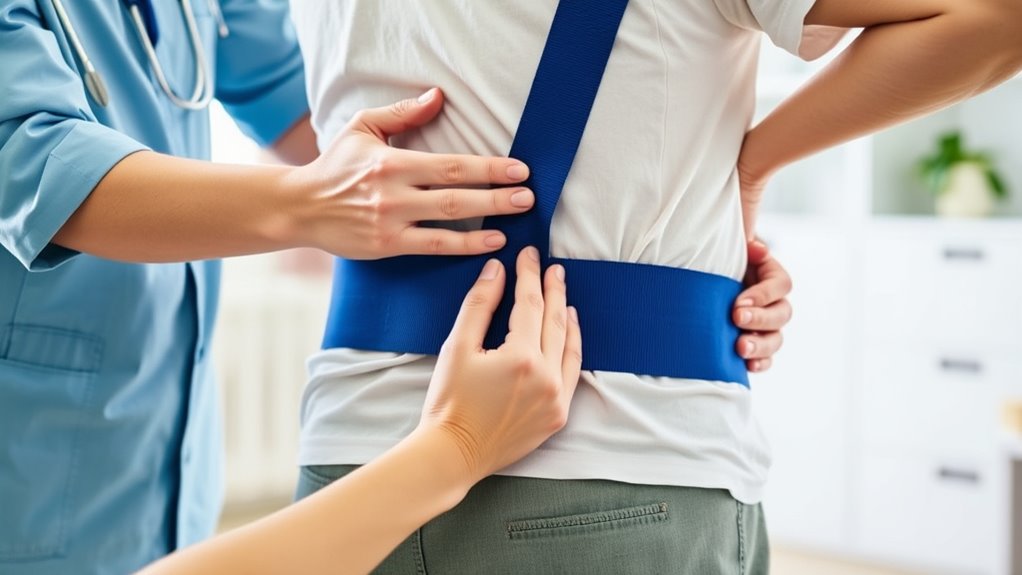
To use a transfer belt safely, you need to place it properly around the patient’s waist, ensuring it’s snug but comfortable. Secure the belt correctly with even tension and an underhand grip to provide steady support. When guiding the patient, move slowly and steadily, keeping communication clear to prevent sudden shifts or falls.
Proper Belt Placement
Proper belt placement is essential for guaranteeing both safety and comfort during transfers. You should position the belt around the waist, just above the hips and lower abdomen. Avoid fragile areas like the ribcage, surgical sites, or open wounds. Always place the belt over clothing rather than directly on the skin to prevent skin irritation. For frail or thin individuals, add a towel between the belt and their body for added comfort. Ensure the belt is snug but not tight. Buckle it slightly off-center for comfort. Two fingers should slide easily between the belt and the person’s body. Proper placement helps maintain support and reduces the risk of slipping or discomfort during transfer. Additionally, understanding the Smart Home Technology involved can aid caregivers in providing more empathetic and effective assistance. Being aware of Free Floating concepts can help caregivers adapt transfer techniques to different environments and needs. Incorporating proper belt placement techniques enhances overall safety and caregiver confidence during patient transfers.
Securing the Belt Correctly
How do you guarantee the transfer belt is secured correctly? First, position the belt around the patient’s waist, snug but not too tight. You should be able to slide two fingers comfortably between the belt and their body. Make sure the buckle is centered or slightly off-center for comfort. Check that the belt lies flat against the skin or clothing, avoiding folds or twists. Confirm it’s secure enough to hold firm support without causing discomfort or restricting breathing. Adjust as needed, ensuring the belt stays in place during movement. Remember, a properly secured belt prevents slipping and provides reliable support, reducing the risk of falls and injuries for both you and the patient. Always double-check before proceeding with any transfer. Additionally, selecting the appropriate transfer belt size and material can enhance safety and comfort during use. Properly training caregivers on securing the belt ensures consistent safety and effectiveness. Incorporating proper fitting techniques can further improve both safety and comfort for the patient. Furthermore, understanding kitchen science & materials can help in selecting durable and skin-friendly belts. Recognizing the importance of belt adjustability ensures that the belt can be fine-tuned for individual patient needs, enhancing overall safety.
Guiding the Patient Safely
Guiding the patient with a transfer belt requires careful technique to ensure safety and stability. First, stand close to the patient, maintaining a balanced stance with feet shoulder-width apart. Keep your back straight and engage your core to prevent strain. Use an underhand grip on the belt, placing your hands evenly on either side for better control. Communicate clearly and calmly, giving instructions throughout the movement. To guide the patient smoothly, remember to: 1. Encourage them to use their own strength when possible. 2. Move slowly and steadily, avoiding jerks. 3. Support their gait by gently guiding their hips or waist. 4. Watch for signs of discomfort or imbalance and adjust accordingly. Proper body mechanics are essential to prevent caregiver injury and ensure effective assistance. Additionally, being aware of the patient’s balance and stability can help you adapt your support as needed. Recognizing and responding to body alignment cues can further promote safe transfers and reduce fall risk. Being attentive to posture and alignment during the transfer helps maintain proper form and safety for both caregiver and patient. Maintaining awareness of the patient’s overall mobility can also help tailor your support to their specific needs.
Recognizing Contraindications and Precautions

Before using a transfer belt, you need to assess the patient’s medical conditions to guarantee it’s safe. Look out for contraindications like recent surgeries, spinal injuries, or open wounds in the belt area. If you’re unsure about any risks, it’s best to consult with the healthcare team before proceeding. Additionally, be aware of potential scams and frauds related to medical equipment and ensure all devices are obtained from reputable sources.
Assessment of Medical Conditions
Evaluating a patient’s medical conditions is essential to guarantee the safe use of a transfer belt. First, review recent surgeries or injuries that could be affected by belt use. Second, consider conditions like spinal injuries or severe respiratory issues that may worsen with assistance. Third, check for open wounds, skin conditions, or medical devices such as feeding tubes or colostomies in the belt area. Fourth, assess pregnancy status or osteoporosis, which can increase risk during transfers. By understanding these factors, you can determine if belt use is appropriate or if adjustments are needed. Always consult with healthcare professionals if you’re unsure about any medical condition that could impact safe transfer practices. This careful assessment protects both you and your patient from potential complications.
Recognizing Risks and Precautions
Recognizing risks and precautions is essential to guarantee safe transfer belt use. You need to identify situations where using a gait belt could cause harm. For example, avoid using it after recent abdominal or chest surgery, spinal injuries, or if the patient has open wounds or skin conditions. Always assess the patient’s medical history before applying the belt. The table below highlights common contraindications and precautions:
| Contraindications | Precautions |
|---|---|
| Recent abdominal or chest surgery | Use slow, steady movements during transfers |
| Spinal cord injuries or fractures | Check belt fit—snug but not tight |
| Open wounds or fragile skin | Communicate clearly with the patient |
Stay vigilant, and if in doubt, consult healthcare professionals.
Best Practices for Safe and Effective Transfers

To guarantee safe and effective transfers, it’s essential to plan ahead and communicate clearly with your patient. This prepares both of you for a smooth process. Here are some best practices:
- Assess your patient’s condition to determine readiness and identify any contraindications.
- Position the belt properly, around the waist, ensuring it fits snugly but comfortably.
- Explain each step to your patient to promote cooperation and reduce anxiety.
- Use slow, controlled movements, supporting the patient’s weight evenly and avoiding jerks or sudden pulls.
Always check the environment for obstacles and ensure your hands are secure on the belt. Proper planning and communication help prevent falls and injuries, making transfers safer for you and your patient.
Frequently Asked Questions
How Do I Choose the Right Size of Transfer Belt for My Patient?
You choose the right size of transfer belt by measuring around your patient’s waist, ensuring the tape measure is snug but not tight. The belt should fit comfortably, with two fingers able to slide between the belt and the body. Avoid belts that are too loose, as they can slip, or too tight, which can cause discomfort or restrict breathing. Always confirm proper fit before proceeding with transfers.
Can Transfer Belts Be Used on Patients With Skin Conditions?
A stitch in time saves nine, so you should avoid using transfer belts on patients with skin conditions. If your patient has fragile or irritated skin, applying a belt can cause further damage or discomfort. Always assess skin integrity first, and consult a healthcare professional if unsure. Use a towel or padded barrier if needed, and prioritize gentle handling to prevent worsening skin issues during transfers.
What Should I Do if the Patient Feels Uncomfortable During Transfer?
If your patient feels uncomfortable during a transfer, stop immediately and check the belt’s fit. Loosen or reposition it if needed, ensuring it’s snug but not tight. Ask if they’re experiencing pain or breathing issues, and adjust accordingly. Communicate calmly to reassure them, and if discomfort persists, consider alternative transfer methods or seek guidance from a healthcare professional. Always prioritize their comfort and safety.
How Often Should the Belt Be Repositioned During Mobility Exercises?
You should reposition the belt as needed during mobility exercises, especially if the patient shifts or if you notice discomfort. Check the belt’s fit frequently, ensuring it’s snug but not tight, and adjust if it slips or causes discomfort. Move with the patient smoothly, and if they change position or you switch tasks, readjust to maintain proper support. Regular repositioning helps prevent injury and keeps the transfer safe.
Are There Specific Types of Transfer Belts for Different Patient Needs?
Yes, there are specific transfer belts designed for different patient needs. You can choose from standard belts for general use, padded belts for patients with sensitive skin, and adjustable belts for a better fit. Some belts have quick-release buckles for easy removal, while others are made with non-slip materials for added safety. Always select a belt that matches the patient’s size, condition, and mobility level to guarantee safe and effective assistance.
Conclusion
Using a transfer belt safely means understanding its purpose, ensuring proper fit, performing safety checks, applying correct techniques, recognizing contraindications, and following best practices. By staying attentive, practicing patience, and maintaining clear communication, you create a safer environment for both you and your patient. Remember, safety isn’t just about following steps; it’s about building trust, preventing harm, and promoting confidence. Keep learning, stay vigilant, and always prioritize safety to make every transfer smooth and secure.