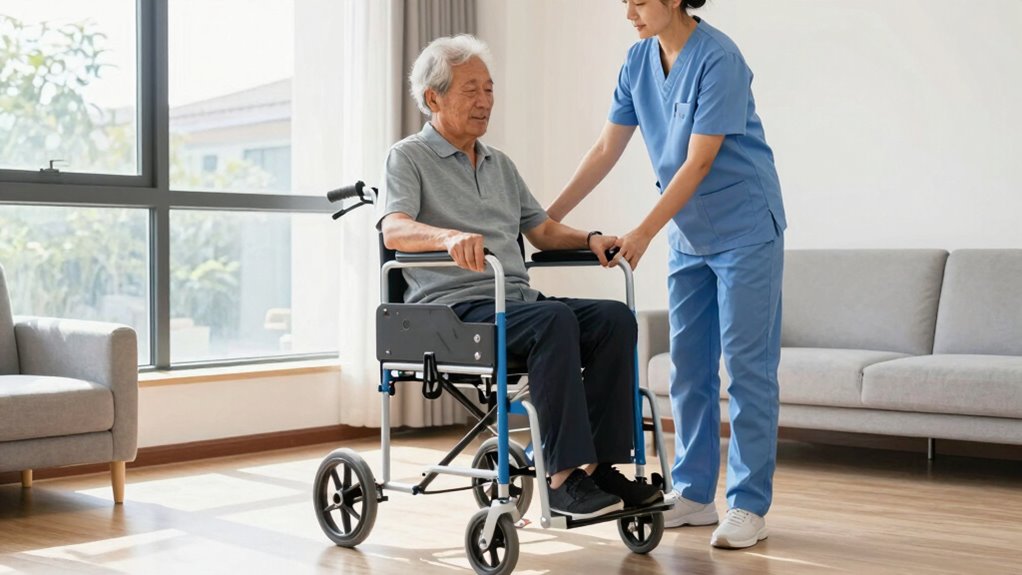

When standing support becomes essential, sit-to-stand lifts offer safe and reliable help. They provide stability through features like locking mechanisms, anti-slip surfaces, and secure harnesses. These lifts give you control and comfort during transfers, boosting confidence and dignity. The safety sensors and alarms alert you to any instability, reducing the risk of falls. If you want to understand how these features work together to make transfers safer, keep exploring to discover more.

Turn quiet afternoons into listening time
- Thousands of audiobooks, podcasts and originals
- Listen on your phone, tablet or Echo — also offline
- Cancel anytime
Key Takeaways
- Sit-to-stand lifts provide essential support for individuals with limited mobility during transfers.
- They enhance safety and stability, reducing fall risks in various environments.
- Safety features, such as harnesses and anti-slip surfaces, ensure secure and comfortable transfers.
- Manual operation with safety mechanisms offers reliable, personalized assistance for users.
- These lifts promote independence, dignity, and confidence during standing and transfer routines.

Safety features are a vital element when selecting a sit-to-stand lift. Many models include locking mechanisms that prevent unintended movement, ensuring the lift stays securely in place during transfers. These safety features help prevent accidents, giving both you and the person you’re assisting peace of mind. Some lifts also have anti-slip surfaces and secure harnesses that keep the individual stable throughout the process. This added security can be particularly comforting for those with balance issues or frailty. Additionally, safety sensors or alarms may be integrated into certain models, alerting caregivers if there’s any instability or if adjustments are needed during use. All these safety features work together to make transfers safer and less stressful. Incorporating safety features into your choice can greatly enhance confidence and protection during transfers.
When using a sit-to-stand lift, you’ll appreciate how manual operation combined with thoughtful safety features simplifies the process. You gain more control, which allows for gentle, personalized assistance tailored to the user’s comfort level. This control helps prevent jerky movements or sudden shifts that could cause discomfort or injury. Furthermore, the manual aspect often means fewer mechanical failures and less dependency on electrical power, making it a dependable choice in various settings. Whether you’re working in a home environment or a healthcare facility, these lifts provide a reliable, safe way to support mobility. They empower users to regain independence and maintain dignity during transfers, making daily routines smoother and safer for everyone involved.
Frequently Asked Questions
How Do I Choose the Right Sit-To-Stand Lift for My Needs?
To choose the right sit-to-stand lift, consider your specific needs and environment. Look for an ergonomic design that offers comfort and ease of use, reducing strain during transfers. Check the weight capacity to make certain it supports your weight safely. Additionally, evaluate features like mobility, battery life, and ease of cleaning. By prioritizing ergonomic design and appropriate weight capacity, you’ll find a lift that enhances safety and independence seamlessly.
Are Sit-To-Stand Lifts Suitable for All Mobility Levels?
Think of sit-to-stand lifts as bridges in assistive technology, helping you cross the gap between limited mobility and independence. They’re suitable for various mobility levels, but not all. If you can stand with support, these lifts can enhance your mobility and safety. However, for severe mobility challenges, other assistive devices might be more appropriate. Always consult a healthcare professional to find the best solution for your needs.
What Maintenance Is Required for Sit-To-Stand Lifts?
You need to regularly clean your sit-to-stand lift following cleaning protocols to guarantee hygiene and safety. Keep the surfaces disinfected and inspect for dirt or debris. Additionally, monitor battery maintenance by charging it properly and checking for any signs of wear or corrosion. Regularly schedule professional inspections to keep the lift functioning smoothly, extending its lifespan and ensuring user safety at all times.
Can Sit-To-Stand Lifts Be Used in Home and Clinical Settings?
Yes, sit-to-stand lifts can be used in both home and clinical settings. You should guarantee proper caregiver training to operate the lift safely and effectively. Cost considerations also play a role, as these lifts vary in price, but investing in one can improve safety and independence. Whether at home or in a clinical environment, proper use and maintenance make these lifts a valuable support tool.
What Are the Safety Precautions When Using a Sit-To-Stand Lift?
You must prioritize safety by conducting a thorough risk assessment before using a sit-to-stand lift, and staff training is vital to prevent accidents. While the lift provides essential support, improper use can lead to injuries. Always make certain the equipment is in good condition, clear the area of obstacles, and follow manufacturer instructions. Combining proper training with careful assessment protects both you and the person you’re assisting.
Conclusion
So, next time you find yourself hesitating to use a sit-to-stand lift, remember—what’s truly essential might just be the support you’re so quick to overlook. Ironically, these lifts, designed to make life easier, often become the very thing we resist. But in the end, isn’t it worth embracing a little help to stay safe and independent? Sometimes, standing tall means accepting the support that keeps you there.
Fall Picks
fall essentials
As an affiliate, we earn on qualifying purchases.