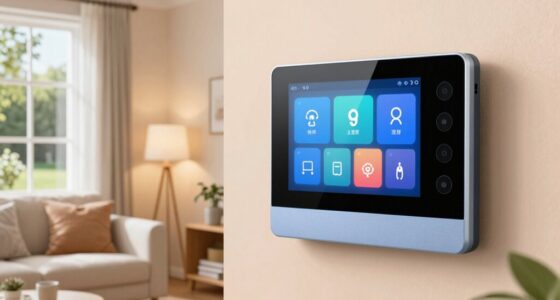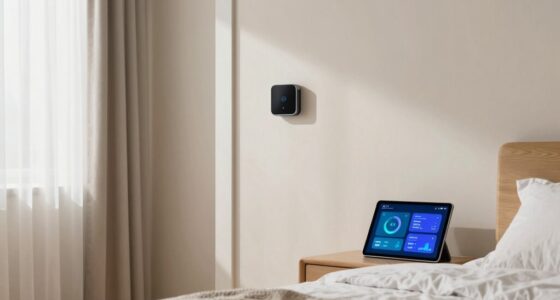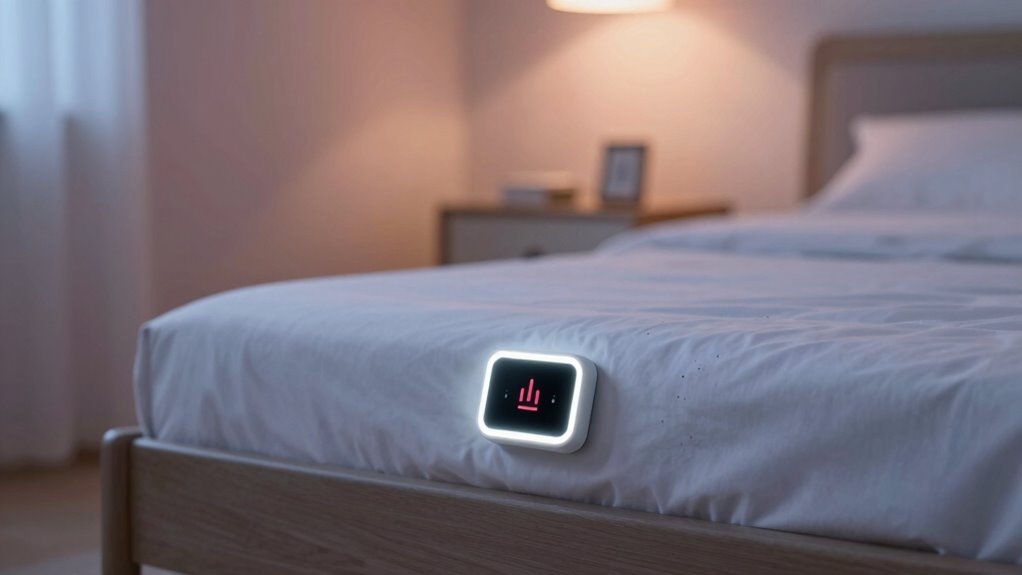

Nighttime wandering needs better signals because poorly placed sensors or incorrect sensitivity can lead to false alarms or missed bed exits. If your alarm isn’t properly calibrated, it may trigger during minor movements or false alarms, causing frustration or delays in response. To improve safety and comfort, you should carefully position sensors and adjust sensitivity settings for accurate detection. Keep going, and you’ll discover how to optimize your bed exit alarm for reliable performance.

Turn quiet afternoons into listening time
- Thousands of audiobooks, podcasts and originals
- Listen on your phone, tablet or Echo — also offline
- Cancel anytime
Key Takeaways
- Effective signals ensure timely alerts, preventing falls during nighttime wandering.
- Proper sensor placement and sensitivity reduce false alarms caused by bedding or minor movements.
- Clear, reliable signals help caregivers respond quickly to genuine bed exit attempts.
- Better signals improve safety and peace of mind for individuals prone to wandering.
- Balancing placement and sensitivity enhances alarm accuracy and minimizes disruptions overnight.

The placement of sensors is vital because it directly affects how well the alarm performs. Usually, sensors are attached to the bed frame, mattress, or a nearby chair, depending on the design. You should position the sensor where the person’s movement is most consistent and where accidental triggers are minimized. For example, if the sensor is too high on the bed, it might not detect movements as effectively when the person shifts or sits up. Conversely, if it’s placed too low or in a spot that’s easily disturbed by bedding or movement, you’ll find yourself dealing with false alarms. Taking the time to test different positions and observing how the alarm responds helps you find the best placement.
Alarm sensitivity is another essential factor. If the alarm is too sensitive, it may sound at the slightest movement, causing unnecessary disruptions and possibly leading to alarm fatigue. You want the sensitivity to be tuned so that it only triggers when someone genuinely attempts to get out of bed. Adjusting sensitivity involves sometimes using adjustable settings on the alarm device itself or choosing models that allow for easy customization. Proper sensitivity settings ensure you’re alerted when needed without constantly being disturbed by minor or irrelevant movements.
Ultimately, the goal is to strike a balance where the sensor placement and alarm sensitivity work together seamlessly, providing a reliable signal that alerts you promptly without false alarms. Properly calibrated alarms give you peace of mind, knowing that you’ll be notified if your loved one tries to leave the bed during the night. This not only helps prevent falls but also allows for quicker responses, making nighttime safety more effective and less stressful for everyone involved.
bed exit alarm with adjustable sensitivity
As an affiliate, we earn on qualifying purchases.
As an affiliate, we earn on qualifying purchases.
Frequently Asked Questions
How Do Bed Exit Alarms Differ From Other Patient Monitoring Devices?
You’ll find bed exit alarms differ from other patient monitoring devices because they focus solely on detecting when someone leaves the bed, using sensors with high accuracy. They also offer alert customization, so you can set specific notifications based on individual needs. Unlike broader monitors, these alarms provide immediate, targeted alerts, helping prevent falls and ensuring safety during nighttime wandering. Their specialized function and customizable alerts make them essential for patient safety.
Are There Any Safety Concerns With Using Bed Exit Alarms?
Think of bed exit alarms as guardians, but even guardians have flaws. You might worry about privacy concerns, as constant monitoring can feel intrusive. False alarms are another issue, causing unnecessary stress and alarm fatigue. These concerns don’t mean alarms are unsafe—they highlight the need for smart, reliable systems. By understanding these risks, you can balance safety with respect for privacy, ensuring your loved ones are protected without feeling overwhelmed.
How Long Do Battery-Powered Bed Exit Alarms Typically Last?
Battery-powered bed exit alarms typically last between six months to a year, depending on their battery lifespan and power management features. You can extend their life by choosing models with energy-efficient settings and regular maintenance, like replacing batteries when needed. Proper power management guarantees the alarms stay reliable, giving you peace of mind during the night. Always check the manufacturer’s recommendations for ideal battery replacement intervals.
Can Bed Exit Alarms Be Used for Outdoor or Mobile Beds?
Imagine a lighthouse guiding ships safely through fog—bed exit alarms work similarly, but what about outdoor or mobile beds? Yes, many now feature outdoor capabilities and mobile bed alerts, making them versatile for various settings. These alarms can be mounted on outdoor beds or used with wheeled beds, alerting caregivers no matter where the bed is. So, you can confidently monitor wandering, indoors or out, with adaptable alert systems.
What Training Is Needed for Staff to Effectively Use Bed Exit Alarms?
You need to provide staff training on how to effectively operate bed exit alarms, guaranteeing they understand alarm calibration to prevent false alerts or missed signals. Training should include proper setup, recognizing alarm sounds, and responding promptly to alerts. Regular refresher courses help staff stay confident, and hands-on practice ensures everyone knows how to use the alarms correctly, promoting patient safety and reducing nighttime wandering risks.
bed sensor alarm for elderly safety
As an affiliate, we earn on qualifying purchases.
As an affiliate, we earn on qualifying purchases.
Conclusion
In the world of bed exit alarms, better signals bring safer sleep and stronger security. By boosting alerts, you banish bedtime breaches, preventing peril and providing peace of mind. Clear, consistent cues can curb wandering worries, creating a calm, controlled environment. With smarter signals, you stand stronger against sudden sallys, securing serenity for seniors and caregivers alike. Remember, a better beep, a safer sleep—making midnight wandering worries a thing of the past.
As an affiliate, we earn on qualifying purchases.
bed exit alarm sensor placement kit
As an affiliate, we earn on qualifying purchases.
As an affiliate, we earn on qualifying purchases.
Cold & flu season Picks
humidifiers
As an affiliate, we earn on qualifying purchases.