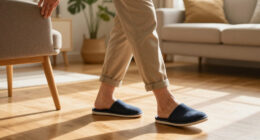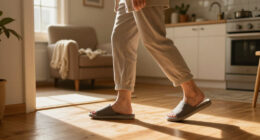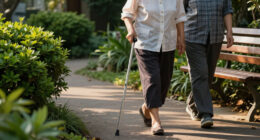
This guide walks you through choosing comfortable orthopedic slippers for a senior — whether for yourself, a parent, or another family member — and fitting them correctly so they get worn instead of sitting in a closet. You will learn how to measure feet properly, which features actually matter (arch support, sole grip, closure type, toe room), how to test the fit at home, and how to break slippers in safely. This guide is for anyone shopping for indoor footwear for an older adult, especially people dealing with foot pain, swollen feet, plantar fasciitis, arthritis, diabetes, or balance concerns. No special expertise is required — just a tape measure, a willingness to check the fit carefully, and about an hour for the shopping and fitting process. Done well, the result is a pair of slippers that slips on easily, supports the arch, grips the floor, and gets worn every day without causing pressure points or falls.

Turn quiet afternoons into listening time
- Thousands of audiobooks, podcasts and originals
- Listen on your phone, tablet or Echo — also offline
- Cancel anytime

OrthoComfoot Men’s Orthopedic Slip-On Canvas Loafers with Arch Support
- ✔ Upper material: Canvas
- ✔ Sole: EVA + Rubber
- ✔ Insole: Orthotic with TPU arch support, PU memory foam, latex metatarsal pad, massaging gel

VALSOLE Orthopedic Slippers for Women and Men with Arch Support
- ✔ Sole material: EVA (Ethylene Vinyl Acetate)
- ✔ Outer material: Cotton
- ✔ Inner material: Wool

Litfun Orthopedic Slippers for Women with Arch Support House Shoes
- ✔ Sole material: Rubber
- ✔ Upper: Corduroy
- ✔ Lining: Velvet terry cloth
Difficulty: Beginner | Time: 1-2 hours for selection and fitting, plus 1-2 weeks of gradual break-in
What You’ll Need
Tools & Materials:
- A flexible tape measure or a ruler
- A piece of paper larger than the foot and a pencil (for tracing)
- A hard floor for testing grip and walking
- The socks the senior will normally wear with the slippers (thin, thick, or compression socks)
- A phone or camera (optional, for comparing models while shopping)
Knowledge:
- Basic awareness of any foot conditions involved: bunions, hammertoes, plantar fasciitis, diabetes-related neuropathy, arthritis, or edema
- Knowledge of any doctor or podiatrist recommendations already given, especially if orthotics are prescribed
Measure feet in the late afternoon or evening. Feet swell over the course of the day, and slippers that fit in the morning can feel tight by dinner. If the senior has significant swelling (edema), measure at the time of day when swelling is typically worst. If shopping online, buy from a retailer with free returns so the fit can be tested at home before committing.
OrthoComfoot Men’s Orthopedic Slip-On Canvas Loafers with Arch Support
This option stands out for balancing genuine orthotic engineering with everyday practicality — which is exactly why it takes our top spot. The TPU arch support is firm enough to address plantar fasciitis and heel pain, while the PU memory foam layer and latex metatarsal pad soften the ride so the footbed never feels punishing underfoot. That combination matters for seniors who need structure but whose feet tire of rigid plastic within an hour.A key differentiator in this lineup is the inclusion of a second pair of softer replacement insoles. Compared with the VALSOLE, whose firm arch support comes with no such fallback, this gives wearers a way to dial the support level up or down — a real advantage for anyone adjusting to orthotics for the first time. The slip-on canvas upper also goes on without bending or pulling, matching the VALSOLE’s ease of entry while being more breathable than its wool lining.The tradeoffs are real but manageable. The canvas upper is less durable than leather and less warm than the wool-lined VALSOLE, so it is not the pick for cold floors or rough outdoor terrain. And like any aggressive orthotic, the stock insole can feel intrusive at first — the difference here is that the included softer pair gives you an immediate alternative rather than a multi-day break-in.
Pros:
- TPU arch support paired with memory foam and a metatarsal pad targets plantar fasciitis, heel pain, and arthritis effectively
- Includes a spare pair of softer insoles, letting wearers adjust support firmness
- Breathable, lightweight canvas with a true hands-free slip-on design
- Durable enough for outdoor casual wear, nursing, and long standing periods
Cons:
- Stock orthotic insole can feel too firm until swapped or broken in
- Canvas is less durable than leather and less insulating than wool options
Best for: Seniors who want serious arch support for plantar fasciitis or heel pain with the flexibility to adjust firmness, and who need one pair that works from the house to the store.
Not ideal for: Those who want maximum warmth on cold floors, or who prefer a plush, cushioned feel over structured orthotic support.
Bottom line: The most complete package in this lineup: genuine orthotic relief, adjustable firmness, and indoor-outdoor versatility in one slip-on.
“The most complete package in this lineup: genuine orthotic relief, adjustable firmness, and indoor-outdoor versatility in one slip-on.”
VALSOLE Orthopedic Slippers for Women and Men with Arch Support
Where the OrthoComfoot spreads its attention across comfort and versatility, the VALSOLE concentrates on one job: supporting users over 220 pounds. Its built-in orthotic insole is the most rigid in this comparison, engineered to distribute pressure across the whole foot rather than letting it concentrate at the heel and ball — the exact failure mode that accelerates fatigue for heavier wearers.The anti-slip EVA outsole is thicker and more traction-focused than the Litfun’s rubber sole, giving it an edge on tile, hardwood, and damp outdoor surfaces. Combined with the cotton-and-wool construction, it is also the warmest option here, making it a stronger winter choice than the breathable OrthoComfoot canvas. The pull-on closure means no bending or fastening, which matters for anyone with back or hip limitations.The honest drawback is the break-in commitment. The firm arch is aggressive enough that the brand itself recommends limiting wear to 2-7 hours per day initially, and some strain in the first week is common. Unlike the OrthoComfoot, there is no softer spare insole to ease the transition. Lighter users under 220 pounds may find the arch simply overbuilt for their needs, and should look elsewhere in this lineup.
Pros:
- The most aggressive arch support in this lineup, built specifically for 220+ lb users
- Anti-slip EVA outsole performs well on tile, hardwood, and damp surfaces
- Wool-lined cotton construction is the warmest option for cold floors and winter months
- Even pressure distribution meaningfully reduces foot fatigue during long days on one’s feet
Cons:
- Requires a gradual break-in of 2-7 hours of wear per day, with initial strain common
- Rigid arch support may be overbuilt for lighter users
- No softer alternate insole included, unlike the OrthoComfoot
Best for: Seniors over 220 pounds who need maximum arch structure, pressure distribution, and warm, slip-resistant footwear for indoor and light outdoor use.
Not ideal for: Lighter users who will find the rigid arch excessive, or anyone unwilling to go through a gradual break-in period.
Bottom line: The strongest structural support in this comparison, but only for wearers heavy enough to need it and patient enough to break it in.
“The strongest structural support in this comparison, but only for wearers heavy enough to need it and patient enough to break it in.”
Litfun Orthopedic Slippers for Women with Arch Support House Shoes
The Litfun solves a problem the other two cannot: feet that change. With adjustable hook-and-loop straps, it accommodates swelling, bunions, and varying widths throughout the day — something the fixed designs of both the OrthoComfoot and VALSOLE simply cannot do. For seniors whose foot size fluctuates or who struggle with slippers that pinch by evening, this adjustability is the deciding feature.Comfort comes from a memory foam ergonomic footbed rather than a rigid orthotic shell. Compared with the VALSOLE, the support is gentler and needs no break-in period — it feels good from the first wear — though it provides less aggressive correction for severe plantar fasciitis. The corduroy upper and velvet terry lining are breathable enough for summer and cozy enough for winter, and the fact that the whole slipper is machine washable makes it the most practical choice for everyday house wear, especially for anyone with incontinence concerns or heavy daily use.Its weaknesses are modest but worth naming. The open-toe design leaves the forefoot exposed, which rules it out for anyone needing full coverage, protection from cold, or diabetic foot safeguards. Some pairs also show slight adhesive overflow at the sole seam — cosmetic, but a reminder that the build is not as robust as the OrthoComfoot’s outdoor-ready construction. Think of this as a dedicated house slipper rather than a do-everything shoe.
Pros:
- Adjustable hook-and-loop straps accommodate swelling, bunions, and changing foot width
- Memory foam footbed delivers arch support with no break-in period required
- Fully machine washable — the only washable option in this lineup
- Rubber outsole provides reliable traction indoors and for quick outdoor trips
Cons:
- Open-toe design leaves the forefoot exposed to cold and bumps
- Gentler support than the orthotic shells in the OrthoComfoot and VALSOLE
- Slight adhesive overflow may appear on some pairs at the sole seam
Best for: Women with swollen feet, bunions, or hard-to-fit widths who want a zero-break-in, machine-washable house slipper with customizable fit.
Not ideal for: Those who need full foot coverage, aggressive orthotic correction, or a slipper durable enough for extended outdoor wear.
Bottom line: The easiest slipper to live with day to day — adjustable, washable, and comfortable immediately — as long as open toes and moderate support are acceptable.
“The easiest slipper to live with day to day — adjustable, washable, and comfortable immediately — as long as open toes and moderate support are acceptable.”
As an Amazon Associate we earn from qualifying purchases.
Before You Start
Three things to settle before you shop. First, decide whether a podiatrist has prescribed custom orthotics or recommended specific features — if so, the slippers need a removable insole so the orthotic can replace it. Second, know the senior’s priorities honestly: if bending over to put shoes on is hard, a slip-on or hands-free design matters more than a lace-up. If falls are a concern, a closed back and slip-resistant sole are non-negotiable. Third, set a realistic budget. Good orthopedic slippers typically cost between $40 and $120. Very cheap slippers with flat, floppy soles usually fail within months and offer no support, so treat this as a health purchase, not a convenience one.
Avoid open-back scuffs for anyone with balance problems or unsteady gait. They are a common cause of indoor slips and are the single most frequent wrong purchase in this category.
Step-by-Step Instructions
Step 1: Measure both feet in the afternoon
Lay a piece of paper on a hard floor and have the senior sit with one foot flat on it. Trace around the foot with the pencil held upright. Measure the length from heel to longest toe and the width at the widest point using the tape measure. Repeat these steps for the other foot. Write down both measurements in inches or centimeters. Note that most people have one foot slightly larger — always fit the larger foot.
Tip: If the senior cannot stand or sit steady enough for tracing, press the heel against a wall, mark the tip of the longest toe on the floor with tape, and measure from the wall to the mark.
Check: You have written length and width measurements for both feet, and you know which foot is larger.
Step 2: Match measurements to the manufacturer’s size chart
Convert the foot measurements to a shoe size using the specific brand’s size chart — do not assume the senior’s old shoe size is correct. Check whether the brand offers wide or extra-wide options and select the width that matches your measurement. If the senior wears thick or compression socks at home, choose the wider option or a half size up. Remember that foot size and shape change with age: arches flatten, feet lengthen, and width often increases.
Tip: Many people over 70 wear shoes one full size larger than they did at 40. Trust the tape measure, not the number they have always worn.
Check: You have a specific size and width to buy, based on the chart, not on memory.
Step 3: Choose the three non-negotiable features
Filter your options down to slippers that have all three of the following: a firm, contoured arch support (a molded footbed, not a flat cushion); a rubber or rubber-textured outsole with visible tread, suitable for walking on tile and wood; and a closed back or a secure back strap. Then pick a closure type based on the senior’s hands: choose hook-and-loop straps for arthritis-friendly adjustability, or a roomy slip-on if hands are weak but swelling is not an issue. These three features do most of the work of preventing foot pain and indoor falls.
Tip: Look for a removable insole if custom orthotics are prescribed — you need the pocket of space to insert them.
Check: Your shortlist contains only slippers with arch support, a gripped sole, and a secure heel.
Step 4: Check the material and interior seams
Run your fingers inside each slipper and feel for anything raised or scratchy before buying. Select the upper and lining material based on the senior’s skin: choose soft leather, stretch knit, or breathable wool for most people, and prioritize seamless or softly lined interiors for diabetes-related neuropathy, where a rough seam can cause an unnoticed blister. If feet swell, choose a stretchy knit upper or adjustable straps rather than stiff leather. Reject any pair with hard plastic trim or exposed inside seams.
Tip: Memory foam feels luxurious but flattens within weeks and provides no arch support. A contoured cork or EVA footbed holds its shape far longer.
Check: The interior feels smooth to your hand everywhere, and the material matches the senior’s skin and swelling needs.
Step 5: Try both slippers on with the right socks
Put the senior in the socks they will actually wear at home, then have them put on both slippers and stand up. Check three things while standing: there is roughly a thumb’s width of space (about half an inch) beyond the longest toe; the ball of the foot sits in the widest part of the slipper without spilling over the edge; and the heel sits snugly against the back without sliding. Watch from behind as they walk across a hard floor — the heel should not slip out and the slipper should not slap.
Tip: Always test standing, never sitting. Feet spread under body weight, and a slipper that feels roomy seated can be tight standing.
Check: Toe room, width, and heel grip all check out while standing, and walking shows no slipping or slapping.
Step 6: Test the grip and ease of use
Walk with the senior across every floor type in the home — tile, hardwood, and any rugs. Press a hand against the sole and drag it across a smooth surface to feel the traction. Then have the senior put the slippers on and take them off unassisted, using their own hands or feet. If they cannot get them on or off alone, the slippers will go unused no matter how supportive they are.
Tip: Watch for rug edges catching on the toe. A slightly rocker-shaped or low-profile toe reduces this tripping risk.
Check: The slippers grip on all floor types and the senior can put them on and remove them without help.
Step 7: Break the slippers in gradually
Wear the new slippers for one to two hours per day for the first week, using the old pair the rest of the time. Increase wearing time each day. Expect a contoured footbed to feel strange at first — mild arch awareness is normal for the first few days. Stop and reassess the fit if blisters, numbness, or sharp pain appear at any point. By the end of the second week the slippers should feel natural for all-day indoor wear.
Tip: For anyone with neuropathy, inspect the feet visually each evening during break-in, since they may not feel a problem developing.
Check: After 10 to 14 days, the slippers are worn all day without red marks, hot spots, or pain.
Common Mistakes to Avoid
- Buying open-back scuff slippers because they are easy to slip on — Choose a closed back or a secure adjustable strap. Open backs are a leading cause of indoor slips for seniors with any gait or balance changes.
- Ordering the size the senior has always worn — Measure both feet and use the brand’s own size chart. Feet lengthen and widen with age, and vanity sizing varies widely between brands.
- Choosing soft memory foam with no arch contour — Press your thumb into the footbed at the arch. If there is no raised contour, the slipper will not support the arch and will flatten within weeks.
- Trying slippers on sitting down or with bare feet when socks are normally worn — Always test standing, in the actual socks worn at home. Feet spread under weight, and sock thickness can change the fit by a full width.
Troubleshooting
Problem: The slippers feel tight across the width but the length is correct
Solution: Exchange for the wide or extra-wide version of the same model rather than sizing up in length, which would create heel slippage. If the brand has no wide option, switch to a stretch-knit upper or a hook-and-loop strap model.
Problem: Heel slips out of the back while walking
Solution: Try a half size down, a model with a gusseted or higher back, or a snug heel strap. Do not fix heel slip with thick socks alone — it usually returns as the sock compresses.
Problem: The arch support feels uncomfortable or pressing after several days
Solution: Mild awareness for the first week is normal; sharp or localized pressure is not. If discomfort stays in one spot, the contour does not match the senior’s arch shape — exchange for a different footbed profile, often described as ‘low arch’ or ‘neutral.’
Problem: Feet swell in the evening and the slippers become restrictive
Solution: Choose a hook-and-loop closure so the fit can be loosened as the day goes on, and schedule a podiatry visit if swelling is new or worsening — persistent edema should be evaluated medically.
What Success Looks Like
The task is complete when all of the following hold true: the slippers go on and come off without assistance; there is a thumb’s width of toe room while standing; the heel stays put while walking on hard floors; the sole grips tile and wood without sliding; the senior wears them all day without red marks, blisters, or complaints of pressure; and foot pain that prompted the purchase — whether arch, heel, or ball-of-foot pain — is reduced within two to three weeks of daily wear. A final check at the end of the first month: inspect the footbed and outsole. The footbed should show an even footprint impression, and the tread should show no significant wear. If the slippers are worn daily and the senior reaches for them without being reminded, the purchase has done its job.
Next Steps
Inspect the slippers every two to three months. Replace them when the outsole tread is worn smooth, the footbed impression is deep and uneven, or the arch contour has visibly flattened — typically every 9 to 18 months with daily wear. Keep the old pair out of circulation so worn-out slippers do not get used out of habit. If foot pain persists after three weeks in well-fitted slippers, or if new numbness, swelling, or skin changes appear, schedule a podiatry appointment — the slippers may need to work alongside medical treatment or custom orthotics rather than instead of it. For seniors who also step outside briefly, consider a companion pair of supportive house-shoes with a sturdier outsole so the indoor pair stays clean and lasts longer.
Frequently Asked Questions
Are orthopedic slippers covered by Medicare or insurance?
Ordinary slippers are generally not covered. However, if a doctor prescribes therapeutic shoes or inserts for a qualifying condition such as diabetes, part of the cost of therapeutic footwear or custom insoles may be covered. Check with the prescriber and the insurance plan before purchasing, and keep the prescription documentation.
Can a senior with diabetes wear ordinary orthopedic slippers?
They can, with conditions: choose a seamless interior, a roomy toe box, and a non-binding upper, and inspect feet visually every evening because neuropathy can hide early skin damage. Any new blister, red spot that does not fade within 15 minutes of removing the slipper, or skin break should prompt a call to a healthcare provider.
How tight should orthopedic slippers feel?
Snug at the heel and midfoot, never tight anywhere. You should be able to wiggle the toes freely, slide one finger — but not two — between the heel and the back of the slipper while standing, and feel no pressure points after an hour of wear. Tightness that leaves a mark on the skin means the width or closure needs adjusting.
Are expensive slippers worth it for seniors?
Up to a point. The features that matter — a contoured arch, gripped outsole, quality lining, adjustable closure — typically appear in the $40 to $120 range. Above that, you are often paying for brand name or luxury materials. A well-fitted $60 pair with the right features will outperform a poorly fitted $200 pair.
How often should slippers be replaced?
With daily wear, expect 9 to 18 months. Replace sooner if the tread is smooth, the footbed has flattened so the arch no longer feels supportive, or the lining has compressed and the fit has loosened. A slipper that slides on the floor or no longer holds the heel firmly should be replaced immediately, as both are fall risks.
Fall Picks
fall essentials
As an affiliate, we earn on qualifying purchases.