TL;DR

Turn quiet afternoons into listening time
- Thousands of audiobooks, podcasts and originals
- Listen on your phone, tablet or Echo — also offline
- Cancel anytime
Comfortable orthopedic slippers for seniors should fit securely, leave room for the toes, and have a stable, slip-resistant sole suited to the home’s floors. Adjustable closures, washable materials, and removable footbeds can help with swelling, hygiene, or custom inserts, but slippers do not treat medical conditions or prevent every fall. Persistent pain, wounds, swelling, or reduced sensation call for advice from a clinician or podiatrist.
A slipper that slides off at the heel can turn a quiet trip to the kitchen into a careful shuffle. For older adults, the right pair can make daily routines easier, especially with cold feet, sore joints, or limited mobility.
This guide explains what to check in comfortable orthopedic slippers for seniors: fit, traction, support, and ease of use. You’ll also learn when a slipper is not enough and a foot care professional should weigh in.
Measure both feet while standing, and try slippers with the socks the wearer usually uses.
Choose enough toe room and a secure fit; adjustable straps can help when feet swell or differ in width.
Match the sole and tread to the home’s floors, and replace slippers when they become worn or unstable.
Removable footbeds may accommodate custom orthotics, provided the insert fits without making the slipper tight or loose.
Ask a clinician or podiatrist about wounds, persistent pain or swelling, reduced sensation, or specialized footwear needs.
What Makes a Slipper Feel Supportive and Secure?
Comfortable orthopedic slippers for seniors are indoor shoes designed around a secure fit, a stable sole, and a footbed that feels comfortable for the wearer. The word “orthopedic” alone does not prove that a slipper treats pain or improves balance. Think of the label as a prompt to inspect the actual design, because the same label can describe very different levels of structure and fit.
Start with the basics: the slipper should stay on while walking, let the toes spread naturally, and avoid pressure or rubbing. A roomy toe box gives the toes space to move rather than forcing them together; that matters when feet are wider, sore, or prone to swelling. An adjustable strap can accommodate changes over the day. For example, a strap that loosens after lunch may be easier to manage than a snug slip-on that pinches by evening. Too much room, however, can let the foot slide, so adjustability helps only when it produces a secure hold.
Support and softness are not the same thing. A cushioned footbed can feel pleasant underfoot, but if it compresses so much that the foot sinks or wobbles, it may feel less stable. A firmer design can provide a steadier base but may feel harsh to someone with tender feet. The useful balance is a supportive feel that suits the wearer, without pressure or excessive sinking. Try the pair on with their usual socks, since socks change both warmth and available space.
A useful rule: Choose for fit and secure hold first; treat the “orthopedic” label as a description, not a medical promise.
Check These Five Details Before You Buy
Comfortable orthopedic slippers for seniors are easier to compare when you check five details: fit, sole, footbed, closure, and materials. Each one affects how the slipper behaves during an ordinary day at home. A pair that looks plush on a shelf can still be awkward on tile, unstable during a turn, or hard to put on. Checking these details together helps reveal tradeoffs that a quick try-on while standing still can miss.
- Measure both feet while standing. Feet can differ in size, and measuring later in the day may account for swelling. Use the larger foot as your guide so the smaller one is not squeezed to make the pair fit. If the larger foot fits but the smaller one slips, an adjustable closure may help balance the fit.
- Check the toe room and width. Toes should not press against the front or sides. Pressure can make a short try-on seem tolerable but become irritating during longer wear. If the wearer uses thick socks, try the slippers with those socks; sizing for bare feet and then adding thick socks can leave too little space.
- Test the sole on the home’s floors. Look for a firm sole with tread that suits wood, tile, or carpet. Tread and a stable base can help the slipper make consistent contact with the floor, but deep or sticky tread is not automatically suitable for every surface. A sole that catches on carpet or feels uneven may affect the wearer’s step. No slipper can prevent every fall, and a worn or unstable sole needs replacing.
- Try the closure and opening. A wide opening and simple adjustable strap may help when bending or gripping is difficult. That convenience has to be weighed against how securely the slipper holds the foot: a style that is easy to put on but slips at the heel may encourage shuffling. The slipper should remain secure during a short walk and turn.
- Choose materials for the wearer. Breathable lining may help warm feet feel less stuffy; a warmer lining may suit cold feet. Washable components can make routine cleaning easier, though the care instructions matter because a lining that does not dry fully can feel damp against the foot. Pick materials that suit both the wearer’s comfort and the household’s cleaning routine.
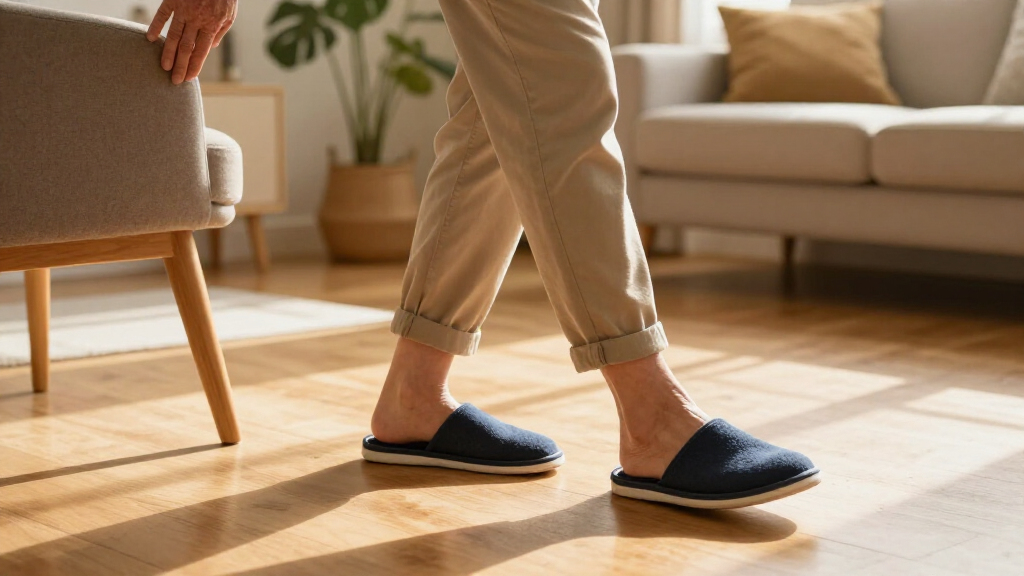
Picture a quick try-on in the afternoon: your parent walks from the kitchen to the living room, turns, and sits down. Watch for heel lift, shuffling, toe gripping, or a face that tightens from pressure. These signs show how the slipper behaves in motion; they can point to a fit or stability problem that would not be obvious from its appearance or from standing in place.
Match the Slipper to the Person and the Floor
Comfortable orthopedic slippers for seniors should match both the wearer’s needs and the surfaces they cross at home. A heel cup or closed back can help keep a slipper in place, while a loose backless style may shift during walking. These features involve a practical tradeoff: more coverage may improve hold, but a tight heel or difficult opening may make the slipper uncomfortable or hard to put on. The right choice depends on mobility, comfort, and how the slipper behaves on the actual floor.
| Feature | May suit | Check before choosing |
|---|---|---|
| Closed back or heel cup | Someone whose slipper tends to slip off | Make sure it does not rub the heel or feel hard to step into |
| Adjustable strap | Feet that swell or vary in width | It should adjust without pinching or loosening as the wearer walks |
| Removable footbed | Someone who needs room for a custom orthotic | Check that the insert fits flat and the slipper still holds the foot |
| Treaded firm sole | Homes with smooth floors or brief trips outside | Look for steady contact with the floor; replace it when worn or unstable |
For instance, if your family member wears a removable custom insert, a slipper with a removable footbed may give that insert space. The fit still needs to work as a system: the insert should lie flat, the toes should have room, and the heel should remain held in place. If adding it makes the shoe tight or lifts the heel, the combination may alter the fit in ways that reduce comfort or steadiness. Try it on before relying on it for daily use.
Some current designs offer wider sizing, washable parts, and soles intended for both indoor wear and brief trips outside. Those are product features, not proof that a slipper prevents falls or treats a condition. Outdoor use also adds grit and moisture, which can wear tread or carry dirt indoors, so check whether the maker’s care instructions suit your routine. A feature is useful when it solves a real need without creating a fit or care problem.
Know When Foot Health Needs More Than a Slipper
Comfortable orthopedic slippers for seniors may improve comfort, but they cannot diagnose or treat the cause of ongoing foot pain. People with diabetes, reduced sensation, arthritis, bunions, or a history of foot ulcers may need advice about suitable footwear. These conditions can change what a person feels, where pressure builds, or how skin responds to friction, so a seemingly comfortable fit may not be enough to judge safety. A clinician or podiatrist can account for the person’s health needs and the condition of their feet.
Be extra cautious if the wearer has a wound, persistent swelling, skin irritation, or reduced feeling in their feet. A slipper that seems comfortable may still rub or press on skin the person cannot easily feel. For example, check the inside seams and footbed for rough spots, and look at the skin after wear if the person can do so safely. Redness or irritation that continues suggests the slipper may be causing pressure; seek professional advice rather than relying on a different label or more cushioning.
For someone who spends a lot of time standing at home, cushioning may feel welcome. Yet very soft foam can compress unevenly, while a firmer footbed may feel harsh to someone with tender feet. There is no single firmness that suits everyone, because comfort and stability depend on the person’s feet and how they walk. Persistent pain or instability deserves professional guidance instead of repeated purchases based on a label.
Get tailored advice if the wearer has a foot wound, ongoing swelling, persistent pain, or reduced sensation. Slippers are not a substitute for care from a qualified professional.
Replace Worn Slippers and Recheck the Fit
Replace comfortable orthopedic slippers for seniors when the tread wears down, the sole feels unstable, or the upper no longer holds the foot securely. A favorite pair can change shape with use, and a loose heel can make each step feel less steady. Replacement depends on condition rather than a fixed calendar date, since wear varies with how often the slippers are used and the surfaces they cross.
Make a quick check every so often: turn the slipper over to inspect the tread, press the sole to see whether it feels even, and look inside for flattened padding or rough seams. Each check helps catch a different issue: worn tread can reduce grip, an uneven sole can change contact with the floor, and flattened padding or rough seams can create pressure. If the wearer starts shuffling, complains of new pressure, or has trouble keeping the slipper on, check fit and condition before assuming they simply need to “get used to it.” Those changes may signal that the pair no longer suits the wearer.
These small checks can make daily life easier for someone who needs a simple routine, especially those with limited mobility or sensitivity to cold. Keep the pair clean according to its care label, and let washable parts dry fully before wearing them again. Complete drying matters because damp lining can feel uncomfortable and may irritate skin. Fresh, dry lining feels better against bare or socked feet.
Frequently Asked Questions
What makes a slipper “orthopedic”?
“Orthopedic” usually describes a design intended to support comfort or fit, such as an adjustable upper, roomy toe box, or supportive footbed. The label alone does not show that the slipper treats a medical condition. Check the design and fit on the wearer’s feet.
Are backless slippers safe for seniors?
A backless slipper may be easy to step into, but it can shift or slip off while walking. A closed back or heel cup may keep it in place better for some wearers. Try the style at home and watch for heel lift or shuffling; no slipper removes all fall risk.
Should seniors choose a soft or firm footbed?
Choose a footbed that feels comfortable without making the wearer sink or wobble. Soft cushioning may suit someone who stands at home, while a very soft sole can feel unstable. If pain persists, ask a clinician or podiatrist for advice.
Can orthopedic slippers accommodate swelling or custom orthotics?
Adjustable straps and multiple width options can help with changes in foot size during the day. A removable footbed may leave room for a custom orthotic, but check that the insert lies flat and the slipper still holds the foot securely. A foot care professional can advise when the fit is difficult to achieve.
How often should seniors replace their slippers?
Replace them when the tread is worn, the sole feels unstable, or the upper no longer holds the foot securely. Check the inside for flattened padding or rough seams as well. A change in fit, new irritation, or more shuffling is a reason to inspect the pair.
Conclusion
Choose slippers by how securely they fit, how their soles meet the home’s floors, and how the wearer feels after walking in them. A comfortable pair should support an ordinary trip across the room without pinching, sliding, or wobbling.
Check the tread, seams, and fit as the slippers age. The best pair is the one that quietly stays put beneath each step.
Fall Picks
fall essentials
As an affiliate, we earn on qualifying purchases.