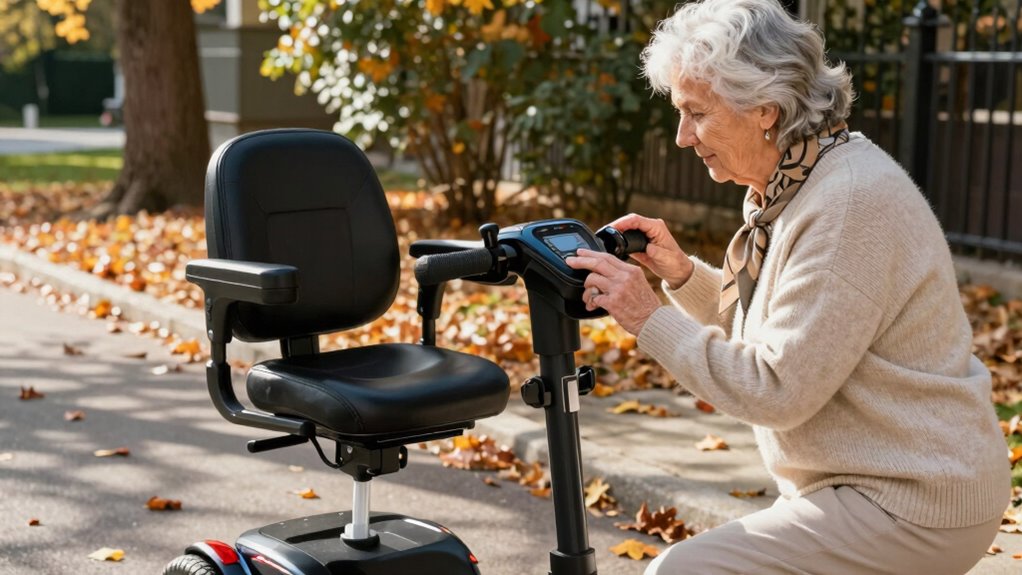

Before a senior starts using a mobility scooter, make certain they understand basic safety precautions, like wearing the safety belt and familiarizing themselves with controls. Proper battery maintenance is key—charge regularly, avoid draining it completely, and check for corrosion. Practice in safe, open areas first, and stay aware of obstacles, slopes, and traffic laws. Regular inspections and cautious operation help guarantee safety and reliability. Keep exploring to learn how these tips help make using a scooter safer and more comfortable.

Get comfort and care essentials delivered free — and shop member deals
- Fast, free delivery on millions of items
- Access to Prime Big Deal Days deals on October 6–7
- Prime Video, Amazon Music and more included
Key Takeaways
- Ensure proper training on scooter controls and safety features before use.
- Regularly check and maintain the battery, tires, and mechanical parts for safety.
- Choose safe, open areas for initial practice and avoid busy streets.
- Always wear safety gear like a seatbelt and use signals or lights when riding.
- Follow manufacturer guidelines for charging, storage, and routine maintenance.

If you’re a senior considering a mobility scooter, it’s important to understand what to expect before making a purchase. These devices can significantly increase your independence, but they also come with responsibilities. One of the most essential aspects is understanding how to properly care for the scooter, especially regarding battery maintenance. The battery is the heart of your scooter, and keeping it in good condition ensures reliable performance. Regularly charging the battery after each use is necessary, and avoid letting it fully drain, as this can reduce its lifespan. Check the battery terminals periodically for corrosion or loose connections, and follow the manufacturer’s instructions for charging times and procedures. Using the correct charger and charging in a cool, dry place will help preserve battery health. Additionally, keeping an eye on the battery level indicator will let you plan your outings better, preventing unexpected stalls. Proper charging habits are crucial for maintaining optimal battery performance and longevity. Understanding the battery types used in mobility scooters can help you select the right charger and maintenance routine for your specific model.
Along with technical upkeep, prioritizing safety precautions is paramount for your well-being. Always wear the safety belt if your scooter has one, and familiarize yourself with the controls before heading out. Start slowly, especially if you’re new to using a mobility scooter, and practice in safe, open areas until you feel confident steering different terrains. Be aware of your surroundings, and look out for obstacles, curbs, or uneven surfaces that could cause falls or tipping. It’s also wise to avoid busy streets and high-traffic areas until you’re comfortable with handling the scooter in various environments. When riding, always adhere to traffic laws and local regulations, and use signals or lights if available to alert pedestrians and drivers. Be cautious on slopes or ramps, and go at a controlled speed to maintain stability.
Furthermore, safety precautions extend beyond riding; store your scooter indoors or in a secure, dry place when not in use to prevent theft or damage. Regularly inspect the tires for wear and proper inflation, and check all mechanical parts for signs of deterioration. Proper maintenance and vigilant safety practices will not only extend the life of your scooter but also keep you safe during each outing. Remember, your mobility scooter is a tool to enhance your independence, but it requires ongoing care and cautious operation. By paying attention to battery maintenance and safety precautions, you’ll enjoy a smoother, safer experience that helps you stay active and confident in your daily activities. Proper battery care practices, including routine inspections and correct charging, are vital for ensuring your scooter remains dependable.
As an affiliate, we earn on qualifying purchases.
Frequently Asked Questions
Can Seniors Use Mobility Scooters Indoors Safely?
Yes, seniors can use mobility scooters indoors safely if they follow proper safety precautions and practice indoor navigation. Make sure the area is clutter-free, well-lit, and free of obstacles. Encourage slow speeds and gentle turns to prevent accidents. Regularly check the scooter’s brakes and tires, and supervise initial use. With these precautions, seniors can navigate indoor spaces confidently and safely, maintaining independence and comfort.
How Do I Maintain a Mobility Scooter Properly?
Imagine your scooter’s smooth ride, wheels seamlessly gliding over the floor. To keep it that way, regularly check the tires for wear and proper inflation, ensuring they grip securely. For battery maintenance, charge it fully after each use and avoid letting it drain completely. Keep the scooter clean, and inspect connections and brakes periodically. Proper care guarantees safety, longevity, and reliable performance every time you take a ride.
Are There Any Legal Restrictions for Scooter Users?
Yes, there are legal restrictions for scooter users. You should familiarize yourself with legal regulations in your area, as rules vary by location, including where you can ride and speed limits. Additionally, check if your insurance coverage extends to mobility scooter use, which can protect you in case of accidents or damages. Being informed about these restrictions helps guarantee safe and legal mobility, avoiding potential fines or insurance issues.
How Long Does the Battery Typically Last?
A mobility scooter’s battery typically lasts between 12 to 20 miles per full charge, depending on usage and model. To maximize battery lifespan, follow the charging guidelines closely—chargers should be unplugged once fully charged, and avoid letting the battery drain completely. Regularly checking the battery’s condition and proper maintenance can help guarantee it performs well and lasts longer, giving you reliable mobility support when you need it most.
What Should I Do if the Scooter Breaks Down?
If your scooter breaks down, stay calm and follow troubleshooting tips like checking the battery connection or resetting the scooter. If these don’t work, activate the emergency procedures, such as using the horn or lights to signal for help. Keep a phone nearby to call roadside assistance or a trusted contact. Regular maintenance can prevent breakdowns, so schedule check-ups and keep spare parts handy for quick fixes.
mobility scooter battery charger
As an affiliate, we earn on qualifying purchases.
As an affiliate, we earn on qualifying purchases.
Conclusion
Getting your senior loved one set up with a mobility scooter is a big step toward independence. By understanding their needs, choosing the right model, and ensuring proper training, you’re helping them stay active and confident. Are you ready to take this next step together and make their daily life easier? Remember, with the right support and guidance, they can enjoy their independence safely and comfortably. It’s all about empowering them to live their best life.
As an affiliate, we earn on qualifying purchases.
senior mobility scooter safety gear
As an affiliate, we earn on qualifying purchases.
As an affiliate, we earn on qualifying purchases.
Cold & flu season Picks
humidifiers
As an affiliate, we earn on qualifying purchases.