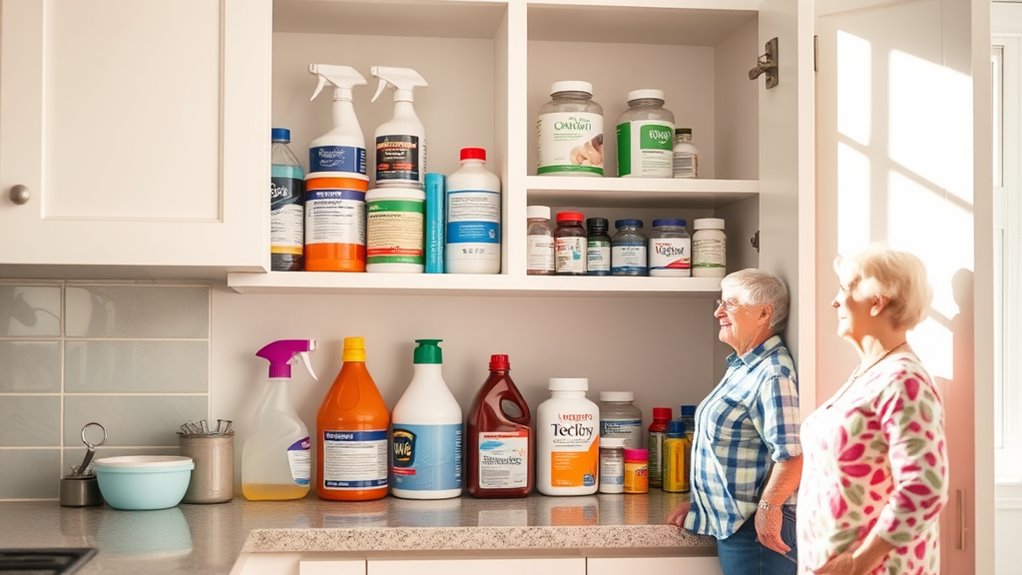

To prevent poisoning, store cleaning supplies and medications in high, locked cabinets out of seniors’ reach. Use child-proof containers and clearly label all items for safety. Keep these items away from common areas and make certain they’re organized in designated, secure spots. Regularly check for expired or unused products and dispose of them properly to avoid accidental ingestion. Maintaining these safe storage practices greatly reduces poisoning risks—continue to learn more ways to protect your loved ones.
Key Takeaways
- Store cleaning supplies and medications in high, locked cabinets out of seniors’ reach.
- Use child-proof containers for all medications and hazardous cleaning products.
- Label containers clearly and keep original packaging for easy identification.
- Keep emergency contact information and poison control center numbers accessible nearby.
- Regularly check and dispose of expired or unused substances safely according to guidelines.

Have you ever wondered how to protect your family from accidental poisoning? It’s a concern that many caregivers share, especially when it comes to keeping potentially dangerous substances out of reach of seniors and children alike. One effective way to do this is by using child proof containers for medications and cleaning supplies. These containers are specifically designed to be difficult for little hands to open, reducing the risk that curious kids or even some seniors with memory issues might accidentally ingest something harmful. When you store items in these secure containers, you create an added layer of safety that’s simple to implement and highly effective.
But simply using child proof containers isn’t enough. You also need to think about emergency preparedness. Make sure you have a plan in case someone accidentally ingests a toxic substance. Keep the poison control center’s phone number visible and easily accessible, along with emergency contact information for your local hospital. Having these resources readily available can make all the difference if an incident occurs. Knowing what to do immediately can prevent serious health issues or even save a life. It’s wise to educate everyone in your household about the dangers of certain substances, so they understand the importance of keeping these items out of reach and what steps to take if an accident happens.
Storing cleaning supplies and medications in high cabinets or locked drawers is a smart move. Keep all chemicals and medicines in a designated area that is both out of sight and out of reach for seniors, children, and visitors who might not realize the danger. This not only prevents accidental poisoning but also helps in maintaining an organized space, making it easier to find what you need without having to rummage through potentially hazardous areas. When you combine the use of child proof containers with strategic storage and clear emergency preparedness, you markedly reduce the risk of accidental poisoning.
It’s also important to regularly check your storage areas for expired or unused medications and cleaning supplies. Dispose of these safely, following local guidelines, to prevent mishandling or accidental ingestion. Educate your family about the importance of never sharing medications and always keeping substances in their original containers, clearly labeled. Remember, prevention is always better than dealing with the aftermath of poisoning. By taking these proactive steps, you create a safer environment for everyone, especially seniors who might be more vulnerable to accidental poisoning due to age-related factors. Small changes in storage habits and preparedness can make a big difference in protecting your loved ones from harm. Proper storage methods are key components in reducing risk and ensuring safety at home.

UMETASS 8 Packs 120cc Child-Proof Plastic Pill Bottle, Empty Medicine Bottle with Child-Resistant Cap, Food Grade Container for Chemicals, Liquids, Powders, and Candy
Wide Range of Applications: Our plastic pill bottles with child-proof covers are ideal for vitamins, pills, capsules, and…
As an affiliate, we earn on qualifying purchases.
As an affiliate, we earn on qualifying purchases.
Frequently Asked Questions
How Can I Teach Seniors About Poison Safety Effectively?
You can teach seniors about poison safety effectively by focusing on medication management and safety education. Use simple, clear language and visual aids to explain the dangers of mixing medications or taking expired drugs. Encourage them to read labels carefully and store all medicines and cleaning supplies out of reach. Reinforce these lessons regularly, and involve caregivers for added support, making safety a consistent part of their daily routine.
Are Childproof Locks Effective for Preventing Senior Poisoning?
Childproof locks can be effective for senior safety, especially if they’re easy for caregivers to open but difficult for seniors to access. They help prevent accidental poisoning by securing cleaning supplies and medications. However, make certain the locks don’t cause frustration or hinder emergency access. Combining childproof locks with clear labeling and proper storage practices offers the best protection, giving you peace of mind while safeguarding your loved ones.
What Are Signs of Poisoning in Seniors to Watch For?
You should watch for symptoms like nausea, vomiting, dizziness, confusion, difficulty breathing, or unusual drowsiness in seniors. Recognizing these signs early is vital for effective symptom recognition. If you suspect poisoning, respond quickly by calling emergency services and providing any relevant information about what might have been ingested. Acting promptly ensures the senior gets the emergency response they need to prevent serious health complications.
How Should I Dispose of Expired or Unused Medications Safely?
Did you know that over 60% of medication errors happen because of improper disposal? To practice safe drug practices, you should take expired or unused medications to a designated collection site or follow local disposal guidelines. Never flush medications unless instructed, and avoid throwing them in the trash. Proper medication disposal helps prevent accidental poisoning and keeps your environment safe for seniors. Always check with your pharmacy for specific disposal instructions.
Can Natural or Alternative Cleaning Products Reduce Poisoning Risks?
Using natural solutions or alternative cleaning products can substantially reduce poisoning risks, especially for seniors. These products often contain fewer harsh chemicals, making them safer if accidentally ingested or touched. You can switch to vinegar, baking soda, or lemon-based cleaners for effective cleaning without dangerous fumes. By choosing alternative cleaning options, you create a safer environment, minimizing the chances of accidental poisoning and promoting better health for everyone in your home.

SISESOL Metal Storage Cabinet Locked Steel Cabinet with 2 Adjustable Shelves,Office Cabinet Locking Tool Cabinets,Kitchen Storage Cabinets Metal Locker Small Counter Height Storage Cupboard 36" H
✔️【High-quality all-steel structure】: This metal cabinet is made of the top quality steel through exquisite craftsmanship; Whole-in-one reinforced…
As an affiliate, we earn on qualifying purchases.
As an affiliate, we earn on qualifying purchases.
Conclusion
By taking simple steps to store cleaning supplies and medications safely away from seniors, you could prevent a devastating poisoning. But what if you missed just one? A single moment of oversight might lead to tragic consequences. Stay vigilant, double-check your storage habits, and keep those potentially dangerous items out of reach. Because in the end, safeguarding your loved ones isn’t just about today—it’s about preventing what could happen tomorrow.
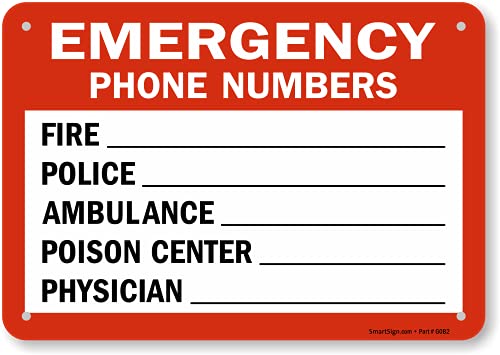
SmartSign 7 x 10 inch “Emergency Phone Numbers – Fire, Ambulance, Police, Poison Center, Physician” Write-On Sign, Digital Printing, 55 mil HDPE Plastic, Red, Black and White
DURABLE PLASTIC: 'Emergency Phone Numbers' signs use 55 mil thick HDPE (high density polyethylene) which is much better…
As an affiliate, we earn on qualifying purchases.
As an affiliate, we earn on qualifying purchases.
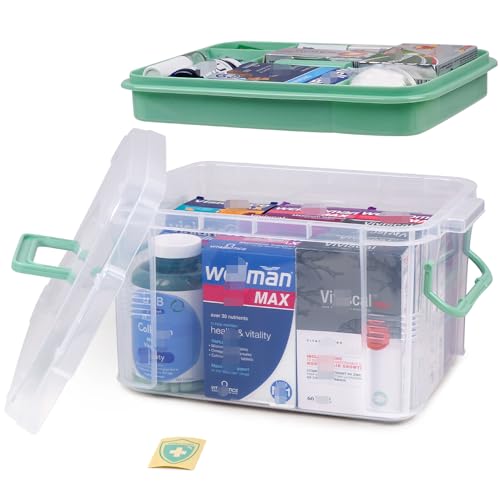
DOUKE 15qt Clear Medicine Organizer Storage Box with Handle, Plastic Empty First Aid Box with Tray, Multipurpose Medical Storage Container, Medication Organizer Chest for Home, Baby, Elderly, Dorm
Spacious 15 Qt Medicine Organizer – Holds medicine supplies, first aid essentials, and daily healthcare items in one…
As an affiliate, we earn on qualifying purchases.
As an affiliate, we earn on qualifying purchases.