
To prepare an emergency “go bag” for your senior, gather essential medical supplies, communication devices, and important documents in a waterproof, easy-to-access container. Include comfort items like a blanket or favorite small pillow to help reduce stress, and guarantee all supplies are current and organized. Store the kit in a known, quick-pick-up spot so you’re always ready. Keep these tips in mind to build an effective grab-and-go kit to keep your loved one safe—learn more below.

Turn quiet afternoons into listening time
- Thousands of audiobooks, podcasts and originals
- Listen on your phone, tablet or Echo — also offline
- Cancel anytime
Key Takeaways
- Include essential medications, medical devices, and allergy supplies in a waterproof, labeled bag for quick access.
- Pack a fully charged communication device, important contact list, and alternative tools like whistles for reliable contact.
- Store vital documents—ID, insurance cards, medical info—in a waterproof container for easy retrieval.
- Add comfort items such as blankets or soothing devices to reduce stress during emergencies.
- Regularly review, update, and organize the go bag contents and keep it in an accessible, designated location.

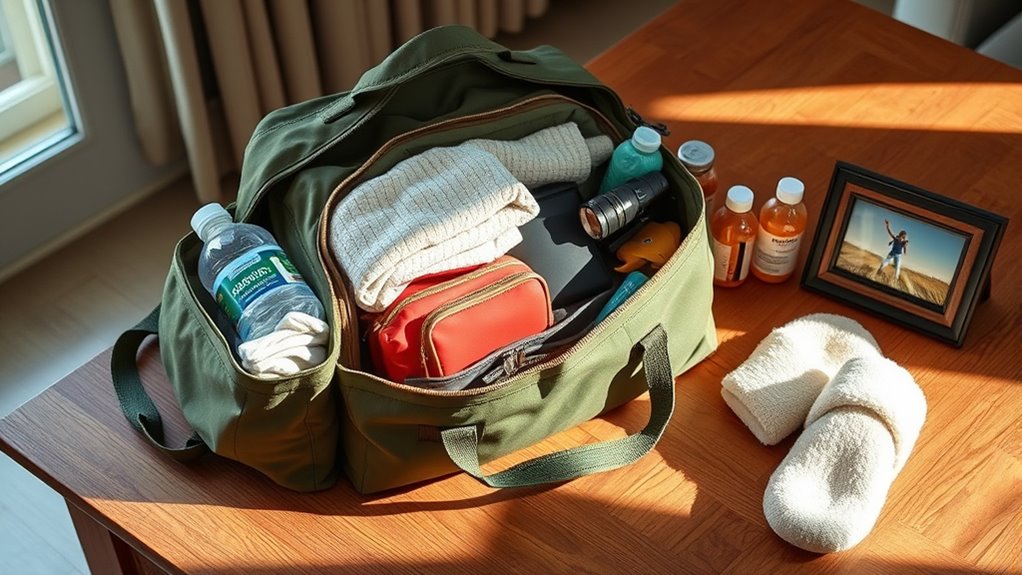
Have you ever wondered what you’d do if a sudden emergency required your senior loved one to leave home quickly? Preparing an emergency “go bag” is essential to guarantee they’re ready to face unexpected situations with confidence. The first step is to gather crucial medical supplies that address their specific health needs. Think of items like prescription medications, inhalers, allergy medications, and any necessary medical devices such as blood sugar meters or mobility aids. These supplies should be easily accessible and packed in a waterproof, clearly labeled bag. Having these essentials within reach prevents delays in administering critical care and gives both you and your loved one peace of mind during stressful moments.
Preparing a go bag with medical essentials ensures senior safety and peace of mind during emergencies.
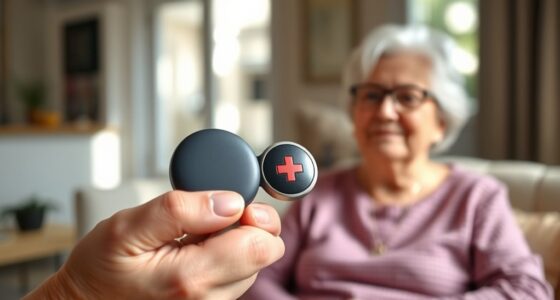
Next, consider communication devices. In an emergency, staying connected can be a lifeline. Ensure your senior has a fully charged cell phone, ideally with a portable charger or power bank to keep it powered if the main battery runs out. If they use a landline, keep a cordless phone nearby. Also, prepare a list of important contacts, including family members, neighbors, and emergency services, written in large print or saved in their device for quick access. Sometimes, seniors might have hearing difficulties or cognitive impairments, so incorporating alternative communication tools like a whistle or a pre-recorded emergency message can be invaluable. These devices ensure they can reach out or be reached when it matters most.
You should also include a copy of essential documents—such as IDs, medical insurance cards, and a list of allergies or medical conditions—and keep them in a waterproof container inside the go bag. This helps streamline assistance from emergency responders or healthcare providers. Remember to pack some basic hygiene items like hand sanitizer, wet wipes, and a small towel, especially if relocating to a shelter or unfamiliar environment. Comfort items such as a favorite blanket or a small pillow can make a difference in reducing anxiety.
Additionally, choosing a projector with high contrast ratios for home entertainment can create a soothing environment during stressful times or provide distraction and comfort for your loved one. Finally, review and update the contents of the go bag regularly. Check expiration dates on medications, replace used supplies, and update contact information as needed. Keep the bag in a designated, easily accessible place known to your loved one and other caregivers. By thoughtfully assembling this kit, you’re not only guaranteeing your senior’s safety but also empowering them to face emergencies with resilience. Preparation is the key to minimizing chaos and making a difficult situation more manageable for everyone involved.
As an affiliate, we earn on qualifying purchases.
Frequently Asked Questions
How Often Should I Update My Senior’s Emergency Go Bag?
You should update your senior’s emergency go bag at least every six months. Regular kit maintenance guarantees supplies are fresh and functional. Use storage tips like keeping the bag in a consistent, easily accessible spot, and check expiration dates on medications and food. During your updates, verify contact info and replace worn or outdated items. This routine helps ensure your senior is always prepared for any crisis.
What Specific Medical Supplies Are Essential for Seniors?
You might think you’ve got everything covered, but don’t forget essential medical supplies like medication management tools and mobility aids. These are vital for seniors’ safety and comfort during emergencies. Include extra prescriptions, a pill organizer, and mobility devices like canes or walkers. Ironically, sometimes the smallest items make the biggest difference, ensuring your senior stays safe, mobile, and prepared when chaos strikes.
How Do I Customize the Kit for Different Types of Emergencies?
You customize the kit for different emergency scenarios by including personalized items that your senior needs, like specific medications or comfort objects. Think about potential emergencies, such as storms or power outages, and add items like extra batteries, non-perishable snacks, or a flashlight. Adjust the kit regularly to reflect changing needs, ensuring it’s always ready for any crisis, and include important documents and contact info tailored to their situation.
What Are the Best Ways to Teach Seniors to Use the Kit?
Your efforts could save a life—it’s that impactful. To teach seniors to use the kit, focus on interactive training and practical demonstrations that engage them actively. Show, don’t just tell, how each item works and what to do in emergencies. Repetition and patience are key, so practice regularly. Make it simple and comfortable, ensuring they feel confident and prepared without feeling overwhelmed.
How Can I Ensure the Kit Remains Accessible During a Disaster?
To keep the kit accessible during a disaster, store it in disaster-proof storage in easy access locations, like near exits or on designated shelves. Regularly check and update the contents to make sure everything’s functional and current. Keep multiple copies of important documents nearby. Also, inform your senior about its location and practice quick access drills, so they know how to grab it swiftly when needed.
waterproof medical supplies bag for seniors
As an affiliate, we earn on qualifying purchases.
As an affiliate, we earn on qualifying purchases.
Conclusion
Think of your senior’s emergency kit as a lifeboat in a storm—ready to keep them safe when chaos erupts. By preparing a well-stocked “go bag,” you’re giving them a sense of security and independence, like a sturdy anchor amid turbulent waters. Take the time now to gather essentials and customize the kit to their needs. Being prepared today means peace of mind tomorrow, ensuring your loved one stays safe no matter what comes.
portable senior communication device
As an affiliate, we earn on qualifying purchases.
As an affiliate, we earn on qualifying purchases.
senior emergency document holder
As an affiliate, we earn on qualifying purchases.
As an affiliate, we earn on qualifying purchases.
Evergreen bestsellers Picks
bestsellers
As an affiliate, we earn on qualifying purchases.