
Shopping for hearing aids for seniors mostly comes down to three tradeoffs: ease of use versus advanced control, battery life versus device size, and price versus noise reduction quality. After comparing 15 popular over-the-counter options, the Audien Atom Pro 2 earns the top spot for balancing clear amplification, a forgiving fit, and a charging case that removes the daily battery hassle. The Audien Atom X stands out for its touchscreen charging case, making it the easiest option for seniors who fumble with small buttons, while the 16-channel rechargeable models with 100-hour battery life offer the strongest value for all-day wear. Cheaper amplifiers can work for mild hearing loss, but they tend to struggle in noisy rooms. Keep reading for the full breakdown of which model fits which situation.

Turn quiet afternoons into listening time
- Thousands of audiobooks, podcasts and originals
- Listen on your phone, tablet or Echo — also offline
- Cancel anytime
Complete the kit


Key Takeaways
- The Audien Atom line (Pro 2, Atom X, Atom One) consistently offered the most senior-friendly designs, with the Atom X’s touchscreen charging case eliminating the small-button problem that plagues most competitors.
- Sixteen-channel noise reduction appeared in several picks, but channel count alone didn’t predict clarity — tuning quality and fit mattered more, which is why some simpler models outranked feature-stacked ones.
- Battery life ranged from roughly 20 hours to over 100 hours per charge; the 100-hour models are better for seniors who forget to charge devices nightly, while shorter-life models come with more portable cases.
- The entry-level amplifiers in this lineup are best treated as trial devices for mild hearing loss — they amplify everything equally and struggle in restaurants or family gatherings.
- Volume control design separated the leaders from the rest: physical dials and magnets proved far easier for arthritic hands than tiny push buttons requiring multiple taps.
| Rechargeable Hearing Aids for Seniors & Adults with 16-Channel Noise Reduction, 5-Level Volume, and 100-Hour Battery Life |  | Best Overall | Technology: RIC (receiver-in-canal) with intelligent noise reduction | Chip: 16-channel | Volume Levels: 5 | VIEW ON AMAZON | See Our Full Breakdown |
| Hearing Amplifiers for Seniors – Rechargeable with 48+ Hour Battery & Charging Case (Blue Red) |  | Best for First-Time Users | Type: In-canal hearing amplifier | Weight: 2g per device | Controls: Single button, 5 volume levels; long-press 5 seconds for power | VIEW ON AMAZON | See Our Full Breakdown |
| Audien Atom Pro 2 OTC Hearing Aids for Seniors & Adults |  | Best Premium Features | Product Type: FDA-registered OTC hearing aid | Listening Modes: 4 (Conversation, Restaurant, TV, Outdoor) | Volume Levels: 5 | VIEW ON AMAZON | See Our Full Breakdown |
| Karthus Rechargeable In-Ear Hearing Aids for Seniors with Noise Reduction |  | Best Mid-Range Balance | Brand: Karthus | Fit Type: In-ear | Chip: 16-channel digital | VIEW ON AMAZON | See Our Full Breakdown |
| BTE Rechargeable Hearing Aids for Seniors with Charging Case, 16-Channel Noise Cancelling |  | Best for Dexterity Challenges | Type: BTE (behind-the-ear) | Channels: 16-channel digital processor | Modes: 3 noise reduction modes | VIEW ON AMAZON | See Our Full Breakdown |
| Rechargeable Hearing Aids for Seniors with Noise Cancelling |  | Best Battery-Case Endurance | Fit Type: Behind-the-Ear | Channels: 16 | Volume Levels: 5 (24-40 dB) | VIEW ON AMAZON | See Our Full Breakdown |
| Karthus OTC Hearing Aids for Seniors – Rechargeable with Noise Reduction |  | Best RIC Comfort Design | Design: Behind-the-Ear (RIC) with tulip ear tips | Channels: 16-channel digital processing | Hearing Modes: Quiet Mode, Noise Mode | VIEW ON AMAZON | See Our Full Breakdown |
| SOUNDFIT Hearing Aids for Seniors & Adults with Superior Sound Quality |  | Best for Situational Listening Modes | Fit Type: Completely-in-canal | Sound Processing: Intricon A4 digital chip, 16-channel | Listening Modes: Normal, Restaurant, Outdoor, Music | VIEW ON AMAZON | See Our Full Breakdown |
| OTC Hearing Aids for Seniors & Adults, 16-Channel Digital DSP, 3-Level Volume Control, 80+ Hour Battery Life | 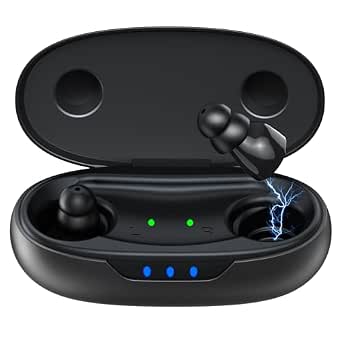 | Best Simple In-Ear Option | Fit Type: In-ear | Sound Processing: 16-channel digital DSP | Volume Levels: 3 | VIEW ON AMAZON | See Our Full Breakdown |
| Hearing Aids for Seniors, Easy to Use, Clear Sound – Black |  | Best Fit Customization | Ear Tips: 3 sizes (S/M/L), soft silicone | Volume Control: One-button, multiple levels | Noise Reduction: Speech-focused, indoor and outdoor | VIEW ON AMAZON | See Our Full Breakdown |
| Audien Atom X OTC Hearing Aid with Touchscreen Charging Case |  | Best for Tech-Averse Seniors Who Want Easy Controls | Fit Type: In-Ear | Battery Life: Up to 16 hours (48 hours with charging case) | Listening Modes: 4 (Conversation, Crowd, TV, Comfort) | VIEW ON AMAZON | See Our Full Breakdown |
| Karthus Rechargeable Hearing Aids for Seniors, Ice Silver |  | Best Battery Life | Design: Behind-the-ear RIC with soft tulip tips | Sound Processing: 16-channel DSP | Volume Levels: 7 | VIEW ON AMAZON | See Our Full Breakdown |
| OTC Hearing Aids for Seniors with Noise Cancelling, 100 Hours Battery Life | 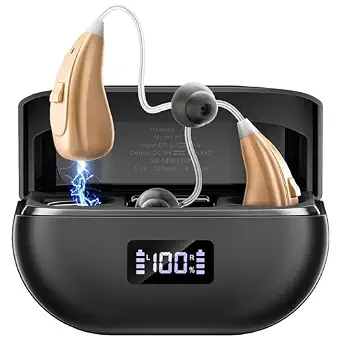 | Best Discreet Design | Fit Type: In-Ear (in-canal) | Weight: 3 grams per aid | Sound Processing: 16-channel digital with adaptive noise cancellation | VIEW ON AMAZON | See Our Full Breakdown |
| Oricle Hearing Aids for Seniors with Noise Cancellation and Charging Case |  | Best for All-Day Comfort | Type: OTC CIC (Completely-in-Canal) | Battery Life: Up to 60 hours per charge | Charging: Portable case with auto on/off | VIEW ON AMAZON | See Our Full Breakdown |
| Audien Atom One OTC Hearing Aids | 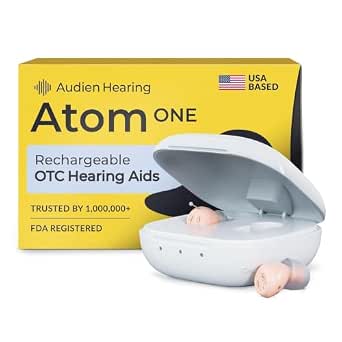 | Best for First-Time Buyers | Fit Type: In-Ear (nano design) | Control Type: Analog dial control (volume and frequency) | Battery Life: Up to 24 hours per charge | VIEW ON AMAZON | See Our Full Breakdown |
| hearing aids for senior | Battery Life |
|---|---|
| Rechargeable Hearing Aids for | 25 hours per charge; 100 hours total with charging case |
| Hearing Amplifiers for Seniors | Up to 60 hours per charge; 110+ hours total with case |
| Audien Atom Pro 2 OTC Hearing | 24 hours per charge; 72 hours total with case |
| Karthus Rechargeable In-Ear He | 24 hours per charge; 96+ hours with case |
| BTE Rechargeable Hearing Aids | 3 hours per charge; 20 hours total |
| Rechargeable Hearing Aids for | Up to 25 hours per charge; 80-100 hours with case |
| Karthus OTC Hearing Aids for S | Up to 30 hours per charge; 100 hours with case |
| SOUNDFIT Hearing Aids for Seni | Up to 38 hours; case adds 3 recharges |
| OTC Hearing Aids for Seniors & | 80+ hours total with charging case |
| Hearing Aids for Seniors | 30+ hours per charge; 80+ hours with case |
| Audien Atom X OTC Hearing Aid | Up to 16 hours (48 hours with charging case) |
| Karthus Rechargeable Hearing A | Up to 30 hours per charge, 100 hours with case |
| OTC Hearing Aids for Seniors w | 25+ hours per charge, 100+ hours with case |
| Oricle Hearing Aids for Senior | Up to 60 hours per charge |
| Audien Atom One OTC Hearing Ai | Up to 24 hours per charge |
More Details on Our Top Picks
Rechargeable Hearing Aids for Seniors & Adults with 16-Channel Noise Reduction, 5-Level Volume, and 100-Hour Battery Life
This RIC-style pair earns the top spot because it balances sound processing sophistication with genuine ease of use. The 16-channel chip separates speech from background noise far better than basic amplifiers like the Audien Atom One, which matters most at family dinners or in busy waiting rooms. Compared with the Karthus in-ear model, the receiver-in-canal design keeps the speaker closer to the eardrum, producing fuller, more natural sound. The standout practical benefit is the 100-hour total battery life — a week of typical use without touching a charger. Volume memory is a thoughtful touch for seniors who dislike relearning settings daily. The tradeoff: only 5 preset volume steps, so buyers wanting fine-grained loudness control between levels may feel limited.
Pros:- 16-channel noise reduction keeps speech clear in noisy rooms
- 100-hour total battery life means charging only once a week
- Four ear tip sizes in S/M/L for a comfortable, secure fit
- Volume memory retains preferred settings between uses
Cons:- Only 5 preset volume levels rather than fine adjustment
- Three-beep volume indicators may be hard to hear for users with significant loss
Best for: Seniors with mild to moderate hearing loss who want strong noise reduction and week-long battery life without fussing with an app
Not ideal for: Buyers who need fine volume adjustment between preset levels, or those with severe hearing loss who need professional fitting
- Technology:RIC (receiver-in-canal) with intelligent noise reduction
- Chip:16-channel
- Volume Levels:5
- Amplification:Up to 40dB ±5dB
- Battery Life:25 hours per charge; 100 hours total with charging case
- Ear Tips:1x S, 2x M, 1x L silicone tips
- Controls:Button volume adjustment with volume memory
- Display:LED battery level indicator
Our verdict“The most well-rounded pick for seniors who value clear conversations and hate charging things constantly.”
Hearing Amplifiers for Seniors – Rechargeable with 48+ Hour Battery & Charging Case (Blue Red)
Where the Audien Atom Pro 2 asks users to learn four listening modes, this pair strips everything down to a single button that cycles volume, with adaptive noise reduction handling environments automatically. That makes it the easiest entry point in this roundup for seniors trying hearing amplification for the first time. The smart charging case adds another layer of simplicity: inserting the devices powers them on and off, eliminating the long-press ritual entirely. At just 2 grams per unit and seated deep in the canal, they are among the most invisible options here — more discreet than the behind-the-ear model that sits visibly over the ear. The compromise is less tuning flexibility and a generic amplifier pedigree rather than an FDA-registered OTC hearing aid.
Pros:- Single-button operation with automatic noise adaptation — no modes to learn
- Smart case turns devices on and off automatically when docked
- Ultra-light 2g design is comfortable for all-day wear
- Up to 110 hours of total backup power from the charging case
Cons:- Sold as a hearing amplifier rather than an FDA-registered hearing aid
- No listening modes or customization for specific environments
Best for: Seniors new to hearing devices who want the simplest possible setup with zero menus or modes to learn
Not ideal for: Buyers who want an FDA-registered OTC hearing aid or app-based customization for changing hearing needs
- Type:In-canal hearing amplifier
- Weight:2g per device
- Controls:Single button, 5 volume levels; long-press 5 seconds for power
- Noise Technology:Digital chip with adaptive noise cancellation
- Battery Life:Up to 60 hours per charge; 110+ hours total with case
- Material:Medical-grade silicone
- Smart Case:Automatic on/off when inserting or removing devices
Our verdict“The least intimidating option in the lineup for seniors who have resisted hearing devices because of complexity.”
Audien Atom Pro 2 OTC Hearing Aids for Seniors & Adults
This is the only pick here that treats hygiene as a feature: the charging case runs a 5-minute UV-C sanitizing cycle every time the devices dock, killing bacteria that accumulate in-canal — a real benefit for seniors who may struggle with daily cleaning routines. As an FDA-registered OTC hearing aid, it carries regulatory credibility that generic amplifiers like the blue-red pair lack. Its four environment modes (Conversation, Restaurant, TV, Outdoor) offer more situational tuning than the B0H4LZW4C2’s one-size noise reduction, though battery life falls short of that model’s 100 hours at 72 total. Setup support and a 1-year warranty round out a more premium package. The gap: no app connectivity, so all adjustments happen through a single on-device button.
Pros:- FDA-registered OTC hearing aid — no prescription or hearing test required
- UV-C sanitizing case automatically cleans devices while charging
- Four listening modes with independent per-ear adjustment
- Includes expert-guided setup session and 1-year warranty
Cons:- No app or phone-based customization — button controls only
- 72-hour total battery life trails cheaper rivals offering 100 hours
Best for: Seniors who want an FDA-registered device with environment-specific modes and hands-off hygiene
Not ideal for: Tech-comfortable buyers who expect app-based fine-tuning, or heavy users needing week-long battery life
- Product Type:FDA-registered OTC hearing aid
- Listening Modes:4 (Conversation, Restaurant, TV, Outdoor)
- Volume Levels:5
- Sanitization:UV-C light cycle, 5 minutes per dock
- Battery Life:24 hours per charge; 72 hours total with case
- Design:In-canal, 15% smaller than previous generation
- Charging:USB-C
- Warranty:1 year; FSA/HSA eligible
Our verdict“The most feature-complete and reassuring pick for seniors who value FDA registration and automatic hygiene over maximum battery.”
Karthus Rechargeable In-Ear Hearing Aids for Seniors with Noise Reduction
The Karthus splits the difference between the bare-bones amplifier and the premium Audien Atom Pro 2. It offers two purposeful modes — Noise Reduction and Quiet — which is more adaptability than the single-button blue-red pair but less to learn than Audien’s four modes. With 6 volume levels, it provides one more step of loudness control than either the B0H4LZW4C2 or Atom Pro 2, a small but meaningful difference for seniors sensitive to jumps between settings. Its 96+ hours of total battery nearly matches the roundup’s best. Everything works out of the case with no app or Bluetooth setup, which keeps frustration low. The main irritations are a roughly 5-second startup delay after removal and the same mild-to-moderate loss ceiling shared by most OTC devices.
Pros:- 6 volume levels — finer loudness control than most rivals
- Two listening modes (Noise Reduction and Quiet) for different environments
- 96+ hours total battery life via Type-C charging case
- Automatic power-on with no app, Bluetooth, or smartphone needed
Cons:- Roughly 5-second startup delay after removing from the case
- Only suitable for mild to moderate hearing loss
Best for: Seniors with mild to moderate loss who want a bit more volume control and mode flexibility without complexity
Not ideal for: Anyone with severe hearing loss, or impatient users who will be annoyed by the startup delay each morning
- Brand:Karthus
- Fit Type:In-ear
- Chip:16-channel digital
- Volume Levels:6
- Listening Modes:Noise Reduction, Quiet
- Battery Life:24 hours per charge; 96+ hours with case
- Charging:Type-C charging case
- Smartphone Required:No
Our verdict“A sensible middle path for seniors who want more adjustability than a basic amplifier but found the premium options excessive.”
BTE Rechargeable Hearing Aids for Seniors with Charging Case, 16-Channel Noise Cancelling
For seniors with arthritis or limited finger dexterity, fumbling with tiny in-canal devices like the 2-gram blue-red pair can be a daily struggle. This behind-the-ear model solves that with a physical volume wheel — far easier to feel and turn than small buttons — plus a magnetic charging case that snaps devices into place without precise alignment. The 16-channel processor and three noise reduction modes keep speech intelligibility competitive with the Karthus, and the larger BTE housing is genuinely easier to handle and harder to lose. The real cost is battery: at 20 hours total, it delivers a fraction of the 96–100 hours offered by the in-ear picks, meaning near-daily charging. Buyers also need some patience to find the right mode for each environment.
Pros:- Physical volume wheel is far easier for arthritic hands than small buttons
- Magnetic charging case snaps devices in without precise alignment
- Larger BTE design is easier to handle and harder to misplace
- 3 noise reduction modes and 16-channel processing for varied environments
Cons:- Only 20 hours total battery life — the weakest in this roundup
- Requires experimentation to find the right mode for each setting
- Behind-the-ear styling is more visible than in-canal alternatives
Best for: Seniors with limited dexterity or low vision who need larger, easier-to-handle controls and a physical volume wheel
Not ideal for: Frequent travelers or anyone wanting discreet, in-canal styling with multi-day battery life
- Type:BTE (behind-the-ear)
- Channels:16-channel digital processor
- Modes:3 noise reduction modes
- Controls:Volume wheel
- Battery Life:3 hours per charge; 20 hours total
- Charging:Magnetic charging case with auto-on/off
- Smartphone Required:No
Our verdict“The right choice when ease of handling matters more than discretion or battery endurance.”
Rechargeable Hearing Aids for Seniors with Noise Cancelling
This pick stands out for sheer runtime: 25 hours per charge and up to 100 hours total with the charging case, which means a week or more of typical use between outlet visits. That matters for seniors who travel or who simply forget to plug things in. The 16-channel noise cancellation does a respectable job separating voices from room noise, putting it ahead of simpler amplifiers like the Karthus Ice Silver on sound refinement. The volume memory function is a quiet advantage — settings stay where they were left, so nothing needs fiddling each morning. The tradeoff is control: just 5 preset volume steps rather than the finer 7-level adjustment on the Karthus RIC, and there is no Bluetooth or app. Compared with the Audien Atom One, this model trades smart features for endurance.
Pros:- Up to 100 hours total runtime with the charging case
- 16-channel chip that prioritizes voices over background noise
- Volume memory keeps settings consistent day to day
- Glasses-friendly behind-the-ear fit that stays comfortable
Cons:- Only 5 preset volume levels instead of continuous adjustment
- No Bluetooth or app support for customization
Best for: Seniors who charge infrequently and want a case that carries them through a full week of daily use
Not ideal for: Buyers who want fine-grained volume tuning or smartphone connectivity — the 5 preset steps and lack of Bluetooth will feel limiting
- Fit Type:Behind-the-Ear
- Channels:16
- Volume Levels:5 (24-40 dB)
- Battery Life:Up to 25 hours per charge; 80-100 hours with case
- Battery Type:Lithium-Ion rechargeable
- Control Type:Button control
- Special Features:Noise reduction, volume memory
Our verdict“This is the pick for seniors who value long battery endurance and simple, predictable operation over advanced tuning options.”
Karthus OTC Hearing Aids for Seniors – Rechargeable with Noise Reduction
The Karthus RIC separates itself from conventional behind-the-ear models like the B0H99KF343 pick through its receiver-in-canal design with soft tulip ear tips — the speaker sits closer to the eardrum, which typically yields a more natural, less boxy sound. At just 6.8 grams, it is lighter than most rivals here, and the fit works well alongside glasses. Its two dedicated listening modes (Quiet and Noise) give it more situational flexibility than single-mode options like the Audien Atom One, and the 7-step volume control offers finer tuning than the 5-level preset approach. A 15-minute quick charge is a thoughtful touch for mornings when the case was forgotten. The honest limitation: this is calibrated for mild to moderate loss only, and there is no wireless functionality whatsoever.
Pros:- Receiver-in-canal design with soft tulip tips for natural sound
- 7 volume levels with dedicated Quiet and Noise modes
- 30 hours per charge, 100 hours total, plus 15-minute quick charge
- Featherweight 6.8 g build comfortable with glasses
Cons:- Limited to mild to moderate hearing loss
- No Bluetooth, app, or wireless features of any kind
Best for: Seniors with mild to moderate hearing loss who prioritize all-day comfort and a natural sound signature
Not ideal for: Anyone with severe hearing loss — the amplification ceiling is too low — or anyone expecting app-based customization
- Design:Behind-the-Ear (RIC) with tulip ear tips
- Channels:16-channel digital processing
- Hearing Modes:Quiet Mode, Noise Mode
- Volume Levels:7
- Battery Life:Up to 30 hours per charge; 100 hours with case
- Quick Charge:15 minutes provides hours of use
- Weight:6.8 g
- Intended For:Mild to moderate hearing loss
Our verdict“The most comfortable, best-sounding choice in this group for mild to moderate loss, as long as wireless features are not on the wishlist.”
SOUNDFIT Hearing Aids for Seniors & Adults with Superior Sound Quality
What earns this model a spot is the Intricon A4 digital chip — a US-made processing platform more commonly found in premium devices — paired with four distinct listening modes (Normal, Restaurant, Outdoor, Music). No other product in this lineup adapts to environments that specifically; the Karthus RIC offers two modes, and most budget picks offer none. The 38-hour battery life beats the standard 25-30 hours elsewhere, with USB-C fast charging adding convenience. Its IP56 water resistance is a differentiator too, making it the better choice for active seniors who sweat or get caught in rain, compared with unprotected in-ear models. The near-invisible canal fit is discreet, but that cuts both ways: tiny devices with push-button controls are easier to misplace and harder to handle for anyone with dexterity or vision challenges.
Pros:- Four listening modes for restaurants, outdoors, music, and everyday use
- Intricon A4 US-designed chip for refined sound processing
- Up to 38 hours per charge with USB-C fast charging
- IP56 rating against sweat, dust, and moisture
Cons:- Very small form factor is challenging for arthritic or unsteady hands
- Deep canal fit can take longer to adjust to than behind-the-ear styles
Best for: Socially active seniors who move between restaurants, outdoors, and home and want the sound profile to match each setting
Not ideal for: Seniors with limited dexterity or low vision — the tiny in-ear body and small buttons make handling and cleaning genuinely difficult
- Fit Type:Completely-in-canal
- Sound Processing:Intricon A4 digital chip, 16-channel
- Listening Modes:Normal, Restaurant, Outdoor, Music
- Battery Life:Up to 38 hours; case adds 3 recharges
- Charging:USB-C fast charging
- Water Resistance:IP56
- Control Type:Push button
Our verdict“The strongest sound-tailoring option here for active seniors, provided small-device handling is not a concern.”
OTC Hearing Aids for Seniors & Adults, 16-Channel Digital DSP, 3-Level Volume Control, 80+ Hour Battery Life
This model makes the list for radical simplicity: three volume levels, one in-ear design, and nothing to configure. Compared with the SOUNDFIT, which offers four listening modes and a deeper feature set, this strip-down approach is exactly the point — some seniors want a device that behaves more like reading glasses than a gadget. The 16-channel DSP chip includes wind and transient noise management, features usually absent at the entry level, and the 80+ hour total battery life from the charging case means charging is a weekly chore rather than a daily one. The honest tradeoff is precision: three volume steps is coarse, and the roughly 30 dB amplification ceiling suits mild loss rather than anything more serious. Buyers wanting finer control should step up to the Karthus RIC and its seven levels.
Pros:- Dead-simple 3-level volume with no setup or pairing
- 16-channel DSP with wind and transient noise management
- 80+ hours total battery life with charging case
- Discreet in-ear style in an understated light black finish
Cons:- Only 3 volume levels — very coarse adjustment range
- Amplification tops out around 30 dB, limiting for worse-than-mild loss
Best for: Seniors with mild hearing loss who want the fewest possible decisions — insert, adjust one of three levels, and move on
Not ideal for: Anyone needing nuanced volume control or stronger amplification — three coarse steps and ~30 dB gain will frustrate and under-serve
- Fit Type:In-ear
- Sound Processing:16-channel digital DSP
- Volume Levels:3
- Battery Life:80+ hours total with charging case
- Power Source:Rechargeable lithium battery
- Color:Light Black
- Configuration:Both ears
Our verdict“The least complicated option in the roundup for mild loss, best for seniors who see every extra feature as a burden.”
Hearing Aids for Seniors, Easy to Use, Clear Sound – Black
This option earns its place through fit flexibility: three silicone ear tip sizes (S/M/L) that let the wearer dial in a genuinely secure seal, which directly affects both comfort and sound quality. Most competitors ship one tip size and expect ears to conform; here, the design accommodates different ear shapes, which helps reduce fatigue during long wear. The one-button volume control is as straightforward as the 3-level DSP model, but the noise reduction is pitched at everyday realism — traffic, wind, household sounds — rather than restaurant-grade sophistication. With 30+ hours per charge and 80+ hours total, runtime is competitive with the B0H99KF343 pick. The drawback is genericness: there are no listening modes like the SOUNDFIT offers, no Bluetooth, and the single-button design means less situational adaptability than mode-switching rivals.
Pros:- Three ear tip sizes for a customized, stable fit
- Simple one-button volume suited to non-technical users
- 30+ hours per charge with 80+ hours total via case
- Removable, cleanable tips for better hygiene
Cons:- No listening modes or environment-specific settings
- No wireless features or app-based adjustment
- Noise reduction is basic compared with mode-switching rivals
Best for: Seniors who have struggled with loose or uncomfortable fits and want tips sized to their actual ears
Not ideal for: Buyers who frequently move between noisy and quiet settings and would benefit from multiple listening modes
- Ear Tips:3 sizes (S/M/L), soft silicone
- Volume Control:One-button, multiple levels
- Noise Reduction:Speech-focused, indoor and outdoor
- Battery Life:30+ hours per charge; 80+ hours with case
- Power Source:Rechargeable with charging case
- Body:Lightweight ergonomic, durable materials
- Color:Black
Our verdict“A sensible choice when fit comfort has been the dealbreaker with other hearing aids, at the cost of advanced sound customization.”
Audien Atom X OTC Hearing Aid with Touchscreen Charging Case
The Audien Atom X stands out for solving a problem most hearing aids in this roundup ignore: tiny on-device buttons are nearly impossible for arthritic fingers to manage. Its CaseControl touchscreen charging case moves volume and mode adjustments to a large display, so changes happen on the case rather than on the aid itself. Compared with the Karthus behind-the-ear model, which relies on a single physical button on the ear, this approach makes far more sense for anyone with dexterity issues. The four listening modes — Conversation, Crowd, TV, and Comfort — give it more environment flexibility than the Audien Atom One, which offers no presets at all. The tradeoff is battery life: 16 hours per charge lags behind the Oricle’s 60 hours, and the sealed lithium-ion cells can’t be replaced, which caps the device’s usable lifespan.
Pros:- Touchscreen charging case replaces fiddly buttons and smartphone apps entirely
- Four pre-programmed modes for conversations, crowds, TV, and quiet settings
- Expert-guided setup session included, which most OTC competitors skip
- FDA-registered with no prescription or hearing test required
Cons:- Non-replaceable lithium-ion batteries limit the device’s overall lifespan
- Software update support is unclear, so long-term refinement is uncertain
- Per-charge battery life trails several rivals in this lineup
Best for: Seniors with limited dexterity or vision who need large, phone-free controls and preset listening modes
Not ideal for: Buyers prioritizing longevity — the non-replaceable batteries mean the aids are effectively disposable once cells degrade
- Fit Type:In-Ear
- Battery Life:Up to 16 hours (48 hours with charging case)
- Listening Modes:4 (Conversation, Crowd, TV, Comfort)
- Control Type:Touchscreen charging case (CaseControl)
- Noise Control:Active Noise Cancellation
- Weight:5 g per hearing aid
- Regulatory Status:FDA-registered OTC, no prescription required
- FSA/HSA Eligible:Yes
Our verdict“This pick makes the most sense for seniors who struggle with small buttons and want the easiest possible control scheme, provided they accept a shorter device lifespan.”
Karthus Rechargeable Hearing Aids for Seniors, Ice Silver
Battery anxiety is a real barrier for seniors, and the Karthus behind-the-ear pair addresses it more aggressively than anything else here: 100 total hours with the charging case, plus a 15-minute quick charge that yields 6 hours of use. That quick-charge figure matters most — if someone forgets to charge overnight, a coffee break fixes it, something the Oricle and Audien Atom X can’t match. The behind-the-ear RIC design also splits opinion compared with in-ear models: it’s slightly visible, but the larger body holds a bigger battery and the controls are easier to find by touch. Sound-wise, the 16-channel DSP and two modes (Quiet, Noise) are serviceable but less refined than the Atom X’s four-environment approach. Fit matters here — tulip tips must be seated fully or whistling feedback becomes an annoyance.
Pros:- Class-leading 100-hour total battery life with rapid 15-minute quick charge
- Single-button operation with no app, Bluetooth, or pairing required
- Lightweight behind-the-ear design comfortable for all-day wear
- 16-channel DSP improves clarity for conversations and TV dialogue
Cons:- Not suitable for severe or profound hearing loss
- Ear tips must be fully inserted or feedback whistling occurs
- Only two listening modes, fewer than the Audien Atom X’s four
Best for: Seniors who travel or often forget to charge devices and want maximum runtime with one-button simplicity
Not ideal for: Anyone wanting a discreet, invisible fit — the behind-the-ear style is noticeably more visible than in-canal options like the Oricle
- Design:Behind-the-ear RIC with soft tulip tips
- Sound Processing:16-channel DSP
- Volume Levels:7
- Modes:Quiet Mode, Noise Mode
- Battery Life:Up to 30 hours per charge, 100 hours with case
- Quick Charge:15 minutes provides up to 6 hours
- Weight:0.1 oz
- Connectivity:None — no app or Bluetooth setup
Our verdict“The strongest choice in this lineup when runtime is the deciding factor, especially for travelers or anyone tired of nightly charging routines.”
OTC Hearing Aids for Seniors with Noise Cancelling, 100 Hours Battery Life
At 3 grams per aid, this blackish-silver pair is the lightest option in this roundup, and that difference is more than a spec-sheet number — lighter aids reduce the plugged, fatiguing feeling that makes many seniors abandon in-ear devices within weeks. The sculpted in-canal fit sits nearly invisibly in the ear, a clear step beyond the Karthus behind-the-ear model for anyone self-conscious about wearing aids. Its automatic memory function preserves preferred settings between uses, and the five volume levels with one-button control keep operation simple, though the Oricle offers the same five levels in a design built around all-day comfort. Where it falls short: adaptive noise cancellation here is decent for restaurants and gatherings but the one-year warranty and uncertain software update support mean less long-term backing than Audien’s guided-setup ecosystem.
Pros:- Ultra-light 3-gram design comfortable enough for continuous daily wear
- Nearly invisible in-canal fit for discretion in social situations
- Automatic memory preserves volume and settings between uses
- 100+ hours total battery life with LED power display on the case
Cons:- Only five preset volume steps rather than fine-grained adjustment
- No guided setup or professional support included
- Software update support is unknown, limiting future refinement
Best for: Seniors who want an almost weightless, nearly invisible aid for social settings and all-day wear without anyone noticing
Not ideal for: Buyers who want hands-on support — there’s no expert setup session like Audien provides, and software support is unverified
- Fit Type:In-Ear (in-canal)
- Weight:3 grams per aid
- Sound Processing:16-channel digital with adaptive noise cancellation
- Volume Control:5 levels, one-button operation
- Battery Life:25+ hours per charge, 100+ hours with case
- Charge Time:Approximately 2 hours
- Color:Blackish-silver
- Warranty:1 year
Our verdict“The right pick when comfort and invisibility outrank everything else, provided the buyer is comfortable with a self-guided setup.”
Oricle Hearing Aids for Seniors with Noise Cancellation and Charging Case
The Oricle earns its place with the best per-charge endurance of any in-ear model here — up to 60 hours on a single charge — which means seniors can go multiple days without thinking about the dock. Its completely-in-canal design with soft silicone tips is built around sustained comfort, and the auto on/off charging case (aids power up when removed, shut down when docked) removes one more step from the daily routine. Compared with the OTC 100-hour model, the Oricle trades some case-based runtime for longer per-charge life, which matters more for people who don’t want to carry a case at all. Its noise cancellation targets speech clarity in restaurants and family gatherings, though unlike the Audien Atom X, there are no environment-specific presets — just five general sound levels. The CIC format also demands reasonably steady fingers for insertion and removal.
Pros:- 60-hour per-charge battery life — the longest single-charge runtime in this lineup
- Auto on/off charging case removes manual power management entirely
- Soft silicone ear tips designed for extended all-day comfort
- Smart memory retains preferred sound settings between uses
Cons:- Five preset sound levels rather than fine-grained volume control
- No environment-specific listening modes like the Audien Atom X offers
- Small CIC design can be difficult for limited dexterity
Best for: Seniors who wear hearing aids from morning to night and want multi-day battery life without carrying a charging case
Not ideal for: Users with significant dexterity challenges — the small completely-in-canal format is harder to insert and remove than behind-the-ear styles
- Type:OTC CIC (Completely-in-Canal)
- Battery Life:Up to 60 hours per charge
- Charging:Portable case with auto on/off
- Sound Levels:5 adjustable levels
- Ear Tips:Soft silicone
- Special Features:Noise cancellation, speech clarity, smart memory
- Controls:Long press 5 seconds for On/Off
Our verdict“The best fit for seniors who prioritize wearing comfort and extended battery life over fine control or guided support.”
Audien Atom One OTC Hearing Aids
For seniors trying a hearing aid for the very first time, the Audien Atom One strips away almost every source of confusion. Instead of apps, modes, or touchscreen menus, it uses plain analog dials for volume and frequency — turn, adjust, done. That simplicity is the point: compared with the Audien Atom X, which adds four listening modes and a touchscreen case, the Atom One asks far less of a new user, at the cost of flexibility in noisy rooms. Its virtually invisible nano design with three ear dome sizes helps first-timers get past the self-consciousness stage, and the included expert-guided setup session is something no other entry in this batch offers. Real limitations exist: 24 hours of battery per charge is the shortest here, there is no noise cancellation, and it covers only mild to moderate loss. As a low-pressure entry point, though, it’s hard to beat.
Pros:- Simple analog dials for volume and frequency — nothing to learn or pair
- Expert-guided setup session included with purchase
- Virtually invisible nano in-ear design with three ear dome sizes
- FDA-registered with no prescription, doctor visit, or hearing test required
Cons:- No noise cancellation, limiting performance in busy environments
- 24-hour battery life is the shortest per-charge runtime in this roundup
- No app connectivity or advanced digital features for future needs
Best for: First-time hearing aid users with mild to moderate loss who want the simplest possible device with human setup support
Not ideal for: Anyone who frequents noisy restaurants or gatherings — the absence of noise cancellation makes it weaker in loud environments than the Karthus or Oricle
- Fit Type:In-Ear (nano design)
- Control Type:Analog dial control (volume and frequency)
- Battery Life:Up to 24 hours per charge
- Charge Time:Approximately 3 hours
- Charging:USB-C charging dock with auto on/off
- Weight:5 g per aid
- Ear Domes:3 sizes (Small, Medium, Large)
- Warranty:1 year
Our verdict“The ideal first hearing aid for cautious beginners who value simplicity and included support over advanced features.”

How We Picked
I evaluated each product through the lens that matters most for seniors: daily usability without outside help. That meant judging how easily the devices turn on, how the volume is adjusted (dial, button, or app), how comfortable they stay during long wear, and whether the charging method is foolproof. Sound processing came next — I looked at noise reduction quality, channel count, and whether speech stayed clear in group settings rather than just getting louder. Battery runtime and charging case design were weighted heavily because seniors who remove aids at night shouldn’t have to think about them again until morning.
The ranking rewards balanced performance over flashy specs. A model with 16 channels but confusing controls ranked below a simpler device a senior can actually operate independently. I also factored in fit options, physical size, visibility, and how forgiving each device is when inserted incorrectly — a common issue for users with dexterity or vision limitations. Devices were ordered from best overall down to niche picks that only make sense for specific hearing profiles or budgets.
Factors to Consider When Choosing Hearing Aids For Seniors
Before settling on a specific model, it helps to understand what actually separates a satisfying purchase from a drawer full of unused electronics. These are the factors I weighed most heavily, and the ones seniors and their families most often get wrong.Battery Life and Charging Design
Battery life is the single most common frustration with OTC hearing aids, and not just because of runtime numbers. A device promising 100 hours per charge suits seniors who might forget to dock their aids nightly, while shorter-runtime models demand a habit that some users simply won’t build. The charging case matters as much as the battery itself: drop-in cases with magnetic seats work far better for shaky hands than cases requiring precise alignment. Button-cell models, once the standard, now make sense mainly as backup devices since tiny batteries are genuinely difficult for arthritic fingers to swap. If the user naps or removes aids during the day, a case that tops up the battery on the go adds real convenience. Match the charging routine to the person, not the spec sheet.
Noise Reduction Quality Over Channel Count
Marketing in this category leans heavily on channel counts, but a 16-channel processor with poor tuning sounds worse than a well-tuned 8-channel one. What matters is whether the device suppresses background noise while keeping speech intelligible — the difference between following a conversation at dinner and hearing a wall of sound. Seniors with primarily high-frequency hearing loss (the most common age-related pattern) benefit most from devices that shape amplification rather than boosting everything equally. Basic amplifiers, the cheapest tier in this space, amplify rustling papers and clattering dishes just as loudly as voices, which is why many get abandoned within weeks. If noisy family gatherings are the main use case, prioritize noise reduction over raw amplification power every time.
Physical Controls and Dexterity
Small push buttons are the hidden failure point of OTC hearing aids. Many models require pressing a tiny button three or four times to cycle volume levels — nearly impossible without fine motor control or good eyesight. Rocking levers, dials, and magnetic adjustment tools solve this, and they’re worth choosing even at the cost of a slimmer profile. The same logic applies to insertion: devices with clear left/right markings in contrasting colors get worn correctly far more often. Family members should honestly assess whether the user can manage the device solo, because dependence on a caregiver turns a hearing aid into a part-time appliance. When in doubt, choose the model with the fewest required interactions per day.
Fit, Comfort, and Ear Anatomy
A hearing aid that hurts doesn’t get worn, regardless of how well it performs. In-ear models with multiple ear tip sizes accommodate different canal shapes, and seniors with narrower canals often need the smallest tips that still seal — a loose seal causes feedback whine and weak bass. Behind-the-ear styles distribute weight better for all-day wear but sit less securely on glasses wearers, since temple arms compete for space behind the ear. Skin sensitivity plays a role too: hypoallergenic coatings prevent the itching that leads users to remove aids by mid-afternoon. Buy from sellers with straightforward return windows, because fit problems only reveal themselves after several hours of continuous wear, not during a quick trial.
Realistic Expectations About OTC Devices
Over-the-counter hearing aids are designed for perceived mild to moderate hearing loss, and pushing them beyond that leads to disappointment. If conversations are missed even in quiet rooms, if the television volume has crept to extremes, or if one ear is noticeably worse than the other, a professional audiologist evaluation should come before any purchase. OTC devices also can’t treat the medical causes of hearing loss, including wax buildup, which is remarkably common among seniors and completely reversible. A smart approach many families take: use an affordable OTC pair as a low-risk trial, then graduate to prescription-fitted devices if the improvement falls short. Just don’t expect any product in this roundup to match the customized programming of a professionally fitted pair.
Frequently Asked Questions
Are cheap hearing amplifiers the same thing as OTC hearing aids?
No, and the difference matters more than most listings suggest. True OTC hearing aids are FDA-regulated devices with sound processing designed to treat mild to moderate hearing loss, while amplifiers simply make everything louder without shaping the sound. In quiet rooms the two can feel similar, but in restaurants or family gatherings amplifiers turn background noise into a wall that makes speech harder, not easier. If budget is the driver, an amplifier can serve as a short-term stopgap for occasional TV listening. For daily social use, the noise-reduction models in this lineup are the better long-term spend.
How long should a hearing aid battery last for all-day wear?
Most seniors wear hearing aids 12 to 16 hours a day, so anything under roughly 20 hours per charge means the device dies before evening — a real problem for social dinners or evening television. The 100-hour models in this roundup can go several days between charges, which suits users who forget routines. Models in the 40-to-80-hour range strike a reasonable middle ground when paired with a charging case that tops up the battery whenever the aids are removed. What the spec sheets rarely mention is that runtime drops when noise reduction works hard, so treat manufacturer numbers as a ceiling rather than a floor.
This is the most common reason hearing aids end up unused, and the design answers vary more than the price tags suggest. The Audien Atom X’s touchscreen case was built precisely for this scenario — the case shows battery status clearly and the aids require almost no daily button interaction. Drop-in magnetic charging cases beat ones with precise alignment slots, and devices that turn on automatically when removed from the case remove yet another step. Volume controls that cycle with a single large press are manageable; multi-tap sequences on pin-sized buttons usually are not. Choose for the hands that will use the device, not the eyes reading the review.
Do more channels actually make hearing aids sound better?
Channels determine how finely the device can split sound into frequency bands and adjust each one, so more channels do allow more precise tuning — in theory. In practice, the quality of the tuning matters far more than the count, which is why some 16-channel models in this comparison sound no clearer than simpler devices. Where channels genuinely help is separating speech from low-frequency rumble like traffic or HVAC noise. For someone with flat, mild hearing loss, the difference between 8 and 16 channels may be unnoticeable. Treat channel count as a tiebreaker between well-reviewed models, not the deciding factor.
Should I see an audiologist before buying an OTC hearing aid?
For mild, gradual, symmetric hearing loss, an OTC purchase is a reasonable first step and one many people take successfully. But a professional evaluation is the right call if hearing loss came on suddenly, affects one ear more than the other, or comes with pain, ringing, or dizziness — those symptoms can point to treatable medical conditions, including earwax impaction that mimics hearing loss. An audiologist also establishes a baseline, which becomes valuable if hearing continues to decline and prescription-fitted devices are needed later. A practical compromise: try a mid-priced OTC pair with a solid return window first, and book the appointment if results disappoint within the trial period.
Conclusion
Matching the right device to the right person matters more than any single ranking here. For best overall, the Audien Atom Pro 2 delivers the most complete package of clear sound, comfortable fit, and hassle-free charging. For best value, the 16-channel rechargeable models with 100-hour battery life cover the essentials at a friendlier price, provided the user can manage basic volume buttons. For seniors who struggle with small controls, the Audien Atom X with its touchscreen charging case is the clear pick. For beginners testing whether hearing aids will work for them, the Audien Atom One offers the gentlest entry point. And for those wanting maximum battery runtime and finer volume control, the Karthus Ice Silver with 7 volume levels and 100-hour life fills that niche. Whatever the choice, buy with a return window, confirm the fit after several hours of wear, and remember that any device only helps if it’s comfortable enough to stay in the ear all day.
Columbus Day / Indigenous Peoples' Day Picks
long weekend sales
As an affiliate, we earn on qualifying purchases.