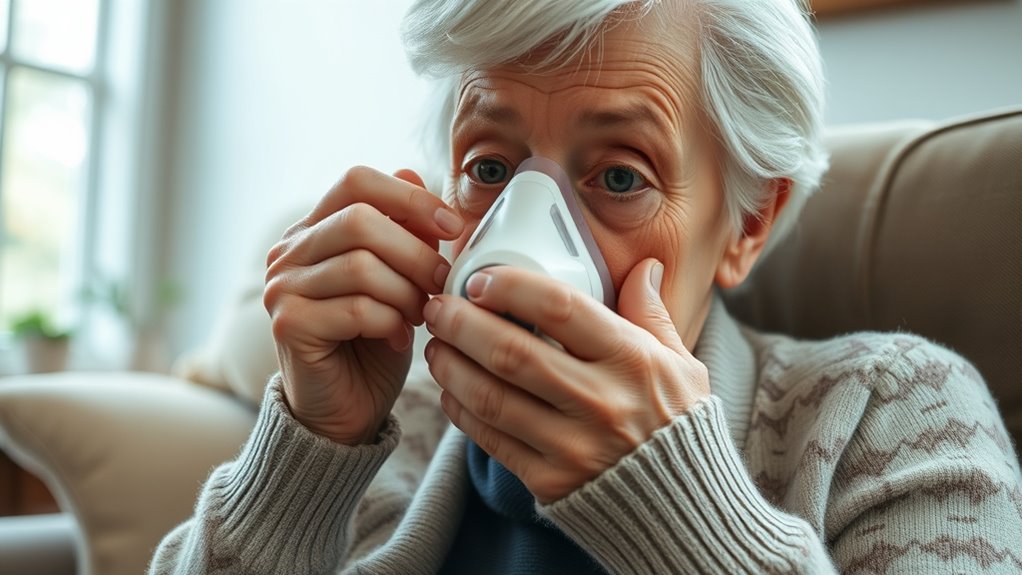

When a senior experiences shortness of breath or an asthma attack, stay calm and help them sit upright to make breathing easier. Use their rescue inhaler if prescribed, and encourage slow, deep breaths. Keep emergency contacts close and call for help if symptoms worsen or don’t improve in a few minutes. Prepare an emergency kit and verify medications are up-to-date. To guarantee their safety and comfort, understanding additional steps can make a significant difference.
Key Takeaways
- Ensure the senior uses their prescribed inhaler correctly and keeps rescue inhalers accessible at all times.
- Help the senior sit upright and stay calm to ease breathing during an attack.
- Recognize early signs of worsening symptoms and call emergency services if necessary.
- Maintain good indoor air quality by reducing dust, smoke, and strong odors in their environment.
- Regularly review and practice emergency response procedures with caregivers and loved ones.
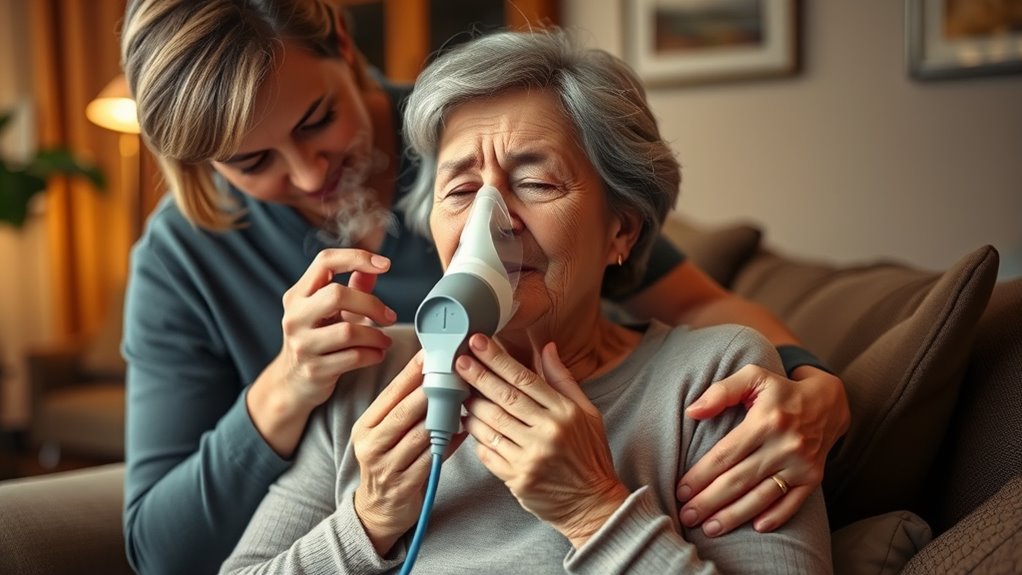
Shortness of breath and asthma attacks can be frightening for seniors and their caregivers, but quick, calm action can make a substantial difference. When your loved one suddenly struggles to breathe, staying composed helps you respond effectively. One of the most important steps is guaranteeing proper medication management. Make sure their inhalers and prescribed medications are up to date, easily accessible, and used correctly. Familiarize yourself with their medication schedules so you can administer the right drugs promptly during an attack. If they have a rescue inhaler, keep it nearby at all times, and regularly check its expiration date. Proper medication management not only helps control symptoms but also reduces the risk of severe attacks. It’s essential to work with their healthcare provider to develop an individualized treatment plan and understand when to escalate care. This proactive approach can prevent emergencies from escalating and provide peace of mind. Additionally, using air purifiers following manufacturer guidelines can help improve indoor air quality and reduce triggers for breathing difficulties.
Emergency preparedness is equally critical. Keep a list of emergency contacts, including their doctor, local emergency services, and a trusted family member or friend. Ensure your loved one’s medical information, such as allergies and current medications, is readily available in case emergency responders are needed. Practice an emergency plan regularly so everyone knows what to do in different scenarios. This might involve recognizing early warning signs of an attack, knowing how to use inhalers correctly, and understanding when to seek immediate medical attention. Having a well-organized emergency kit with essential supplies—extra inhalers, tissues, a mask, and water—can be invaluable during a crisis. Also, consider installing emergency alert systems or alarms that can notify others if your loved one needs urgent help.
During an attack, your quick response, grounded in good medication management and emergency preparedness, can drastically improve outcomes. Encourage your loved one to sit upright and stay calm, as panicking can worsen breathing difficulties. Assist them in using their rescue inhaler as prescribed. If symptoms worsen or don’t improve within a few minutes, don’t hesitate to call emergency services. Remember, the key is to act swiftly but calmly, ensuring they receive the care they need without unnecessary delay. Regularly reviewing and practicing your emergency plan keeps everyone prepared and reduces stress during actual emergencies. By staying organized and informed, you can help your senior loved one navigate shortness of breath and asthma attacks more safely and confidently.

Casematix Asthma Inhaler Case with Lanyard and Clip On Keychain Carabiner, Inhaler Holder Extended to Fit Standard Rescue and New Albuterol Inhaler Devices up to 4 Inches – Includes Asthma Case Only
- Fits Standard and Extended Inhalers: Holds up to 4-inch inhalers
- Durable Protective Design: Resists drops, impacts, and spills
- Includes Carabiner and Lanyard: Easy to carry and attach
As an affiliate, we earn on qualifying purchases.
As an affiliate, we earn on qualifying purchases.
Frequently Asked Questions
How Can I Prevent Asthma Attacks in Seniors?
You can prevent asthma attacks in seniors by maintaining good air quality indoors and outdoors, reducing exposure to allergens and irritants. Encourage strict medication adherence, ensuring they take prescribed inhalers and treatments consistently. Regularly clean living spaces to minimize dust and mold, and monitor weather conditions that might trigger symptoms. Staying proactive helps manage asthma effectively, reducing the risk of attacks and promoting better respiratory health for seniors.
What Lifestyle Changes Support Better Breathing in Seniors?
You can support better breathing in seniors by encouraging regular breathing exercises to strengthen lung capacity and reduce shortness of breath. Make dietary adjustments by incorporating anti-inflammatory foods like fruits, vegetables, and omega-3-rich fish, which can improve lung health. Additionally, avoiding smoking and allergens is essential. These lifestyle changes help maintain clear airways, reduce inflammation, and promote overall respiratory wellness for seniors.
Are There Alternative Therapies for Senior Asthma Management?
Yes, there are alternative therapies for senior asthma management. Holistic approaches, such as breathing exercises, meditation, and mindfulness, can help reduce symptoms. Natural remedies like herbal teas, steam inhalation, and essential oils may also provide relief when used safely. Always consult a healthcare provider before trying these options to guarantee they complement your senior’s treatment plan and don’t interfere with prescribed medications.
How to Differentiate Between Heart and Lung-Related Breathlessness?
You can differentiate heart from lung-related breathlessness by observing symptoms. If you notice heart symptoms like chest pain, irregular heartbeat, or swelling, it likely points to a heart issue. Lung indicators include wheezing, persistent cough, or shortness of breath that worsens with activity. Pay attention to the onset and duration—heart problems often cause sudden symptoms, while lung issues may develop gradually. Always consult a healthcare professional for an accurate diagnosis.
When Should I Seek Emergency Medical Help for a Senior?
Think of emergency signs like flashing warning lights on your dashboard—ignore them, and you’re risking serious damage. If a senior struggles to breathe, turns blue, or becomes unresponsive, seek immediate action. These signs indicate urgent issues that require emergency help. Trust your instincts; when in doubt, call emergency services right away. Acting quickly can save their life, so don’t delay if you notice these critical symptoms.

LEVOIT Air Purifier for Home Pets Hair Allergies in Bedroom, Covers Up to 1073 ft² by 56W High Torque Motor, AHAM VERIFIDE, 3-in-1 Filter with HEPA Sleep Mode, Remove Dust Smoke Odor, Core300-P, White
- Certified for Performance and Efficiency: AHAM VERIFIDE certified for reliability
- Powerful Air Cleaning: 56W motor with 143 CFM CADR
- Effective for Large Spaces: Covers up to 1073 ft²
As an affiliate, we earn on qualifying purchases.
As an affiliate, we earn on qualifying purchases.
Conclusion
Being prepared can make all the difference during a senior’s shortness of breath or asthma attack. Remember, about 60% of asthma-related deaths occur in adults over 65, highlighting the importance of quick action and proper management. Stay calm, help them sit upright, and use their inhaler if prescribed. Your prompt response can prevent serious complications and ensure their safety. Stay vigilant, stay informed, and always be ready to assist when it matters most.

430 Piece First Aid Kit, Well-Organized Premium Waterproof Compact Trauma Medical Kits for Any Emergencies, Ideal for Home, Office, Car, Travel, Outdoor, Camping, Hiking, Boating (Red)
- Easy-Access, Well-Organized Interior: Labeled pockets and dedicated bandage area
- 430 Professional-Grade Medical Items: Meets international standards, latex-free
- Waterproof and Durable Material: Tear-resistant polyester fabric with extra storage
As an affiliate, we earn on qualifying purchases.
As an affiliate, we earn on qualifying purchases.
senior asthma management supplies
As an affiliate, we earn on qualifying purchases.
As an affiliate, we earn on qualifying purchases.