TL;DR

Turn quiet afternoons into listening time
- Thousands of audiobooks, podcasts and originals
- Listen on your phone, tablet or Echo — also offline
- Cancel anytime
Fit&Well published a chair-based yoga flow from a yoga therapist who works with older adults, including people with Parkinson’s, movement disorders and chronic health conditions. The seven movements are presented as adaptable options, not a prescribed medical program; the report does not provide clinical evidence that the routine improves health outcomes.
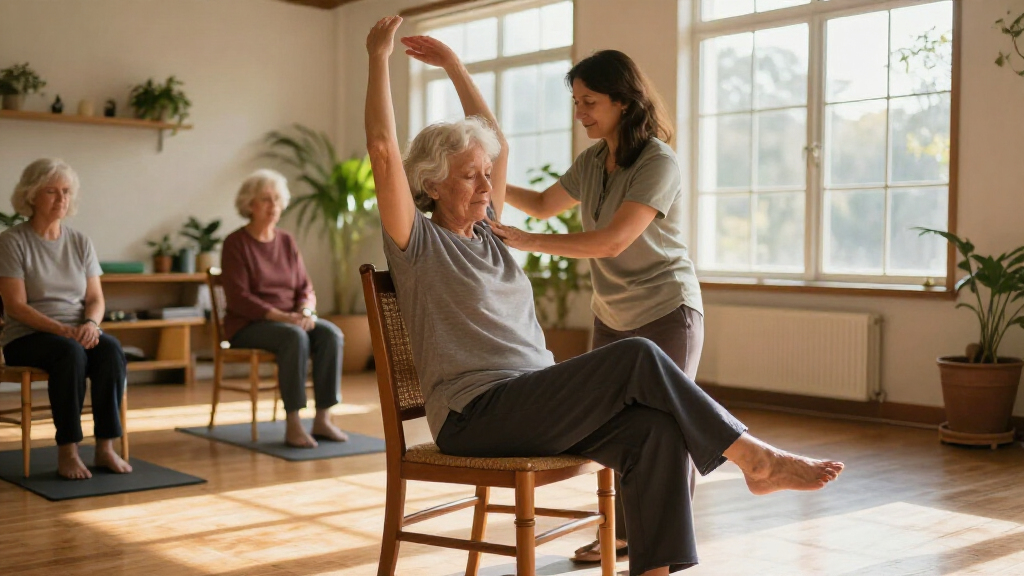
Fit&Well has published a seven-part chair-based yoga routine recommended by a yoga therapist who works with older adults, including people living with Parkinson’s, movement disorders and chronic health conditions. The seated sequence uses breathing, arm movements, twists and gentle bends, and is presented as an adaptable option for people who are more comfortable moving from a chair or cannot manage floor-based exercises.
The therapist says chair-based practice can involve stretching muscles, moving joints and mindful breathing while a participant remains seated. The report describes the movements as gentle, but the therapist says they may still feel energizing. That description reflects the therapist’s experience with their classes, rather than a clinical finding presented in the article.
The sequence begins with a minute to sit with the feet flat, the torso upright and the hands resting on the lap while breathing settles. It then moves through seven steps: raising the arms and bringing the palms together, rotating the torso to each side, lifting one arm at a time and then both, side bends, seated cat-cow movements, and forward folds.
Most movements are suggested for three to five repetitions, or three repetitions per side where applicable. The report advises using a sturdy chair and leaving enough space to raise the arms. It also offers modifications: hold the chair during a side bend for added stability, or rest the hands on the knees during a forward fold. Participants are encouraged to stay within their own range of movement rather than trying to achieve a particular pose.
A Seated Option for Gentle Movement
The routine addresses a practical barrier to exercise: not everyone can or wants to move on the floor. A chair-based sequence may make movement feel more accessible to some older adults and people with limited mobility, while allowing them to adjust how far they reach or bend. The instructions emphasize stability and individual capacity rather than matching a fixed pose.
That accessibility framing matters, but the report does not establish that this specific flow prevents falls, treats Parkinson’s, relieves chronic conditions or produces measured fitness gains. The stated benefits—such as feeling calmer, rested or uplifted—are the therapist’s observations. Readers should distinguish those descriptions from evidence of a medical effect.
Products Worth Considering

Garmin Venu 3S GPS Smartwatch with AMOLED Display, Soft Gold and French Gray Silicone Band

Philips Sonicare ProtectiveClean 5300 Rechargeable Electric Toothbrush with 3 Brush Heads, Black

Oral-B iO5 Rechargeable Electric Toothbrush with 5 Cleaning Modes and Travel Case, White
As an affiliate, we earn on qualifying purchases.
How the Seven-Move Flow Works
The therapist says their work includes older adults living with Parkinson’s and other movement disorders, as well as people with chronic health conditions. They use chair-based yoga both for people who do not have the mobility for floor exercises and for those who simply prefer to remain seated. The supplied report does not identify the therapist by name or give details about their qualifications beyond describing them as a yoga therapist.
The sequence coordinates movement with breathing. For example, participants inhale while raising an arm or opening the chest, then exhale while lowering the arm, twisting or rounding the back. The side bend and forward fold include simpler alternatives for people who need more support. These are instructions from the published routine; the report does not provide a trial, participant data or comparison with other exercise programs.
““I encourage everyone to move within the range and capacity of their body—there’s no particular shape or position to achieve.””
— The yoga therapist quoted in Fit&Well
Evidence and Individual Suitability
The supplied report does not say when the routine was published, identify the therapist, or cite research testing these seven movements. It also gives no data on participants’ ages, health status or results. The claims about feeling more energized or rested are therefore anecdotal observations in the source material, not quantified effects.
The article does not specify how people with particular injuries, balance concerns or medical conditions should modify every movement, nor does it set out screening criteria. A seated routine can still involve reaching, bending and rotation. Anyone uncertain about whether these movements are suitable for them should ask a qualified health professional or appropriately trained instructor before trying them.
How Readers Can Approach the Routine
The report offers the sequence for readers to try with a sturdy chair and clear space, using the stated repetition ranges and the easier options when needed. It does not announce a follow-up study, program or clinical evaluation. The next step described is simply trying the seated flow within one’s comfortable range, rather than treating it as a prescribed treatment.
Readers looking for evidence about specific health benefits would need research that tests the routine or comparable chair-based programs and reports outcomes. Until such evidence is supplied for this sequence, its reported benefits should be understood as the therapist’s experience, while questions about individual suitability remain personal and health-specific.
Key Questions
What exercises are included in the chair routine?
The flow includes an initial seated breathing pause, an overhead arm arc into prayer, seated twists, single- and double-arm raises, side bends, cat-cow movements and forward folds.
How many repetitions does the report recommend?
Most movements are suggested for three to five repetitions. Twists and side bends are described as three repetitions on each side.
Does the report prove the routine improves health?
No. The supplied report gives the therapist’s experience and instructions, but it does not cite a clinical study or provide measured health outcomes for this seven-movement sequence.
What equipment is needed?
The routine calls for a sturdy chair and enough clear space to raise the arms comfortably. The report suggests holding the chair for support during side bends if needed.
Source: fitandwell.com