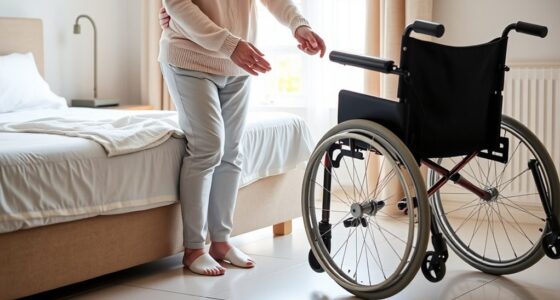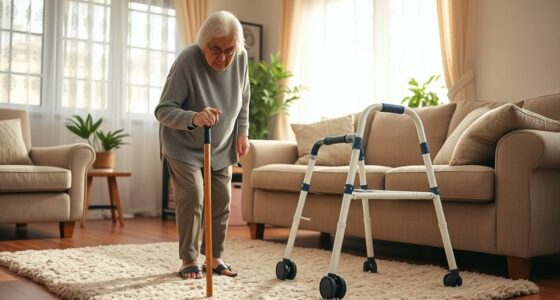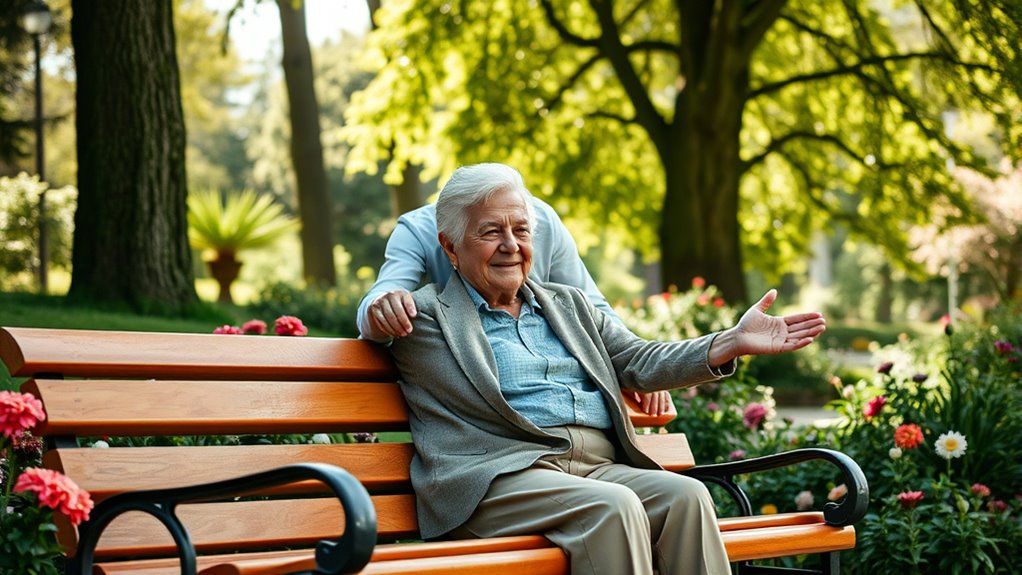

If an elderly person falls, first check if they’re conscious and call emergency services if needed. Keep them calm, offer reassurance, and assess for injuries, avoiding movement if serious harm is suspected. Help them gently roll onto their side, then assist them to kneel and slowly stand, supporting them securely. Make sure nearby furniture is stable and within reach for added support. For more safety tips and proper techniques, continue exploring ways to help them get up safely.
Key Takeaways
- Check for injuries and call emergency services if serious harm is suspected.
- Keep the person calm and supportive, offering reassurance and comfort.
- Assist them to kneel on one knee, then help them to sit on a sturdy surface.
- Guide them to push up with their hands and support their hips as they stand slowly.
- Ensure they are stabilized with nearby furniture and monitor for dizziness or pain.
Assessing the Situation and Ensuring Safety

When you find an elderly person on the ground, your first priority is to assess the situation carefully to guarantee safety for both of you. Check if they are conscious and able to communicate. Look for visible injuries, bleeding, or severe pain that might need emergency help. Be alert for signs of head, neck, or spinal injuries, which can worsen with movement. Ask if they can move their limbs or feel pain in specific areas. If you suspect serious injury or they can’t safely get up, call 911 immediately. Keep the environment safe by removing hazards nearby. Stay calm, speak reassuringly, and avoid rushing. Your careful assessment helps prevent further harm and guides your next steps effectively. Assessing for injuries is crucial to determine the proper response. Additionally, understanding how to support their mobility can aid in safe repositioning once it’s appropriate. Recognizing hazardous environments can also prevent additional accidents during rescue efforts. Being aware of energy-related issues such as fatigue or dizziness can further inform your approach to helping them safely. It’s also beneficial to be familiar with basic first aid procedures to provide immediate assistance if necessary.
Providing Immediate Comfort and Support
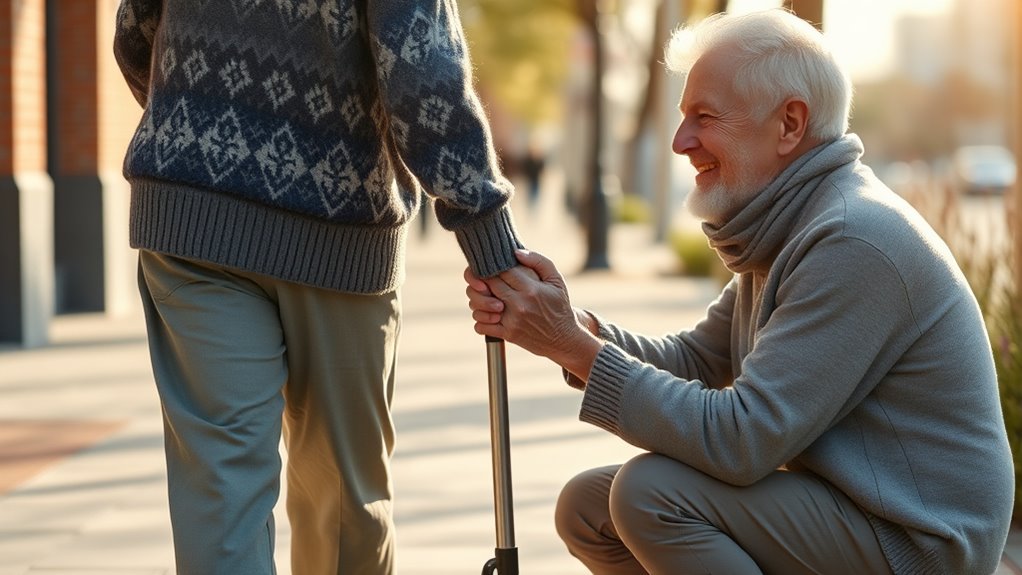
Offering immediate comfort and support after a fall helps calm the elderly person and reduces anxiety. Speak softly, reassure them you’re there to help, and avoid rushing. Keep them warm with a blanket or jacket, and encourage slow, deep breaths to ease panic. Use the following table to guide your support:
| Support Step | Description |
|---|---|
| Reassure | Calmly tell them you’re there and everything is okay. |
| Comfort | Offer a blanket or gentle touch for reassurance. |
| Stay Present | Stay close until they feel calmer and more secure. |
Your calm presence helps ease fear, making it easier for them to relax and cooperate during the recovery process. Maintaining a safe environment is crucial to prevent further falls or injuries. Additionally, being aware of fall prevention strategies can help reduce the risk of future accidents. Keep communication gentle, and focus on providing emotional reassurance.
Preparing the Person for Moving

Before attempting to move the person, make certain they are as prepared as possible to reduce the risk of further injury. First, reassure them calmly and encourage deep breaths to help manage anxiety. Check for any obvious injuries, bleeding, or severe pain, and avoid moving if you suspect head, neck, or spinal injuries. Ensure the surrounding area is clear of obstacles to prevent accidents. Help the person roll gently onto their side, allowing blood pressure to stabilize. Once relaxed, assist them into a hands-and-knees position, using nearby sturdy support like a chair or table. Confirm the support surface is stable and close enough for leverage. This preparation minimizes discomfort and prepares them for the next steps safely. Proper positioning helps prevent additional injury and makes the moving process safer. Additionally, understanding safe transfer techniques can increase confidence and reduce risk during the rescue. Recognizing body mechanics is essential to avoid causing strain to yourself or the injured person during the move. Incorporating proper body mechanics also reduces fatigue and improves safety for both parties. Being aware of pool safety practices can further prepare you for handling emergencies effectively.
Using Proper Techniques to Help Them Stand
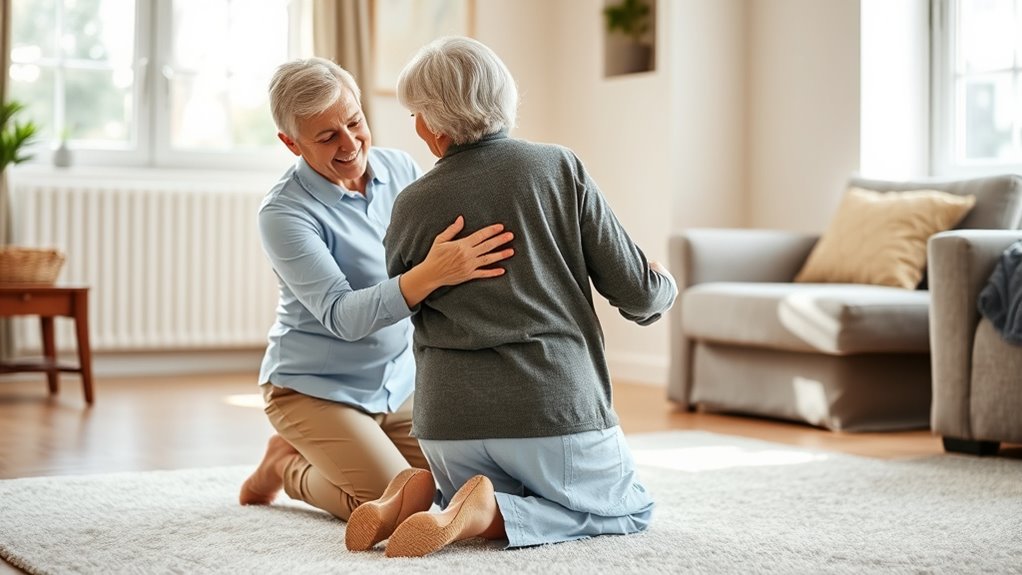
After ensuring the person is relaxed and supported in a hands-and-knees position, position yourself close to their side. Place one hand on their hip or waist and the other on their shoulder or upper back to provide stability. Encourage them to push up with their hands firmly on the support surface, keeping their elbows slightly bent. As they begin to rise, assist by guiding their hips upward while maintaining steady contact. Help them shift their weight gradually onto their legs by encouraging small, controlled movements. Once their weight is fully on their feet, support their balance as they stand straight. Keep your movements slow and steady, and communicate reassurance throughout to help them feel secure and confident. For added safety, consider non-slip mats or supportive handrails to prevent slipping during the process, especially since proper fire control techniques can help minimize hazards during assisted movements. Being aware of fall prevention strategies can further enhance safety during the recovery process. Additionally, assessing their mobility and strength beforehand can help tailor your assistance to reduce injury risk and ensure a smoother recovery. Incorporating ergonomic techniques can also make the process safer and more comfortable for both of you.
Positioning Supportive Furniture Safely

To guarantee the support furniture is safe and effective, position it directly in front of the fallen person’s body, close enough for them to reach comfortably without overstretching. Confirm the furniture is stable, with non-slip feet or a secure base to prevent shifting during movement. Select a chair with armrests on both sides to offer multiple hand-holding options, helping the person balance as they rise. Verify the seat height allows their feet to touch the ground firmly, promoting proper weight distribution. Place the support surface close enough for easy access but far enough to avoid overstretching or straining. Before lifting, double-check that the furniture won’t slide or tip, ensuring a secure and safe environment for the recovery process. Additionally, ensure the ergonomic design of the support furniture aligns with the user’s needs to facilitate safe and comfortable movement. Incorporating appropriate stability features can further enhance safety during the process, especially if the furniture includes anti-tip mechanisms or other safety enhancements. Properly anchoring support furniture can also help prevent accidental movement during use, reducing injury risks. Paying attention to support furniture safety can significantly reduce the risk of injury during assistance.
Monitoring and Preventing Future Falls
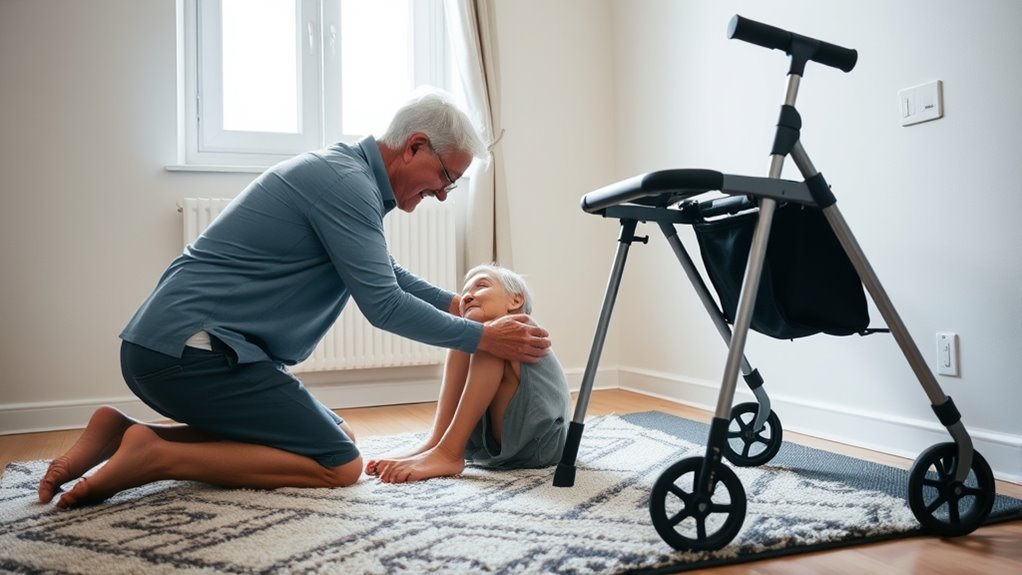
Monitoring a person after they’ve been helped up is essential to guarantee their safety and prevent another fall. Keep an eye out for dizziness, weakness, or signs of pain, and ask how they feel before allowing them to walk or stand alone. Encourage them to sit and rest if needed, and check for any new discomfort. Make sure their environment is safe by installing grab bars, improving lighting, and removing tripping hazards. Regularly review their mobility and balance, and consider professional assessments to identify underlying issues. Educate them on safe movement techniques and encourage the use of assistive devices if necessary. Additionally, understanding Gold IRA Markets can inform future investment safety practices. Consistent monitoring and proactive adjustments can considerably reduce the risk of future falls, helping them stay safe and maintain independence longer. Incorporating fall prevention strategies into their daily routine can further enhance their safety measures. Recognizing fall risk factors can help tailor specific interventions to reduce the likelihood of future incidents.
Frequently Asked Questions
How Can I Tell if the Fall Caused a Serious Injury?
You should look for signs like severe pain, bleeding, swelling, or deformity that suggest serious injury. If the person cannot move limbs, feels numb, or complains of intense head or neck pain, these are red flags. Also, watch for unconsciousness, difficulty breathing, or confusion. If any of these occur, call emergency services immediately and avoid moving them unless necessary to prevent further harm.
What Signs Indicate a Head or Spinal Injury?
Like a fragile glass, head or spinal injuries show signs like severe pain, dizziness, or sudden weakness. Watch for confusion, blurred vision, or loss of consciousness, which indicate brain trauma. If the person can’t move limbs or feels numb or tingling, suspect spinal injury. Check for uneven pupils, persistent headache, or neck tenderness. Avoid moving them unnecessarily and seek emergency help immediately if these signs appear.
When Should I Call Emergency Services Instead of Helping the Person Up?
You should call emergency services immediately if the fallen person shows signs of a head, neck, or spinal injury, such as severe pain, weakness, or loss of sensation. Also, if they are unconscious, unable to communicate, bleeding heavily, or can’t move their limbs, don’t attempt to help them up yourself. Prioritize calling emergency services to guarantee they get professional medical assistance as quickly as possible.
How Do I Handle a Person Who Refuses Help After Falling?
Imagine you’re standing at a crossroads, and someone refuses your help like a closed door. You calmly respect their decision, but stay nearby, offering reassurance with a gentle voice and kind gestures. If they’re in danger or unable to move safely, call emergency services. Your presence is like a lighthouse—remaining steady and supportive, even if they choose to navigate alone, ensuring they’re safe and cared for.
What Are the Best Ways to Prevent Future Falls at Home?
You can prevent future falls at home by removing tripping hazards like loose rugs and clutter. Install grab bars in bathrooms and along stairways for support. Guarantee good lighting everywhere, especially in hallways and staircases. Use non-slip mats in the bathroom and secure cords out of walkways. Encourage regular exercise to improve strength and balance. Keep pathways clear, and review medications with your healthcare provider to minimize dizziness risks.
Conclusion
By balancing patience and preparation, you can confidently carry out careful, caring, and controlled care. Clear communication and cautious coordination create comfort, help prevent further falls, and promote peace of mind. Remember, your calm, consistent efforts can cultivate confidence, comfort, and continued independence. With compassion and caution, you can convert a challenging situation into a safe, supportive, and successful recovery, ensuring the elderly person feels secure and supported every step of the way.