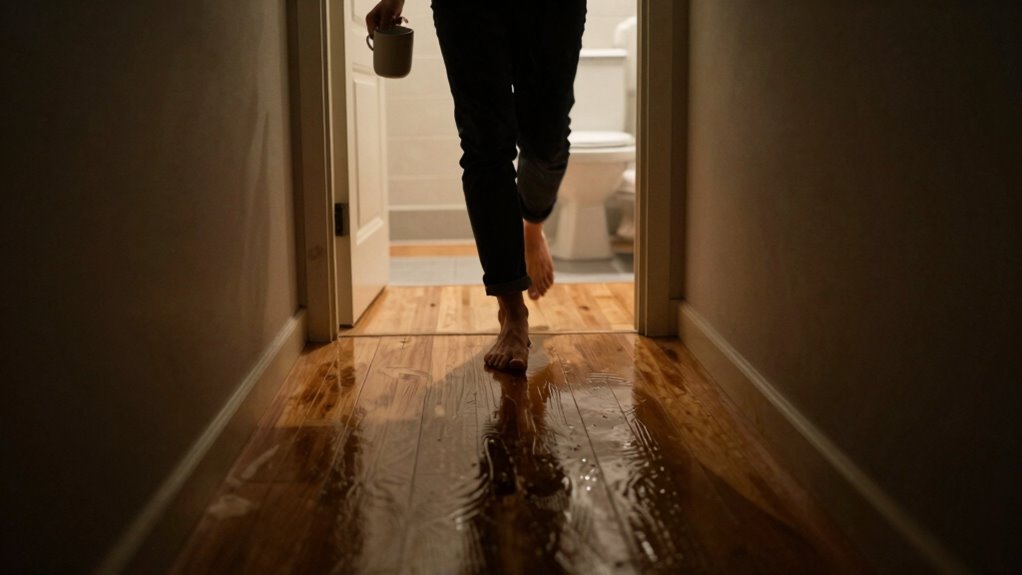
Hurrying to the bathroom increases your fall risk because speed makes you overlook hazards like wet floors, uneven surfaces, or obstacles. When you rush, you tend to focus less on your footing and more on reaching your destination, which can lead to slips, trips, or missteps. Carrying objects or being distracted also heightens these dangers. If you keep going fast, you’re more likely to miss critical safety cues—a few quick tips can help you stay safer.

Get comfort and care essentials delivered free — and shop member deals
- Fast, free delivery on millions of items
- Access to Prime Big Deal Days deals on October 6–7
- Prime Video, Amazon Music and more included
Key Takeaways
- Hurrying reduces focus, making it harder to notice hazards like wet or uneven surfaces.
- Speed increases the likelihood of missteps, slips, and trips on bathroom floors.
- Carrying objects while rushing distracts attention from foot placement and hazards.
- Wet floors from quick movements or spills become more dangerous when not dried promptly.
- Rushing compromises careful walking, heightening risk of falls and injuries.
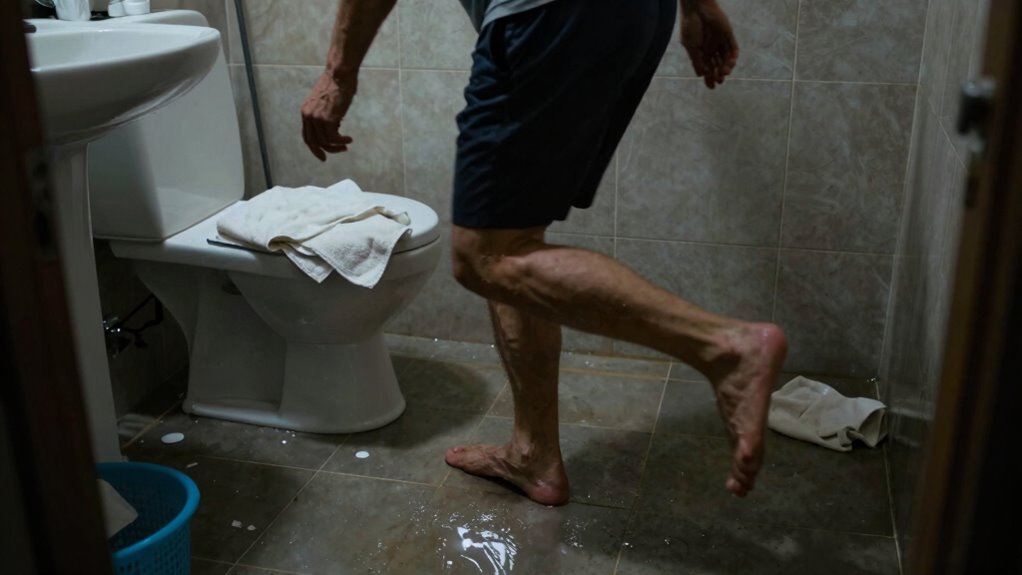
Have you ever rushed to the bathroom and suddenly felt unsteady? That sudden jolt of imbalance often happens when you’re in a hurry, and it’s more common than you might think. When you’re rushing, your focus narrows to reaching the toilet or sink, and you might overlook hazards lurking beneath your feet. Slippery surfaces are a major concern—wet tiles, spilled liquids, or even soap residue can make the floor slick and treacherous. If you’re rushing, you’re less likely to notice these hazards until it’s too late. The risk of slipping increases markedly, especially if you’re not paying close attention to your footing. Even a small slip can lead to a fall, which might result in serious injuries, especially for older adults or those with mobility issues.
Uneven flooring adds another layer of danger when you’re in a hurry. Many bathrooms have uneven tiles, loose mats, or uneven thresholds that can catch your foot unexpectedly. When speed becomes a priority, your steps become less careful. You might lift your foot too high or misjudge your footing, which can cause you to stumble. If the floor isn’t even, your chances of catching your toe or tripping over a bump go up considerably. The combination of haste and uneven surfaces creates a perfect storm for falls, especially if your vision is momentarily distracted or if you’re carrying items like a laundry basket or a phone. These distractions make it harder to notice tricky spots on the floor. Additionally, hazards on the bathroom floor can increase fall risk, especially when attention is diverted. Paying attention to environmental hazards such as loose tiles or clutter can significantly reduce your risk of accidents. Being aware of common bathroom hazards and addressing them can help prevent hurried mishaps.
In your rush to reach the bathroom, your attention shifts away from safety. You might skip looking down or neglect to check the path ahead. This oversight can lead to stepping on something slippery or uneven, increasing your fall risk. It’s tempting to rush because you’re in a hurry or feeling urgent, but this haste often backfires. Taking a few extra seconds to walk carefully and watch your step can markedly reduce your chances of falling. Wearing shoes with good grip, keeping floors dry, and ensuring the bathroom floor is even and free of obstacles also help. Additionally, maintaining safe bathroom conditions by regular cleaning and repairs can further minimize hazards. Staying aware of hazardous surfaces and proactively addressing them helps create a safer environment. Falling in the bathroom isn’t just embarrassing—it can cause cuts, bruises, broken bones, or worse. So, next time you feel the urge to rush, remember that slowing down a little could save you from a painful fall. Practicing mindful walking and prioritizing safety over speed can make a big difference in preventing accidents.
As an affiliate, we earn on qualifying purchases.
Frequently Asked Questions
How Can I Reduce the Need to Rush to the Bathroom?
To reduce the need to rush to the bathroom, focus on hydration management by drinking fluids steadily throughout the day rather than in large amounts at once. Additionally, try bladder training techniques to increase your bladder’s capacity and delay urgency. By maintaining a consistent schedule and practicing these strategies, you can lessen sudden urges, decrease rushing, and lower your fall risk.
Are There Specific Times When Fall Risk Is Higher?
You face higher fall risks during certain times, especially when timing patterns and urgency triggers kick in. For example, early mornings or late nights when you may rush due to urgency, or after waking from sleep, are common risk periods. During these times, your movement is often hurried, increasing the chance of slips or trips. Being aware of these patterns helps you plan ahead, slow down, and reduce fall risks.
What Are Some Common Injuries From Bathroom Falls?
You might suffer injuries like cuts, bruises, or broken bones from bathroom falls. Slippery surfaces caused by water or soap increase your risk, especially if you rush. Bathroom clutter, like rugs or toiletries, can also cause you to trip and fall. Being cautious, cleaning up spills promptly, and keeping the area clear help prevent these injuries. Taking your time guarantees you stay safe and avoid unnecessary harm.
Does Medication Affect Bathroom Urgency and Fall Risk?
Medication side effects can turn your bathroom visits into a race against time, making urgency management more essential. As you navigate these effects, you might feel like you’re chasing shadows, risking a slip or fall in your haste. Recognizing how your medication influences bathroom urgency helps you stay calm and plan ahead. By managing this urgency carefully, you protect yourself from falls and keep your independence shining brightly.
How Can Caregivers Assist Elderly Individuals Safely?
You can help elderly individuals stay safe by using assistive devices like grab bars and walkers, which provide stability. Make safety modifications such as installing proper lighting and removing tripping hazards in bathrooms and hallways. Encourage them to take their time and avoid rushing. Regularly check their footwear for proper fit and grip. Your attentive support and these simple adjustments considerably reduce fall risks during bathroom visits.
elderly fall prevention grab bars
As an affiliate, we earn on qualifying purchases.
As an affiliate, we earn on qualifying purchases.
Conclusion
So, next time you rush to the bathroom, remember how that quick dash can lead to a stumble. It’s like catching a falling glass — a sudden move might seem harmless but can cause a crack you didn’t see coming. Take a breath, slow down, and steady your steps. Because in those split seconds, a simple pause can keep you safe, preventing a fall from turning into a painful accident.
As an affiliate, we earn on qualifying purchases.
As an affiliate, we earn on qualifying purchases.
Cold & flu season Picks
humidifiers
As an affiliate, we earn on qualifying purchases.