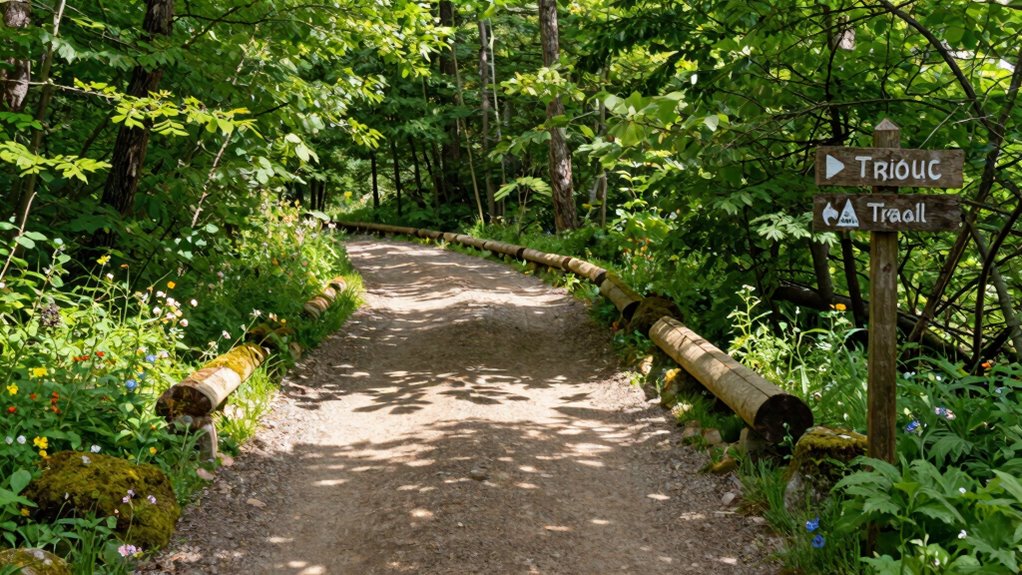

To make common pathways easier to navigate, you should install clear signage with simple symbols and concise text at key decision points. Make certain pathways are well-lit with consistent, energy-efficient lighting, especially at night, and keep the area free of clutter and obstacles. Incorporate visual and tactile cues like color coding, landmarks, and textured surfaces for accessibility. Designing intuitive, wide routes that avoid confusing loops will improve overall navigation—if you want to learn more, keep exploring effective strategies.

Turn quiet afternoons into listening time
- Thousands of audiobooks, podcasts and originals
- Listen on your phone, tablet or Echo — also offline
- Cancel anytime
Key Takeaways
- Install clear, simple signage with symbols and concise text at decision points and entrances.
- Ensure pathway lighting is even, glare-free, and well-maintained for visibility at night.
- Regularly clean and trim pathways to remove obstacles, debris, and overgrown vegetation.
- Use visual and tactile cues like color coding, landmarks, and textured surfaces for better recognition.
- Design wide, logical, and accessible routes that avoid confusing loops or dead ends.
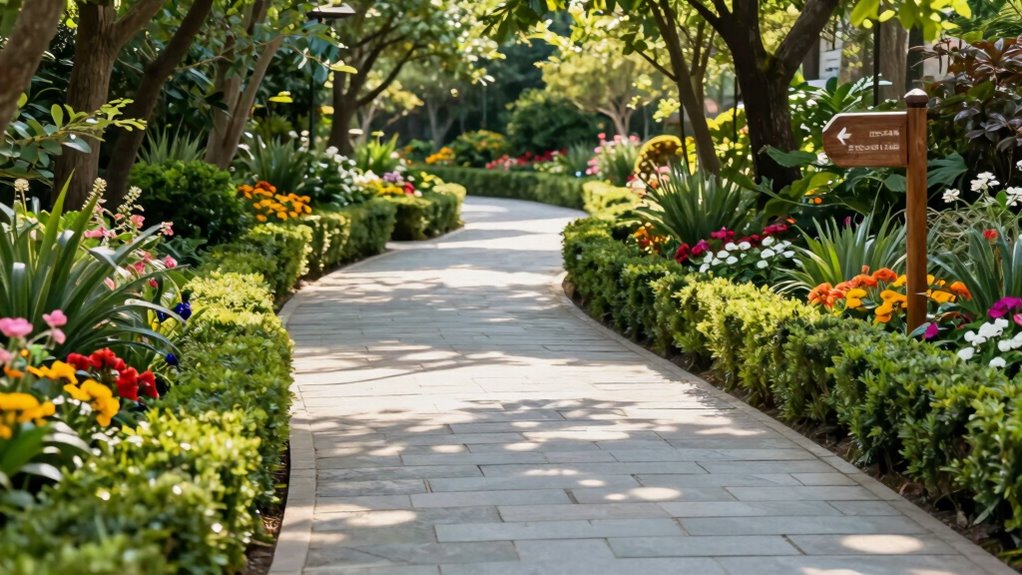
Finding common pathways can often feel frustrating or confusing, especially when they’re cluttered, poorly marked, or poorly maintained. To make navigation easier, you need to focus on clear guidance and good visibility. One of the most effective ways to achieve this is by implementing wayfinding signage. Well-designed signs act as visual cues, guiding you smoothly from one point to another. They should be strategically placed at decision points, intersections, and entrances. Use simple symbols and concise text to communicate directions quickly, minimizing confusion. Durable materials and reflective surfaces ensure signs remain visible regardless of weather or lighting conditions.
Alongside signage, pathway lighting is essential, especially during low-light hours or at night. Proper lighting illuminates the entire pathway, helping you see where you’re going and avoiding obstacles or hazards. Select fixtures that provide even, glare-free illumination, and place them at regular intervals. This consistent lighting creates a safe and inviting environment, reducing the chances of tripping or feeling lost. Solar-powered lights can be a sustainable option, especially in outdoor settings, and are easy to install without extensive wiring. Incorporating lighting solutions that are energy-efficient and weather-resistant can further enhance the pathway’s safety and longevity. Additionally, integrating wayfinding principles into the design can help create a more intuitive navigation experience.
Maintaining a clean, clutter-free pathway is equally important. Overgrown foliage, debris, or misplaced objects can obscure signs and reduce visibility. Regular upkeep keeps pathways clear and ensures that signs and lights are unobstructed. If pathways are in outdoor areas, consider trimming plants and removing obstacles, so the signage and lighting remain effective. In high-traffic zones, adding tactile elements like textured surfaces or raised markers can also aid navigation for people with visual impairments. Implementing visual cues such as color coding or distinctive markings can further improve recognition and ease of navigation.
Another vital aspect is designing pathways with intuitive flow in mind. Avoid creating confusing loops or dead ends. Instead, aim for a logical, straightforward route that naturally guides users from start to finish. Incorporating landmarks or distinctive features along the way to serve as visual anchors can help you remember and recognize the path more easily. Additionally, consider accessibility needs by ensuring pathways are wide enough for wheelchairs and that signage is easy to read for everyone.
Frequently Asked Questions
How Do I Determine Which Pathways Need the Most Improvement?
You should observe where people struggle most by noting recurring wayfinding challenges and gathering feedback. Pay attention to areas where visitors seem confused or hesitant, especially considering accessibility considerations for diverse users. Conduct walkthroughs with different individuals, including those with mobility needs, to identify obstacles. Analyzing traffic flow and collecting input helps pinpoint pathways needing the most improvement, ensuring everyone can navigate easily and safely.
What Tools Are Best for Pathway Navigation Enhancement?
You should use interactive maps and lighting solutions to enhance pathway navigation. Interactive maps help users easily find their way with digital, real-time guidance, reducing confusion. Adequate lighting solutions ensure visibility during low-light conditions, making pathways safer and more accessible. Combining these tools creates a seamless navigation experience, helping users feel confident and secure as they move through common pathways. Both tools considerably improve overall navigation efficiency.
How Can Signage Be Optimized for Better Understanding?
You can optimize signage by incorporating clear visual cues and consistent color coding to guide users effectively. Use high-contrast colors for visibility and simple symbols to convey messages quickly. Place signs at key decision points, ensuring they’re easily readable from a distance. Regularly update signage to reflect pathway changes, and keep messaging straightforward, so users understand directions effortlessly, reducing confusion and enhancing overall navigation experience.
What Safety Measures Should Be Prioritized in Pathway Design?
You should prioritize safety measures like lighting improvements and obstacle removal in pathway design. Guarantee pathways are well-lit to increase visibility, especially at night or in low-light conditions. Remove obstacles such as debris, uneven surfaces, or protrusions that could cause trips or falls. Regularly inspect the pathways to maintain safety standards. These steps help create a safer environment, making navigation easier and reducing the risk of accidents for all users.
How Often Should Pathways Be Reviewed and Updated?
Think of pathways as living corridors that need regular tending. You should review and update them at least once a year, or more often if usage patterns change. During these reviews, focus on accessibility improvements, like adding ramps or clearer signage, and aesthetic considerations, such as landscaping or lighting. Regular updates keep pathways safe, inviting, and functional, ensuring they meet users’ needs and adapt to evolving environments.
Conclusion
By simplifying and clearly marking your pathways, you make navigation effortless. For example, imagine redesigning a busy office corridor with better signage and open sightlines—employees move faster and feel less stressed. You can do the same at home or in public spaces by removing clutter and adding intuitive signs. Taking these small steps guarantees everyone can find their way easily, saving time and reducing frustration. Clear pathways create a smoother, more welcoming environment for all.
Fall Picks
fall essentials
As an affiliate, we earn on qualifying purchases.