To help a senior with tremors eat and drink without spills, consider using adaptive utensils with wider grips and non-slip handles for better control. Place cups with lids or straws and keep utensils organized within easy reach. Installing grab bars, using non-slip placemats, and ensuring proper lighting can also boost safety. Small modifications like these improve independence and confidence—continue to explore more tips to make mealtimes safer and more comfortable.

Get comfort and care essentials delivered free — and shop member deals
- Fast, free delivery on millions of items
- Access to Prime Big Deal Days deals on October 6–7
- Prime Video, Amazon Music and more included
Key Takeaways
- Use adaptive utensils with wider grips, non-slip handles, and balanced weight to enhance control and reduce spills.
- Implement environmental modifications like stable placemats, proper lighting, and organized, accessible utensils.
- Employ spill-proof cups with lids or straws to prevent tip-overs during drinking.
- Install grab bars and non-slip surfaces to improve safety and stability during meals.
- Keep the dining area clutter-free and well-lit to minimize distractions and improve visual focus.
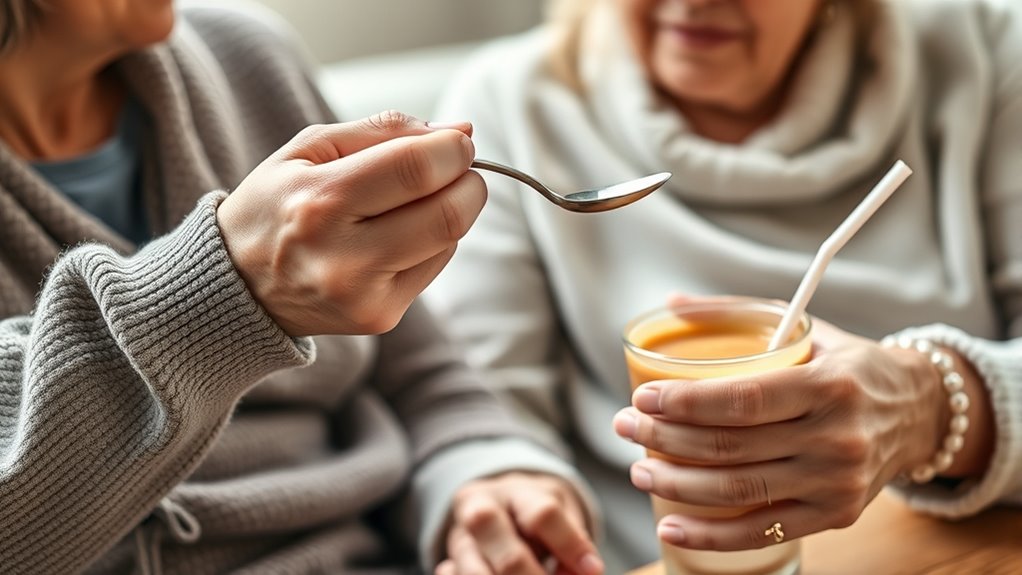
Are you concerned about how tremors affect your loved ones’ daily lives? If so, you’re not alone. Tremors can make simple tasks like eating and drinking frustrating and sometimes unsafe. Luckily, there are practical ways to support your loved one’s independence and safety. One effective approach involves using adaptive utensils. These specially designed tools often feature wider grips, non-slip handles, and balanced weight distribution, making it easier for seniors to hold and maneuver utensils steadily. When your loved one uses adaptive utensils, they gain better control, which reduces spills and frustration during meals. Pairing these utensils with environmental modifications can further enhance safety and comfort. For example, ensuring the dining area has a stable, non-slip placemat or tray prevents the plate from sliding. Placing utensils and cups in easily reachable, organized spots minimizes the need to stretch or search, reducing the risk of accidents caused by shaky hands. You might also consider installing grab bars or sturdy rails near the eating area for extra support, especially if your loved one struggles with balance or stability. Lighting is another key factor; well-lit spaces help them see their food more clearly, reducing the chance of spills caused by misjudging distances or amounts. Additionally, using spill-proof cups with lids or straws can prevent accidental tip-overs, which are common with tremors. It’s important to create an environment that minimizes distractions and clutter, helping your loved one focus on eating without feeling overwhelmed or anxious. Adjusting the height of the table or chair can also make a significant difference, providing better posture and control during meals. Comfort and accessibility should be at the forefront of your modifications, making sure your loved one can sit comfortably and reach their food and drinks without strain. Incorporating these environmental modifications not only helps manage tremors during meals but also boosts your loved one’s confidence and dignity. Utilizing adaptive utensils and thoughtful modifications to their environment can significantly improve mealtime experiences. Remember, small adjustments can have a big impact on their independence and safety. It’s all about creating a supportive, user-friendly space that accommodates their needs and minimizes frustrations. With the right adaptive utensils and thoughtful modifications to their environment, you’ll help your loved one enjoy meals without spills, making mealtimes safer, more enjoyable, and less stressful for everyone involved.
adaptive utensils with non-slip handles
As an affiliate, we earn on qualifying purchases.
As an affiliate, we earn on qualifying purchases.
Frequently Asked Questions
Are There Specific Medications to Reduce Tremors During Meals?
Yes, there are medication options to reduce tremors during meals. Medications like beta-blockers and anti-seizure drugs are commonly used for tremor suppression, helping your loved one eat and drink more comfortably. Your doctor may also prescribe medications like primidone or tranquilizers if needed. Always consult a healthcare professional to determine the best medication plan, ensuring safe and effective tremor management tailored to individual needs.
How Can Caregivers Encourage Independence Despite Tremors?
Encourage independence like guiding a boat through gentle waters. You can do this by providing adaptive utensils with thicker grips and easy-to-hold designs, making eating less frustrating. Environmental modifications, such as stabilizing plates or placing non-slip mats, help minimize spills. Offer gentle encouragement and patience, allowing your loved one to practice at their own pace. Small adjustments boost confidence, enabling them to enjoy meals with as much independence as possible.
What Are the Signs of Nutritional Deficiencies in Seniors With Tremors?
You should watch for signs like fatigue, weakness, or pale skin, which indicate possible anemia symptoms from vitamin deficiencies. If your senior shows poor coordination, memory issues, or numbness, they might lack essential nutrients like B12 or iron. Regular check-ups and a balanced diet help identify and address these deficiencies early, ensuring their tremors don’t worsen and their overall health stays on track.
Can Physical Therapy Improve Hand Stability During Eating?
Did you know that physical therapy can considerably improve hand stability for seniors? It often incorporates adaptive techniques and sensory strategies, which help reduce tremors during eating. By focusing on targeted exercises, you can help your loved one regain confidence and independence at mealtime. Regular therapy sessions strengthen hand muscles and improve coordination, making spills less likely and eating more comfortable.
Are There Assistive Devices Designed for Tremor Management?
Yes, there are assistive devices like adaptive utensils and stabilization devices designed for tremor management. These tools help you eat and drink more independently by reducing hand tremors and improving grip. Adaptive utensils often feature weighted handles or ergonomic designs, while stabilization devices secure the utensil or hand. Using these devices can boost confidence and safety during meals, making eating easier and less messy for seniors with tremors.
spill-proof cups with lids or straws
As an affiliate, we earn on qualifying purchases.
As an affiliate, we earn on qualifying purchases.
Conclusion
You might worry that helping a senior with tremors will be challenging or intrusive. But with patience and gentle adjustments, you can make mealtimes safer and more enjoyable for both of you. Remember, your support boosts their confidence and independence. It’s okay to ask for advice or try different tools—your effort truly makes a difference. By staying compassionate and proactive, you’ll help your loved one eat and drink with dignity and comfort every day.
As an affiliate, we earn on qualifying purchases.
As an affiliate, we earn on qualifying purchases.
Fall Picks
fall essentials
As an affiliate, we earn on qualifying purchases.