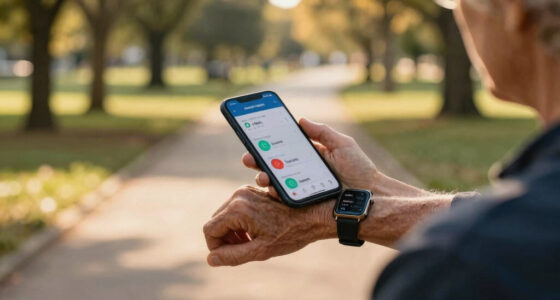
As you support your loved one through their vision loss, focus on introducing assistive devices like talking watches and tactile markers gradually to boost confidence. Offer emotional reassurance, celebrate small victories, and create a safe space for expressing concerns. Organize belongings for easy access and explore support groups for shared experiences. By combining practical adaptations with compassionate care, you help maintain their independence and dignity—if you’d like, there’s more to discover on how to make this journey smoother for both of you.

Turn quiet afternoons into listening time
- Thousands of audiobooks, podcasts and originals
- Listen on your phone, tablet or Echo — also offline
- Cancel anytime
Key Takeaways
- Introduce assistive devices gradually to boost confidence and promote independence.
- Provide emotional support through empathy, reassurance, and active listening to help cope with feelings of vulnerability.
- Organize belongings with tactile markers and proper lighting to improve safety and accessibility.
- Encourage connection with support groups and foster open communication to address concerns and share experiences.
- Celebrate small progress and demonstrate device use to reinforce abilities and maintain motivation.

Have you ever wondered how losing your sight changes your everyday life? When someone you love begins to experience vision loss, it can feel overwhelming, both for them and for you. As a caregiver or family member, your role becomes essential in helping them navigate this new reality. One of the first steps is understanding the significance of assistive devices. These tools, such as talking watches, magnifiers, or screen readers, are designed to empower your loved one to maintain independence. Introducing these devices gently and encouraging their use can boost confidence and reduce frustration. It’s also essential to recognize that emotional support plays a critical role in their adaptation process. Losing sight can lead to feelings of vulnerability, frustration, or even depression. Your empathy and reassurance can make a significant difference. Be patient and listen carefully to their concerns, validating their feelings without rushing to solutions. Offer encouragement and celebrate small victories as they learn to use new tools or adjust to daily routines.
Incorporating assistive devices into their routine isn’t just about the technology itself; it’s about fostering a sense of autonomy and dignity. You might help set up a designated space with tactile markers or organize their belongings for easy access. Demonstrate how to operate new gadgets and be available to troubleshoot or answer questions. Your ongoing support will help them feel less isolated and more capable of managing their daily tasks. Remember, emotional support extends beyond practical help. It’s about creating an environment where they feel safe to express their fears and frustrations. Sometimes, simply holding their hand or offering a comforting word can ease anxiety. Encourage them to connect with others who are experiencing similar challenges—support groups can be invaluable. Additionally, understanding the importance of high contrast and proper lighting can significantly improve their visual comfort and safety.
As they learn to adapt, it’s essential to keep the lines of communication open. Ask what they need and listen without judgment. Offer reassurance that they’re not alone in this journey, and remind them of their strengths. Celebrate progress, no matter how small, and reinforce that their abilities are not diminished—they’re simply different. Your patience, understanding, and consistent emotional support will help your loved one face the challenges of vision loss with resilience. By combining practical tools like assistive devices with compassionate care, you create a foundation for them to regain confidence and navigate their new normal with hope and dignity.
talking watch for visually impaired
As an affiliate, we earn on qualifying purchases.
As an affiliate, we earn on qualifying purchases.
Frequently Asked Questions
How Can I Maintain My Loved One’s Independence During Vision Loss?
You can maintain your loved one’s independence by encouraging adaptive mobility techniques, like using a cane or guiding them safely, to help them navigate confidently. Support their participation in recreational activities suited for their needs, which boosts their confidence and social engagement. Regularly communicate and involve them in decision-making, ensuring they feel empowered. These steps help preserve their autonomy and promote a sense of normalcy during their vision loss journey.
What Emotional Support Options Are Available for Vision Loss?
Did you know that 70% of people with vision loss find emotional support helpful? You can explore emotional counseling to help your loved one cope with feelings of frustration or loss. Peer support groups also offer comfort by connecting them with others facing similar challenges. Encourage open conversations, listen patiently, and remind them they’re not alone. These options can markedly boost their emotional well-being during this difficult change.
How Do I Choose the Right Assistive Technology Tools?
You should assess your loved one’s specific needs and preferences first. Look for assistive technology tools like devices that support braille literacy and smart home devices that simplify daily tasks. Try out different options, involve them in choosing, and consult with specialists or organizations specializing in vision loss. This hands-on approach guarantees you select tools that genuinely improve independence and comfort.
What Safety Modifications Are Essential at Home?
You should prioritize home safety by removing tripping hazards, installing grab bars in bathrooms, and ensuring good lighting. Use mobility aids like canes or walkers to improve stability and prevent falls. Secure rugs and clutter, and consider contrasting tape on stairs for better visibility. These modifications create a safer environment, helping your loved one maintain independence while reducing the risk of accidents at home.
How Can I Prepare for Future Stages of Vision Deterioration?
To prepare for future stages of vision deterioration, focus on future planning by discussing potential changes with your loved one’s medical team. Schedule regular medical consultations to stay updated on their condition and explore adaptive tools like magnifiers or audio devices. Adjust your home environment proactively, ensuring safety and accessibility. Stay informed about support resources and involve your loved one in decisions, fostering independence and comfort as their vision changes.
tactile markers for organization
As an affiliate, we earn on qualifying purchases.
As an affiliate, we earn on qualifying purchases.
Conclusion
As you step into their world, remember that even Helen Keller, in her darkest moments, found strength through connection and resilience. Your unwavering support becomes their guiding light, turning shadows into moments of clarity. Though the road may be challenging, your compassion and patience mirror the timeless hope of a sunrise after night. Together, you can navigate this journey, proving that love’s sight is often clearer than vision itself.
As an affiliate, we earn on qualifying purchases.
As an affiliate, we earn on qualifying purchases.
Fall Picks
fall essentials
As an affiliate, we earn on qualifying purchases.