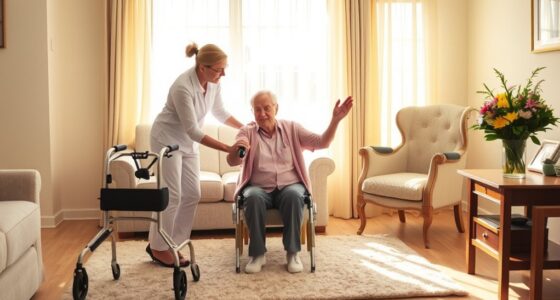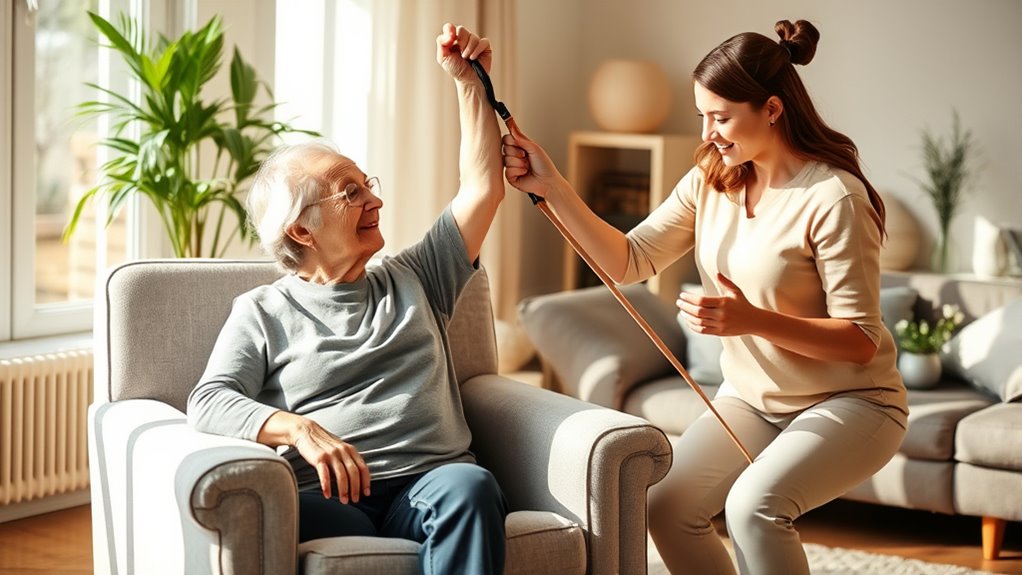

To help your senior do physical therapy exercises at home, establish a consistent routine by creating a safe, clutter-free environment with proper support. Use load-planning tools to tailor activities safely and incorporate engaging elements like music or personal interests. Celebrate small victories and set achievable goals to boost motivation. Regularly check progress and consult professionals for adjustments. Keep their safety a priority, and you’ll find ways to make exercises effective and enjoyable—discover how further techniques can enhance this process.

Turn quiet afternoons into listening time
- Thousands of audiobooks, podcasts and originals
- Listen on your phone, tablet or Echo — also offline
- Cancel anytime
Key Takeaways
- Establish a consistent, engaging routine to reinforce adherence and improve overall recovery.
- Ensure a safe exercise environment with proper lighting, supportive furniture, and minimal clutter.
- Use load-planning tools and environmental modifications to tailor exercises and prevent injuries.
- Motivate seniors by celebrating progress, setting achievable goals, and incorporating personal interests.
- Involve healthcare professionals for exercise adjustments, safety guidance, and ongoing support.

Have you ever wondered if homework can actually boost your health? It might sound unusual, but when it comes to helping your senior loved ones with physical therapy exercises at home, homework takes on a new, beneficial meaning. By turning their prescribed exercises into a regular homework routine, you can play a pivotal role in improving their recovery and overall well-being. The key is to focus on senior safety and exercise motivation, ensuring that your loved one stays safe while staying engaged and committed to their recovery process. Incorporating load‑planning tools can help you tailor the exercises to their capacity, reducing the risk of overexertion. The safety of your loved one is paramount when encouraging your loved one to do physical therapy exercises at home. You want to create a secure environment that minimizes the risk of falls or injuries. Make sure their space is clutter-free, well-lit, and equipped with supportive furniture or aids if needed. Demonstrate proper techniques, and supervise initial exercises to guarantee they’re doing them correctly. Using simple tools like sturdy chairs, non-slip mats, and grab bars can make exercises safer and more comfortable. Regularly check in on their progress, and adjust activities as necessary to prevent strain or discomfort. Your attentiveness not only helps prevent accidents but also reassures your loved one that their safety is your priority. Exercise motivation plays a vital role in helping your senior stay consistent with their physical therapy. It’s normal for motivation to dip, especially when progress feels slow or exercises become repetitive. To keep their spirits high, make the routine engaging. Celebrate small victories and improvements, and remind them of the benefits—like increased strength, better mobility, and reduced pain—that come from sticking with their exercises. Incorporate their interests into the routine if possible, such as listening to favorite music during exercises or doing them in a preferred part of the house. Setting achievable goals and tracking progress can boost their confidence and give them a sense of accomplishment. Sometimes, offering gentle encouragement and reminding them of their resilience can spark renewed motivation. If they’re struggling, consider involving a physical therapist to adapt exercises or provide new techniques, which can also reignite their enthusiasm.
Products Worth Considering

Therabody Theragun Relief Massage Gun, 3-Speed, Black

Oral-B iO Series 5 Rechargeable Electric Toothbrush with Travel Case and 3 Brush Heads, Black

Therabody SmartGoggles 2nd Gen Heated Eye and Temple Massager
As an affiliate, we earn on qualifying purchases.
Frequently Asked Questions
How Can I Motivate My Senior to Stick With Their Exercise Routine?
You can motivate your senior by using motivation techniques like setting small, achievable goals and celebrating progress. Encourage them with positive reinforcement and remind them of the benefits, such as improved strength and independence. Incorporate encouragement strategies like offering praise and making exercises enjoyable. Keep routines consistent and involve family or friends for support. Your encouragement boosts their confidence and helps them stay committed to their physical therapy exercises.
What Safety Precautions Should I Take During Home Exercises?
To make certain safety during home exercises, focus on fall prevention by removing tripping hazards like loose rugs or clutter. Encourage your senior to wear proper footwear with good grip to prevent slips. Always supervise initial sessions and have sturdy support nearby, such as a chair or wall. Make sure the exercise area is well-lit, and start with gentle movements to avoid strain. These precautions help keep your senior safe and secure.
How Do I Modify Exercises for Limited Mobility?
Think of adapting exercises as tailoring a suit to fit perfectly. You can modify routines by incorporating adaptive techniques, like using resistance bands or smaller movements. Chair modifications are your secret weapon—encourage your senior to sit with back support or use armrests for balance. These adjustments make exercises safer and more manageable, ensuring your loved one stays active without risking injury or frustration.
When Should I Consult a Healthcare Professional About Progress?
You should consult a healthcare professional about progress if you notice any concerning signs, like increased pain, swelling, or unusual fatigue. Regular monitoring of signs helps establish if the exercises are effective or if adjustments are needed. Schedule a follow-up with a healthcare professional to discuss your senior’s progress, especially if improvements plateau or symptoms worsen. Professional follow-up ensures safe, effective therapy tailored to their needs.
Are There Recommended Assistive Devices to Aid Exercises at Home?
Think of assistive devices as gentle companions guiding your loved one through their exercises. You can consider using exercise aids like resistance bands, grab bars, or ergonomic tools that make movements easier and safer. These devices help improve stability and confidence during workouts. Always choose aids suited to their needs, and consult a healthcare professional to guarantee you’re selecting the best options to support their progress comfortably and effectively.
Conclusion
By blending patience with persistence, you play a powerful part in your senior’s progress. Your consistent encouragement can cultivate confidence, comfort, and commitment. Remember, small steps lead to significant strides, so stay supportive and sincere. Together, you’ll foster a future filled with fitness and fulfillment. Keep the momentum moving, and watch as your senior’s strength, stability, and spirit soar through simple, steady steps at home. Your dedication makes a difference every single day.