
To help a senior safely in and out of a car, prepare the environment by checking for obstacles, ensuring good lighting, and using non-slip mats. Adjust the seat height and install grab handles for support. Communicate clearly, guiding them with simple instructions while encouraging proper body mechanics—keeping your back straight and supporting their movements. Use assistive devices like walkers or reachers when needed. Following these steps guarantees safety and confidence; discover more tips to make the process smoother.
Key Takeaways
- Assess environmental hazards and ensure proper lighting and clear pathways before assisting the senior.
- Adjust vehicle seat height and use assistive devices like grab handles for easier entry and exit.
- Guide the senior with proper body mechanics, encouraging upright posture and smooth pivot movements.
- Support the senior during exit by holding their arm or waist and checking footing before they step away.
- Maintain ongoing safety by inspecting for hazards, ensuring good traction, and providing steady support throughout.
Assessing the Environment and Preparing the Area
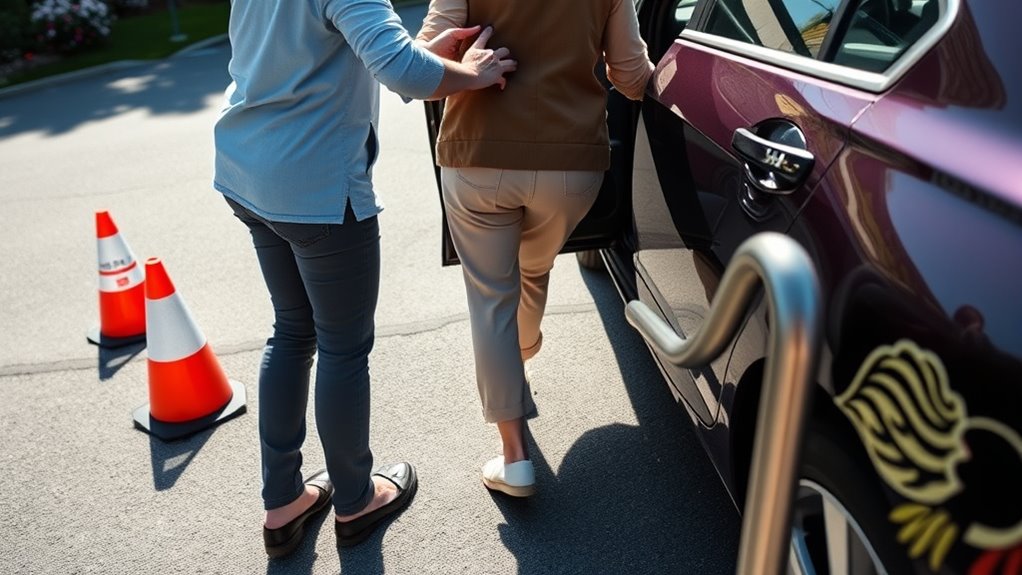
Before helping a senior in or out of a vehicle, you should thoroughly evaluate the environment to identify potential hazards. Check for wet or icy surfaces that could cause slips, especially on pavement or around the vehicle. Examine the ground for uneven terrain, loose gravel, or obstacles like rocks and debris that might trip them. Ensure pathways are clear of clutter, such as bags or tools, which could obstruct movement. Look for adequate lighting, especially if it’s dark or cloudy, to improve visibility. Confirm that the vehicle is parked securely with the parking brake engaged. Additionally, assess weather conditions—rain, snow, or strong winds can impact safety. Being aware of field‑of‑view and its importance can also help you better anticipate potential hazards in the environment. Moreover, understanding hazard perception can enhance your ability to identify risks before assisting them.
Adjusting the Vehicle for Optimal Accessibility
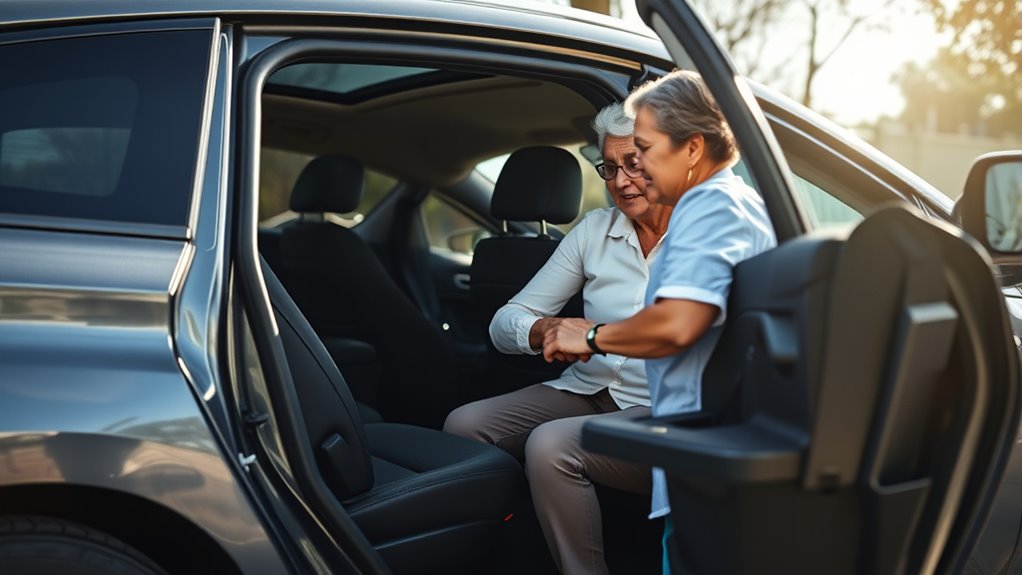
To guarantee safe and easy entry and exit for seniors, start by adjusting the vehicle to enhance accessibility. Proper adjustments minimize strain and reduce fall risks. Here are key steps to follow:
- Adjust the seat height so the senior’s feet are flat on the ground, reducing the distance they need to lift.
- Use seat cushions or raised seats to make entry and exit easier without overextending limbs.
- Install grab handles or assistive bars near doors for stable support during transfers.
- Ensure door mechanisms are easy to open by checking for power locks or installing door extenders if needed.
- Incorporate smart home fitness technology to monitor mobility and provide reminders for safe entry and exit routines. Additionally, adjusting the vehicle for ergonomic support can further enhance comfort and safety during transfers. Regular assessments of mobility can help identify additional safety modifications tailored to individual needs. Incorporating automated safety features into the vehicle can also provide extra security during transfers, especially in emergency situations.
Ensuring Proper Body Mechanics During Entry and Exit
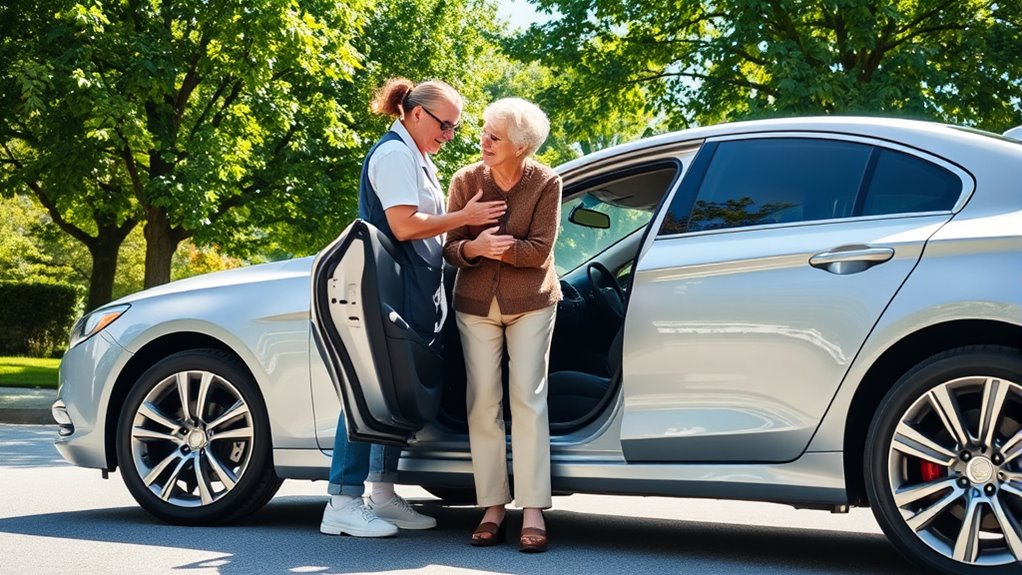
Proper body mechanics are essential when seniors are entering or exiting a vehicle to prevent injuries and reduce strain. Position yourself close to the senior, encouraging them to sit upright with their feet flat on the ground. Guide them to use both hands on the door frame or grab handle, distributing weight evenly to avoid falls. When standing or sitting, have them pivot with their entire body instead of twisting the spine, protecting against injury. Remind them to keep their back straight and use their leg muscles rather than their back to lift or lower themselves. Confirm they wear shoes with good traction to prevent slipping. Supporting proper alignment and movement reduces the risk of muscle strains and falls during these transitions. Incorporating body awareness exercises into their routine can further enhance their ability to perform these movements safely and confidently. Additionally, teaching seniors proper ergonomic techniques can help maintain safe body mechanics and promote independence during vehicle transfers. Developing a routine that emphasizes posture correction can also contribute to safer movements and reduce discomfort. Practicing these techniques regularly can also improve their overall movement confidence, making daily activities safer and easier. Engaging in functional movement training can further improve their ability to perform these transitions smoothly and safely.
Using Assistive Devices to Support Stability and Balance
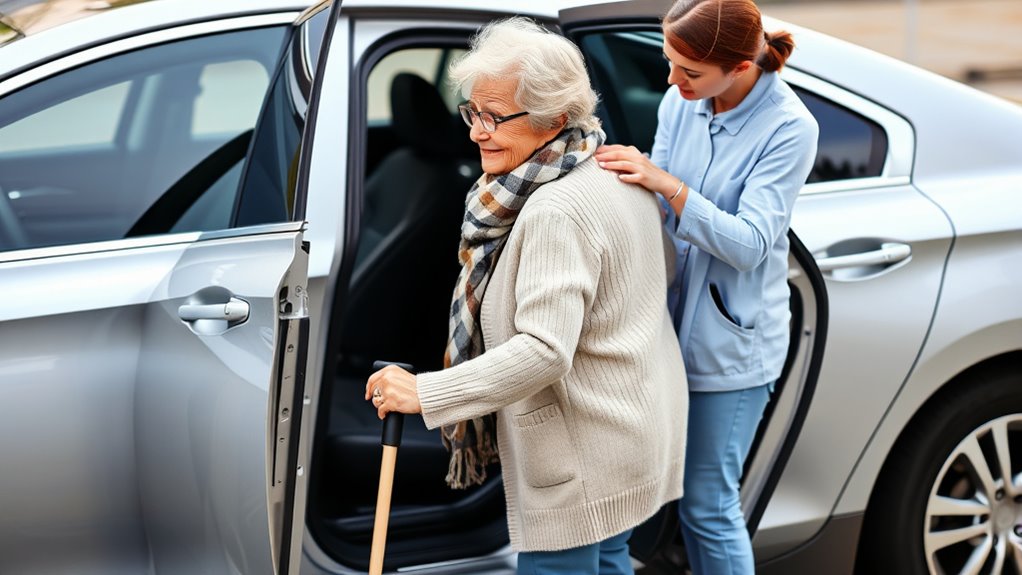
Choosing the right assistive devices can make a big difference in maintaining stability and preventing falls. It’s important to learn proper usage techniques so these tools support you effectively during transfers and mobility. Using devices correctly guarantees safety and helps you feel more confident getting in and out of your vehicle. Additionally, consulting with a healthcare professional or a licensed therapist can ensure the assistive devices are appropriate and properly fitted for your specific needs. Incorporating auditory feedback techniques may also enhance your awareness of positioning and balance during mobility tasks. Being aware of wave and wind conditions can further improve safety when moving outdoors, especially in windy or unpredictable environments. Understanding assistive device features can help you select tools that best match your mobility requirements and environment. Recognizing environmental factors is also crucial for adapting your mobility strategies in different settings.
Selecting Appropriate Devices
Selecting the right assistive devices can considerably enhance a senior’s stability and balance when getting in and out of a vehicle. Choosing the proper tools guarantees safety and reduces fall risks. Consider these options:
- Walker or cane: Provides extra support and helps maintain balance during transfers.
- Grab bars or handles: Secure handholds near the door or seat offer stable grip points.
- Reacher or grabber: Assists in retrieving items without bending or stretching excessively.
- Non-slip mats: Prevent slipping inside the vehicle, especially on smooth floors or mats.
- Proper device placement and adjustment: Ensuring that assistive devices are correctly positioned and comfortable can improve safety and confidence during transfers.
Assess your senior’s specific needs, mobility level, and comfort to select devices that best support safe, confident transfers. Proper device choice makes a significant difference in reducing injury risk.
Proper Usage Techniques
Using assistive devices correctly can greatly improve your stability and confidence when getting in and out of a vehicle. Always make certain your device, like a grab handle or cane, is secure and in good condition before use. When using a grab handle, grip firmly with your whole hand, and keep your body close to the vehicle for better balance. If you’re using a walker or cane, position it on the side where you need support, and move slowly to avoid slipping. When stepping onto a running board or step stool, hold onto the vehicle for added stability. Keep your body aligned, move deliberately, and avoid twisting your spine. Proper technique minimizes fall risk and makes the transfer smoother and safer. Additionally, being aware of proper home safety principles can help you avoid common hazards during these transfers. Being mindful of vehicle entry and exit safety tips can further reduce the chance of accidents.
Guiding the Senior Through Safe Entry Procedures
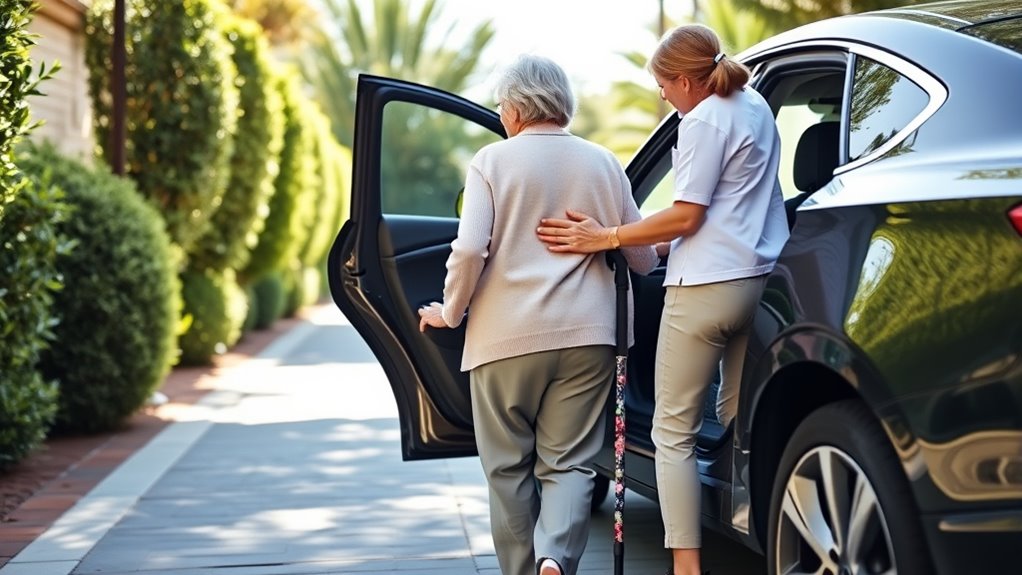
Effective guiding starts with clear communication, so always speak calmly and explain each step before assisting. Use proper body mechanics by facing the senior, keeping your back straight, and supporting their body securely. This approach helps prevent injuries and guarantees the senior feels confident during entry. Additionally, being mindful of thermal behavior and ensuring the environment is safe can further support a smooth and secure transfer. Being aware of at‑home safety devices can also help identify potential hazards and improve overall safety during the transfer process. Incorporating cybersecurity best practices such as secure communication can help protect sensitive information during planning and coordination of mobility assistance.
Clear Communication Techniques
Clear communication is essential for guiding seniors safely through vehicle entry, ensuring they understand each step and feel confident throughout the process. Your words should be clear, calm, and direct, avoiding jargon or ambiguous instructions. Use a gentle tone and maintain eye contact to reinforce understanding. Always confirm your senior’s readiness before moving to the next step.
Here are four key techniques to enhance communication:
- Use simple, concise language to explain each action.
- Speak at a steady, calm pace, giving time for responses.
- Provide visual cues, such as pointing or demonstrating movements.
- Encourage questions and repeat instructions if needed, ensuring clarity and reassurance.
Proper Body Mechanics
Guiding seniors safely through vehicle entry requires attention to proper body mechanics to prevent injuries and falls. Keep your back straight and bend at your hips and knees, not your spine. Position yourself close to the senior to reduce reaching and strain. Place your hands firmly on the door frame, grab handle, or assistive device to distribute weight evenly. Encourage the senior to turn their body as a whole rather than twisting their spine, protecting against injury. Use your leg muscles to lift and support, avoiding a hunched posture. Ensure the senior’s shoes have good traction to prevent slipping. By maintaining proper posture and support, you help minimize risks and make the process safer for both of you.
Facilitating Safe Exiting and Post-Exit Support

When helping a senior exit a vehicle, paying close attention to their body positioning and providing steady support can make the process safer and smoother. Proper post-exit support helps prevent falls and boosts confidence. Here are key tips:
- Assist with stability by holding their arm or waist as they step out, ensuring they don’t lose balance.
- Check their footing before they move away from the vehicle, making sure they have secure ground.
- Encourage slow, deliberate movements to prevent dizziness or fatigue.
- Provide environmental support by clearing obstacles and ensuring the area is well-lit and even.
These steps help maintain safety and promote independence after exiting the vehicle.
Communicating Effectively Throughout the Process

Effective communication is essential throughout the entire process of helping seniors in and out of vehicles, as it guarantees safety, builds trust, and reduces confusion. You should clearly explain each step before starting, so your senior knows what to expect. Use simple, direct language and maintain a calm tone to reassure them. Make eye contact and listen attentively to any concerns or questions they have. Your verbal cues should be paired with gentle gestures to reinforce instructions. Always check for understanding and encourage feedback, adjusting your approach if needed. Consistent, respectful communication helps your senior feel empowered and safe during transfers. Remember, patience and clarity are key to ensuring a smooth, secure process that fosters confidence and minimizes anxiety.
Addressing Common Challenges and Preventing Falls

Addressing common challenges during vehicle transfers helps reduce the risk of falls and injuries. To do this effectively, you should be aware of potential hazards and strategies to prevent them.
- Uneven surfaces: Use step stools or running boards to bridge gaps and ensure stable footing.
- Poor lighting: Make sure the area is well-lit, especially during evening or early morning transfers.
- Slippery floors: Place non-slip mats inside the vehicle and wear shoes with good traction.
- Limited mobility or strength: Offer appropriate assistive devices and support, like grab handles or caregiver help, to stabilize movements.
Maintaining Safety With Ongoing Vehicle and Environment Checks

Regularly inspecting your vehicle and surrounding environment guarantees ongoing safety during senior transfers. Check for hazards like wet or icy surfaces, clutter, or uneven pavement that could cause slips or trips. Ensure door handles and grab bars are secure and free of damage. Verify that the vehicle is clean and free of debris that might create obstacles. Confirm that lighting around the vehicle is adequate, especially if transfers happen in low-light conditions. Keep pathways clear of obstacles, and remove any loose mats or objects. Inspect weather conditions—avoid transfers during heavy rain or snow. Regularly check that assistive devices, like grab handles or step stools, are in good condition. Staying vigilant helps prevent accidents and guarantees a safer, smoother transfer for seniors.
Frequently Asked Questions
How Can I Help a Senior With Severe Mobility Limitations Safely Get Into a Car?
To help a senior with severe mobility limitations into a car safely, first make certain you have assistance if needed. Use a transfer board or a lift if available, and secure their mobility aids. Communicate clearly and calmly, positioning yourself for support. Guide their movements gently, stabilize their body, and make sure they’re comfortable and secure before closing the door. Always prioritize safety and patience throughout the process.
What Are the Best Ways to Prevent Falls During Winter or Icy Conditions?
Falls increase by 30% during icy conditions, so you need to be extra cautious. Use traction devices like ice grips or non-slip mats on vehicle floors. Clear ice and snow from pathways, steps, and around the vehicle. Encourage seniors to wear shoes with good traction and move slowly. Assist with handrails and step stools, and provide steady support. Planning ahead and taking your time can markedly reduce fall risks in winter weather.
How Do I Assist a Senior With Cognitive Impairments During Vehicle Entry and Exit?
You should provide clear, simple instructions and maintain eye contact to help the senior stay focused. Use gentle guiding touches on their arm or hand to support stability, and make sure the environment is free of distractions. Move slowly, giving them time to process each step. If needed, use visual cues or signs, and always stay close to offer reassurance and immediate assistance during vehicle entry and exit.
Are There Specific Clothing Tips for Seniors to Ensure Safe Vehicle Transfers?
You might think loose clothing offers comfort, but it can pose safety risks during transfers. Opt for well-fitting, non-restrictive garments that don’t catch on door frames or hinges. Choose layers that are easy to remove if needed, and avoid long, flowing fabrics that could cause tripping. Comfortable, secure clothing enhances mobility and reduces fall hazards, making vehicle transfers safer and more manageable for seniors.
How Often Should Vehicle and Environment Safety Checks Be Performed?
You should perform vehicle and environment safety checks weekly and before each trip. Regularly inspect for hazards like loose floor mats, slippery surfaces, or damaged grab handles. Clear pathways and ensure adequate lighting are essential. Check weather conditions and adapt your environment accordingly. Consistent safety checks help prevent falls and accidents, giving you peace of mind and guaranteeing the senior’s safety during transfers.
Conclusion
By following these steps, you create a safe pathway for your loved one, turning the vehicle into a sturdy bridge rather than a fragile crossing. Your careful attention and gentle guidance help prevent falls and build confidence. Remember, every safe exit and entry strengthens their independence like steady stones in a well-built bridge. Keep communication clear and environment secure, ensuring every journey is smooth and safe for your senior.