
TL;DR

Turn quiet afternoons into listening time
- Thousands of audiobooks, podcasts and originals
- Listen on your phone, tablet or Echo — also offline
- Cancel anytime
A doctoral thesis from Umeå University examines hip-fracture risk, mortality and recovery among people aged 85 and older. It reports that health conditions and psychological well-being matter alongside age, with dementia linked to higher mortality and recovery often marked by setbacks. The findings point to the need to tailor care to each person’s circumstances.
A doctoral thesis from Umeå University finds that hip-fracture risk, mortality and recovery among people aged 85 and older are associated with health, medical conditions and psychological well-being—not age alone. The research highlights the varied consequences of fractures in later life and supports care shaped around each person’s needs; it also reports high mortality among the oldest adults studied.
Doctoral student Erika Olofsson examined factors linked to hip fractures and death among adults aged 85 and older, as well as older adults’ accounts of recovery. The thesis reports that nearly half of the oldest adults died within a year of sustaining a hip fracture. The source does not specify the exact age cutoff used for “oldest adults” in that finding.
The study found that risk factors differed between women and men. Among women, greater independence in everyday activities was associated with increased fracture risk. Olofsson said this finding challenges the assumption that fractures mainly affect the frailest older adults, and suggested that greater activity may mean more exposure to situations in which falls can happen.
After a fracture, depression, previous stroke and subtrochanteric fracture—a break in the upper part of the femur—were associated with higher mortality. In an analysis covering the first three years, dementia, both alone and alongside depressive symptoms, was associated with increased mortality at every follow-up point. Depression alone did not have a statistically significant association with mortality in that analysis.
Health Shapes Risk and Recovery
The findings matter because they show why age alone is an incomplete guide to a person’s likely experience after a hip fracture. Two people of the same age may differ in physical function, other illnesses, mental health and available support. Those differences can affect both vulnerability and the work of recovering everyday abilities.
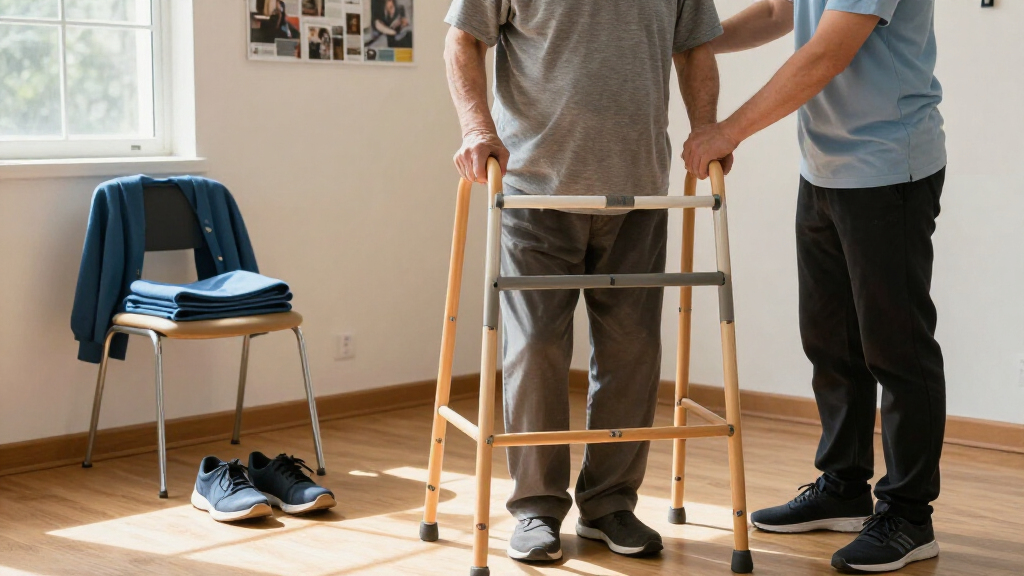
The thesis also cautions against treating recovery as a simple return to a previous level of independence. In repeated interviews during the first year, participants described progress followed by setbacks, fear of falling again, the role of family support and the desire to remain independent. Some continued to face difficulties a year later. These accounts make the recovery process relevant to rehabilitation and support planning, not just the treatment of the broken bone.
Olofsson argues that care should reflect each person’s situation. The thesis identifies associations; it does not establish that any one factor directly causes a fracture or death, nor does the source report a tested care program or evidence that a particular intervention changes outcomes.
Products Worth Considering

Bowflex PR1000 Home Gym

Therabody SmartGoggles 2nd Gen Heated Eye and Temple Massager

Garmin Forerunner 570 GPS Running Smartwatch, 47mm, Aluminum, Black
As an affiliate, we earn on qualifying purchases.
A Swedish Study of Adults 85+
Hip fractures affect approximately 17,000 people each year in Sweden, primarily older adults, according to the source report. Such injuries can lead to lasting limitations in function, loss of independence and increased risk of death. The thesis focuses on people aged 85 and older, a group whose health and life circumstances can vary substantially.
Olofsson’s work brings together three questions: which factors are associated with hip fractures at very advanced ages, which conditions are linked to mortality after a fracture, and how older adults describe the recovery process. Its central point is that fracture outcomes are not uniform. The report does not provide the thesis’s sample sizes, detailed methods or numerical effect estimates, so the strength and scope of individual associations cannot be assessed from the available summary alone.
“An important and striking finding was the high mortality rate among the oldest old adults following a hip fracture. I also found that dementia in combination with depressive symptoms was associated with increased mortality.”
— Erika Olofsson, doctoral student at Umeå University’s Department of Nursing
Limits of the Reported Findings
The available report does not give sample sizes, study methods in detail, or effect estimates. It is therefore not possible from this account to gauge how large the reported associations were or how broadly they apply beyond the people studied. The phrase “oldest old” is not defined with an exact age range in the summary.
Associations should not be read as proof of cause. The thesis reports that dementia was associated with increased mortality and that depression alone was not statistically significantly associated with mortality in the specified analysis; it does not show why those patterns occurred. The report also does not identify which treatments or support approaches might improve outcomes, or whether the findings have changed clinical practice.
Applying Findings to Individual Care
The thesis’s immediate message is to account for a person’s physical function, medical conditions and psychological well-being when planning care and support after a fracture. The report does not announce a new clinical guideline or a specific next study. Further details about the research design and results would help clinicians and readers judge how the findings should inform practice.
For readers, the key development is evidence from a study of adults aged 85 and older that fracture risk and recovery are not explained by chronological age alone. How care systems translate that finding into assessment, rehabilitation and family support remains unclear from the published summary.
Key Questions
What did the Umeå University thesis study?
Doctoral student Erika Olofsson studied factors associated with hip fractures and mortality among people aged 85 and older, and interviewed older adults about recovery after a fracture.
What was reported about mortality after a hip fracture?
The report says nearly half of the oldest adults died within one year of a fracture. It does not give an exact age definition for that group or provide a sample size in the summary.
Which conditions were associated with higher mortality?
The thesis linked depression, previous stroke and subtrochanteric fracture with increased mortality. In the three-year analysis, dementia—with or without depressive symptoms—was associated with increased mortality at all follow-up points. Depression alone was not statistically significantly associated with mortality in that analysis.
Does the thesis show that age does not matter?
No. The reported conclusion is that age alone does not determine risk or recovery. The thesis points to physical health, medical conditions and psychological well-being as additional factors; the summary does not quantify their relative contributions.
What did participants say recovery was like?
In repeated interviews during the first year, recovery was described as uneven, with progress and setbacks. Participants discussed everyday activities, fear of falling again, family support and independence, and some still reported difficulties after a year.
Source: rss