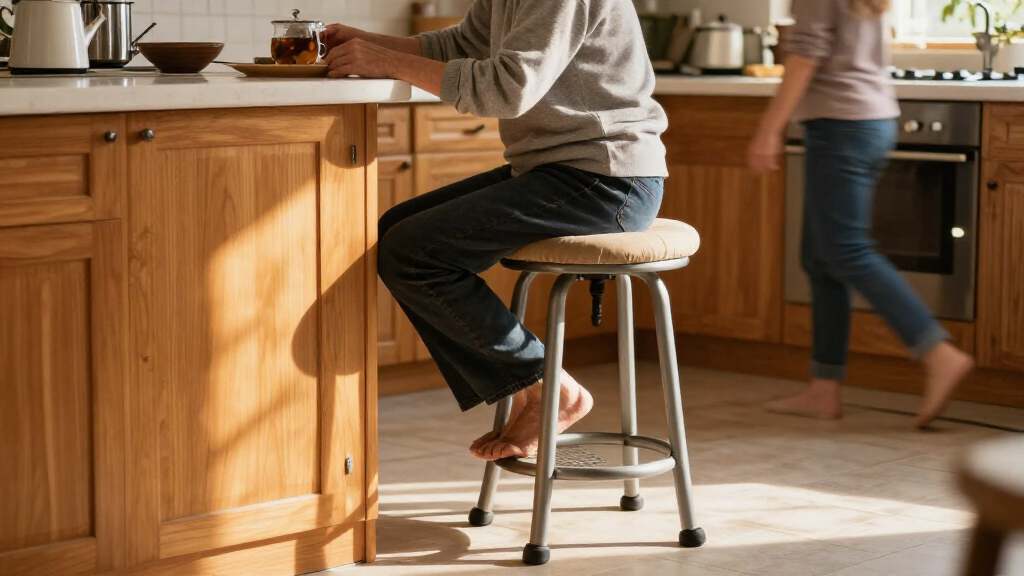
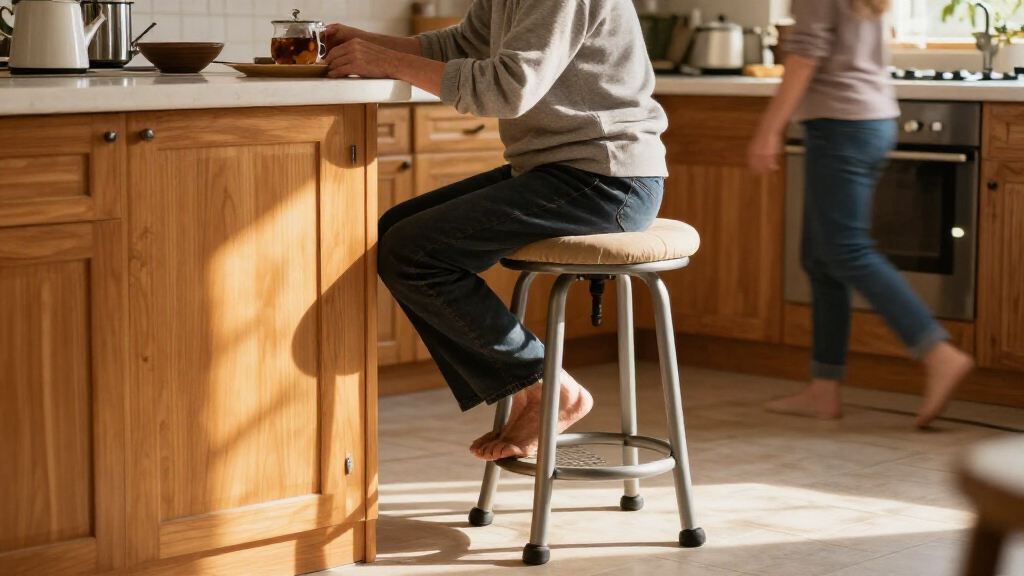
Senior-friendly kitchen stools vary widely: some provide a raised step and handhold, while others offer a seated perch for work at a counter. I’d rank the Drive Medical Bariatric Heavy-Duty Step Stool with Handrail as the best overall starting point for shoppers who prioritize a substantial handrail and heavy-duty design. The Drive Medical Adjustable Height Stool with Back and Arms stands out for seated support, while the Aratan Folding Step Stool with Adjustable Handle suits buyers who need a handhold that can be stored away. The main tradeoff is between a stable, larger footprint and a compact design that may offer less support or a smaller standing surface. Read on for the full comparison, buying guidance, and picks for different needs.

Turn quiet afternoons into listening time
- Thousands of audiobooks, podcasts and originals
- Listen on your phone, tablet or Echo — also offline
- Cancel anytime
Complete the kit


Key Takeaways
- The lineup splits into two different jobs: step stools help with reaching, while the Drive Medical Kitchen Stool and hydraulic saddle stool are seated work options; choose by task before comparing features.
- A handrail is not the same as a full backrest and arms. Step-stool rails can assist with balance while stepping, while the Drive Medical adjustable stool provides support during seated use.
- Adjustability appears in several forms. The Suteck, Aratan, and LUCKUP models offer adjustable handles, while the Drive Medical stool adjusts seat height; those features solve different fit problems.
- Folding designs favor storage, not every room layout. The Aratan is a compact-minded option, but shoppers should still check its deployed footprint and how it locks before use.
- Heavy-duty capacity alone does not settle the choice. The Drive Medical bariatric step stool pairs a heavy-duty design with a handrail, but a larger stool may be less convenient in a tight kitchen than a simpler step stool.
| Leekpai Step Stool with Handle for Adults and Seniors, 350 lb Capacity, Black |  | Best Simple One-Step Support | Material: Metal | Color: Black | Weight capacity: 350 pounds | VIEW LATEST PRICE | See Our Full Breakdown |
| Drive Medical Adjustable Height Stool with Back and Arms, White |  | Best for Seated Counter Tasks | Material: Powder-coated steel | Seat height: 21–27 inches | Seat: Padded and angled | VIEW LATEST PRICE | See Our Full Breakdown |
| Suteck 2-Step Stool with Adjustable Handle, Black |  | Best for Higher-Reach Support | Material: Carbon steel | Color: Black | Number of steps: 2 | VIEW LATEST PRICE | See Our Full Breakdown |
| Aratan Folding Step Stool with Adjustable Handle |  | Best Compact Storage Pick | Brand: Aratan | Model number: WK2501F-1BL | Material: Alloy steel | VIEW LATEST PRICE | See Our Full Breakdown |
| LUCKUP 2-Step Stool with Adjustable Handrail |  | Best Two-Step Everyday Versatility | Material: Rust-resistant carbon steel | Number of steps: 2 | Weight capacity: 400 pounds | VIEW LATEST PRICE | See Our Full Breakdown |
| Medical King Adult Step Stool with Handle |  | Best Simple One-Step Aid | Brand: Medical King | Material: Chrome-plated alloy steel | Weight capacity: 330 lbs | VIEW LATEST PRICE | See Our Full Breakdown |
| Drive Medical Bariatric Heavy-Duty Step Stool with Handrail |  | Best for Higher Weight Capacity | Material: Steel | Color: Silver vein | Platform dimensions: 14 × 10 inches | VIEW LATEST PRICE | See Our Full Breakdown |
| Drive Medical Kitchen Stool | | Best for Supported Sitting | Frame material: White powder-coated steel | Seat: Padded and angled | Back: Padded | VIEW LATEST PRICE | See Our Full Breakdown |
| Walktory Adjustable Hydraulic Saddle Stool with Ring Pedal and Backrest |  | Best Adjustable Rolling Seat | Brand: Walktory | Model number: MA3700-USV3-white | Seat height range: 22–26 inches | VIEW LATEST PRICE | See Our Full Breakdown |
| senior-friendly kitchen stool | Material | Weight capacity | Color | Number of steps |
|---|---|---|---|---|
| Leekpai Step Stool with Handle | Metal | 350 pounds | Black | 1 |
| Drive Medical Adjustable Heigh | Powder-coated steel | — | — | — |
| Suteck 2-Step Stool with Adjus | Carbon steel | 450 pounds | Black | 2 |
| Aratan Folding Step Stool with | Alloy steel | 330 pounds | Blue | 1 |
| LUCKUP 2-Step Stool with Adjus | Rust-resistant carbon steel | 400 pounds | Black | 2 |
| Medical King Adult Step Stool | Chrome-plated alloy steel | 330 lbs | Silver | 1 |
| Drive Medical Bariatric Heavy- | Steel | 500 lbs | Silver vein | — |
| Drive Medical Kitchen Stool | — | — | — | — |
| Walktory Adjustable Hydraulic | Metal frame, PU leather seat | 250 lbs | — | — |
More Details on Our Top Picks
Leekpai Step Stool with Handle for Adults and Seniors, 350 lb Capacity, Black
The Leekpai is a straightforward choice for kitchen tasks that need just a little extra height, such as reaching an upper shelf. Its supportive handle gives users a place to steady themselves while stepping up or down, and the grooved, non-slip platform adds grip underfoot. At 350 pounds, its stated capacity is higher than the Aratan Folding Step Stool’s 330 pounds, though Aratan is easier to put away thanks to its folding design. The Leekpai is a single step, not a seated kitchen stool, so it suits brief, supported standing rather than resting at a counter. Assembly is required, and its listed 33.5-inch depth may take more floor space than buyers expect. I’d choose it over a two-step model when one low step is enough.
Pros:- Supportive handle offers a handhold while stepping up and down
- Grooved non-slip surface adds traction underfoot
- 350-pound stated capacity
- Assembly tools and instructions are included
Cons:- Assembly is required before use
- A single step may not provide enough reach for higher shelves
- Listed depth of 33.5 inches may be difficult to fit in a compact kitchen
Best for: Older adults who need one stable step and a handhold for occasional access to kitchen cabinets or shelves
Not ideal for: People looking for a seat at the counter, or anyone who needs a second step to reach higher storage
- Material:Metal
- Color:Black
- Weight capacity:350 pounds
- Dimensions:33.5 in D × 17 in W × 11 in H
- Item weight:3.63 kg
- Number of steps:1
- Assembly:Tools and instructions included
Our verdict“Choose the Leekpai if one step, a steadying handle, and a 350-pound capacity fit your kitchen tasks better than a folding or two-step design.”
Drive Medical Adjustable Height Stool with Back and Arms, White
Unlike the Leekpai and other step stools in this group, the Drive Medical is an actual seat for kitchen tasks that take longer than a quick reach. Its 21–27-inch adjustable seat can be set to suit different counter heights, while the padded, angled seat and backrest provide support during seated work. The removable, width-adjustable arms give a user something to push against when sitting or standing, but they can also be taken off when they obstruct a close approach to the counter. Non-slip rubber feet add stability on the floor. This design is better suited to chopping or sorting at a counter than the Suteck 2-Step Stool, but it does not provide a raised platform for reaching overhead. The product data also gives no weight capacity, so buyers who need that figure should check before choosing.
Pros:- Seat height adjusts from 21 to 27 inches to suit different counters
- Padded angled seat, backrest, and arms support seated use
- Arms adjust in width and can be removed
- Non-slip rubber feet and a limited lifetime warranty are specified
Cons:- Does not help users reach high cabinets like a step stool
- Product data does not state a weight capacity
- Arms may need removal if they prevent close access to a work surface
Best for: Older adults who want back and arm support while doing seated food preparation or other counter-height tasks
Not ideal for: People who need a step to reach overhead storage, or buyers who require a clearly stated weight capacity before purchasing
- Material:Powder-coated steel
- Seat height:21–27 inches
- Seat:Padded and angled
- Backrest:Included
- Arms:Width-adjustable and removable
- Feet:Non-slip rubber
- Warranty:Limited lifetime
Our verdict“Pick the Drive Medical when supported sitting at a counter matters more than gaining height for overhead kitchen storage.”
Suteck 2-Step Stool with Adjustable Handle, Black
For kitchens where a single step does not provide enough reach, the Suteck adds a second platform and an adjustable handrail. Its 10 handrail height settings let users set the grip to a more comfortable position, while the six-leg welded carbon-steel frame and textured platform are intended to support steadier stepping. The stated 450-pound capacity is higher than the LUCKUP 2-Step Stool’s 400 pounds, making this the stronger capacity-led choice between the two. That extra reach comes with a larger, heavier setup: at 11.2 pounds and 36.22 inches tall as listed, it is less convenient to move and store than the one-step Aratan. I’d favor the Suteck for reaching elevated cabinets, but not as a substitute for a stool designed for seated kitchen work.
Pros:- Two steps provide more reach than single-step options
- Handrail adjusts to 10 height settings
- Six-leg welded frame and textured platform are designed for stability
- 450-pound stated capacity exceeds the LUCKUP model’s 400 pounds
Cons:- At 11.2 pounds, it is heavier than the listed one-step options
- Two-step form takes more space than a compact single-step stool
- Provides standing access, not a supported seat for counter work
Best for: Older adults who need two levels of access and an adjustable handrail for reaching higher kitchen storage
Not ideal for: People with very limited storage or those who need a lightweight step stool to move frequently
- Material:Carbon steel
- Color:Black
- Number of steps:2
- Handrail adjustment:10 height settings
- Weight capacity:450 pounds
- Item weight:11.2 pounds
- Dimensions:21.85 in D × 13.78 in W × 36.22 in H
- Maximum height:43.11 inches
- Frame:Six-leg welded frame
Our verdict“Choose the Suteck when higher reach, a customizable handrail, and its 450-pound capacity outweigh the convenience of a smaller stool.”
Aratan Folding Step Stool with Adjustable Handle
The Aratan is the space-saving choice for kitchens where a step stool cannot stay out. It folds to 17 × 10.8 × 3.7 inches, a slim profile that can fit in a narrow gap, and its handle adjusts from 24 to 32 inches to offer a handhold suited to the user. The non-slip platform and alloy-steel frame give it practical support for occasional reaching. Compared with the Leekpai, the Aratan is easier to store but has a lower stated capacity—330 pounds versus 350—and assembly involves choosing from extra screws. It is still a one-step stool, so it will not provide the reach of the two-step Suteck. The instructions also call for a dry, flat surface; I would not treat its folding format as a reason to use it on uneven or damp flooring.
Pros:- Folds to a slim profile for storage in narrow spaces
- Handle adjusts from 24 to 32 inches
- Non-slip platform and anti-slip feet are specified
- Rust-resistant alloy-steel construction
Cons:- 330-pound stated capacity is lower than the Leekpai’s 350 pounds
- Assembly is required and the extra screws require selection
- Use is specified for a dry, flat surface
Best for: Older adults in compact kitchens who need a one-step stool that can be folded away between uses
Not ideal for: Users who need two-step reach, a higher stated capacity than 330 pounds, or a stool for damp or uneven surfaces
- Brand:Aratan
- Model number:WK2501F-1BL
- Material:Alloy steel
- Color:Blue
- Weight capacity:330 pounds
- Handle height range:24–32 inches
- Folded dimensions:17 in × 10.8 in × 3.7 in
- Item weight:2.98 kg
- Number of steps:1
Our verdict“Choose the Aratan if easy storage matters most and a single step with an adjustable handle covers your kitchen needs.”
LUCKUP 2-Step Stool with Adjustable Handrail
The LUCKUP pairs two steps with a handrail that can be mounted on either side, a useful detail when a kitchen layout or the user’s stronger side dictates the approach. Its 6-inch and 10.5-inch step heights create a measured climb, while five non-slip feet and a textured platform with drainage holes support indoor or outdoor use. Compared with the Suteck, its 400-pound capacity is lower than that model’s 450 pounds, but the LUCKUP is listed at 6.83 kg and offers a side-selectable rail. The rail adjusts through five positions rather than the Suteck’s 10, so it provides less height fine-tuning. Assembly is required, and the product’s listed weight may make frequent repositioning less appealing. This is a practical fit for users who need two levels and a flexible handrail position.
Pros:- Handrail can be installed on either side
- Two step heights provide staged access
- Five non-slip feet and an auxiliary support foot are specified
- Textured platform with drainage holes supports indoor or outdoor use
Cons:- 400-pound stated capacity is below the Suteck’s 450 pounds
- Handrail has five positions, fewer than the Suteck’s 10 settings
- Assembly is required, and the listed item weight is 6.83 kg
Best for: Older adults who need a two-step stool with a handrail that can be installed on the more accessible side
Not ideal for: Buyers who need the higher stated capacity or more handrail adjustment settings offered by the Suteck
- Material:Rust-resistant carbon steel
- Number of steps:2
- Weight capacity:400 pounds
- Handrail height:35.6–39.6 inches; 5 adjustable positions
- Step heights:First: 6 inches; second: 10.5 inches
- Overall dimensions:14.1 in W × 22.6 in D × 35.6–39.6 in H
- Step size:16.1 in L × 8.6 in W
- Item weight:6.83 kg
- Color:Black
Our verdict“Pick the LUCKUP if two-step access and a handrail mounted on either side matter more than maximum capacity or finer rail adjustment.”
Medical King Adult Step Stool with Handle
For a senior who needs a steady boost to reach a kitchen shelf or climb onto a high bed, the Medical King Adult Step Stool keeps the setup simple: one step, a support handle, and a 330-pound capacity. Its alloy-steel frame is listed for kitchen, bathroom, and bedroom use, so it can serve more than one spot in the home. Compared with the Drive Medical Bariatric Heavy-Duty Step Stool, it has a lower stated capacity and no platform dimensions or grip details supplied, making stability harder to judge from the product data. The single step also offers less reach than a two-step stool. I’d favor it for modest height differences and buyers who want a handle, but not for reaching high cupboards or anyone who needs verified platform measurements before choosing.
Pros:- Support handle offers a point of assistance while stepping up or down.
- 330-pound stated weight capacity.
- Listed for use in the kitchen, bathroom, and bedroom.
- Chrome-plated alloy-steel frame.
Cons:- One step provides limited reach compared with multi-step stools.
- No platform or overall dimensions are provided.
- The supplied product details do not specify a non-skid platform or feet.
Best for: Adults who need a handle-assisted single step for modest height differences at a bed, counter, or bathroom fixture.
Not ideal for: People who need extra reach, a documented non-skid platform, or exact dimensions to check the stool’s fit in a tight kitchen.
- Brand:Medical King
- Material:Chrome-plated alloy steel
- Weight capacity:330 lbs
- Number of steps:1
- Age range:Adult
- Color:Silver
- Listed uses:Bathroom, kitchen, bedroom
Our verdict“Choose this for a handle-equipped, one-step boost around the home, but pick a higher-reach model if kitchen storage is well above arm’s reach.”
Drive Medical Bariatric Heavy-Duty Step Stool with Handrail
Among these step stools, the Drive Medical Bariatric Heavy-Duty Step Stool makes the clearest case for buyers prioritizing a high stated capacity: it supports up to 500 pounds and pairs a 34-inch handrail with a ribbed rubber platform and rubber feet. Those grip details give the product data more information about footing than the Medical King Adult Step Stool, whose platform and feet are not described. It also arrives fully assembled, removing setup from the equation. The tradeoff is a 14 × 10-inch platform and a floor-standing frame that needs clear space, so this is less convenient to tuck into a narrow kitchen than a compact one-step design. I’d choose it when support and capacity lead the decision, while buyers needing a stool that stores away easily should look elsewhere.
Pros:- 500-pound stated weight capacity.
- 34-inch handrail provides a support point while stepping.
- Ribbed rubber platform and rubber feet are specified for grip.
- Arrives fully assembled and includes a limited lifetime warranty.
Cons:- Needs open floor space for setup and use.
- The 14 × 10-inch platform may feel restrictive to users who want a larger standing area.
- Only one platform size and one stool configuration are specified.
Best for: Seniors who want a handrail, a specified grippy platform, and a high stated capacity for occasional access to elevated surfaces.
Not ideal for: People with very limited floor space or anyone seeking a compact stool that can be easily stored between uses.
- Material:Steel
- Color:Silver vein
- Platform dimensions:14 × 10 inches
- Handle height:34 inches
- Weight capacity:500 lbs
- Platform:Non-skid ribbed rubber
- Assembly:Fully assembled
- Warranty:Limited lifetime
Our verdict“Pick this when capacity, handrail support, and specified non-skid surfaces outweigh the need for a space-saving stool.”
Drive Medical Kitchen Stool
Unlike the step stools elsewhere in this lineup, the Drive Medical Kitchen Stool is for sitting at a counter or work surface rather than gaining height. Its padded, angled seat and padded back offer more contact support than the Walktory saddle stool’s narrower 14.5-inch seat, while removable arm supports can be adjusted in width or taken off to suit different users. That makes it a stronger fit for someone who benefits from arm support when sitting down or standing up. The powder-coated steel frame gives it a defined, durable frame material, but the supplied details do not state seat height, overall dimensions, or weight capacity. I’d choose it for seated kitchen tasks, not for reaching cabinets; buyers who need a height-adjustable rolling seat may prefer the Walktory, though that model has a different posture and support style.
Pros:- Padded seat and back add cushioning for seated tasks.
- Angled seat is described as helping with sitting down and standing up.
- Removable arm supports adjust in width for different users.
- White powder-coated steel frame.
Cons:- Does not provide a step for reaching elevated shelves.
- Seat height and overall dimensions are not supplied.
- Weight capacity is not stated in the provided product data.
Best for: Seniors who spend time seated at a kitchen work surface and want a padded seat, back, and adjustable-width arm supports.
Not ideal for: People who need a step stool to reach overhead storage or buyers who require stated seat-height and weight-capacity figures before purchase.
- Frame material:White powder-coated steel
- Seat:Padded and angled
- Back:Padded
- Arm supports:Removable and adjustable in width
Our verdict“Choose this for supported, seated kitchen work rather than for reaching high shelves or adjusting a stool to different counter heights.”
Walktory Adjustable Hydraulic Saddle Stool with Ring Pedal and Backrest
The Walktory Adjustable Hydraulic Saddle Stool is the lineup’s most adjustable seating option: its seat moves from 22 to 26 inches, swivels 360 degrees, and rolls on five casters. A curved saddle seat, backrest, and ring footrest make it distinct from the stationary, padded Drive Medical Kitchen Stool; the Walktory may suit short seated tasks where repositioning and foot support matter, while the Drive offers adjustable-width arm supports. But rolling casters can be a poor match for a senior who needs a fixed, dependable seat to sit down or rise from, and the listed 250-pound capacity is lower than the capacities stated for both step stools in this batch. The PU leather seat also has a sunlight-fading caveat. I’d choose it for an adjustable home workspace, not as a substitute for a grab-supported step stool.
Pros:- Hydraulic lift adjusts seat height from 22 to 26 inches.
- Backrest and curved saddle seat support an upright seating posture.
- Ring footrest provides a place to rest the feet.
- Five-wheel base and 360-degree swivel allow repositioning.
Cons:- 250-pound stated capacity is below the capacities listed for the step stools in this batch.
- Casters may make it less suitable for users who need a fixed seat for sitting down or standing up.
- PU leather may fade after prolonged direct sunlight exposure.
Best for: Seniors who need an adjustable-height, rolling seat for a home workspace and can safely use a wheeled base.
Not ideal for: People who need a stationary seat with arm supports for transfers, a step for reaching cupboards, or a capacity above 250 pounds.
- Brand:Walktory
- Model number:MA3700-USV3-white
- Seat height range:22–26 inches
- Seat width:14.5 inches
- Item dimensions:15.3 in D × 14.5 in W × 22 in H
- Weight capacity:250 lbs
- Material:Metal frame, PU leather seat
- Base and features:Five-wheel rolling base, hydraulic lift, 360° swivel, ring footrest, backrest
Our verdict“Choose this for adjustable, mobile seating at a home work surface, but skip it if you need a stable transfer seat or a stool for reaching shelves.”
How We Picked
I compared these nine stools by the kind of kitchen task they support, the help they offer when getting on or off, and how much room they are likely to occupy. I gave more weight to clear support features—such as handrails, backrests, arms, adjustable height, and stated capacity—than to broad claims about comfort or safety. Since step stools and seated stools serve different purposes, I treated them as separate use cases rather than ranking them as interchangeable products.
The order favors options with a defined role and useful support for everyday kitchen tasks, then places more specialized, compact, or task-specific models after them. A larger handrail-equipped stool may rank ahead for shoppers prioritizing support, while a folding model can be a better personal fit when storage is the main constraint. I did not treat a product name or a capacity figure as proof that a stool suits every user; dimensions, setup, floor conditions, and the user’s ability to step or sit remain part of the decision.
| senior-friendly kitchen stool | Color |
|---|---|
| Leekpai Step Stool with Handle | Black |
| Drive Medical Adjustable Heigh | — |
| Suteck 2-Step Stool with Adjus | Black |
| Aratan Folding Step Stool with | Blue |
| LUCKUP 2-Step Stool with Adjus | Black |
| Medical King Adult Step Stool | Silver |
| Drive Medical Bariatric Heavy- | Silver vein |
| Drive Medical Kitchen Stool | — |
| Walktory Adjustable Hydraulic | — |
Factors to Consider When Choosing Senior-friendly Kitchen Stools
Before choosing a stool, I’d start with the task and the user’s movement needs—not the product label. The points below help distinguish a stool that merely reaches a shelf from one that fits a person’s balance, kitchen layout, and daily routine.
Match the Stool to the Task
Decide whether the main need is reaching a high shelf, standing with a raised step, or sitting while preparing food. A step stool is not a substitute for a chair if standing is tiring, and a low kitchen stool will not safely add reach to a cupboard. Think through the actual sequence: getting to the stool, stepping or sitting, completing the task, and getting back down. If the user needs help with both reaching and sitting, one stool may not cover both jobs well. Buying one multipurpose product can seem simpler, but a mismatch can leave the key task unsupported.
Check How the User Gets On and Off
Consider whether the person can lift a foot onto a step, turn around to sit, and stand back up without pulling on an unstable surface. A rail may offer a handhold during a step, while arms can give leverage when rising from a seat; neither feature replaces individualized mobility advice. The height and position of the support matter, so compare them with the user’s reach and preferred hand. A stool that is stable once occupied may still be difficult to approach or leave. If getting on or off is the hardest part, prioritize an easy entry and exit over extra features.
Measure the Work Area and Storage Spot
Measure the floor space where the stool will stand, including room for feet and a clear path around nearby cabinets. Check the product’s opened dimensions rather than relying on the word “compact” or “folding.” A folding stool can be easier to store, but it still needs a stable place to open and enough space to use its handle. Also decide where it will live between tasks: a stool that blocks a walkway may be left unused or moved hastily. For narrow kitchens, storage convenience matters, but it should not come at the expense of a secure setup.
Read Capacity and Dimensions Together
Use the stated weight capacity as a basic screening figure, not as a complete measure of suitability. Compare it with the user’s weight and leave a sensible margin, while also checking the width and depth of the standing or sitting surface. A high capacity does not tell you whether the stool feels roomy, whether the rail is positioned comfortably, or whether the product fits the kitchen. For seated models, seat height affects how easily someone can place both feet on the floor and stand back up. For step stools, step height affects reach and the effort needed to climb.
Look for Setup and Maintenance Demands
Find out whether assembly is required and whether the user can safely set the stool up without assistance. Folding and adjustable parts add flexibility, but they also need to be fully secured before use and checked if they become loose. In a kitchen, a surface that can be wiped clean is useful, while exposed joints and moving parts may need occasional inspection. Avoid assuming a stool is ready for use just because it arrives assembled. A simpler design may be the better choice when the user or caregiver wants fewer steps between taking it out and using it.
Know When a More Specialized Stool Is Worth It
Paying for a larger, heavy-duty design can make sense when the user needs a substantial handrail or has a specific capacity requirement. A backrest and arms may be more useful than a step when the person needs to sit during food preparation, while a saddle seat is a more specialized posture choice. Extra adjustability helps only if the range matches the counter, the user, and the task. Before choosing a specialized model, check that its shape and controls suit the person who will use it. If balance or transfers are a concern, ask a clinician or occupational therapist for guidance rather than relying on a product description alone.
Frequently Asked Questions
Should I choose a step stool or a seated kitchen stool?
Choose a step stool if the main task is gaining safe reach to a cupboard or another elevated surface. Choose a seated stool if the person needs to rest while working at a counter or wants back and arm support while sitting. These product types solve different problems, so a handrail on a step stool does not make it a seated support option. If the user needs both extra reach and a place to sit, consider whether two task-specific options would be safer than asking one stool to do both. The right answer depends on the user’s ability to step, stand, and rise from a seat.
Does an adjustable handle make a step stool safer for every user?
No. An adjustable handle can make the handhold easier to match to a user’s height or grip, but it does not establish that the stool is stable for that person or task. The user still needs to approach, mount, and leave the stool in a controlled way, and the stool must be set up as directed. Check how the handle locks and whether the adjustment range places it within comfortable reach. If the person depends heavily on pulling themselves upward, ask a mobility professional whether a step stool is appropriate.
How much weight-capacity margin should I leave?
Start by comparing the user’s weight with the manufacturer’s stated capacity and avoid choosing a product that is at or below that figure. A capacity rating is only one part of fit: surface size, stability, and how the user transfers onto the stool also matter. Allowing a margin can be a sensible screening practice, but there is no single margin that makes every model suitable. Read the product instructions for its intended use and limits, and do not use a step stool as a chair unless the manufacturer permits it. When needs are complex, seek advice from a clinician or occupational therapist.
Is a folding stool a good choice for a small kitchen?
It can be, especially when the stool needs to be put away between uses, but folding does not automatically mean it fits every small kitchen. Measure the open footprint and leave clear space for the user to stand, step, or hold the rail. Consider whether the person can open, lock, and fold it without bending or handling a difficult mechanism. A permanently positioned stool may be easier to use if it is needed throughout the day, provided it does not obstruct a walkway. Storage convenience should never replace a secure, level setup.
When should I ask a professional before buying a kitchen stool?
Ask a clinician or occupational therapist if the user has frequent falls, trouble standing from a chair, difficulty lifting a foot onto a step, or needs help with transfers. A professional can assess the actual kitchen task and recommend whether a rail, arms, backrest, or a different assistive device is a better match. This is especially useful when a stool will be used near a hot stove, sharp tools, or heavy cookware. Bring the product dimensions and intended use to the discussion rather than relying on a general label such as senior-friendly. Product features can support a routine, but they cannot replace a personalized mobility assessment.
Conclusion
For shoppers who want a clear starting point, I’d choose the Drive Medical Bariatric Heavy-Duty Step Stool with Handrail as the best overall pick in this lineup for its focused, handrail-equipped step-stool role. The Leekpai Step Stool with Handle is my best value-style choice for buyers who want a straightforward adult step stool with a handle, while the Drive Medical Adjustable Height Stool with Back and Arms is the best premium-style pick for shoppers who prioritize seated support and height adjustment. For beginners who want an easy-to-understand setup, start with the Adult Step Stool with Handle and check its dimensions and instructions against the user’s needs. Choose the Aratan Folding Step Stool for storage-minded households, the Suteck or LUCKUP for adjustable-handle step-stool alternatives, the Drive Medical Kitchen Stool for a seated kitchen task, or the Walktory hydraulic saddle stool for a specialized perch-style seat. I’d make the final choice by matching the stool to the user’s movement, the task, and the available floor space—not by treating all nine as interchangeable.
Fall Picks
fall essentials
As an affiliate, we earn on qualifying purchases.