
TL;DR

Turn quiet afternoons into listening time
- Thousands of audiobooks, podcasts and originals
- Listen on your phone, tablet or Echo — also offline
- Cancel anytime
A Sixty and Me contributor shares five practices that have helped her cope while her mother is hospitalized for sepsis for the second time in six weeks. Her account focuses on acknowledging uncertainty, weighing travel and caregiving limits, learning from each hospital stay, allowing restorative moments and returning attention to the present.
A writer for Sixty and Me has described five ways she is coping as her mother faces two hospitalizations for sepsis in six weeks, including naming uncertainty, considering what she can sustain from a distance and making room for ordinary moments. The account is a personal report, not clinical guidance, and offers a view of the emotional decisions adult children may face during a parent’s medical crisis.
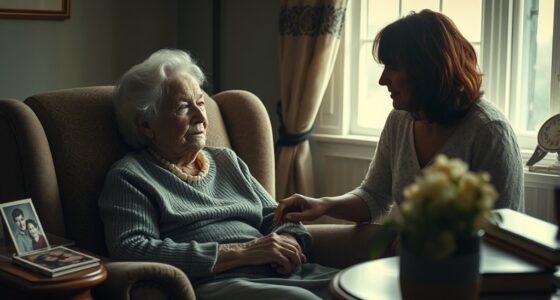
The writer says she lives hundreds of miles from her mother and has struggled with shifting information from doctors. One doctor said her mother’s condition was improving, while another was unsure. The writer describes trying to make decisions without knowing what would happen next, a situation she says prompted her to repeatedly imagine possible outcomes.
Her first suggestion is to acknowledge uncertainty openly rather than pretend it is absent. She also says adult children can ask themselves whether traveling immediately is necessary and what they can manage without exhausting themselves. In her account, caring for oneself is not the same as abandoning a parent.
The remaining practices are to treat each hospital stay as a chance to learn which questions to ask and which decisions need attention; allow moments of enjoyment without interpreting them as a lack of care; and view presence as something to return to repeatedly, rather than a permanent state. These are lessons drawn from the writer’s experience, not guarantees about medical outcomes or prescriptions for other families.
Supporting Families Through Hospital Crises
The report speaks to a challenge for families caring across distance: medical information can change, while travel, work, finances and personal health limit what relatives can do in person. A family member may have to weigh whether to go to the hospital, when to seek updates and how to remain involved when decisions are unfolding quickly.
The writer’s suggestions do not resolve those practical questions, but they identify the emotional load that can accompany them. Acknowledging what is unknown and recognizing personal limits may help a caregiver make decisions without treating constant worry as proof of devotion. The account also stresses that taking a break does not mean a person has stopped caring.
Because this is one person’s reflection, it cannot establish that the approach will work for every caregiver. Its value is in making a difficult experience legible and offering readers language for concerns they may be reluctant to voice.
As an affiliate, we earn on qualifying purchases.
A Daughter Caring From Afar
The writer describes leading women’s circles and guiding mindfulness meditation, while acknowledging that those practices have not prevented fear during her mother’s illness. She says she had visited recently and was weighing whether to return immediately or wait until she was needed more. Her account presents that decision as a question of capacity and circumstances, not a simple measure of love.
She calls repeated hospital stays a kind of “dress rehearsal”, meaning that each experience can teach a family which questions to ask and how to understand conversations with clinicians. She is careful to distinguish becoming more capable from becoming less afraid. The report does not describe a treatment plan or offer details about the mother’s prognosis.
hospital stay journal for caregivers
As an affiliate, we earn on qualifying purchases.
As an affiliate, we earn on qualifying purchases.
The Medical Outlook Is Not Detailed
The report does not state how the mother’s condition has changed since the second hospitalization, what treatment she is receiving or what clinicians expect next. The writer says one doctor described improvement and another was unsure, but provides no further medical details or timeline for resolving that difference.
It is also not clear whether she traveled to the hospital after writing the account, what decisions she was asked to make, or how the family is coordinating care. The piece offers personal coping reflections; it does not establish medical facts beyond the writer’s account of two sepsis-related hospitalizations in six weeks.
adult coloring books for stress relief
As an affiliate, we earn on qualifying purchases.
As an affiliate, we earn on qualifying purchases.
Care Decisions Continue to Evolve
The writer says her mother is being cared for and that she is doing what she can from a distance. Her account gives no date for a further update, discharge or other medical milestone, so the mother’s next steps are not known from the report.
For readers following the situation, the immediate development is the family’s ongoing response as information changes. The writer’s closing question invites people who have faced similar long-distance decisions to share what helped them feel useful and find peace of mind. Any treatment or travel decisions for a family should be based on the circumstances and information available to that family, rather than on one contributor’s experience.
portable travel magnifying glass for seniors
As an affiliate, we earn on qualifying purchases.
As an affiliate, we earn on qualifying purchases.
Key Questions
What happened to the writer’s mother?
The writer says her mother was hospitalized twice in six weeks, both times with sepsis. The report does not provide further medical details.
What five practices does the report describe?
They are acknowledging uncertainty, considering what caregiving demands are sustainable, learning from each hospital stay, allowing positive moments and returning to the present as a repeated practice.
Does the article give medical advice?
No. It is a personal account about emotional coping and family decisions, not medical guidance or a report on treatment outcomes.
What is known about the mother’s current condition?
The writer says her mother is being cared for. The account does not specify her prognosis, treatment, discharge plans or whether her condition has improved since the second hospitalization.
Source: rss
Cold & flu season Picks
humidifiers
As an affiliate, we earn on qualifying purchases.