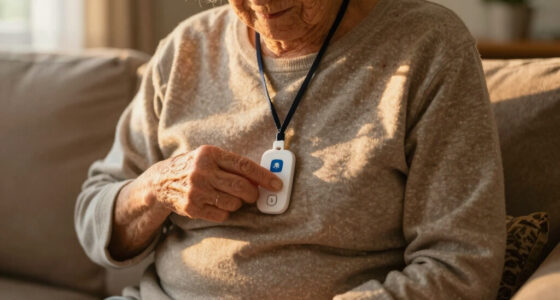
Choosing among medical alert systems for seniors comes down to one central tradeoff: monthly monitoring fees versus one-time hardware costs. Monitored systems like the Medical Guardian MGMini, my pick for best overall, connect to a 24/7 emergency response center with GPS tracking, but they require a subscription. If you want to avoid recurring fees entirely, the Medical Alert Pendant with Direct 911 Calling and the Life Alert Caregiver Pager skip the middleman and cost nothing after purchase, though you give up professional dispatch and automatic fall detection. Somewhere in between sit devices like the Fall Detection Watch with GPS, which bundles wellness features and SOS calling without a contract. Below, I break down all nine systems by protection level, cost over time, and who each one actually suits.

Turn quiet afternoons into listening time
- Thousands of audiobooks, podcasts and originals
- Listen on your phone, tablet or Echo — also offline
- Cancel anytime
Complete the kit



Key Takeaways
- The Medical Guardian MGMini earned best overall because it combines GPS, 4G connectivity, and 24/7 professional monitoring in a wearable that works away from home — the only catch is the ongoing monthly fee.
- Four of the nine systems (the Direct 911 pendant, Freedom Alert, Caregiver Pager, and the app-controlled wristband) charge no monthly fee, making them dramatically cheaper over a five-year horizon than any monitored option.
- Automatic fall detection appears on only three products (the Fall Detection Watch, Safety+ 4G, and SecuLife pendant), and it matters most for seniors who live alone or have a history of falls.
- At-home-only systems like the Life Alert Caregiver Pager and Freedom Alert are half the price of mobile GPS systems but leave a dangerous gap the moment the user steps outside or into the yard.
- The Safety+ 4G and Bay Alarm Medical SOS sit at the premium end because they layer fall detection, GPS, and two-way voice into a single monitored device — worth paying for if reliability outweighs budget concerns.
| Medical Guardian MGMini Medical Alert Device for Seniors |  | Best Overall | Connectivity: AT&T and Verizon 4G LTE | Battery Life: 3 days | Recharge Time: 4 hours | VIEW LATEST PRICE | See Our Full Breakdown |
| Life Alert System No Monthly Fee, Caregiver Pager Call Button for Seniors with App |  | Best Value for At-Home Care | Connectivity: 2.4GHz WiFi | Included Components: Waterproof call button, SOS watch button, receiver | Wearing Options: Necklace pendant and wristband | VIEW LATEST PRICE | See Our Full Breakdown |
| Fall Detection Watch for Seniors with GPS Tracker, SOS Button, Heart Rate & Step Counter |  | Best Health-Focused Smartwatch | Fall Detection: Automatic with emergency alerts | Connectivity: Cellular 4G (data-only SIM required for calls) | Water Resistance: IP67 waterproof | VIEW LATEST PRICE | See Our Full Breakdown |
| Bay Alarm Medical SOS Mobile GPS Medical Alert System for Seniors |  | Best Lightweight On-the-Go Pick | Coverage: Nationwide 4G LTE | Weight: Under 2 oz | Water Resistance: Water-resistant | VIEW LATEST PRICE | See Our Full Breakdown |
| Safety+ 4G Medical Alert System with Fall Detection and GPS |  | Best Battery Life | Coverage: Nationwide 4G | Battery Life: Up to 6 days | Water Resistance: Yes | VIEW LATEST PRICE | See Our Full Breakdown |
| Medical Alert Pendant for Seniors – Direct 911 Calling, No Monthly Fees |  | Best Fee-Free Mobile Pick | Connectivity: 4G LTE cellular | Emergency Calling: Direct 911, no call center | Communication: Two-way speaker and microphone | VIEW LATEST PRICE | See Our Full Breakdown |
| Freedom Alert Landline Personal Emergency Device |  | Best for Landline Households | Connectivity: Landline | Communication: Two-way voice | Emergency Options: Family contacts and/or 911 | VIEW LATEST PRICE | See Our Full Breakdown |
| SecuLife Medical Alert Pendant with Fall Detection and GPS Tracking |  | Best Full-Protection Pick | Fall Detection: Yes, automatic | GPS Tracking: Real-time with safe zones | Location History: 1 year | VIEW LATEST PRICE | See Our Full Breakdown |
| Life Alert System No Monthly Fee App-Controlled Waterproof Wristband |  | Best In-Home Caregiver System | Waterproof Wristband: Yes | Call Buttons: 2 | Display: 6 LED number display | VIEW LATEST PRICE | See Our Full Breakdown |
| medical alert systems for senior | Connectivity | Water Resistance |
|---|---|---|
| Medical Guardian MGMini Medica | AT&T and Verizon 4G LTE | — |
| Life Alert System No Monthly F | 2.4GHz WiFi | Waterproof buttons |
| Fall Detection Watch for Senio | Cellular 4G (data-only SIM required for calls) | IP67 waterproof |
| Bay Alarm Medical SOS Mobile G | — | Water-resistant |
| Safety+ 4G Medical Alert Syste | — | Yes |
| Medical Alert Pendant for Seni | 4G LTE cellular | — |
| Freedom Alert Landline Persona | Landline | — |
| SecuLife Medical Alert Pendant | — | IP67 |
| Life Alert System No Monthly F | — | — |
More Details on Our Top Picks
Medical Guardian MGMini Medical Alert Device for Seniors
Medical Guardian’s MGMini earns the top spot because it balances discretion, mobility, and professional monitoring better than anything else in this lineup. Unlike no-fee options such as the Life Alert Caregiver Pager, this pendant works away from home thanks to GPS location updates and dual-carrier 4G LTE, so an active senior who gardens, walks, or travels stays covered. The two-way speaker means help can talk to the wearer immediately, and a three-day battery beats the Bay Alarm Mobile’s vaguer “several days.” The tradeoff is cost: at $43.95/month, plus $10/month for fall detection, this is one of the most expensive ongoing commitments here.
Pros:- Discreet, wearable-as-jewelry design seniors actually keep on
- Works at home and away with GPS and dual-carrier 4G LTE
- 24/7 professional monitoring with two-way voice
- Three-day battery with a quick four-hour recharge
Cons:- One of the highest subscription costs in the roundup at $43.95/month
- Fall detection adds another $10/month
- Only one device can be active per member
Best for: Active seniors who leave the house regularly and want a professionally monitored, discreet pendant with GPS
Not ideal for: Budget-conscious families unwilling to pay $44+ monthly, or anyone wanting a one-time-purchase device
- Connectivity:AT&T and Verizon 4G LTE
- Battery Life:3 days
- Recharge Time:4 hours
- Monitoring Service:Subscription required, $43.95/month
- Optional Fall Detection:$10/month add-on
- Device Compatibility:One device active per member
Our verdict“If reliable around-the-clock professional monitoring and on-the-go coverage justify a monthly fee, this is the pendant to buy.”
Life Alert System No Monthly Fee, Caregiver Pager Call Button for Seniors with App
For seniors who rarely leave the house and have a caregiver nearby, this no-monthly-fee pager system is the smartest money in this roundup. Instead of routing alerts to a call center like the MGMini, it pings a WiFi receiver and family app, which means zero recurring costs — the tradeoff being that if nobody answers, no emergency service is contacted. Both the waterproof pendant and wrist button work in the bathroom, where falls are most common, something the Freedom Alert landline unit can’t match as flexibly. The main frustration is transparency: battery life and receiver range are undocumented, so buyers in larger homes are taking something of a gamble.
Pros:- No subscription or monthly fees ever
- Waterproof buttons safe for shower and bath use
- Alerts reach caregivers through both a receiver and smartphone app
- Two wearing styles included — necklace and wristband
Cons:- No connection to 911 or a monitoring center
- Battery life and receiver range are not disclosed
Best for: Homebound seniors with a spouse, roommate, or nearby family member who can respond to alerts
Not ideal for: Seniors living alone — alerts only reach a caregiver, not emergency services
- Connectivity:2.4GHz WiFi
- Included Components:Waterproof call button, SOS watch button, receiver
- Wearing Options:Necklace pendant and wristband
- Coverage Area:Bedroom, bathroom, kitchen, living room, hallway
- Water Resistance:Waterproof buttons
- Monthly Fees:None
Our verdict“A low-cost, no-subscription lifeline for seniors whose safety net is a caregiver in the same house.”
Fall Detection Watch for Seniors with GPS Tracker, SOS Button, Heart Rate & Step Counter
This fall detection watch is the only pick here that doubles as a wellness tracker, logging heart rate, blood pressure, sleep, and steps alongside automatic fall alerts. Compared with a single-purpose pendant like the Bay Alarm Mobile, it gives caregivers far richer context — location, geo-fencing, even two-way video calls — in one wrist-worn device. The catch is setup: the pre-installed SIM doesn’t support voice calls, so buyers must source their own data-only SIM, and the dated Android Wear 1.0 platform with 1 GB of storage makes it feel less polished than dedicated medical devices. It rewards tech-comfortable families willing to tinker in exchange for health data the pendants simply don’t collect.
Pros:- Automatic fall detection with emergency alerts built in
- GPS tracking with geo-fencing for wander-prone seniors
- Two-way video calling keeps families connected daily
- IP67 waterproofing plus heart rate, sleep, and step tracking
Cons:- Pre-installed SIM doesn’t support voice; extra SIM purchase and setup required
- Aging Android Wear 1.0 software with only 1 GB of storage
Best for: Tech-savvy families who want fall alerts plus continuous health and location monitoring in one device
Not ideal for: Seniors who want a plug-and-play device — SIM setup and app configuration require patience
- Fall Detection:Automatic with emergency alerts
- Connectivity:Cellular 4G (data-only SIM required for calls)
- Water Resistance:IP67 waterproof
- Health Tracking:Heart rate, blood pressure, sleep, step counter
- Location:Real-time GPS with geo-fencing
- Calling:Two-way video phone calls, SOS emergency calling
- Compatibility:Android and iOS smartphones
Our verdict“The right choice when health tracking matters as much as emergency response and someone in the family can handle setup.”
Bay Alarm Medical SOS Mobile GPS Medical Alert System for Seniors
Weighing under two ounces, the Bay Alarm Mobile is the lightest GPS-enabled option in this roundup, and it offers both a neck lanyard and belt clip so seniors can wear it however they’ll actually tolerate. Its nationwide 4G LTE coverage and one-button panic design make it a direct rival to the MGMini — but where Medical Guardian locks you to one device per member, Bay Alarm leans on a strong caregiver mobile app for family oversight. It’s cheaper upfront than full smartwatch solutions like the Fall Detection Watch, yet the subscription is still required for any real functionality. Battery life is only described as “several days,” and fall detection details are thin, so verify pricing and add-ons before committing.
Pros:- Featherweight design under 2 oz that seniors forget they’re wearing
- Nationwide 4G LTE coverage for use anywhere
- Two wearing options plus caregiver mobile app
- Simple one-button SOS operation
Cons:- Subscription required for the device to function at all
- Battery life varies and fall detection support is undocumented
Best for: Seniors who find traditional pendants heavy or uncomfortable and want a barely-there GPS device
Not ideal for: Buyers who want fall detection guaranteed up front — capabilities here are unclear
- Coverage:Nationwide 4G LTE
- Weight:Under 2 oz
- Water Resistance:Water-resistant
- Battery Life:Several days per charge
- Wearing Options:Neck lanyard, belt clip
- Caregiver Features:Mobile app support
- Subscription:Required
Our verdict“The pick for comfort-first seniors who want mobile GPS protection without wristwatch bulk.”
Safety+ 4G Medical Alert System with Fall Detection and GPS
The Safety+ system’s standout spec is its up-to-6-day battery — double the MGMini’s three days — which matters enormously for seniors who forget to charge devices. Unlike the Fall Detection Watch, it requires no smartphone and no fiddly SIM setup: it arrives with a charging dock, lanyard, and belt clip, and fall detection and GPS are standard rather than paid add-ons. The first month of monitoring is included, softening the $40/month hit that follows. That still undercuts Medical Guardian’s $43.95 base plus $10 fall detection, making it the stronger value among monitored systems. Just know it depends entirely on cellular coverage, so rural buyers with weak signal should confirm service before purchasing.
Pros:- Best-in-roundup battery life of up to 6 days
- Fall detection and GPS included at no extra charge
- No smartphone needed for setup or daily use
- Caregiver app for activity and emergency monitoring
Cons:- $40/month subscription after the first free month
- Completely dependent on cellular signal strength
Best for: Seniors who forget to charge devices and want fall detection included without add-on fees
Not ideal for: Rural households with spotty cellular coverage, or anyone avoiding recurring fees
- Coverage:Nationwide 4G
- Battery Life:Up to 6 days
- Water Resistance:Yes
- Fall Detection:Included
- GPS:Included
- Included Accessories:Charging dock, lanyard, belt clip, caregiver app access
- Monitoring Service:First month included, $40/month thereafter
Our verdict“The monitored pick for forgetful chargers — longest battery and bundled fall detection at a lower monthly rate than Medical Guardian.”
Medical Alert Pendant for Seniors – Direct 911 Calling, No Monthly Fees
Most fee-free alert devices force a tradeoff: they only work at home. This pendant sidesteps that by connecting over 4G LTE nationwide, so an active senior who walks the neighborhood or travels can still reach help. Compared with the Freedom Alert, which is tethered to a landline, this option goes wherever cellular coverage exists. The direct 911 dialing also skips the monitoring-center middleman, which cuts response friction — though it means no trained dispatcher confirming the emergency first. The AAA batteries lasting a full year spare users from nightly charging, unlike the SecuLife pendant that needs recharging every few days. The flip side: emergency calls are all it does. There is no fall detection, no GPS, and no family notification, so a confused senior who cannot press the button is unprotected.
Pros:- Truly no monthly fees or contracts
- Works nationwide on 4G LTE, not just at home
- Year-long AAA battery life with no charging routine
- Two-way speaker and microphone for talking to dispatchers
Cons:- Emergency-only device — no fall detection, GPS, or family notifications
- Dead weight anywhere without cellular coverage
Best for: Active, independent seniors who leave the house regularly and want one-button 911 access without recurring costs
Not ideal for: Seniors with cognitive decline or fall risk who may be unable to press the button — there is no automatic detection or caregiver alerting
- Connectivity:4G LTE cellular
- Emergency Calling:Direct 911, no call center
- Communication:Two-way speaker and microphone
- Battery:3x AAA, up to 1 year
- Dimensions:2.8 x 1.75 x 0.6 inches
- Weight:3 oz
- Monthly Fees:None
- Includes:Neck lanyard, protective call cover
Our verdict“The right pick for mobile seniors who want zero recurring costs and just need a reliable line to 911 wherever they go.”
Freedom Alert Landline Personal Emergency Device
The Freedom Alert takes a different path from cellular rivals like the 4G LTE pendant: it rides on an existing landline connection, which makes it immune to dead zones and cellular outages in rural areas. The standout capability is customizable call sequencing — a press of the button can dial family members first, then 911, so relatives become the first line of response. The rechargeable battery with 24-hour backup keeps protection alive during power cuts, something the WiFi-dependent app-controlled wristband cannot promise. No monthly fees keeps lifetime cost near zero, matching the direct-911 pendant. The obvious limitation is the shrinking relevance of landlines: if the household has cut the cord, this device is a non-starter, and it offers no protection whatsoever once the user steps into the yard or beyond.
Pros:- Calls family, neighbors, or 911 in a customizable sequence
- Landline reliability where cellular signal is weak or absent
- 24-hour battery backup during power outages
- No monthly fees ever
Cons:- Requires an active landline, which many households no longer have
- Zero protection outside the home
- Landline infrastructure is steadily disappearing, making long-term viability uncertain
Best for: Seniors in rural areas with weak cellular signal who still have an active landline and mostly stay home
Not ideal for: Cord-cutting households or anyone needing protection outside the house — the device is anchored to the landline
- Connectivity:Landline
- Communication:Two-way voice
- Emergency Options:Family contacts and/or 911
- Rechargeable:Yes
- Battery Backup:24 hours
- Monthly Fees:None
Our verdict“A sensible, fee-free choice only for seniors whose home still runs on a landline and whose world rarely extends past the front door.”
SecuLife Medical Alert Pendant with Fall Detection and GPS Tracking
This is the most complete safety package in this batch. Where the direct-911 pendant depends entirely on the wearer pressing a button, SecuLife adds automatic fall detection — the single most valuable feature for seniors who may lose consciousness or be too disoriented to call. The real-time GPS tracking with customizable safe zones lets family see where a wandering parent is at any moment, something only the Fall Detection Watch in this roundup approaches. The IP67 waterproofing covers the shower, where falls are most common, and the six-day battery beats most smartwatch-style competitors that need nightly charging. The honest tradeoff is the $20 monthly subscription, which stacks up to $240 a year — more than every other option here, all of which are fee-free at the basic level. Anyone unwilling to commit to recurring costs should look at the fee-free alternatives and accept less protection.
Pros:- Automatic fall detection summons help even if the wearer cannot press the button
- GPS tracking with geofenced safe zones for wandering risks
- IP67 water resistance safe for showering
- Six-day battery life between charges
Cons:- $20/month subscription adds up to $240+ per year indefinitely
- Dependent on cellular service availability
- Overkill for healthy, fully independent seniors
Best for: Seniors with fall risk or mild cognitive decline whose families want location tracking and automatic emergency escalation
Not ideal for: Budget-sensitive buyers opposed to any subscription — the $20 monthly cost never ends
- Fall Detection:Yes, automatic
- GPS Tracking:Real-time with safe zones
- Location History:1 year
- Water Resistance:IP67
- Battery Life:Up to 6 days
- Two-Way Calling:Yes
- SOS Button:Yes
- Monthly Subscription:$20
Our verdict“Worth the subscription for families of fall-prone or memory-impaired seniors who need protection the wearer cannot forget to activate.”
Life Alert System No Monthly Fee App-Controlled Waterproof Wristband
This wristband system solves a different problem than the cellular pendants: instead of calling 911, it alerts family members and caregivers through a smartphone app. That makes it closer to the Caregiver Pager Call Button elsewhere in this roundup — ideal when a spouse or adult child is nearby and can respond faster than an ambulance. The waterproof wristband works in the shower, and the 300-foot range covers a typical house and yard. Unlike SecuLife, there are no monthly fees for the core functions. The catch is the technical fine print: it demands a 2.4GHz WiFi network, so homes on 5GHz-only routers need reconfiguring, and the SMS alerts may cost extra despite the no-fee claim. The 6-LED number display is also basic — this is a paging system, not a communicator, so the wearer cannot talk through it.
Pros:- Waterproof wristband usable in the shower and bath
- No monthly fees for core alerting functions
- 300-foot range covers most homes and yards
- App-based remote notifications for off-site family
Cons:- Requires 2.4GHz WiFi — incompatible with 5GHz-only networks
- SMS notifications may carry hidden subscription costs
- No two-way communication and locked to Tuya Smart / Smart Life apps
Best for: Seniors living with or near involved caregivers who want shower-safe alerting at home without subscription costs
Not ideal for: Seniors living alone — alerting family via app is not a substitute for direct emergency dispatch, and there is no two-way voice
- Waterproof Wristband:Yes
- Call Buttons:2
- Display:6 LED number display
- WiFi Support:2.4GHz only
- Range:Up to 300 feet
- App Compatibility:Tuya Smart, Smart Life
- Monthly Fee:None (SMS alerts may require subscription)
Our verdict“A fee-free in-home paging system best paired with a caregiver who can physically respond — not a standalone lifeline for someone living alone.”

How We Picked
I ranked these nine systems by asking the questions a family actually faces when shopping for an older adult: what happens when the button is pressed, where the device works, and what it costs over five years, not just on day one. Systems that route to a professional monitoring center with GPS location scored highest for reliability, because a dispatcher can send the right help even when the user cannot speak. No-fee devices were judged on how they compensate — direct 911 calling, caregiver app alerts, or two-way voice — and penalized where a missed smartphone notification could mean a missed emergency.
I also weighed fall detection accuracy, water resistance for shower use (where many falls occur), battery life, and ease of daily wear, since a clunky pendant that gets taken off provides zero protection. Finally, I balanced each product’s strengths against its role in the lineup: a budget pager should not be compared to a premium GPS system head-to-head, but it can win outright for a senior who rarely leaves home. That logic drove the ranking order, from the most complete protection at the top to the most affordable entry points at the bottom.
| medical alert systems for senior | Water Resistance |
|---|---|
| Medical Guardian MGMini Medica | — |
| Life Alert System No Monthly F | Waterproof buttons |
| Fall Detection Watch for Senio | IP67 waterproof |
| Bay Alarm Medical SOS Mobile G | Water-resistant |
| Safety+ 4G Medical Alert Syste | Yes |
| Medical Alert Pendant for Seni | — |
| Freedom Alert Landline Persona | — |
| SecuLife Medical Alert Pendant | IP67 |
| Life Alert System No Monthly F | — |
Factors to Consider When Choosing Medical Alert Systems For Seniors
Beyond the individual reviews, a few structural decisions will shape whether any of these systems actually works when it matters. Before you commit, think through the following factors.Monitored Versus No-Fee: The Real Cost Math
The sticker price of a medical alert system is rarely the full story. A monitored device like the MGMini or Bay Alarm Medical SOS may cost little upfront but adds $25–$45 per month, which compounds to $1,500–$2,700 over five years. A no-fee pendant that costs $60 once looks like a bargain by comparison — until you consider who answers the call. With direct 911 devices, your loved one speaks to a dispatcher but must be able to communicate their location; with caregiver pagers, help only arrives if a family member’s phone buzzes. The mistake I see most often is families buying the cheapest option for a senior who lives alone, where the gaps in no-fee systems are widest. If someone is usually home with a spouse or nearby family, the no-fee route is genuinely sensible. If they spend hours alone, the monitoring fee is effectively insurance against that gap.
Coverage Area: Home-Only Versus Anywhere
Every system in this roundup falls into one of two coverage categories, and picking the wrong one is the second most common buying error. Home-only systems — the WiFi pager, Freedom Alert landline unit, and base-station devices — rely on a receiver inside the house, so protection ends at the mailbox. Mobile GPS systems like the Safety+ 4G, SecuLife, and Bay Alarm SOS use cellular networks and work in the grocery store, the car, or on a walk. Be honest about the senior’s actual routine rather than their stated one: many families buy an at-home system, then discover dad gardens, walks the dog, and drives to church weekly. Also check whether a mobile device runs on a cellular network with good coverage in your area, because a 4G pendant on a weak signal is a pendant that cannot call anyone.
Fall Detection: When Automatic Beats a Button
The hardest truth about medical alerts is that a button only works if the person can press it — and a senior who is unconscious, disoriented, or pinned after a fall often cannot. That is the entire argument for automatic fall detection, available on the Fall Detection Watch, Safety+ 4G, and SecuLife pendant. These sensors flag sudden drops and summon help without any input. Two caveats deserve attention: fall detection generates false alarms from time to time (dropping into a chair quickly can trigger it), and it typically requires a monitoring subscription to do anything once a fall is registered. If your loved one has fallen in the past year, has balance issues, or takes medications that cause dizziness, I would treat fall detection as non-negotiable. For a robust senior buying a system mostly for peace of mind, a standard SOS button is a reasonable place to save money.
Wearability and Water Resistance
A device left in a drawer protects no one, and wearability failures are the quiet reason many systems go unused. Pendants around the neck get taken off at night; bracelets come off before dishwashing; watches get forgotten on chargers. Look for a form factor the senior will genuinely tolerate 24 hours a day, and pay attention to water resistance ratings, since bathrooms are statistically the most dangerous room in the house. The waterproof wristband and shower-safe fall detection watch in this lineup handle that scenario; some landline base-station pendants do not. Battery life matters for the same reason — a device that dies mid-afternoon because no one remembered to charge it creates a daily vulnerability window. Devices with multi-day batteries, or base-station systems with pendants that never need charging, remove that failure point entirely.
Who Answers the Call, and How Fast
This is the factor buyers understand least and regret most. Professional monitoring centers answer in seconds, confirm the emergency verbally, access medical profiles, and dispatch local EMS with the correct address — even if the caller cannot speak. Direct 911 devices put your loved one straight through to a public dispatcher, which is faster in one sense but relies on the senior being able to explain where they are, which is exactly what a confused or injured person struggles to do. App-based caregiver alerts add response time that depends entirely on how quickly a family member sees the notification and can physically reach the senior. None of these paths is wrong, but they suit different households: monitoring for solo seniors, 911 devices for cognitively sharp users in one fixed location, and pager systems for seniors with attentive, nearby family.
Frequently Asked Questions
Are no-monthly-fee medical alert systems actually reliable enough for a senior who lives alone?
For a senior who lives completely alone, no-fee systems carry real limitations you should weigh honestly. Direct 911 pendants and landline devices like the Freedom Alert do connect to real emergency dispatchers, so they are not unsafe — but they depend on the user being conscious and able to communicate their situation and location. Caregiver pager systems are the weakest option for solo living, because the alert only reaches whoever has the app installed and is paying attention at that moment. If your mother lives alone and has any fall history or health condition that could leave her unable to speak, a monitored system with automatic fall detection is the safer choice. No-fee devices work best as a supplement, or as a primary device for seniors with a spouse, neighbor, or family member physically close by during most of the day.
Is fall detection worth the extra cost, or is a regular SOS button enough?
The honest answer depends on fall risk, not age. A regular SOS button is perfectly adequate for a steady, healthy senior who wants a way to call for help after surgery or for general reassurance. Fall detection earns its cost when the likely emergency is one that prevents pressing a button — a concussion, a hip fracture on the bathroom floor, or a cardiac event. Research on senior falls consistently shows that long lie times after a fall worsen outcomes dramatically, which is exactly the scenario automatic detection exists to prevent. In this lineup, the Fall Detection Watch, Safety+ 4G, and SecuLife pendant offer it. Expect occasional false alarms from brisk sitting movements; most systems let you cancel a fall alert within a short window before help is dispatched.
Do GPS medical alert systems work everywhere, including indoors and in rural areas?
GPS systems have two separate dependencies people often confuse: satellite positioning for location, and cellular signal for making the call. GPS location itself works outdoors nearly everywhere, but indoors — especially in large buildings or basements — accuracy can drift by a block or more, and a dispatcher may get an approximate rather than exact address. Cellular connectivity is the bigger constraint in rural areas: a device tied to a weak carrier network simply cannot place the emergency call, no matter how good its GPS is. Before buying a mobile system like the Safety+ 4G or Bay Alarm SOS, check which carrier it uses and compare that against coverage maps for your parents’ home and the places they regularly go. Hybrid systems that also include an at-home base station cover the indoor gap better than mobile-only devices.
Can I use one of these systems for a senior who refuses to wear a pendant?
Yes, and this is a genuinely common problem — the best device is worthless in a nightstand. The most successful workaround in this roundup is the fall detection smartwatch format, which many seniors accept because it looks like a normal watch and offers heart rate and step counting they may actually want. The app-controlled wristband with an LED display works similarly for seniors who dislike the stigma of a medical pendant. If even a watch is rejected, some families succeed with the pager button placed in fixed locations — bedside, bathroom, and favorite chair — though that trades away protection during movement between them. Whatever you choose, involve the senior in the decision, because devices they helped pick get worn far more consistently than ones imposed on them.
What happens if my loved one presses the button accidentally — will police show up anyway?
False alarms are routine, and every reputable system has a cancellation path — but they differ in how forgiving it is. With monitored services, a pressing error is painless: an operator comes on the line, you say it was a mistake, and nothing else happens. Many systems also give you a 10–30 second window to cancel a fall detection alert before the operator even engages. Direct 911 devices are less forgiving, because once the call connects to a public dispatcher, most agencies expect you to stay on the line and confirm you are fine, and repeated hang-ups can prompt a welfare check. Caregiver pager systems are the most forgiving of all, since the alert just pings a family phone. If accidental presses seem likely — with tremors or cognitive decline, for example — lean toward a monitored system or pager over a direct-911 device.
Conclusion
After comparing all nine systems, the right choice comes down to matching the device to the household, not chasing features. Best overall goes to the Medical Guardian MGMini, which pairs professional 24/7 monitoring with GPS and 4G mobility in a genuinely wearable package — the strongest all-around protection if a monthly fee fits your budget. For best premium coverage, the Safety+ 4G with Fall Detection and GPS layers automatic fall alerts onto monitored response, with the Bay Alarm Medical SOS close behind for its polished mobile platform. Best value belongs to the Direct 911 Pendant, which delivers genuine emergency calling with zero subscription for a one-time cost, while the Life Alert Caregiver Pager is the budget pick for seniors with attentive, nearby family.
For specific needs: the Fall Detection Watch is the clear choice for seniors who resist traditional pendants but will happily wear a smartwatch, and it doubles as the best option for health tracking. The Freedom Alert suits technophobes with a landline who want dead-simple two-way calling, and the SecuLife pendant fits active seniors who garden, walk, and drive but still want monitored backup. The app-controlled waterproof wristband rounds things out as a capable starter device for anyone testing whether a medical alert fits their daily routine. Whichever direction you take, the worst choice is no system at all — even the simplest pendant in this lineup beats hoping help finds its way on its own.
Halloween Picks
halloween
As an affiliate, we earn on qualifying purchases.