
Choosing the right fall prevention device for elderly loved ones involves balancing safety, dignity, ease of use, and cost. Top picks include the Lunderg Wireless Early Alert Bed & Chair Alarm for its wireless alerts and minimal restraint impact, the NOMO Smart Care System for advanced fall detection and remote monitoring, and the Lunderg Large Wireless Bed Alarm for extra coverage and false alarm reduction. Each offers unique tradeoffs: some prioritize dignity with wireless alerts, others focus on comprehensive monitoring, and a few combine both. Here’s how I’ve compared these options to help you find the best fit for your needs.
Key Takeaways
- Wireless alerts preserve dignity better than traditional wired alarms.
- Fall detection systems with remote monitoring offer broader safety features but may involve ongoing costs.
- Larger sensor pads reduce false alarms but may be less discreet.
- Compatibility limitations, such as bed type restrictions, influence product choice.
- Ease of setup varies; some systems require no Wi-Fi or apps, others need internet connection.
| Lunderg Wireless Early Alert Bed & Chair Alarm Set for Elderly | 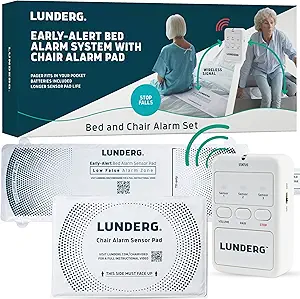 | Best Overall Wireless Fall Prevention for Dignity | Range: up to 400 ft | Sensor Pad Size: 10×33 inches (bed), chair sensor | Power Source: Batteries (AA) | VIEW LATEST PRICE | See Our Full Breakdown |
| NOMO Smart Care Medical Alert System |  | Best for Advanced Monitoring & Fall Detection | Monitoring: 24/7 with subscription | Fall Detection: Yes | Connectivity: WiFi | VIEW LATEST PRICE | See Our Full Breakdown |
| Lunderg Large Wireless Bed Alarm System for Elderly |  | Best for Extra Coverage & False Alarm Reduction | Sensor Size: 20×30 inches | Range: up to 400 ft | Battery Life: 15 months | VIEW LATEST PRICE | See Our Full Breakdown |
| KingPavonini ASTM-Approved Adjustable Bed Rail for Seniors |  | Best for Physical Safety & Support | Weight Capacity: 380 lbs | Adjustable Height: 17.6-20.9 inches | Extension Range: 28.6-34.7 inches | VIEW LATEST PRICE | See Our Full Breakdown |
More Details on Our Top Picks
Lunderg Wireless Early Alert Bed & Chair Alarm Set for Elderly
This option stands out for its wireless design, eliminating the in-room alarm that can cause agitation or fear, making it ideal for dementia care. Unlike wired alarms, it doesn’t threaten independence or dignity, sending alerts directly to a caregiver’s pager within a 400-foot range. The patented hip-level sensor pad reduces false alarms caused by shifting or restless sleep, and the portable pager offers volume and vibration controls, ensuring alerts wake you without disturbing the entire house. Compared with traditional wired alarms, this set offers a more humane approach, but it requires replacing batteries every 15 months and doesn’t include a smart home integration, which some users might want for automation.
Pros:- Wireless alerts preserve dignity and avoid restraint issues
- Hip-level sensor pad reduces false alarms
- Portable, adjustable-volume pager
- No Wi-Fi or app needed
Cons:- Requires battery replacements every 15 months
- Limited to alerting via pager, no smart home features
- Range may be restricted in large homes
Best for: Caregivers seeking a dignity-preserving, easy-to-use alert system for dementia or restless sleepers
Not ideal for: Homes requiring smart home integration or users comfortable with wired alarms
- Range:up to 400 ft
- Sensor Pad Size:10×33 inches (bed), chair sensor
- Power Source:Batteries (AA)
- Compatibility:Lunderg bed alarm, chair alarm
- Battery Life:15 months
- HSA/FSA Eligible:Yes
Bottom line: A compassionate, wireless system that balances safety with dignity, best suited for dementia care or restless sleepers.
NOMO Smart Care Medical Alert System
The NOMO system excels for its integrated fall detection, motion sensing, and remote caregiver notifications. It uses WiFi to connect a hub, satellites, and wearable tags, providing a comprehensive safety net without requiring landlines or invasive devices. The system’s real-time alerts to caregivers’ smartphones and optional 24/7 monitoring make it ideal for families wanting continuous oversight. However, it involves a monthly subscription after a 60-day free trial, and some users may find the initial setup slightly more complex than basic alarms. Compared to simple alert systems, NOMO offers broader safety features, but at a recurring cost and reliance on WiFi stability.
Pros:- Fall detection with immediate alerts
- Two-way voice communication
- Remote caregiver notifications
- WiFi-based, no landline needed
Cons:- Monthly subscription required after trial
- Dependent on WiFi connection
- Higher initial setup effort
Best for: Families seeking a modern, remote monitoring solution with fall detection
Not ideal for: Users preferring standalone alarms or those without reliable WiFi
- Monitoring:24/7 with subscription
- Fall Detection:Yes
- Connectivity:WiFi
- Components:Hub, Satellites, Tags
- App Compatibility:iOS and Android
- Trial Period:60 days
Bottom line: A robust, WiFi-enabled monitoring system with fall detection, best for tech-savvy families wanting 24/7 oversight.
Lunderg Large Wireless Bed Alarm System for Elderly
This pick offers larger, 20×30-inch sensor pads that provide extra coverage, reducing false alarms from restless sleepers or shifting. It’s ideal for those with more movement or sleep disturbances. Like the other Lunderg alarms, it sends alerts wirelessly to a caregiver’s pager, maintaining dignity and avoiding restraint issues. The anti-slip stickers help keep the pad in place, and the volume and vibration-adjustable pager ensure alerts are noticeable without being disruptive. Compared with smaller pads, this model adds peace of mind for restless or sleep-challenged seniors, but it lacks smart home features and requires battery replacements every 15 months.
Pros:- Extra-large sensor pad for better coverage
- Reduces false alarms from movement
- Wireless alerts to caregiver’s pager
- Adjustable volume and vibration
Cons:- No smart home or app features
- Requires battery replacements
- Limited compatibility with adjustable beds
Best for: Caregivers needing extra coverage for restless sleepers with a focus on reducing false alarms
Not ideal for: Homes with adjustable beds or those seeking smart home integration
- Sensor Size:20×30 inches
- Range:up to 400 ft
- Battery Life:15 months
- Compatibility:Bed and chair alarms
- Alerts:Wireless to pager
- FSA/HSA Eligible:Yes
Bottom line: Ideal for restless sleepers or those with frequent movement, offering extra coverage and false alarm reduction.
KingPavonini ASTM-Approved Adjustable Bed Rail for Seniors
This adjustable bed rail offers a sturdy, safety-focused solution for seniors with mobility issues. Its non-slip handle and padded grips support stability, helping prevent falls when getting in and out of bed. The tool-free installation makes setup straightforward, and the adjustable height and extension provide a customizable fit for different beds and user needs. With a weight capacity of 380 lbs, it supports even more vulnerable users. However, it’s incompatible with adjustable beds, and the mattress height range (3-12 inches) might limit use for some beds. This rail is best suited for those who need physical support but do not have adjustable bed frames.
Pros:- High weight capacity (380 lbs)
- Adjustable height and extension
- Non-slip ergonomic handle
- Easy tool-free setup
Cons:- Not compatible with adjustable beds
- Limited mattress height range
- No electronic alert or fall detection features
Best for: Seniors needing physical support and stability during bed transfers
Not ideal for: Owners of adjustable beds or those seeking electronic fall alerts
- Weight Capacity:380 lbs
- Adjustable Height:17.6-20.9 inches
- Extension Range:28.6-34.7 inches
- Bed Compatibility:Twin to King (not adjustable beds)
- Material:Steel with padded handle
- Certification:ASTM Approved
Bottom line: A durable, support-oriented bed rail ideal for physical stability, but not suited for electronic fall alerts or adjustable beds.
How We Picked
In selecting these fall prevention devices, I prioritized safety features, ease of use, and user experience. I reviewed products with proven effectiveness in elderly care, considering whether they minimize restraint, reduce false alarms, and support dignity. I also examined customer feedback, manufacturer reputation, and whether the devices suit different living situations—whether at home or care facilities. Cost and ongoing subscription requirements factored into the overall value. My goal was to identify options that balance safety, simplicity, and respect for elderly independence.
Factors to Consider When Choosing Elderly Fall Prevention Devices
Selecting the right fall prevention device depends on individual needs, living situation, and safety priorities. For those concerned with dignity and minimal restraint, wireless alert systems like Lunderg’s are ideal. Families wanting comprehensive oversight with fall detection and remote caregiver alerts should consider systems like NOMO. If extra coverage for restless sleepers is needed, larger sensor pads provide peace of mind. Physical support options, such as adjustable bed rails, are best for individuals needing help with stability and mobility. Understanding these differences will help you choose a device that fits your loved one’s lifestyle and safety requirements.
Wireless Alert Systems
Wireless systems eliminate the in-room alarm that can cause agitation, offering alerts directly to caregivers’ pagers or smartphones. They are best for maintaining dignity and avoiding restraint issues, especially in dementia care. However, they depend on battery life and range, and do not typically include fall detection or remote monitoring features.
Fall Detection and Monitoring
Fall detection systems with remote caregiver notifications provide broader safety coverage. They use sensors and WiFi or cellular connections to alert caregivers instantly. These are suited for families wanting continuous oversight but involve ongoing subscription costs and require reliable internet. They are more complex to set up but offer a higher level of safety.
Sensor Pads and Coverage
Larger sensor pads can reduce false alarms caused by restless movement. They are useful for seniors with sleep disturbances or hyperactivity. Keep in mind, bigger pads may be less discreet and less portable, but they offer peace of mind for high-movement individuals.
Physical Support Devices
Adjustable bed rails provide physical stability and support during transfers. These are best for seniors with mobility issues but do not include electronic alerts or fall detection. Compatibility with bed types and mattress height limits are key considerations when selecting a rail.
Frequently Asked Questions
What is the main benefit of wireless fall alarms?
Wireless fall alarms prioritize the dignity of elderly individuals by avoiding in-room alarms that can cause agitation or fear. They send alerts directly to caregivers’ pagers or phones, reducing the feeling of restraint and promoting independence, especially for those with dementia or cognitive challenges.
How does fall detection technology differ from simple alert systems?
Fall detection technology automatically recognizes when a fall occurs using sensors and sends instant alerts to caregivers, providing immediate response capabilities. Simple alert systems require the individual to activate an alarm manually, which may be less effective if they are unable to press a button after a fall.
Are larger sensor pads better for preventing false alarms?
Yes, larger sensor pads tend to cover more area, which reduces false alarms caused by shifting or restless movements. They are particularly helpful for seniors who move a lot during sleep, providing more reliable alerts and peace of mind for caregivers.
What are the advantages of physical support devices like bed rails?
Physical support devices such as adjustable bed rails help prevent falls by providing stability during transfers and while in bed. They are easy to install and do not rely on technology, making them suitable for users who prefer mechanical safety measures without ongoing costs.
How do I choose between a fall detection system and a simple alarm?
The choice depends on your loved one’s mobility and cognitive state. Fall detection systems are ideal if you want automatic alerts and remote monitoring, especially for those who might not be able to activate a manual alarm after a fall. Simple alarms work well for individuals who can manually trigger alerts and prefer a straightforward, less expensive solution.
Conclusion
For caregivers prioritizing dignity and minimal restraint, wireless alarm systems like Lunderg’s are ideal. Families seeking comprehensive safety with fall detection and remote oversight should turn to systems like NOMO, despite ongoing costs. For those concerned about restless sleep and false alarms, larger sensor pads offer extra coverage. Lastly, physical support like adjustable bed rails suits seniors needing stability and assistance with mobility. Your decision should align with the individual’s mobility level, cognitive state, and living environment to ensure safety and independence.