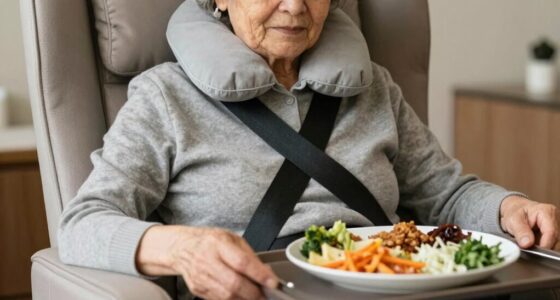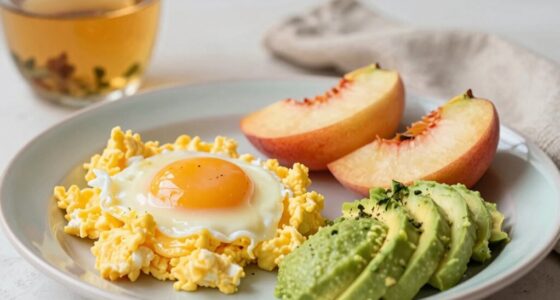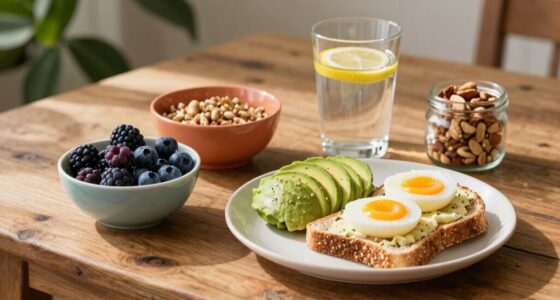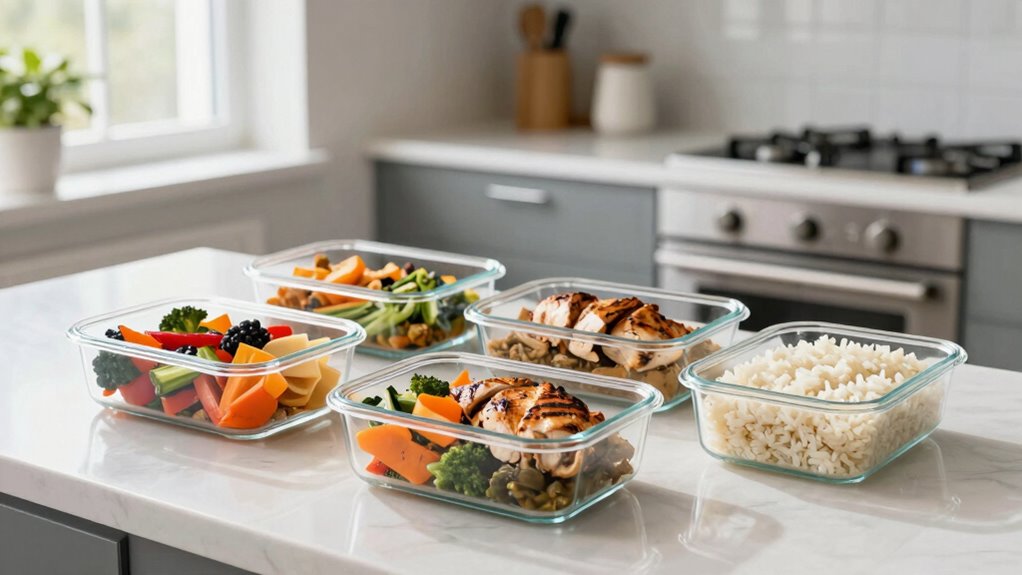

To make meal prep easier during busy care weeks, focus on batch cooking essential ingredients like grains, proteins, and roasted vegetables. Use airtight, stackable containers to store pre-portioned snacks and meals, labeling them for quick access. Prepare versatile options like cut-up veggies with hummus or pre-portioned snacks to keep energy levels steady. Combining smart storage with simple prep strategies helps reduce stress and saves time, giving you more energy for what matters most. Keep going to discover more helpful tips!

Turn quiet afternoons into listening time
- Thousands of audiobooks, podcasts and originals
- Listen on your phone, tablet or Echo — also offline
- Cancel anytime
Key Takeaways
- Batch cook versatile staples like grains, proteins, and roasted vegetables for quick meal assembly.
- Use labeled, airtight containers to store pre-portioned meals and snacks for easy access.
- Prepare and portion snacks in advance using variety for sustained energy throughout busy weeks.
- Organize ingredients and meals with stackable containers to maximize space and simplify retrieval.
- Focus on balanced, ready-to-eat meals and snacks to reduce daily prep time and maintain nutritional needs.
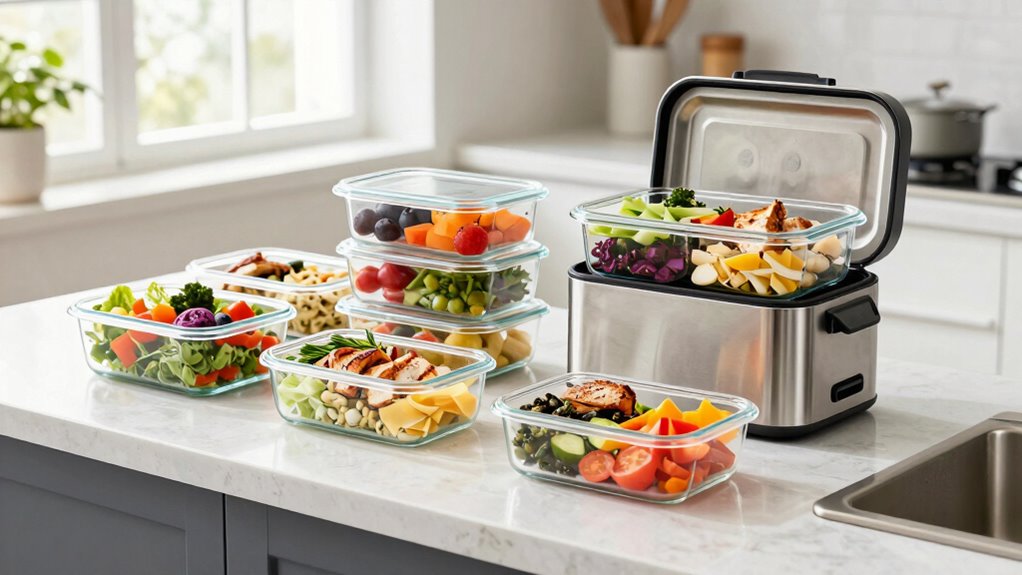
Care weeks can be demanding, but proper meal prep makes them more manageable. When your schedule is packed, having nutritious, ready-to-eat meals and snacks on hand can save you time and stress. To make this process easier, focus on creating healthy snack options that are simple to grab and go. Think of pre-portioned nuts, trail mix, or cut-up vegetables paired with hummus. These snacks provide energy without the need for last-minute prep when you’re already overwhelmed. Incorporating a variety of textures and flavors keeps your snack options appealing and helps sustain your energy levels throughout busy days.
Healthy, grab-and-go snacks like nuts and veggies keep you energized during busy care weeks.
To keep your meal prep efficient, investing in the right storage containers is key. Use airtight containers to preserve freshness and prevent spills, especially if you’re packing liquids like yogurt or smoothies. Stackable containers save space in your fridge or freezer, making it easier to organize your prepped meals. Label each container with the contents and date to stay organized and avoid confusion later. Choosing containers made from durable, microwave-safe materials allows you to reheat your meals directly, saving you time. Also, consider portion sizes that match your daily needs to prevent waste and ensure you’re eating enough to stay energized. Implementing efficient storage solutions can further streamline your process and keep everything accessible. Additionally, investing in reliable food storage can help prevent spoilage and maintain meal quality over time.
When prepping meals, aim for a balance of proteins, healthy fats, and carbs. This combination keeps you full longer and provides sustained energy. Prepare versatile ingredients that can be used in multiple meals, such as grilled chicken, roasted vegetables, or cooked grains. This way, you can mix and match throughout the week, reducing the workload each day. To streamline your prep, batch cook larger quantities of staples and store them in your organized containers. This approach minimizes daily cooking and allows you to focus on assembling meals quickly. Additionally, understanding food safety principles can help you keep your prepped meals fresh and safe to eat during busy periods. Incorporating proper handling and storage techniques ensures your meals remain nutritious and free from contamination.
Another tip is to prep snacks in advance, portioned into individual containers or snack bags. This makes it simple to grab a healthy snack on your way out the door or during a quick break. Keep a variety of options, from fresh fruit to protein bites, to avoid boredom and ensure you’re meeting your nutritional needs. When you combine smart storage container tips with a well-planned selection of healthy snack options, you’re setting yourself up for success during even the busiest of care weeks. This approach not only saves time but also keeps your diet balanced and satisfying, making your hectic schedule feel a little more manageable.
airtight food storage containers
As an affiliate, we earn on qualifying purchases.
As an affiliate, we earn on qualifying purchases.
Frequently Asked Questions
How Long Can Prepped Meals Be Safely Stored?
Prepped meals can typically be safely stored for 3 to 4 days, following food safety guidelines. You should keep them in airtight containers in the refrigerator at or below 40°F. To guarantee freshness and prevent foodborne illnesses, consume or freeze leftovers within this timeframe. If you need to store meals longer, freezing is a good option, extending shelf life up to 3 months. Always reheat thoroughly before eating.
What Are the Best Containers for Meal Prep?
Think of your meal prep containers as a sturdy vessel sailing through busy weeks. Reusable containers are your reliable ships, durable and eco-friendly. Opt for leak-proof options to prevent spills and keep your meals intact, like a ship with airtight seals. Choose glass or high-quality plastic containers with secure lids for safe, convenient storage. These containers guarantee your meals stay fresh and protected, making your busy weeks easier to handle.
How Do I Prevent Meals From Spoiling Quickly?
To prevent meals from spoiling quickly, focus on maintaining meal freshness with proper storage tips. Store perishable foods in airtight containers and keep them at the right temperature in the fridge or freezer. Label your meals with dates to track freshness, and avoid leaving meals out at room temperature for too long. These steps help preserve quality, reduce waste, and guarantee your meals stay safe and delicious throughout your busy week.
Can I Meal Prep for Multiple Dietary Restrictions?
Yes, you can meal prep for multiple dietary restrictions by focusing on dietary restriction compatibility and meal prep customization. Start by selecting ingredients that meet each restriction, like gluten-free grains or dairy alternatives. Use separate containers or sections within containers to keep flavors and restrictions separate. Customize meals by adjusting seasonings and portion sizes, ensuring each dish suits individual needs. This approach makes meal prep efficient, safe, and tailored to everyone’s dietary requirements.
What Are Quick Tips for Reheating Prepped Meals?
To reheat prepped meals efficiently, use the right reheating techniques to preserve flavor and texture. For stovetop dishes, gently warm over low heat, stirring occasionally. Microwave in short bursts, stirring in between to guarantee even heating. Cover your container to retain moisture, preventing dryness. Always check that the internal temperature reaches 165°F. These tips help maintain flavor and prevent overcooking, making your meals taste fresh every time.
microwave-safe meal prep containers
As an affiliate, we earn on qualifying purchases.
As an affiliate, we earn on qualifying purchases.
Conclusion
Now you’re all set to breeze through care weeks like a pro. With your meal prep routine, you’ll handle busy days smoothly, like a ship gliding through calm waters. Remember, planning ahead isn’t just about saving time; it’s about giving yourself peace of mind. Keep it simple, stay consistent, and enjoy the extra moments for yourself. Soon, meal prep will feel like second nature—easy as pie—making your care weeks a little brighter and a lot less stressful.
stackable refrigerator storage containers
As an affiliate, we earn on qualifying purchases.
As an affiliate, we earn on qualifying purchases.
As an affiliate, we earn on qualifying purchases.
Fall Picks
fall essentials
As an affiliate, we earn on qualifying purchases.