TL;DR

Turn quiet afternoons into listening time
- Thousands of audiobooks, podcasts and originals
- Listen on your phone, tablet or Echo — also offline
- Cancel anytime
Fit&Well has published a 10-minute, no-equipment Pilates routine for beginners, created by instructor Andrew Griffiths. It includes six movements and recommends doing the workout three times a week, with a rest day between sessions; individual results are not specified.
Fit&Well has published a 10-minute Pilates workout for beginners that requires no equipment and uses six movements to practise core control, balance and mobility. The routine was created by Pilates instructor Andrew Griffiths, who recommends doing it three times a week with a day off between sessions.
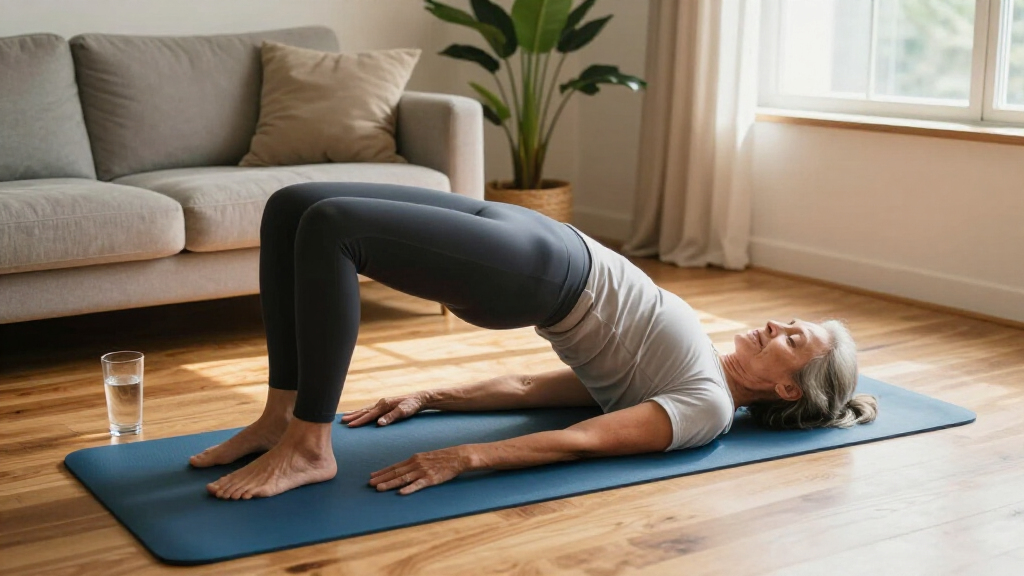
The workout moves through a pelvic tilt, the hundred, dead bug, glute bridge, bird dog and child’s pose. Most exercises are performed lying on the floor or on hands and knees. Fit&Well’s instructions pair breathing with movement and emphasize controlled repetitions rather than speed.
The routine begins with eight to 10 pelvic tilts, followed by the hundred, for which beginners can start with 40 or 50 arm pulses rather than aiming for 100. The dead bug and bird dog call for eight to 10 repetitions on each side, while the glute bridge calls for 10 to 12 repetitions. The dead bug, bridge and bird dog are each prescribed for two sets, with 30 seconds of rest between sets; child’s pose finishes the session with a 30- to 60-second hold.
Several exercises include ways to reduce the challenge. For the hundred, participants can keep their feet on the floor or leave their head and shoulders down. In the dead bug, the instructions say to keep the lower back connected to the floor as the opposite arm and leg extend. During the bridge, the hips lift while the lower back should not overarch. Fit&Well advises taking the movements slowly and maintaining control.
A Short Routine Built Around Control
The workout offers readers a brief, equipment-free way to try Pilates, with clear repetitions and modifications rather than a requirement to complete a full 100 pulses or use advanced positions. That may make the routine more approachable for someone new to the exercises, though the source does not report testing among participants or measured outcomes.
Griffiths says the sequence targets more than abdominal muscles. He describes the hundred, dead bug and bird dog as exercises for the core and muscles that help stabilize the spine, while the glute bridge and bird dog work the glutes and muscles supporting the back. Pelvic tilts and child’s pose add gentle movement for the spine and hips. These are the instructor’s explanations of the routine, not evidence that it will produce a particular health result for every person.
The emphasis on breathing, body awareness and gradual effort is part of the routine’s design. Griffiths says Pilates breathing may help with stress and anxiety, but the source provides no study or clinical evidence to quantify that effect. Readers should treat it as an attributed claim, not a promised outcome.
non-slip Pilates exercise mat for home workouts
As an affiliate, we earn on qualifying purchases.
As an affiliate, we earn on qualifying purchases.
How the Six Moves Fit Together
Fit&Well presents the workout as a beginner option that needs only floor space and 10 minutes. Its sequence progresses from awareness of pelvic position to exercises requiring coordination of the arms, legs and trunk, then ends with a resting stretch. No equipment, prior Pilates experience or additional workout sessions are specified as prerequisites.
The recommended schedule is three sessions a week, separated by a day off. Griffiths says that frequency can allow time for recovery while practising strength and motor control. He also suggests progressing the programme when the routine starts to feel easy, but the article does not prescribe a specific next level, added resistance or increase in repetitions.
The advice is attributed to Griffiths, identified by Fit&Well as a Pilates instructor, fitness expert and nutritionist at Net World Sports. The supplied report does not include independent evaluation of the workout or outcome data.
“Small and controlled is the aim. The movement comes from the pelvis, not the legs.”
— Andrew Griffiths, Pilates instructor
thick cushioned yoga mat for floor exercises and Pilates
As an affiliate, we earn on qualifying purchases.
As an affiliate, we earn on qualifying purchases.
Results and Progression Remain Unspecified
The report does not say how quickly participants might build strength, how much improvement to expect, or whether the routine has been evaluated in a study. Its statements about core stability, posture, back support and stress are presented as Griffiths’ explanations; the supplied material does not include measurements or independent evidence confirming outcomes from this particular six-move programme.
It also does not provide alternatives for every movement, guidance for people with injuries or health conditions, or a detailed progression once the exercises become easy. Comfort and ability can vary. Anyone unsure whether the movements are appropriate for them can ask a qualified health or fitness professional for individualized guidance.
beginner Pilates workout guide book
As an affiliate, we earn on qualifying purchases.
As an affiliate, we earn on qualifying purchases.
Repeat, Rest and Adjust Gradually
The next step in the published plan is to practise the routine three times weekly with a day off between sessions, using the easier options where needed. The article does not announce a follow-up programme or set a timeline for increasing the workload. Griffiths’ guidance is to consider progressing once the workout feels easy, but it leaves the method of progression open.
For readers trying the workout, the instructions put priority on controlled movement, steady breathing and stopping or modifying an exercise if it is uncomfortable. No later results or participant feedback are included in the source material.
Key Questions
What exercises are in the 10-minute Pilates routine?
It includes pelvic tilts, the hundred, dead bug, glute bridges, bird dogs and child’s pose. The first five use repetitions or pulses, and child’s pose is held for 30 to 60 seconds.
Do beginners need equipment or Pilates experience?
No equipment or prior experience is listed as necessary. Fit&Well says the routine requires space on the floor and 10 minutes.
How often does Griffiths recommend doing the workout?
Griffiths recommends doing it three times a week with a day off between sessions. This is the schedule given in the report, not a guarantee of results.
Can beginners make any of the exercises easier?
Yes. During the hundred, beginners can keep their feet on the floor or leave their head and shoulders down, and they can begin with 40 or 50 pulses rather than 100. The instructions also stress moving slowly and maintaining control.
Does the report say how much core strength the routine will build?
No. It describes the intended focus of the exercises but provides no measured results, study data or expected timeline for strength gains.
Source: rss
Halloween Picks
halloween
As an affiliate, we earn on qualifying purchases.