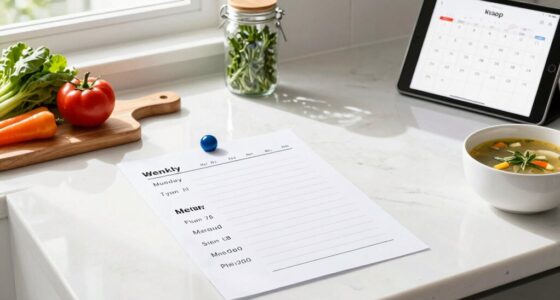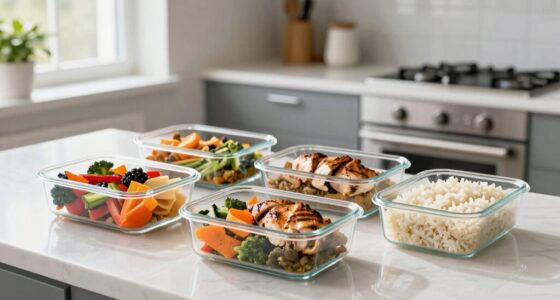

To make meals easier for seniors who tire quickly, plan and prepare ahead by batch-cooking and pre-portioning ingredients. Use adaptive utensils with larger handles or ergonomic designs to reduce hand strain, and organize the kitchen to keep essentials within easy reach. Simplify recipes with fewer ingredients and focus on quick, nutritious meals. Taking breaks and sitting while preparing food can also help. Keep exploring for more tips to make cooking safer and more manageable.

Turn quiet afternoons into listening time
- Thousands of audiobooks, podcasts and originals
- Listen on your phone, tablet or Echo — also offline
- Cancel anytime
Key Takeaways
- Use adaptive utensils with ergonomic handles to reduce hand strain during cooking and eating.
- Plan and batch cook meals ahead to minimize daily preparation effort.
- Organize the kitchen for easy access to frequently used items and tools.
- Incorporate sit-down meal prep with supportive seating to conserve energy.
- Choose quick, simple recipes that require minimal steps and ingredients.
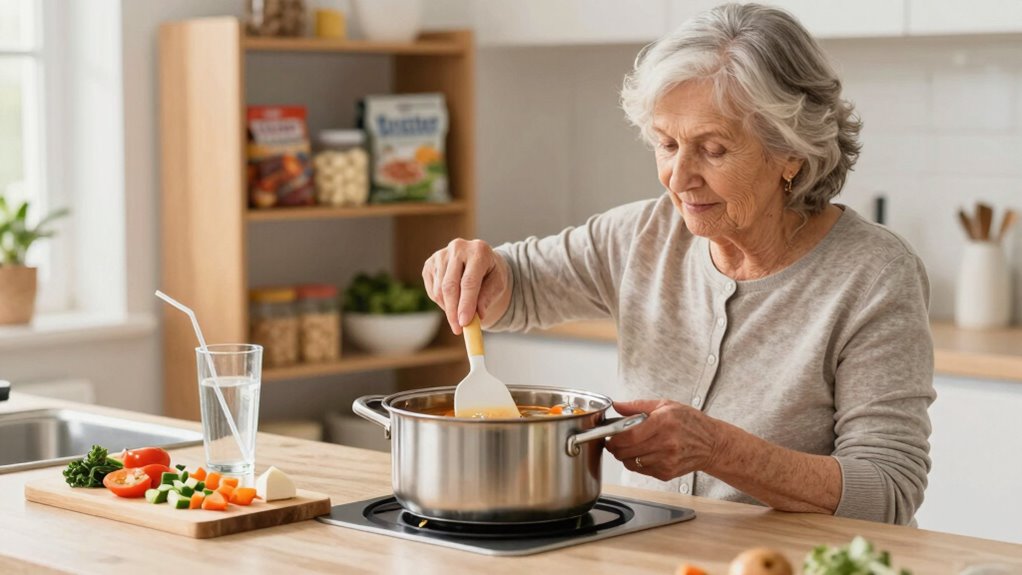
Preparing meals can be challenging for seniors who tire quickly, but with some simple adjustments, you can make the process easier and less exhausting. One of the best ways to lessen the effort is to focus on efficient meal prep. Planning meals ahead of time allows you to reduce the number of steps you need to take during cooking and minimizes the time spent on repetitive tasks. Batch-cooking and pre-portioning ingredients can also save energy, so you’re not constantly chopping or measuring fresh ingredients. You might consider preparing several meals at once and storing them in the fridge or freezer, which means less cooking on busy or tiring days. Simplifying recipes by choosing fewer ingredients or using pre-cut vegetables can make meal prep faster and less physically demanding.
Simplify meal prep with planning, batch-cooking, and pre-portioned ingredients to save energy and reduce fatigue.
Using adaptive utensils is another smart strategy. These specially designed tools help overcome common difficulties like gripping, squeezing, or controlling standard utensils. For example, utensils with larger, non-slip handles provide better grip and reduce strain on your hands. Utensils with weighted or angled features can make scooping and cutting easier, allowing you to maintain control without excessive effort. Incorporating adaptive utensils into your daily routine minimizes frustration and helps you maintain independence while preparing your meals. You’ll find that tasks like stirring, cutting, or serving become much more manageable with the right tools in place. Additionally, choosing ergonomic kitchen tools can significantly improve comfort and safety during meal prep.
It’s also helpful to set up your kitchen in a way that reduces physical strain. Keep frequently used items within easy reach, and organize your workspace to minimize unnecessary movement. Using a sturdy, lightweight cutting board and ergonomic knives can make chopping safer and less tiring. Consider installing pull-out shelves or lazy Susans in cabinets so you don’t have to stretch or bend excessively to access ingredients. If standing for long periods is difficult, use a high stool or a kitchen chair to sit while preparing food. These small adjustments can make a significant difference in conserving your energy during meal prep. Incorporating indoor air quality improvements, like proper ventilation, can help create a more comfortable environment during cooking sessions. Additionally, selecting ergonomic kitchen setup options can further reduce physical stress and enhance safety.
Finally, don’t forget to pace yourself. Take breaks when needed, and avoid trying to do everything at once. Preparing simple, nutritious meals that require minimal effort can keep you well-nourished without draining your energy reserves. By combining strategic meal prep, adaptive utensils, and thoughtful kitchen organization, you’ll find cooking becomes less taxing, helping you stay independent and enjoy your meals without unnecessary fatigue.
adaptive ergonomic kitchen utensils
As an affiliate, we earn on qualifying purchases.
As an affiliate, we earn on qualifying purchases.
Frequently Asked Questions
What Are Some Quick, Nutritious Snack Options for Seniors?
You should offer healthy snacks that are quick and easy to prepare. Think yogurt with fresh fruit, trail mix, cheese and whole-grain crackers, or veggie sticks with hummus. These options provide essential nutrients without requiring much effort. Keep easy recipes on hand, like smoothies or no-bake energy bites, so seniors can enjoy nutritious snacks without tiring themselves. These simple choices support their energy levels and overall health.
How Can I Ensure Meals Are Visually Appealing for Seniors?
You can make meals visually appealing by embracing colorful plating, which adds joy and stimulation to each bite. Use a variety of fresh, vibrant vegetables and fruits to brighten dishes and evoke positive feelings. Maintain portion control to prevent overwhelm, ensuring meals look inviting without appearing intimidating. Thoughtfully arranging food, with attention to balance and color, helps seniors feel more engaged and enthusiastic to enjoy their meals, turning eating into a delightful experience.
Are There Specific Foods to Avoid for Seniors With Limited Energy?
You should avoid foods that cause sluggishness or digestive discomfort, like heavy, greasy, or processed options. Instead, focus on dietary restrictions that limit sugar or salt intake. Incorporate energy-boosting foods such as lean proteins, whole grains, fruits, and vegetables to help seniors maintain their energy levels. Keeping meals light, nutritious, and easy to digest guarantees they stay energized without feeling overwhelmed or exhausted during meals.
How Can I Involve Seniors in Meal Planning Safely?
Ever wondered how to involve seniors in meal prep safely? Start by discussing their dietary restrictions and preferences, then invite them to choose simple recipes. Break tasks into manageable steps, like washing veggies or setting the table. Keep activities light and short, ensuring they don’t tire easily. This approach fosters independence and makes meal planning enjoyable, while respecting their limits and promoting a sense of involvement and control.
What Tools Can Help Seniors Prepare Meals More Easily?
You can make meal prep easier for seniors by providing adaptive utensils with easy-to-grip handles and ergonomic cookware designed to reduce strain. These tools help seniors cut, stir, and serve comfortably, minimizing fatigue. Investing in lightweight, non-slip utensils and pots with comfortable handles can boost independence. These tools streamline cooking, making it safer and less tiring, so seniors can enjoy preparing meals without feeling overwhelmed or exhausted.
As an affiliate, we earn on qualifying purchases.
Conclusion
By simplifying snacks, stirring soups, and stacking sandwiches, you turn mealtime into a manageable moment. Making meals more manageable means more meaningful moments, minimizing fatigue and maximizing flavor. With a little planning and patience, you’ll create comforting, convenient cuisine that keeps seniors satisfied and stress-free. Remember, small steps create big smiles, turning tedious tasks into tender, tasty treats. So, serve with sensitivity, streamline with care, and savor the simple joys of shared meals.
As an affiliate, we earn on qualifying purchases.
As an affiliate, we earn on qualifying purchases.
Fall Picks
fall essentials
As an affiliate, we earn on qualifying purchases.