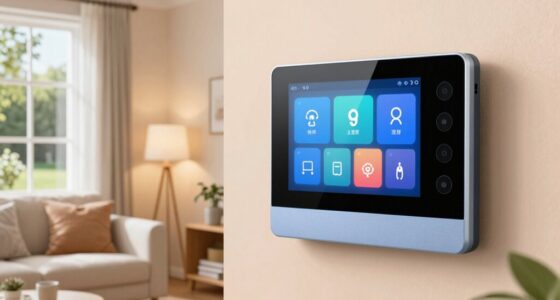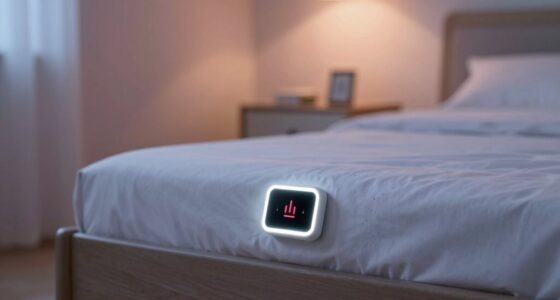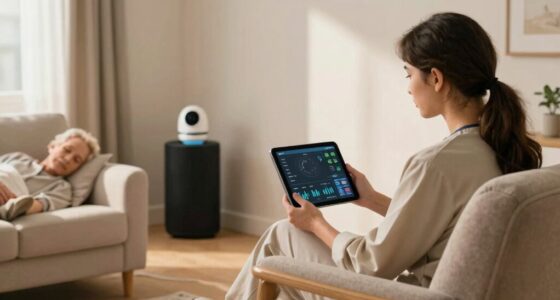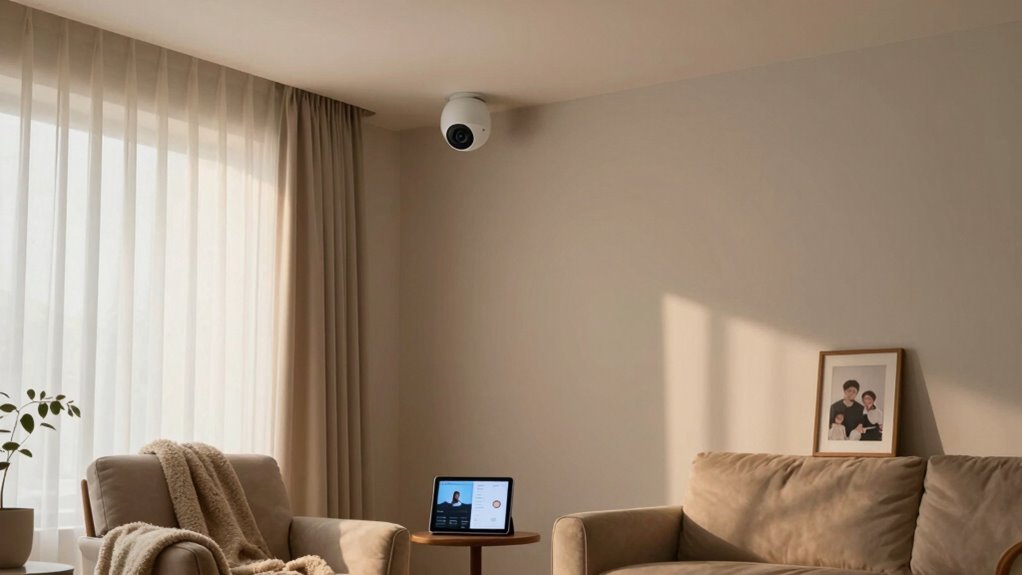

Home monitoring systems can help you keep your aging parents safe while respecting their privacy. They monitor essential signs, detect falls, and alert caregivers or emergency services if needed. Many systems include customizable privacy controls, allowing you to choose what data’s shared and when. Advanced sensors analyze behavior to catch early signs of trouble, all while promoting independence. To find the right balance that suits your family, keep exploring how these features work together to support safety and privacy effectively.
Open a free Amazon Business account
Business pricing, bulk buying and tax-exempt orders.
As an affiliate, we earn on qualifying purchases.
Key Takeaways
- Customize privacy controls to share only necessary health data with caregivers and healthcare providers.
- Use advanced sensors and behavioral analytics to detect hazards without invasive monitoring.
- Enable emergency alerts and quick communication features for safety without compromising privacy.
- Establish open communication with aging parents to align safety needs with their comfort levels.
- Balance continuous monitoring with selective data sharing to maintain independence and trust.
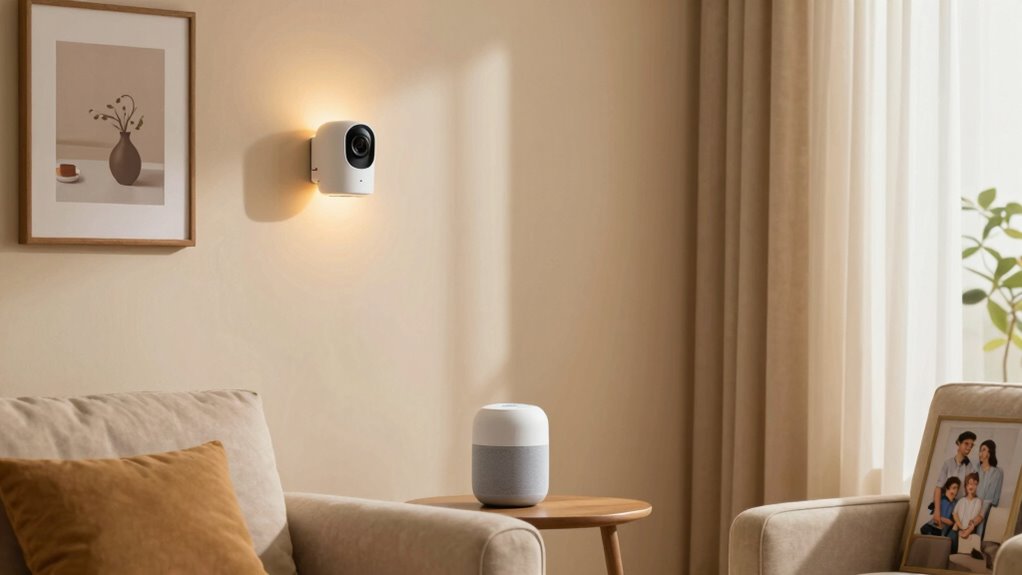
Have you ever wondered how to keep your home safer without constantly being there? Home monitoring systems can give you that peace of mind, especially when caring for aging parents. These systems work behind the scenes, allowing you to keep an eye on your loved ones while respecting their independence. One way they do this is through remote health features. With remote health, you can monitor vital signs, medication reminders, and daily activity levels from your smartphone or computer. This means you don’t have to be physically present to guarantee your parents are doing well. If something seems off—like irregular heart rates or missed medications—you can quickly alert them or coordinate with healthcare providers. This setup offers reassurance without intrusive check-ins, letting your parents feel more in control of their daily routines. Additionally, some systems include privacy controls that let you customize what information is shared, helping maintain trust and autonomy. Incorporating secure data management can further enhance privacy and ensure sensitive information is protected. Many systems also utilize advanced sensor technology that can detect subtle changes in behavior or environment, providing early alerts that might prevent emergencies. For example, sensor accuracy is crucial in distinguishing between normal activity and potential hazards, which enhances the reliability of alerts. Using behavioral analytics, these systems can identify unusual patterns that may indicate health issues before they become critical. Emergency alerts are another essential component of modern home monitoring systems. These alerts enable your loved ones to summon help instantly if they fall, feel unwell, or encounter other emergencies. With a simple press of a button or even voice activation, emergency alerts notify you and emergency services immediately. This rapid response can be life-saving in situations where every second counts. Plus, many systems integrate sensors that detect unusual activity or falls automatically, alerting you even if your parents are unable to press an emergency button. Knowing that help is just a push away can ease your worries, especially if your parents live alone or have mobility challenges. While these features greatly boost safety, you also need to think about privacy. Striking the right balance is essential—you want to protect your loved ones without making them feel surveilled. Many systems allow customizable privacy settings, so you can choose what data is shared and when. For example, you might opt for remote health monitoring during certain hours or only activate emergency alerts when needed. Open communication with your parents about how the system works and why it’s in place can help them feel comfortable and in control of their privacy. Remember, the goal is to create a supportive safety net that respects their independence while providing the security they need. With thoughtful setup and ongoing dialogue, a home monitoring system can be a powerful tool to help you care for your aging parents without crossing boundaries.
Frequently Asked Questions
How Do Monitoring Systems Impact Family Dynamics?
Monitoring systems can profoundly impact family dynamics by influencing trust and emotional well-being. You might find that they foster a sense of safety, but they can also create feelings of mistrust or invasion of privacy if not used thoughtfully. Open communication helps maintain family trust, ensuring emotional well-being remains intact. When everyone understands the purpose and limits of monitoring, these systems can support your loved ones without causing unnecessary tension.
Are There Legal Restrictions on Monitoring Aging Parents?
Yes, there are legal restrictions on monitoring aging parents. You need to take into account legal regulations that protect individuals’ rights and data privacy laws that govern how personal information is collected and used. Before installing monitoring systems, make sure you’re compliant with local laws and obtain your parents’ consent if required. Being aware of these legal considerations helps you balance safety with respecting their privacy and autonomy.
How Can Privacy Be Maintained With Continuous Monitoring?
You can maintain privacy with continuous monitoring by implementing strict consent protocols, ensuring your parents agree to the system’s use. Use data encryption to protect their information from breaches, and limit monitoring to necessary areas and times. Transparent communication reassures your parents, and regularly reviewing privacy settings helps balance safety with respect for their independence. This way, you prioritize their safety without compromising their privacy.
What Are the Costs Associated With Home Monitoring Systems?
The costs of home monitoring systems vary based on features and providers. You should do a cost comparison to find options that suit your budget. Installation expenses can range from a one-time fee to included setup costs. Keep in mind that more advanced systems with cameras or health sensors tend to be pricier. Overall, balancing your budget with the level of safety needed is key when choosing a monitoring system.
How Do Monitoring Systems Affect Seniors’ Independence?
Research suggests monitoring systems can both support seniors’ independence and challenge their technological privacy. You might find that these systems enable your loved ones to live independently longer by alerting you to emergencies, yet they may also feel invasive, threatening privacy. Striking a balance involves choosing technology that preserves independence while respecting personal boundaries, ultimately empowering seniors without compromising their dignity or autonomy.
Conclusion
By choosing the right home monitoring system, you can guarantee your aging parents feel safe without sacrificing their privacy. Imagine Sarah installing discreet sensors in her parents’ home, giving her peace of mind while respecting their independence. With thoughtful planning, you strike a balance that prioritizes both safety and dignity. Remember, open communication about monitoring helps build trust, making your loved ones feel secure and respected in their own space.
Flea & tick season Picks
flea and tick prevention
As an affiliate, we earn on qualifying purchases.