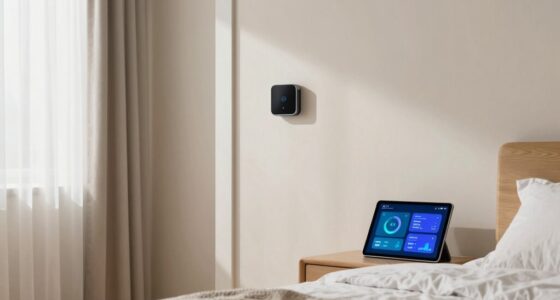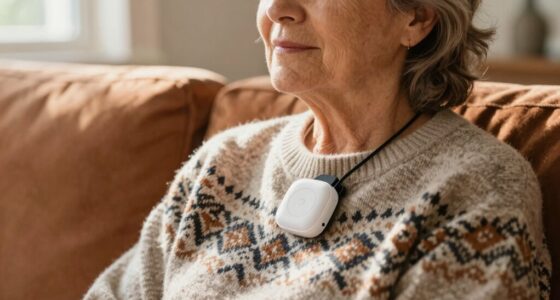
Relying only on fall detection technology leaves you vulnerable because it can alert others after a fall, but it doesn’t prevent falls from happening in the first place. You need to combine it with safety measures like home modifications, good lighting, and mobility support. Staying proactive in your safety plan helps lower risks and keeps you prepared. If you want to discover how to create a truly thorough safety approach, keep exploring the options available.

Turn quiet afternoons into listening time
- Thousands of audiobooks, podcasts and originals
- Listen on your phone, tablet or Echo — also offline
- Cancel anytime
Key Takeaways
- Fall detection devices only alert after a fall, not prevent the fall itself.
- Environmental hazards and safety risks remain unaddressed without modifications.
- Physical activity and health management are crucial for reducing fall risk, beyond technology.
- Emergency response plans are necessary since detection alone cannot ensure timely help.
- A comprehensive safety plan combines technology, environmental adjustments, and behavioral strategies for full protection.
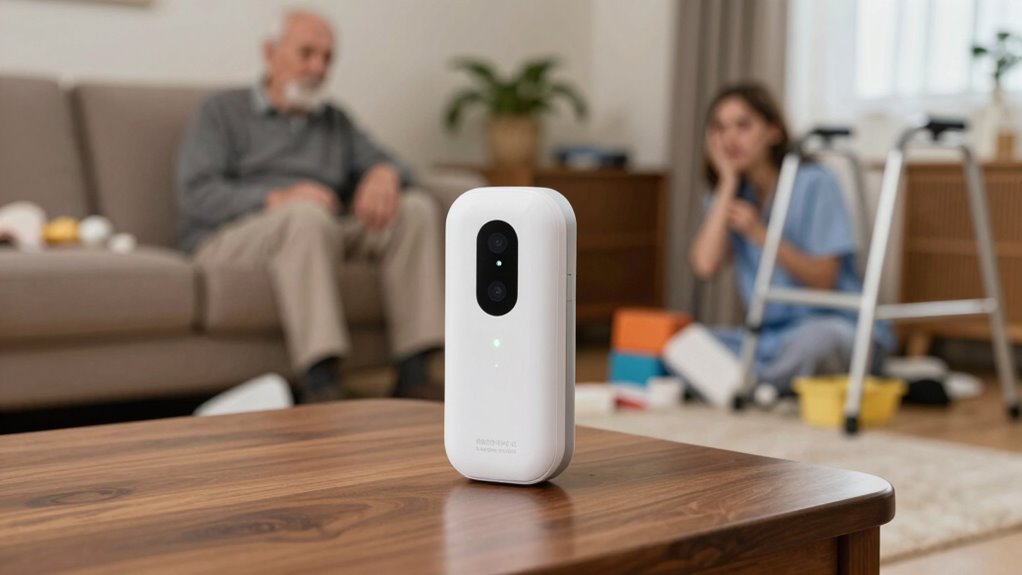
Falls can happen unexpectedly, especially among seniors or individuals with mobility challenges, making fall detection technology an essential part of safety plans. But relying on fall detection alone isn’t enough to guarantee thorough safety. You need to consider emergency preparedness as a whole, which involves more than just catching falls when they happen. Fall detection devices are valuable—they alert caregivers or emergency services immediately when a fall occurs—but they don’t prevent falls from happening in the first place. If your goal is to protect yourself fully, you must adopt a broader approach that combines technology with proactive safety measures.
Fall detection is vital but must be part of a broader safety and prevention strategy.
Technology integration plays a pivotal role in creating a complete safety plan. While fall detection systems can be lifesavers, they work best when paired with other safety features like grab bars, non-slip mats, and good lighting. These preventive tools help reduce the likelihood of falls occurring initially. Electric bikes, for example, can enhance mobility and independence but require proper safety measures to prevent accidents. Relying solely on detection technology can lead to a false sense of security, causing you to overlook the importance of environmental modifications and behavioral adjustments that promote safety. A thorough plan involves evaluating your living space for hazards, implementing safety measures, and guaranteeing that emergency contacts and services are always accessible. Additionally, sound health practices such as regular exercise and balance training can significantly lower fall risks. Incorporating home safety assessments can further identify potential hazards and ensure your environment remains secure. It’s also important to maintain clear pathways in your home to reduce tripping hazards and improve overall safety.
Emergency preparedness extends beyond just having fall detection devices in place. It means knowing what steps to take immediately after a fall, such as how to call for help or alert neighbors. It also involves regular health check-ups, medication management, and physical activity routines designed to improve strength and balance. These proactive steps can greatly lower fall risks and help you respond effectively if a fall does occur. Technology, in this context, is an essential tool—not a standalone solution. It works best when integrated into a broader safety strategy that includes education, environmental adjustments, and health management.
In short, fall detection is a key component of a safety plan, but it shouldn’t be the only one. To truly protect yourself, you need to embrace thorough emergency preparedness that incorporates various safety measures and effective technology integration. This combined approach offers peace of mind, knowing that you’re not just reacting to falls but actively working to prevent them and respond swiftly if they do happen. That’s the key to a resilient, complete safety plan—one that keeps you safer, longer.
As an affiliate, we earn on qualifying purchases.
Frequently Asked Questions
How Cost-Effective Are Comprehensive Safety Plans Compared to Fall Detection Systems?
Detailed safety plans are generally more cost-effective than fall detection systems alone because they include proactive measures, regular assessments, and personalized safety strategies, reducing long-term risks and costs. Conducting a cost analysis helps you prioritize safety investments wisely, ensuring resources are allocated efficiently. Although initial expenses may be higher, a full safety plan minimizes fall-related injuries, ultimately saving money and enhancing overall safety for you or your loved ones.
Can Fall Detection Devices Be Integrated With Other Home Safety Technologies?
Yes, fall detection devices can be integrated with other home safety technologies in your smart home. You can set up emergency alerts that activate when a fall is detected, notifying caregivers or emergency services instantly. This integration enhances safety, allowing you to automate responses like opening doors or turning on lights. Combining fall detection with smart home systems provides an all-encompassing safety network, giving you peace of mind and quicker assistance during emergencies.
What Training Is Needed for Users to Effectively Utilize Safety Devices?
You need to get familiar with the device’s usability, so you can confidently operate it when needed. User education is essential, covering how to wear, activate, and troubleshoot the safety device. Training sessions should be clear and hands-on, helping you become comfortable with all features. Remember, it’s better to learn the ropes now than to be caught off guard later, because a little preparation goes a long way.
Are There Privacy Concerns With Monitoring Systems in Safety Plans?
Yes, privacy concerns and data security are important when using monitoring systems in safety plans. You might worry about who accesses your personal information and how it’s protected. To address this, guarantee the system has strong encryption and privacy policies. Regularly review your privacy settings and understand how your data is used. Staying informed helps you balance safety benefits with maintaining your privacy and peace of mind.
How Often Should Safety Equipment Be Inspected or Replaced?
You should inspect your safety equipment regularly, at least once every three to six months, to guarantee its reliability. Follow recommended inspection schedules from manufacturers, and check for signs of wear or damage that could affect equipment durability. Replace any items that show signs of deterioration immediately to maintain safety. Regular inspections help prevent failures during emergencies, ensuring your safety plan remains effective and trustworthy.
As an affiliate, we earn on qualifying purchases.
Conclusion
Remember, relying solely on fall detection is like trusting Icarus to avoid the sun—you’re missing the broader picture. A thorough safety plan acts as your Ariadne’s thread, guiding you through potential hazards and offering proactive solutions. While fall detection can alert you after a fall, it’s only part of the maze. Embrace a full strategy, and you’ll navigate life’s risks with the wisdom of Theseus, not just the alarm of Daedalus.
As an affiliate, we earn on qualifying purchases.
As an affiliate, we earn on qualifying purchases.
Fall Picks
fall essentials
As an affiliate, we earn on qualifying purchases.