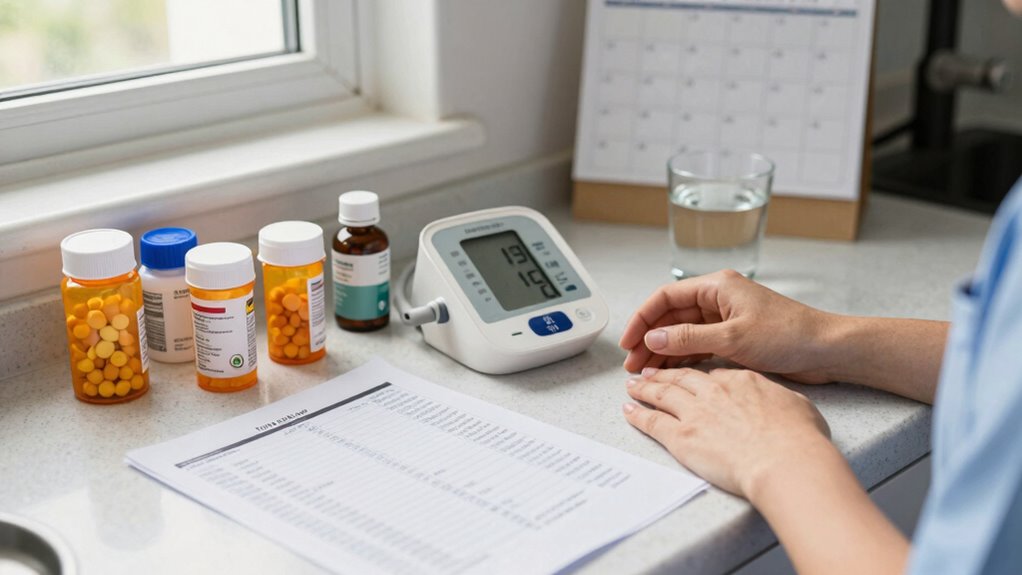

When attending a medication review, bring a detailed list of all medications, including prescriptions, OTC drugs, vitamins, and supplements with dosages and reasons for each. Carry medication containers with labels intact and note recent changes. Keep a record of adherence, missed doses, side effects, and any storage issues. Bring relevant lab results and documentation of concerns or interactions. Staying organized can be tricky, but there’s more to contemplate for a thorough review—keep going to learn how to be fully prepared.

Get comfort and care essentials delivered free — and shop member deals
- Fast, free delivery on millions of items
- Access to Prime Big Deal Days deals on October 6–7
- Prime Video, Amazon Music and more included
Key Takeaways
- Complete list of all current medications, including dosages, frequencies, and reasons for use.
- Medication containers with labels and any management systems like pill organizers.
- Records of adherence, missed doses, side effects, and symptom details.
- Recent lab results, diagnostic tests, and notes on medication-related issues.
- Notes on storage needs, recent changes, and reference materials for proper medication management.

Caregivers play a crucial role in managing medications for those they care for, often serving as the first line of defense in ensuring safe and effective treatment. When attending a medication review, it’s important to come prepared with specific information and supplies that will help healthcare professionals assess and optimize the medication regimen. You should bring a detailed list of all current medications, including prescription drugs, over-the-counter medicines, vitamins, and supplements. This list helps the healthcare provider see the full picture and identify potential interactions or redundancies. Be sure to include the dosages, frequency, and the reasons each medication was prescribed, as well as any recent changes.
Caregivers should bring a detailed medication list and notes to ensure safe, effective treatment during reviews.
Medication adherence is a key focus during reviews, so bring a record of how your loved one has been taking their medications. Note any missed doses, late administrations, or difficulties in following the prescribed schedule. This information allows the healthcare provider to determine if adjustments are necessary to improve adherence. If your loved one has experienced any issues with side effects, make a detailed note of these symptoms, including when they started, their severity, and whether they improve or worsen over time. Side effect management is essential for maintaining the medication’s benefits and your loved one’s quality of life, so sharing this information helps the provider tailor the treatment plan accordingly. Additionally, understanding the importance of proper medication storage can help prevent accidental ingestion or deterioration of medicines. Proper storage can also mitigate risks associated with refrigeration or temperature control, which is critical for certain medications.
Recognizing the significance of medication policies and guidelines can support better management and compliance at home, ensuring medications remain effective and safe. Bring any medication containers with labels intact. This helps confirm the exact medications, dosages, and instructions. If your loved one uses a pill organizer or has a home medication management system, bring that along as well, so the healthcare provider can review and suggest improvements if needed. It’s also helpful to keep a record of the medication schedule, which can identify patterns or issues with timing. Don’t forget to carry any recent lab results or diagnostic tests that might impact medication decisions.
Ultimately, coming prepared with thorough documentation and a clear understanding of your loved one’s medication routine enables the healthcare provider to conduct a comprehensive review. Your active participation ensures that medication adherence remains high and side effects are effectively managed, promoting better health outcomes and a safer treatment plan.
As an affiliate, we earn on qualifying purchases.
Frequently Asked Questions
How Often Should Medication Reviews Be Scheduled?
You should schedule medication reviews at least every six to twelve months, depending on the person’s health condition. Regular reviews help you check medication timing, ensuring dosages are correct, and facilitate side effect management. If there are recent changes in health, new symptoms, or concerns about side effects, consider scheduling reviews sooner. These check-ins keep your loved one’s medications effective and safe, promoting better health outcomes.
Who Should Be Present During the Review?
Research suggests that involving the primary caregiver, the patient, and their healthcare provider during medication reviews enhances safety. You should guarantee these key people are present, as they can discuss medication interactions and side effect management effectively. Including everyone helps identify potential issues early, clarifies medication purposes, and ensures all concerns are addressed. This team approach promotes safer, more effective medication use, reducing risks and improving health outcomes.
What Specific Documents or Records Are Needed?
You should bring a list of current medications, including dosages and frequencies, to make certain medication adherence is on track. Also, bring any recent pharmacy records or medication bottles. These documents help your healthcare provider assess how well your loved one is managing side effects and whether adjustments are needed. Keeping track of side effect management notes and medication changes will support a thorough review and ideal care planning.
How Can Caregivers Prepare for Unexpected Questions?
To prepare for unexpected questions, you should practice clear, concise responses and familiarize yourself with common medication concerns. Think ahead about potential emergency questions, like side effects or missed doses, and plan your answers. Use clarification strategies—such as asking for specific details or repeating questions—to guarantee understanding. Staying calm and confident helps you communicate effectively, making it easier to handle surprises during medication reviews.
What Should Be Done if a Medication Is Discontinued?
When a medication is discontinued, you should follow proper discontinuation procedures to guarantee safety and clarity. This involves communicating with healthcare providers about the medication shift, confirming the reasons for stopping, and noting any withdrawal symptoms or side effects. Keep updated records and monitor your loved one closely during this period. Proper management prevents confusion and affirms the medication change supports their health goals effectively.
medication management record book
As an affiliate, we earn on qualifying purchases.
As an affiliate, we earn on qualifying purchases.
Conclusion
Think of a medication review as a trusted lighthouse guiding your loved one safely through foggy waters. By bringing the right information—like a sturdy lantern—you help illuminate potential hazards and chart a clear course forward. Your preparation guarantees the journey is smooth and safe. With each review, you’re steering with confidence, keeping threats at bay, and guiding your loved one toward calmer seas. Your active role is the beacon that ensures safe passage every time.
reusable medication containers with labels
As an affiliate, we earn on qualifying purchases.
As an affiliate, we earn on qualifying purchases.
As an affiliate, we earn on qualifying purchases.
Halloween Picks
halloween
As an affiliate, we earn on qualifying purchases.