TL;DR

Get comfort and care essentials delivered free — and shop member deals
- Fast, free delivery on millions of items
- Access to Prime Big Deal Days deals on October 6–7
- Prime Video, Amazon Music and more included
UC Davis Health researchers are testing whether an AI-assisted home medication dispenser can help adults with mild cognitive impairment or dementia take prescribed drugs and give caregivers clearer confirmation. The one-year trial will enroll 50 people, comparing the device plus training and support with participants’ usual medication routines; results are not yet available.
UC Davis Health researchers are testing an AI-assisted medication dispenser to see whether it helps older adults with mild cognitive impairment or dementia take prescriptions as directed and lets caregivers check whether doses were taken. The trial plans to enroll 50 participants, with half using the device alongside training and support and half continuing their usual medication routine.
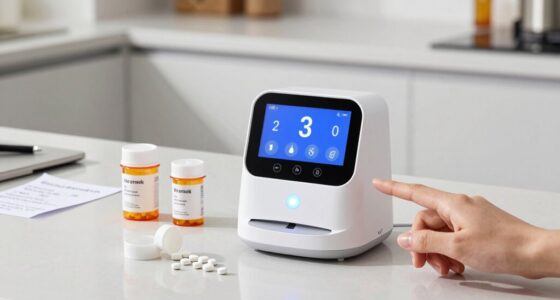
The countertop device, made by HiDO Health, is about 17 inches tall and is designed to hold up to a 90-day supply of as many as seven medications. According to the report, it is intended to dispense the right medication at the scheduled time, verify who is taking it and record whether it was taken, while sharing information with approved caregivers. Researchers say it goes beyond an alarm or pill organizer, which may indicate that a pill was removed without establishing that it was swallowed.
Researchers will follow participants for one year and measure medication adherence, cognition and daily functioning. They will also collect blood samples to track health indicators, including cholesterol and glucose, relevant to conditions treated with participants’ medications. A UC Davis Health pharmacy team will review medications for safety before participants begin the study.
The study is funded by a $2.48 million National Institute on Aging grant through its Phase II Small Business Innovation Research program. The researchers, neuropsychologists Alyssa Weakley and Sarah Tomaszewski Farias, aim to test whether the device works in a clinical setting and learn which participants may benefit and how caregivers can best use it.
Testing Medication Support at Home
For an older adult with memory problems, a missed or delayed dose can affect routine care and leave family members unsure whether medication was taken. The device is designed to address that uncertainty by pairing dispensing with a record that approved caregivers can check remotely. If the approach proves useful, it could offer families a way to monitor medication routines while supporting an older adult’s ability to remain at home.
That possibility is not yet an established outcome. This trial is intended to produce evidence on adherence and other measures, rather than assume that a device’s features translate into better health. The findings may help clinicians and families judge whether this kind of technology is practical and beneficial for people with different levels of cognitive impairment.
AI medication dispenser for seniors
As an affiliate, we earn on qualifying purchases.
As an affiliate, we earn on qualifying purchases.
From Pill Organizers to Recorded Doses
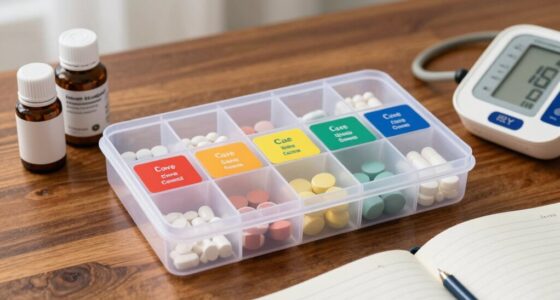
Many existing tools help people sort medications or remember scheduled doses. Alarms can prompt someone to take a pill, while a conventional pillbox can show that medication has been removed. Neither necessarily confirms that the person took it. The HiDO system is being tested on the premise that dispensing records and caregiver access could help fill that gap.
The report describes Marianne Blake, 88, who lives independently and uses a pillbox, and her daughter, Patty Soulsby, who worries about missed or delayed medication. The report cites estimates that 4.3 million older Americans live alone with memory and thinking problems. It also cites research linking medication errors with a higher likelihood of hospitalization, but the trial itself will test the device’s performance rather than establish that it prevents hospital stays.
Researchers say independent evaluation matters because devices marketed to support daily function may not have strong evidence behind them. Tomaszewski Farias noted that some products are sold without research showing whether they work. The source report says earlier peer-reviewed research offered preliminary evidence that HiDO was practical, accurate and usable; the current trial is intended to assess the device further in a larger study.
“Mom’s pretty good about taking her morning pills, but sometimes she won’t take them until 2 p.m. or not at all. The evening pills are the harder ones to remember to take.”
— Patty Soulsby, whose mother is participating in the report
automatic pill organizer with reminder
As an affiliate, we earn on qualifying purchases.
As an affiliate, we earn on qualifying purchases.
Trial Results Are Still Pending
No results from this trial are reported yet. It is not clear whether the device will improve medication adherence compared with usual routines, change participants’ cognition or daily functioning, or affect the blood indicators researchers plan to track. The study’s 50-person enrollment also means the findings will be based on a limited participant group.
The report does not specify the trial’s start date, when enrollment will be complete, or when results are expected. It also does not establish whether the system will reduce medication errors, hospitalizations, caregiver workload or costs. Those outcomes should not be treated as proven benefits before the researchers report their findings.
medication adherence device for elderly
As an affiliate, we earn on qualifying purchases.
As an affiliate, we earn on qualifying purchases.
One Year of Participant Follow-Up
Researchers plan to enroll 50 people with conditions ranging from mild cognitive impairment to moderate dementia. Half will receive the dispenser, training and support; the other half will continue their usual medication routine. Participants will then be followed for a year as the team tracks adherence, cognition, daily functioning and selected blood measures.
The next meaningful update will be whether the trial completes enrollment and what the researchers find after follow-up. Until results are published or otherwise reported, the device’s effectiveness for this group remains under study.
smart medication management system
As an affiliate, we earn on qualifying purchases.
As an affiliate, we earn on qualifying purchases.
Key Questions
What is the clinical trial testing?
It is testing whether an AI-assisted home medication dispenser can help adults with mild cognitive impairment or dementia take prescription drugs as directed and provide caregivers with information about whether doses were taken.
How many people will take part?
The trial plans to enroll 50 participants. Half will use the device with training and support, while half will continue their usual medication routine.
What does the device do?
The HiDO device is designed to dispense scheduled medications, verify who is taking them, record whether they were taken and share information with approved caregivers. The study will assess how it performs; those capabilities do not establish that it improves health outcomes.
Has the trial shown that the device works?
No trial results are included in the report. Researchers will follow participants for one year and measure adherence, cognition and daily functioning, among other indicators.
Who is funding the study?
The trial is supported by a $2.48 million National Institute on Aging grant through the agency’s Phase II Small Business Innovation Research program.
Source: rss
Halloween Picks
halloween
As an affiliate, we earn on qualifying purchases.