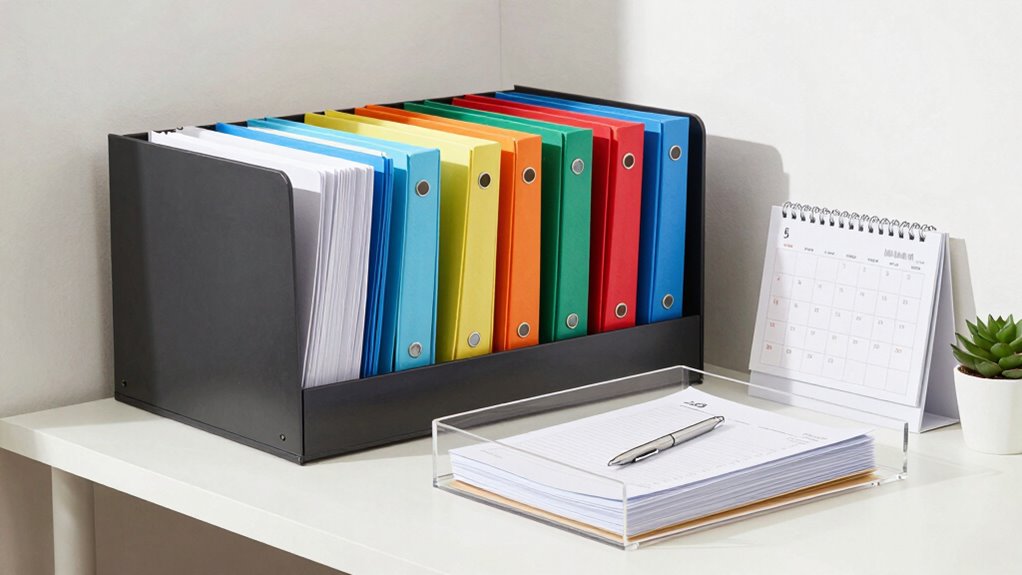

To keep your important papers easy to find, create a well-organized filing system that uses clearly labeled folders, whether physical or digital. Use categories like bills, medical records, or legal documents, and store everything in designated locations. Regularly review and purge outdated papers to prevent clutter. Maintain consistency with labels and storage methods, and back up digital copies for quick access from any device. If you keep these strategies in mind, you’ll master simple, stress-free document management.

Turn quiet afternoons into listening time
- Thousands of audiobooks, podcasts and originals
- Listen on your phone, tablet or Echo — also offline
- Cancel anytime
Key Takeaways
- Implement a consistent filing system with clearly labeled folders and categories for quick identification.
- Use both digital and physical storage methods to ensure easy access and backup.
- Regularly review and purge outdated documents to keep the system streamlined.
- Create a logical organization hierarchy, such as by year or document type, for efficient retrieval.
- Maintain and update labels and storage areas regularly to ensure ongoing accessibility.
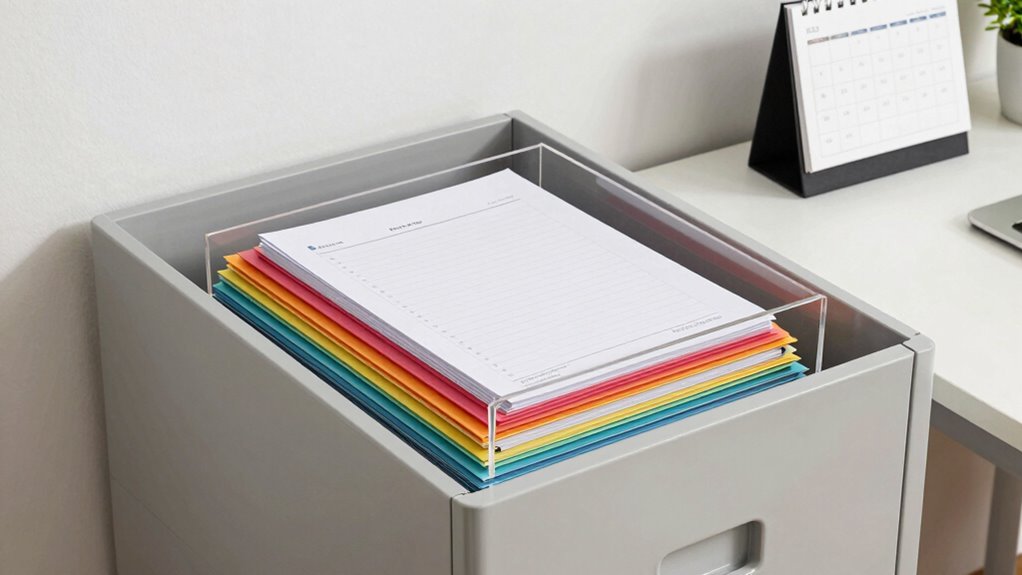
Ever find yourself digging through piles of papers just to locate an important document? It’s frustrating, time-consuming, and can make you feel overwhelmed. The key to avoiding this chaos is establishing a system that keeps your important papers organized and easy to find. Whether you prefer digital organization or paper storage, creating an efficient filing system is essential. Digital organization can save space and make searching for documents quick and effortless. By scanning important papers and storing them in clearly labeled folders or cloud services, you can access what you need from any device, anytime. This method reduces clutter and minimizes the risk of losing important papers. On the other hand, if you’re more comfortable with physical copies, proper paper storage is equally critical. Invest in sturdy, labeled file folders and a filing cabinet or storage boxes. Assign each category of documents—such as bills, medical records, or legal papers—to its own folder or box. Keep everything in a designated, easily accessible spot so you don’t have to search through stacks every time you need a specific paper. Regularly reviewing and purging outdated or unnecessary papers can prevent clutter from building up again. Utilizing clear labels on folders or digital file names helps you identify contents at a glance. For digital files, create a logical folder hierarchy—perhaps by year, category, or importance—to streamline your searches. Physical papers benefit from alphabetized or color-coded labels, making retrieval even faster. Having a well-organized filing system can also help you quickly locate documents during emergencies or urgent situations. When scanning papers, make sure the digital copies are high quality and backed up securely to avoid losing important information. Incorporating digital storage options can further enhance your document management and accessibility. For physical papers, keep them in a safe, organized place away from potential damage like water or fire. Additionally, understanding comogenic ratings of skincare products can help you choose non-pore-clogging options, which can be beneficial if you’re organizing your skin care routine alongside your documents. Implementing a systematic approach to your organization can further enhance efficiency and ensure your documents stay well-maintained over time. Developing a consistent filing routine can help you stay on top of new documents and keep your system functional. Remember, the goal is to make your system intuitive so you spend less time searching and more time focusing on what truly matters. Taking a little time to organize now will pay off in the long run, saving you stress and frustration when you need that one essential document. A well-thought-out system ensures your papers, whether digital or physical, are always within reach, giving you peace of mind and a clutter-free space.
As an affiliate, we earn on qualifying purchases.
Frequently Asked Questions
How Often Should I Review and Reorganize My Important Papers?
You should review and reorganize your important papers at least once a year to maintain good document organization. Regular paper sorting helps you stay on top of current documents and discard outdated or unnecessary files. If you experience major life changes or significant financial events, consider doing a quick check more often. This proactive approach guarantees your files remain accessible, accurate, and clutter-free, making it easier to locate what you need quickly.
What Is the Best Way to Label My Filing System?
Think of your filing system like a well-organized library; clarity is key. Use a label hierarchy with clear categories, and incorporate color coding to distinguish sections at a glance. Keep labels concise but descriptive, and guarantee fonts are uniform for consistency. This approach helps you quickly locate documents, much like a librarian finding a book effortlessly, making your system both functional and visually intuitive.
How Can I Protect Important Papers From Damage?
To protect your important papers from damage, store them in a fireproof safe to secure against fire and water damage. For added security, consider using document encryption if you keep digital copies or sensitive information stored electronically. Keep the safe in a secure, easily accessible location, and regularly back up digital files. This combo ensures your documents stay safe from physical harm and unauthorized access.
Should I Keep Digital Copies of All Important Documents?
Yes, you should keep digital copies of all important documents. Creating a digital backup guarantees you have access even if the originals are lost or damaged. Use cloud storage for secure, easy access from anywhere, and consider saving copies on an external drive for added protection. This way, your important papers stay safe, organized, and readily available whenever you need them.
What Is the Recommended Storage Location for Security?
You should store your important papers in a secure vault or fireproof cabinet to protect them from theft, fire, or natural disasters. While it may seem inconvenient, this safeguards your essential documents and offers peace of mind during emergencies. Don’t let a disaster ruin your memories or critical information—choose a sturdy, fire-resistant storage solution that keeps your papers safe and accessible when you need them most.
digital document storage and backup
As an affiliate, we earn on qualifying purchases.
As an affiliate, we earn on qualifying purchases.
Conclusion
Think of your papers as treasures in a well-guarded vault, each piece in its perfect place. When you organize with care, you become the master of your own chaos, like a captain steering through stormy seas to calm waters. Clear labels and designated spots are your compass, guiding you effortlessly. Keep this rhythm steady, and you’ll always find what you need—just like a hero finding their way home, no matter how wild the journey.
As an affiliate, we earn on qualifying purchases.
document scanning and organization tools
As an affiliate, we earn on qualifying purchases.
As an affiliate, we earn on qualifying purchases.
Cold & flu season Picks
humidifiers
As an affiliate, we earn on qualifying purchases.