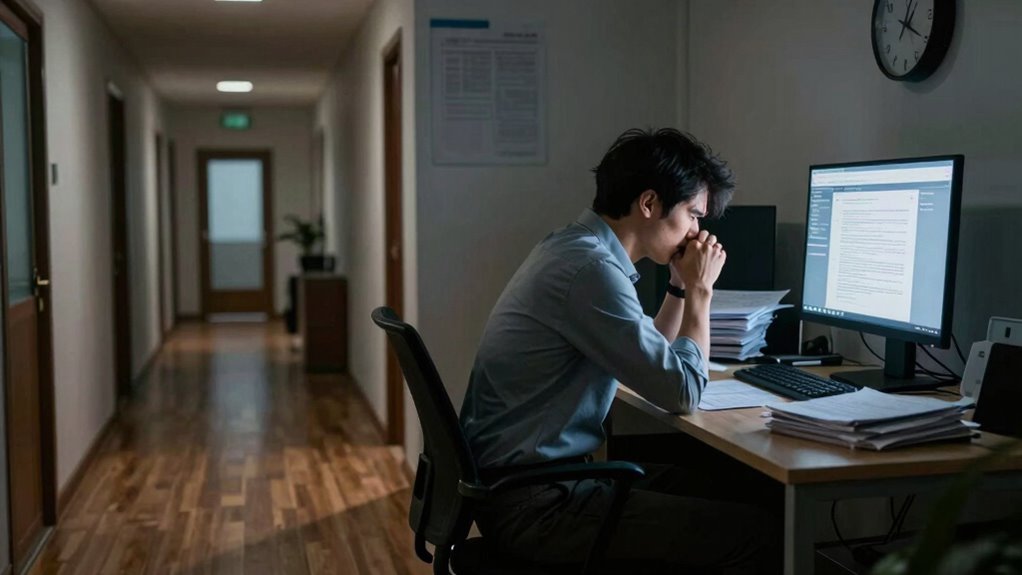

Waiting too long for legal decisions can increase your stress because prolonged uncertainty fuels anxiety and feelings of helplessness. As you check for updates often, your mind races with worst-case scenarios, making it harder to stay calm. Emotional detachment might seem like a good way to cope, but it can actually make you feel lonelier and more overwhelmed. If you keep going through this cycle, understanding why it happens can help you find more effective ways to manage your feelings.

Get comfort and care essentials delivered free — and shop member deals
- Fast, free delivery on millions of items
- Access to Prime Big Deal Days deals on October 6–7
- Prime Video, Amazon Music and more included
Key Takeaways
- Prolonged waiting amplifies uncertainty, increasing anxiety and feelings of helplessness.
- Extended delays cause emotional exhaustion and physical symptoms like headaches and sleep issues.
- Unclear legal jargon adds confusion, heightening frustration and emotional distress.
- Emotional detachment to cope can lead to loneliness and decreased emotional resilience.
- Replaying worst-case scenarios and obsessive checking sustain high stress levels.

Waiting for legal decisions or updates can be incredibly stressful because it keeps you in a state of uncertainty. You find yourself constantly checking for news, wondering if the outcome will work in your favor, and feeling like you’re caught in limbo. During this period, your mind races with questions, and the inability to control the situation only heightens your anxiety. It’s natural to feel this way, but understanding why waiting intensifies stress can help you manage your emotions better.
Waiting for legal updates heightens stress and anxiety, but understanding the process can help you manage your emotions more effectively.
One major source of added frustration is the use of legal jargon. Legal language is filled with complex terms that can feel overwhelming, especially when you’re already anxious. These unfamiliar words can create a barrier, making it harder to understand what’s happening or what to expect next. Because of this, you might feel more disconnected from the process, unable to fully grasp the developments or the reasoning behind decisions. This lack of clarity feeds into your feelings of helplessness, prolonging the emotional toll. Recognizing how legal language complexity impacts your understanding can help reduce some of this frustration.
Another key factor is emotional detachment. When you’re waiting, it’s easy to become emotionally numb or disconnected from your feelings as a coping mechanism. You might try to suppress worry or frustration to avoid feeling overwhelmed, but this only makes the wait seem longer and more distressing. Emotional detachment becomes a way to shield yourself from the pain of uncertainty, yet it can also make you feel isolated, like you’re not part of the process. It’s a paradox—by trying to stay detached, you inadvertently intensify your sense of loneliness and helplessness, which ramps up your stress levels. Additionally, understanding the importance of emotional regulation can help in managing these feelings more effectively.
The longer you wait, the more your mind tends to dwell on negative possibilities, which fuels anxiety. You might replay scenarios in your head, imagining the worst case, or obsessively check for updates, hoping for good news. That constant mental loop keeps your stress elevated, and because you’re unsure about how long the process will take, it’s like being stuck in a never-ending waiting game. Your body responds to this ongoing tension with physical symptoms—tight muscles, headaches, trouble sleeping—that only make the emotional strain worse.
Ultimately, the delay creates a feedback loop: the longer you wait, the more uncertain and anxious you feel, and the more you try to detach emotionally, the harder it becomes to stay grounded. Recognizing these patterns can help you develop strategies to cope better, like setting boundaries for when you check for updates or seeking support to process your feelings. But knowing that legal jargon and emotional detachment are part of the process can remind you that your stress is rooted in the natural difficulty of waiting, not just personal weakness.
As an affiliate, we earn on qualifying purchases.
Frequently Asked Questions
How Can I Prepare Effectively for Legal Discussions?
To prepare effectively for legal discussions, familiarize yourself with relevant legal jargon to communicate clearly. Gather all necessary documents and outline your main concerns beforehand. Address confidentiality concerns by understanding what information is protected and what can be shared. Practice explaining your situation concisely, so you’re ready to answer questions confidently. Being organized and informed helps reduce stress, ensuring the conversation is productive and you feel more in control.
What Signs Indicate I Should Seek Legal Advice Immediately?
You should seek legal advice immediately if you notice signs like legal myths affecting your understanding, or if confidentiality concerns arise, especially with sensitive information. Ignoring these signs can lead to costly mistakes or misunderstandings. Acting promptly guarantees you get clear guidance, dispels myths, and maintains confidentiality. Don’t wait until issues escalate—address legal matters early to reduce stress and protect your rights effectively.
How Does Delaying Legal Conversations Affect Settlement Outcomes?
Delaying legal conversations is like trying to fix a leaking pipe after the basement floods—you risk more damage and higher costs. When you wait, your timing strategy suffers, reducing your leverage in negotiations. Early legal input helps shape your approach, making settlement outcomes more favorable. Without prompt dialogue, you lose negotiation tactics that could secure better terms, ultimately prolonging your stress and increasing the chances of unfavorable results.
Are There Risks in Discussing Legal Issues Without a Lawyer Present?
Discussing legal issues without a lawyer present can lead to risks like misinterpreting legal jargon, which might harm your case. You also face confidentiality concerns, as sensitive information could be unintentionally shared or misunderstood. Without legal guidance, you might overlook essential details or make statements that could be used against you later. To avoid these risks, it’s best to consult a lawyer before engaging in any legal conversations.
What Are Common Misconceptions About Waiting to Consult a Lawyer?
Many believe that delaying a legal consultation gives them time to prepare or saves money, but this is a legal myth. Delay dangers include missing critical deadlines, losing evidence, or making statements that harm your case. The longer you wait, the more you risk complicating your situation. Consulting a lawyer early helps you understand your rights, avoid pitfalls, and handle legal issues confidently, reducing stress and future complications.
As an affiliate, we earn on qualifying purchases.
Conclusion
Waiting too long to have legal conversations can considerably increase your stress levels, making problems feel overwhelming and harder to resolve. Research shows that delays in addressing legal issues can double your anxiety and prolong uncertainty. By tackling these talks early, you regain control and reduce emotional strain. Don’t wait until it’s too late—address legal matters promptly to keep stress at bay and move forward with confidence. Taking action now can make all the difference.
mindfulness meditation for stress
As an affiliate, we earn on qualifying purchases.
As an affiliate, we earn on qualifying purchases.
As an affiliate, we earn on qualifying purchases.
Halloween Picks
halloween
As an affiliate, we earn on qualifying purchases.