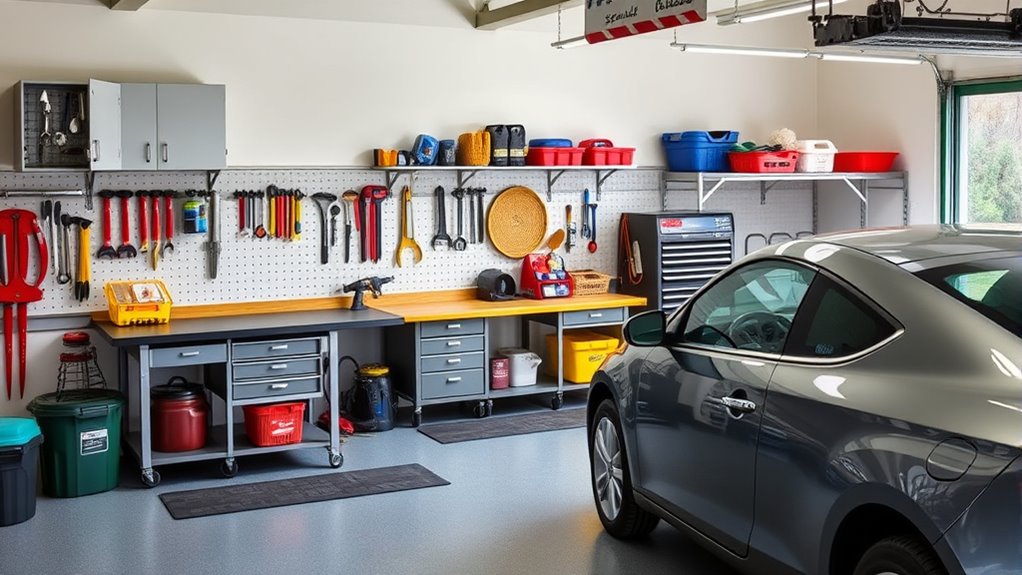

To keep your garage and workshop senior-friendly, prioritize safety by organizing tools and supplies within easy reach, using non-slip mats, and installing bright lighting to prevent falls. Store chemicals safely away from heat and children, and always wear appropriate PPE like gloves and goggles. Regularly check and maintain tools and equipment. Implement clear signage and keep emergency equipment accessible. Staying proactive enhances safety — continue along for more tips on creating a secure workshop environment.
Key Takeaways
- Install proper lighting and clear pathways to prevent trips and falls for seniors.
- Store tools, chemicals, and car parts in accessible, labeled, and organized spaces to reduce confusion and hazards.
- Use ergonomic tools with easy grips to minimize strain and improve safety during tasks.
- Ensure all chemicals are stored safely and out of reach, with clear labels and proper ventilation.
- Provide safety equipment like goggles and gloves, and encourage regular safety checks to prevent accidents.

A garage or workshop can be a safe space if you take the right precautions, but hazards are always present if you’re not careful. Whether you’re working with power tools, storing chemicals, or maintaining your vehicle, awareness is key to preventing accidents. Power tool hazards are one of the biggest risks in any workshop. These tools are powerful but can cause serious injuries if mishandled. Always ensure you read the instructions before use, wear safety goggles, and keep your hands clear of moving parts. Unplug tools when not in use, and regularly check cords and switches for damage. Keep your workspace clean and organized so you don’t trip over cords or knock over tools that could cause injury. Properly storing and maintaining power tools reduces the risk of accidents and prolongs their life. Regular inspections of your workspace can help identify potential hazards before they cause harm.
Power tools require careful handling, proper storage, and safety gear to prevent accidents and injuries.
Chemical storage tips are equally important for senior safety. Many chemicals found in garages, such as paints, solvents, or automotive fluids, can be hazardous if mishandled. Always store chemicals in clearly labeled, tightly sealed containers, away from heat sources or direct sunlight. Use shelves or cabinets specifically designed for chemical storage, and keep them out of reach of children or pets. Avoid mixing chemicals unless you know it’s safe, and never pour leftover chemicals down drains or onto the ground. Dispose of chemicals properly according to local regulations to prevent environmental contamination and health hazards. When handling chemicals, wear protective gloves and masks, and work in well-ventilated areas to avoid inhaling fumes.
In addition to managing power tools and chemicals safely, you should also pay attention to your workspace’s overall safety. Make sure walkways are clear of clutter, so you don’t trip or stumble. Install proper lighting to see what you’re doing clearly, especially when working with small parts or delicate tasks. Keep a fire extinguisher nearby and ensure it’s suitable for chemical or electrical fires. Regularly inspect your tools and storage areas for damage or leaks, and replace or repair them promptly. Using appropriate storage solutions can help organize your workspace and reduce clutter, making it safer and more efficient.
Safety isn’t just about avoiding immediate injuries; it’s about creating an environment where you and your loved ones can work and move confidently. Taking simple steps like following chemical storage tips, using power tools carefully, and maintaining an organized workspace will make your garage or workshop safer for everyone. Remember, a little caution goes a long way in preventing accidents and ensuring your space remains a secure haven for projects and repairs.
Frequently Asked Questions
How Can I Modify Tools for Easier Grip and Operation?
You can modify tools for easier grip by adding ergonomic handles or switching to adaptive grip tools. Wrap handles with rubber or foam sleeves to improve comfort and reduce strain. Use larger, textured grips that provide better control and lessen the effort needed. These modifications make tools safer and easier to operate, especially for seniors, ensuring they maintain independence and work more comfortably in the garage or workshop.
What Are the Best Ways to Label Hazardous Chemicals Safely?
You want to keep hazardous chemicals safe and clearly labeled. Use bold, easy-to-read fonts and color coding—like red for danger—to catch the eye. Apply chemical labeling with weatherproof labels that resist smudging and fading. Incorporate hazard communication symbols clearly and concisely. When you do this, you create a visual map that warns and informs, making safety second nature and reducing accidental spills or mishandling.
How Do I Ensure Proper Lighting for Senior-Friendly Workspaces?
To guarantee proper lighting for senior-friendly workspaces, you should prioritize lighting solutions that provide bright, even illumination. Incorporate natural illumination by opening windows or installing skylights to reduce eye strain. Use adjustable LED lights or task lighting to target specific areas, and avoid harsh shadows. Regularly maintain and clean lighting fixtures to keep the workspace well-lit, making it safer and easier for seniors to work comfortably.
What Safety Equipment Is Essential for Elderly Users?
You should prioritize safety equipment like protective eyewear to shield eyes from debris and chemicals, and hearing protection to reduce noise exposure that can damage hearing over time. Make sure these items are comfortable and easy to use, so elderly users feel confident wearing them. Regularly check that the safety gear fits well and is in good condition, creating a safer environment for everyone working in the space.
How Can I Organize Tools to Minimize Trip Hazards?
You should use effective storage solutions like labeled bins, pegboards, and wall-mounted racks to keep tools organized. Regularly reduce clutter by putting tools back after each use and discarding or replacing damaged items. Keep pathways clear and guarantee tools are stored at accessible heights to minimize trip hazards. Prioritizing clutter reduction and smart storage helps create a safer, more manageable workspace for seniors.
Conclusion
By making simple safety adjustments, you can enjoy your garage and workshop without worry. Sure, some might think it’s a hassle, but prioritizing safety keeps everyone, especially seniors, protected. With easy-to-install tools, clear labels, and organized spaces, you’ll create a safer environment that promotes independence. Don’t let concerns hold you back—taking these steps guarantees your workspace is secure, comfortable, and ready for your next project. Your safety is worth the small effort!